Loading...
Cipriano Castro vs Wu Sangui
Wu Sangui leads by 20.2 pts · 2 figures compared
…
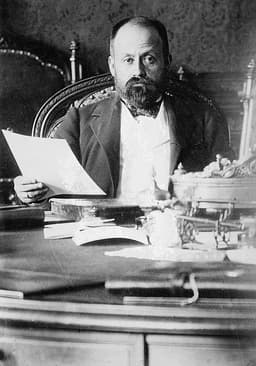
Cipriano Castro
General · Modern
43.9Total
Wu Sangui
General · Modern
64.1Total
Basic Information
Born
1858
1612
Died
1924
1678
Era
Modern
Modern
Nationality
Venezuela
China
Occupation
General
General
Civilization
Western
Eastern
Score Comparison
Military (10%)
38.3
82.0
Political (20%)
35.1
68.0
Influence (20%)
51.0
56.7
Legacy (20%)
39.2
55.0
Leadership (15%)
54.2
80.0
Strategy (15%)
41.7
58.0
TOTAL
43.9
64.1
Cipriano Castro — Complete Timeline
1899 AD
Seizure of Power in VenezuelaPolitical Action◆ Major
Castro led a successful invasion from Colombia, seizing power in Venezuela. He established a dictatorship and ruled with an iron fist, suppressing opposition and centralizing authority.
CoupDictatorshipInvasion
Impact: nationaldestructive
1901 AD
Suppression of the Libertadora RevolutionWar◆ Major
Castro suppressed the Libertadora Revolution, a major uprising led by his political opponents. The rebellion was crushed after a long and bloody civil war, but it weakened Castro's regime and led to widespread destruction.
Civil WarSuppressionLibertadora Revolution
Impact: nationaldestructive
1902 AD
Venezuelan Blockade CrisisWar◆ Major
Castro's refusal to pay foreign debts led to a naval blockade of Venezuela by Britain, Germany, and Italy. The blockade forced Castro to negotiate and submit to international arbitration, damaging Venezuela's sovereignty.
BlockadeDebt CrisisInternational Conflict
Impact: globaldestructive
1908 AD
Exile and DeathPolitical Action◆ Major
Castro was overthrown by his vice president, Juan Vicente G
OverthrowExileDeath
Impact: nationaltragic
Wu Sangui — Complete Timeline
1644 AD
Defeated Li Zicheng at the Battle of Shanhai PassWar◆ Major
Wu Sangui allied with the Manchu forces to defeat Li Zicheng's rebel army at the Battle of Shanhai Pass. The combined Qing-Ming loyalist army routed Li's forces, forcing Li to retreat from Beijing. This battle sealed the Qing conquest of northern China.
Ming-Qing TransitionBattleAlliance
Impact: globaldestructive
Opened Shanhai Pass to the ManchusPolitical Action
Wu Sangui, commanding the Ming garrison at Shanhai Pass, opened the pass to the Manchu army led by Dorgon. This allowed the Manchus to enter China proper and march on Beijing, which had been captured by Li Zicheng's rebel forces.
Ming-Qing TransitionBetrayalShanhai Pass
Impact: globaldestructive
Appointed Prince of Pingxi by the QingPolitical Action◆ Major
Wu Sangui was appointed Prince of Pingxi by the Qing dynasty for his role in their conquest. He was granted control over Yunnan province, becoming one of the three powerful feudatories that ruled southern China under Qing suzerainty.
Qing DynastyFeudatoryAppointment
Impact: national
1673 AD
Launched the Revolt of the Three FeudatoriesWar
Wu Sangui initiated the Revolt of the Three Feudatories against the Qing dynasty. He proclaimed a new dynasty and led a rebellion from his base in Yunnan, initially gaining control of much of southern China before the Qing counteroffensive.
Qing DynastyRebellionThree Feudatories
Impact: nationaldestructive
1678 AD
Proclaimed Emperor of the Zhou DynastyPolitical Action◆ Major
Wu Sangui proclaimed himself Emperor of the Zhou dynasty in Hengzhou (modern Hengyang). This act formalized his rebellion against the Qing. However, he died later that same year, and his rebellion collapsed shortly after.
Qing DynastyRebellionProclamation
Impact: nationaldestructive
Expert Analysis
Origins
Cipriano Castro was born in 1858 in Capacho, Venezuela, into a modest farming family. He received little formal education but developed political ambitions early. After studying law briefly in San Cristóbal, he engaged in local politics and military adventures, joining the Liberal Party. Wu Sangui was born in 1612 in Liaodong, China, into a military family. His father, Wu Xiang, was a Ming general, and Wu Sangui followed the family tradition, rising through the ranks as a cavalry officer. His early career was marked by service on the northern frontier against the Manchus.
Rise to Power
Castro rose to power in 1899 by leading an invasion from Colombia, known as the Restorative Liberal Revolution. With a force of 60 men, he marched on Caracas, gathering support and defeating government forces. By October 1899, he entered Caracas and declared himself president. Wu Sangui's rise came through military merit. By the 1640s, he was a key Ming general commanding the elite garrison at Shanhai Pass, the strategic gateway to the capital. In 1644, facing the rebel Li Zicheng's advance, Wu initially considered surrender but after Li executed his family, Wu allied with the Manchu prince Dorgon, opening the pass and allowing Manchu entry. This decision made him a crucial figure in the Qing conquest.
Leadership & Governance
Castro ruled Venezuela as a dictator from 1899 to 1908. He centralized power, suppressed opposition, and maintained control through a network of loyalists. His governance was erratic: he defaulted on foreign debts, leading to the 1902–1903 naval blockade by Britain, Germany, and Italy. Militarily, Castro scored 38.3, reflecting his limited strategic success. In contrast, Wu Sangui's leadership score of 80.0 reflects his effective command of large armies. As Prince of Pingxi under the Qing, he governed Yunnan with autonomy, promoting economic development and military consolidation. However, his governance was self-serving, enriching his family and preparing for rebellion.
Triumph & Tragedy
Castro's greatest success was seizing and holding power for nearly a decade despite internal and external pressures. His biggest failure was the blockade crisis, which exposed Venezuela's vulnerability and forced him to negotiate, damaging his prestige. He was overthrown in 1908 while seeking medical treatment in Europe. Wu Sangui's triumph was his role in the Qing conquest, which brought him immense power and wealth. His tragedy was the failure of his rebellion, the Revolt of the Three Feudatories (1673–1681). He proclaimed himself emperor in 1678 but died soon after; the rebellion collapsed by 1681. His political score of 68.0 indicates shrewd maneuvering, but his strategy score of 58.0 suggests flawed planning.
Character & Destiny
Castro was impulsive and confrontational, often making decisions based on pride. His refusal to pay debts led to the blockade, and his inability to secure his succession allowed his vice president to seize power. Wu Sangui was pragmatic and ambitious, willing to switch sides for personal gain. His decision to open Shanhai Pass altered Chinese history, but his later rebellion failed due to overreach and lack of coordination. Both men were shaped by their environments: Castro by Venezuela's instability, Wu by the Ming-Qing transition.
Legacy
Castro's legacy is mixed: he is remembered as a caudillo who stood up to foreign powers but also as a dictator who plunged Venezuela into crisis. His influence score of 51.0 reflects moderate impact. Wu Sangui is a controversial figure in Chinese history: some view him as a traitor for collaborating with the Manchus, while others see him as a patriot who later resisted. His total score of 64.1 is significantly higher than Castro's 43.9, reflecting greater military and political impact. The Qing dynasty he helped establish lasted until 1912.
Conclusion
Wu Sangui had a greater historical impact than Cipriano Castro. With a total score of 64.1 versus Castro's 43.9, Wu's actions fundamentally altered China's trajectory, enabling the Qing dynasty's rise and later challenging it. Castro's influence was limited to Venezuela and the short-lived blockade crisis. While both were ambitious generals, Wu's decisions resonated across centuries, while Castro's legacy faded after his exile.
Rankings
🥇
Wu SanguiLeader
Mil: 82.0Pol: 68.0Inf: 56.7
64.1
🥈
Cipriano Castro
Mil: 38.3Pol: 35.1Inf: 51.0
43.9
+20.2 behind
How This Comparison Works
Algorithm
Each figure is scored on 6 dimensions (0—100 scale) based on structured historical data: Military (10%), Political (20%), Influence (20%), Legacy (20%), Leadership (15%), Strategy (15%). The weighted total produces the final ranking.
Data Sources
Scores are computed from structured sub-indicators in the database. Scale factors adjust for era (Ancient ×0.85, Modern ×1.0) and civilization size (Eastern ×1.05, Other ×0.80) to account for differences in population and military scale.
Maximum 3 Figures
Comparisons are limited to 2—3 figures to ensure readability and statistical meaningfulness.
Error Margins
±5 points per dimension — Sub-scores are derived from historical records with inherent uncertainty. Two figures within 5 points on a dimension should be considered roughly equivalent in that area.
Total Score Accuracy
±3 points overall — The weighted combination of 6 dimensions produces a total score with approximately ±3 points of uncertainty. Differences of less than 3 points are not statistically significant— the figures are effectively tied.
Known Limitations
- Historical records are incomplete and uneven across civilizations
- Figures from oral-tradition societies may be underrepresented
- Occupation labels can misclassify multi-role figures
- Scores measure capability and impact, not moral character
- Quantitative scoring is a comparison tool, not absolute truth
Capability Radar
Military (10%) — Battles & Warfare
Battles
30
75
Win Rate
35
70
Expansion
25
70
Political (20%) — Governance & Reform
Reform
20
30
Diplomacy
25
70
Economy
15
40
Influence (20%) — Cultural & Global Reach
Cultural
15
50
Global
20
55
Legacy (20%) — Historical Impact
Historical
25
70
Longevity
10
60
Leadership (15%) — Power & Stability
Tenure
45
65
Stability
10
30
Strategy (15%) — Tactics & Innovation
Strategy
30
80
Tactics
25
75
Reform
20
40
Similar Comparisons
Comments & Discussion
No comments yet. Be the first to share your thoughts!