Loading...
Christian I of Denmark vs Vlad the Impaler
Christian I of Denmark leads by 0.4 pts · 2 figures compared
…
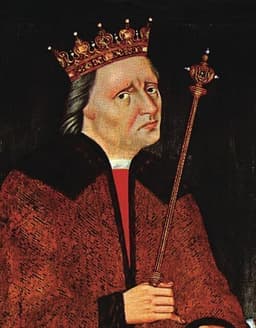
Christian I of Denmark
Emperor · Medieval
53.8Total
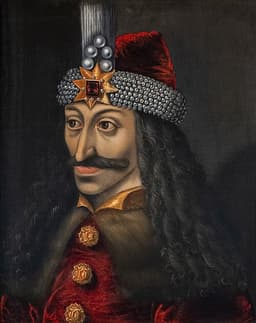
Vlad the Impaler
Emperor · Medieval
53.4Total
Basic Information
Born
1426
1431
Died
1481
1476
Era
Medieval
Medieval
Nationality
Denmark
Wallachia
Occupation
Emperor
Emperor
Civilization
Western
Western
Score Comparison
Military (10%)
55.0
40.0
Political (20%)
54.7
27.9
Influence (20%)
55.7
82.0
Legacy (20%)
49.2
55.0
Leadership (15%)
67.0
38.1
Strategy (15%)
38.6
52.5
TOTAL
53.8
53.4
Christian I of Denmark — Complete Timeline
1448 AD
Election as King of DenmarkPolitical Action◆ Major
Following the death of King Christopher III, the Danish Council elected Christian of Oldenburg as king. This established the Oldenburg dynasty, which would rule Denmark for over four centuries.
AccessionDynasty Foundation
Impact: nationalconstructive
1450 AD
Union of Norway with DenmarkPolitical Action◆ Major
Christian I was crowned King of Norway in Trondheim, formalizing the union between Denmark and Norway. This union lasted until 1814, making Norway a Danish dominion for centuries.
UnionScandinavia
Impact: regional
1457 AD
Election as King of SwedenPolitical Action◆ Major
Christian I was elected King of Sweden, briefly restoring the Kalmar Union. His rule in Sweden was contested, leading to rebellion and his eventual deposition in 1464.
Kalmar UnionSweden
Impact: regional
1468 AD
Pledge of Orkney and ShetlandPolitical Action◆ Major
To secure a dowry for his daughter Margaret's marriage to James III of Scotland, Christian I pledged the Orkney and Shetland islands. The pledge was never redeemed, and the islands became permanently part of Scotland.
Territorial LossScotland
Impact: regionaltragic
1479 AD
Foundation of the University of CopenhagenCultural◆ Major
Christian I issued a charter establishing the University of Copenhagen, the first university in Denmark. Modeled on the University of Cologne, it became a center of learning and the oldest university in the country.
EducationUniversity
Impact: nationalconstructive
Vlad the Impaler — Complete Timeline
1448 AD
First Reign as Voivode of WallachiaPolitical Action
Vlad III assumed the throne of Wallachia for the first time, with Ottoman support, after the death of his father Vlad Dracul. His reign lasted only two months before he was deposed by John Hunyadi of Hungary.
ReignWallachiaOttoman
Impact: national
1457 AD
Impalement Campaign in WallachiaPolitical Action◆ Major
Vlad executed thousands of boyars, merchants, and peasants through impalement to consolidate power and eliminate opposition. This brutal method became his hallmark, earning him the posthumous name 'the Impaler' and inspiring the Dracula legend.
RepressionBrutalityDracula
Impact: nationaldestructive
1462 AD
Night Attack at TârgovișteWar◆ Major
Vlad launched a surprise night attack on the Ottoman camp of Sultan Mehmed II near T
BattleOttomanWallachia
Impact: regional
Imprisonment by Matthias CorvinusPolitical Action◆ Major
After being captured by Hungarian forces, Vlad was imprisoned by King Matthias Corvinus of Hungary for about 12 years. He was held in captivity at Visegr
ImprisonmentHungaryPropaganda
Impact: nationaltragic
1476 AD
Death in Battle against the OttomansWar◆ Major
Vlad was killed in combat near Bucharest while fighting against Ottoman forces, possibly betrayed by his own men. His head was sent to Constantinople as a trophy, ending his third and final reign as Voivode of Wallachia.
DeathBattleOttoman
Impact: nationaltragic
Expert Analysis
Origins
Christian I (1426–1481) was born into the House of Oldenburg in northern Germany. His father, Count Dietrich of Oldenburg, was a minor noble. Christian was educated in courtly and political affairs, preparing him for leadership. He rose through marriage and election, not birthright to a major throne.
Vlad III (1431–1476) was born in Sighișoara, Transylvania, as the second son of Vlad II Dracul, Voivode of Wallachia. His early life was marked by hostage captivity under the Ottoman Empire, where he witnessed cruelty and learned military tactics. This shaped his later ruthlessness.
Rise to Power
Christian I was elected King of Denmark in 1448 after the death of Christopher III, establishing the Oldenburg dynasty. He secured the throne of Norway in 1450 and was elected King of Sweden in 1457, briefly reuniting the Kalmar Union. However, Swedish opposition led to his deposition in 1464. His rise was diplomatic and electoral.
Vlad the Impaler first ruled Wallachia briefly in 1448 with Ottoman support. After his father and brother were killed, he regained the throne in 1456 with Hungarian aid. His rise involved violence and betrayal, including the execution of boyars who opposed him.
Leadership & Governance
Christian I focused on consolidating the Kalmar Union and strengthening royal authority through alliances and institutions. He founded the University of Copenhagen in 1479, modeled on the University of Cologne, promoting education. Financially, he pledged Orkney and Shetland to Scotland as dowry for his daughter, a decision that permanently lost these territories. His governance was diplomatic but costly.
Vlad ruled through terror. He impaled thousands of boyars, merchants, and peasants to eliminate opposition and enforce order. His infamous "Night Attack" in 1462 against Sultan Mehmed II's camp used psychological warfare. He maintained independence from the Ottomans through brutality, but his methods alienated allies and subjects. His leadership score of 38.1 reflects his ruthless, unstable rule.
Triumph & Tragedy
Christian I's triumph was the establishment of the Oldenburg dynasty, which ruled Denmark until 1863. The union with Norway lasted until 1814, a significant legacy. His tragedy was the loss of Orkney and Shetland due to unpaid dowry, and the failure to maintain the Kalmar Union. He scored 67.0 in leadership for his institutional foundations.
Vlad's triumph was his successful defense of Wallachia against Ottoman invasion, notably the 1462 campaign. His tragedy was his imprisonment by Matthias Corvinus for 12 years and his death in battle, possibly betrayed. His influence score of 82.0 reflects his lasting cultural impact as Dracula.
Character & Destiny
Christian I was pragmatic and diplomatic, prioritizing stability and dynastic continuity. His character led to the long-lasting Oldenburg dynasty but also to territorial losses due to financial mismanagement. He scored 54.7 in politics, indicating moderate effectiveness.
Vlad was paranoid and sadistic, driven by revenge and survival. His cruelty earned him enemies and a short reign. His strategy score of 52.5 shows tactical skill but poor long-term planning. His character sealed his violent fate.
Legacy
Christian I's legacy is institutional: the University of Copenhagen, the Oldenburg dynasty, and the Danish-Norwegian union. His impact on education and governance in Scandinavia is tangible.
Vlad's legacy is cultural: he inspired Bram Stoker's Dracula, becoming a symbol of horror. In Romania, he is a national hero for resisting the Ottomans. However, his actual political achievements were ephemeral.
Conclusion
Christian I had greater long-term impact on governance and institutions, scoring 53.8 overall vs Vlad's 53.4. While Vlad's influence is culturally immense, Christian's political and educational foundations shaped Scandinavia for centuries. Christian I wins in measurable historical change.
Rankings
🥇
Christian I of DenmarkLeader
Mil: 55.0Pol: 54.7Inf: 55.7
53.8
🥈
Vlad the Impaler
Mil: 40.0Pol: 27.9Inf: 82.0
53.4
+0.4 behind
How This Comparison Works
Algorithm
Each figure is scored on 6 dimensions (0—100 scale) based on structured historical data: Military (10%), Political (20%), Influence (20%), Legacy (20%), Leadership (15%), Strategy (15%). The weighted total produces the final ranking.
Data Sources
Scores are computed from structured sub-indicators in the database. Scale factors adjust for era (Ancient ×0.85, Modern ×1.0) and civilization size (Eastern ×1.05, Other ×0.80) to account for differences in population and military scale.
Maximum 3 Figures
Comparisons are limited to 2—3 figures to ensure readability and statistical meaningfulness.
Error Margins
±5 points per dimension — Sub-scores are derived from historical records with inherent uncertainty. Two figures within 5 points on a dimension should be considered roughly equivalent in that area.
Total Score Accuracy
±3 points overall — The weighted combination of 6 dimensions produces a total score with approximately ±3 points of uncertainty. Differences of less than 3 points are not statistically significant— the figures are effectively tied.
Known Limitations
- Historical records are incomplete and uneven across civilizations
- Figures from oral-tradition societies may be underrepresented
- Occupation labels can misclassify multi-role figures
- Scores measure capability and impact, not moral character
- Quantitative scoring is a comparison tool, not absolute truth
Capability Radar
Military (10%) — Battles & Warfare
Battles
25
45
Win Rate
30
40
Expansion
35
25
Political (20%) — Governance & Reform
Reform
40
20
Diplomacy
55
30
Economy
45
15
Influence (20%) — Cultural & Global Reach
Cultural
40
75
Global
35
65
Legacy (20%) — Historical Impact
Historical
50
70
Longevity
45
75
Leadership (15%) — Power & Stability
Tenure
60
35
Stability
30
10
Strategy (15%) — Tactics & Innovation
Strategy
25
55
Tactics
20
70
Reform
15
30
Similar Comparisons
Comments & Discussion
No comments yet. Be the first to share your thoughts!