Loading...
Christian I of Denmark vs Emperor Xuanzong of Jin
Christian I of Denmark leads by 9.1 pts · 2 figures compared
…
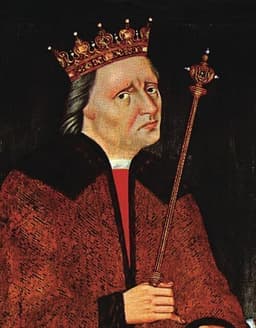
Christian I of Denmark
Emperor · Medieval
53.8Total
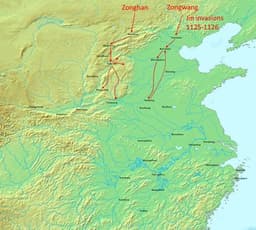
Emperor Xuanzong of Jin
Emperor · Medieval
44.7Total
Basic Information
Born
1426
1163
Died
1481
1224
Era
Medieval
Medieval
Nationality
Denmark
Jin dynasty
Occupation
Emperor
Emperor
Civilization
Western
Eastern
Score Comparison
Military (10%)
55.0
50.0
Political (20%)
54.7
30.8
Influence (20%)
55.7
51.0
Legacy (20%)
49.2
41.7
Leadership (15%)
67.0
55.3
Strategy (15%)
38.6
35.7
TOTAL
53.8
44.7
Christian I of Denmark — Complete Timeline
1448 AD
Election as King of DenmarkPolitical Action◆ Major
Following the death of King Christopher III, the Danish Council elected Christian of Oldenburg as king. This established the Oldenburg dynasty, which would rule Denmark for over four centuries.
AccessionDynasty Foundation
Impact: nationalconstructive
1450 AD
Union of Norway with DenmarkPolitical Action◆ Major
Christian I was crowned King of Norway in Trondheim, formalizing the union between Denmark and Norway. This union lasted until 1814, making Norway a Danish dominion for centuries.
UnionScandinavia
Impact: regional
1457 AD
Election as King of SwedenPolitical Action◆ Major
Christian I was elected King of Sweden, briefly restoring the Kalmar Union. His rule in Sweden was contested, leading to rebellion and his eventual deposition in 1464.
Kalmar UnionSweden
Impact: regional
1468 AD
Pledge of Orkney and ShetlandPolitical Action◆ Major
To secure a dowry for his daughter Margaret's marriage to James III of Scotland, Christian I pledged the Orkney and Shetland islands. The pledge was never redeemed, and the islands became permanently part of Scotland.
Territorial LossScotland
Impact: regionaltragic
1479 AD
Foundation of the University of CopenhagenCultural◆ Major
Christian I issued a charter establishing the University of Copenhagen, the first university in Denmark. Modeled on the University of Cologne, it became a center of learning and the oldest university in the country.
EducationUniversity
Impact: nationalconstructive
Emperor Xuanzong of Jin — Complete Timeline
1214 AD
Moved the capital to KaifengPolitical Action◆ Major
Under pressure from Mongol attacks, Emperor Xuanzong of Jin ordered the relocation of the capital from Zhongdu (Beijing) to Kaifeng in the south. This move was seen as an abandonment of the northern territories and demoralized the Jin army.
Capital moveKaifengMongol pressure
Impact: nationaltragic
1215 AD
Loss of Zhongdu to the MongolsWar
After Xuanzong's departure, the Mongols captured Zhongdu, the former Jin capital. The city was sacked and burned, and the Jin dynasty lost control of its northern heartland, reducing its territory to the central plains.
Fall of ZhongduMongol conquestTerritorial loss
Impact: nationaltragic
Jin-Mongol peace negotiationsPolitical Action◆ Major
Xuanzong attempted to negotiate peace with the Mongols, offering tribute and recognition of Mongol supremacy. Genghis Khan initially accepted but later resumed hostilities, demanding further concessions and territory.
Peace talksDiplomacyTribute
Impact: regional
Expert Analysis
Origins
Christian I of Denmark was born in 1426 in Oldenburg, Germany, into the House of Oldenburg. His father, Count Dietrich of Oldenburg, was a minor German noble. Christian received a typical noble education, focusing on governance and military tactics. His rise was facilitated by the death of King Christopher III of Denmark, Sweden, and Norway in 1448, which left the Kalmar Union without a clear heir.
Emperor Xuanzong of Jin, born Wanyan Xun in 1163, was a member of the Jurchen Jin dynasty. His early life was spent in the imperial court; he was the son of Emperor Shizong. Xuanzong's upbringing emphasized Confucian scholarship and military training, preparing him for eventual rule. He ascended the throne in 1213 after his predecessor, Emperor Weishao, was killed by Mongol forces.
Rise to Power
Christian I was elected King of Denmark in 1448 by the Danish Council, following the death of Christopher III. The council chose him over other claimants to maintain stability. In 1449, he was elected King of Norway, and in 1457, he briefly became King of Sweden, restoring the Kalmar Union. However, his rule in Sweden was contested, leading to rebellion and his eventual deposition from the Swedish throne in 1464. His political maneuvering secured his position in Denmark and Norway, but his Swedish venture failed.
Emperor Xuanzong became emperor in 1213 after a coup that removed Emperor Weishao. The Jin dynasty was already under severe Mongol attacks led by Genghis Khan. Xuanzong's first major decision was to move the capital from Zhongdu (modern Beijing) to Kaifeng in 1214, hoping to escape Mongol pressure. This move was controversial and weakened the dynasty's northern defenses, leading to the loss of Zhongdu to the Mongols in 1215.
Leadership & Governance
Christian I focused on consolidating his rule in Denmark and Norway. He established the Oldenburg dynasty, which would rule Denmark until 1863. His governance included administrative reforms and the foundation of the University of Copenhagen in 1479, modeled on the University of Cologne. This university became a center of learning in Scandinavia. He also pledged the Orkney and Shetland islands to Scotland as a dowry for his daughter's marriage, a decision that led to permanent loss of those territories. His leadership score of 67.0 reflects his ability to establish a lasting dynasty, but his military score of 55.0 indicates limited martial success.
Emperor Xuanzong faced the existential threat of the Mongol Empire. His decision to move the capital to Kaifeng was a strategic retreat, but it demoralized his subjects and left the northern heartland vulnerable. He attempted peace negotiations with the Mongols, offering tribute, but Genghis Khan's acceptance was temporary. Xuanzong's political score of 30.8 is low, reflecting his inability to unite his court or effectively counter the Mongol advance. His leadership score of 55.3 is slightly above average, but his strategy score of 35.7 shows poor decision-making under pressure.
Triumph & Tragedy
Christian I's greatest success was founding the University of Copenhagen, which became a lasting institution. He also secured the Danish and Norwegian thrones for his dynasty, which endured for centuries. His greatest failure was the loss of the Orkney and Shetland islands to Scotland, a costly diplomatic miscalculation. Additionally, his brief rule in Sweden ended in rebellion, damaging the Kalmar Union's cohesion.
Emperor Xuanzong's triumph was his survival in power for over a decade despite Mongol pressure. He maintained the Jin dynasty's existence temporarily by moving the capital. However, his tragedy was the loss of Zhongdu, the dynasty's traditional capital, and the subsequent weakening of Jin authority. His peace efforts failed, and the Mongols eventually destroyed the Jin dynasty in 1234, after his death in 1224.
Character & Destiny
Christian I was pragmatic and diplomatic, focusing on building alliances and institutions. His decision to pledge the Orkney and Shetland islands shows a willingness to sacrifice long-term assets for short-term gains. His character shaped his destiny: he established a dynasty but made territorial concessions that weakened the kingdom. Historical assessments view him as a competent but not exceptional ruler, with a total score of 53.8.
Emperor Xuanzong was cautious and indecisive, as seen in his capital move and peace negotiations. He failed to inspire his court or military, leading to internal discord. His character, marked by a desire to avoid conflict, led to a slow decline. Historians criticize his leadership during a crisis, reflected in his total score of 44.7.
Legacy
Christian I's legacy is the Oldenburg dynasty, which ruled Denmark and Norway for centuries. The University of Copenhagen remains a prestigious institution. The loss of Orkney and Shetland is a lasting consequence of his reign. He is remembered as the founder of a royal line that shaped Scandinavian history.
Emperor Xuanzong's legacy is the loss of the Jin dynasty's northern territories and the eventual fall of the dynasty. His capital move is seen as a strategic blunder. The Jin dynasty's collapse allowed the Mongols to consolidate power in China. He is largely remembered as a weak emperor who failed to defend his realm.
Conclusion
Christian I had greater impact than Emperor Xuanzong, as evidenced by his higher total score of 53.8 versus 44.7. Christian I founded a dynasty that lasted centuries and established an enduring university, while Xuanzong's reign accelerated the Jin dynasty's decline. Christian I's political and leadership scores (54.7 and 67.0) outpace Xuanzong's (30.8 and 55.3). Although both faced challenges, Christian I's long-term contributions to Scandinavian institutions outweigh Xuanzong's failed defense against the Mongols. The data supports that Christian I was more effective in governance and legacy.
Rankings
🥇
Christian I of DenmarkLeader
Mil: 55.0Pol: 54.7Inf: 55.7
53.8
🥈
Emperor Xuanzong of Jin
Mil: 50.0Pol: 30.8Inf: 51.0
44.7
+9.1 behind
How This Comparison Works
Algorithm
Each figure is scored on 6 dimensions (0—100 scale) based on structured historical data: Military (10%), Political (20%), Influence (20%), Legacy (20%), Leadership (15%), Strategy (15%). The weighted total produces the final ranking.
Data Sources
Scores are computed from structured sub-indicators in the database. Scale factors adjust for era (Ancient ×0.85, Modern ×1.0) and civilization size (Eastern ×1.05, Other ×0.80) to account for differences in population and military scale.
Maximum 3 Figures
Comparisons are limited to 2—3 figures to ensure readability and statistical meaningfulness.
Error Margins
±5 points per dimension — Sub-scores are derived from historical records with inherent uncertainty. Two figures within 5 points on a dimension should be considered roughly equivalent in that area.
Total Score Accuracy
±3 points overall — The weighted combination of 6 dimensions produces a total score with approximately ±3 points of uncertainty. Differences of less than 3 points are not statistically significant— the figures are effectively tied.
Known Limitations
- Historical records are incomplete and uneven across civilizations
- Figures from oral-tradition societies may be underrepresented
- Occupation labels can misclassify multi-role figures
- Scores measure capability and impact, not moral character
- Quantitative scoring is a comparison tool, not absolute truth
Capability Radar
Military (10%) — Battles & Warfare
Battles
25
25
Win Rate
30
20
Expansion
35
5
Political (20%) — Governance & Reform
Reform
40
20
Diplomacy
55
30
Economy
45
25
Influence (20%) — Cultural & Global Reach
Cultural
40
20
Global
35
15
Legacy (20%) — Historical Impact
Historical
50
30
Longevity
45
20
Leadership (15%) — Power & Stability
Tenure
60
55
Stability
30
15
Strategy (15%) — Tactics & Innovation
Strategy
25
15
Tactics
20
20
Reform
15
10
Similar Comparisons
Comments & Discussion
No comments yet. Be the first to share your thoughts!