Loading...
Christian I of Denmark vs Duwa
Duwa leads by 1.0 pts · 2 figures compared
…
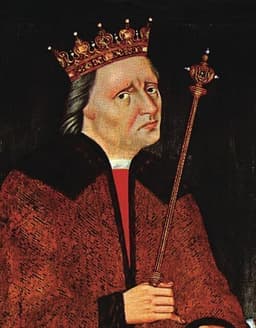
Christian I of Denmark
Emperor · Medieval
53.8Total

Duwa
Emperor · Medieval
54.8Total
Basic Information
Born
1426
1265
Died
1481
1307
Era
Medieval
Medieval
Nationality
Denmark
Chagatai Khanate
Occupation
Emperor
Emperor
Civilization
Western
Eastern
Score Comparison
Military (10%)
55.0
47.5
Political (20%)
54.7
54.7
Influence (20%)
55.7
53.3
Legacy (20%)
49.2
45.8
Leadership (15%)
67.0
74.0
Strategy (15%)
38.6
60.0
TOTAL
53.8
54.8
Christian I of Denmark — Complete Timeline
1448 AD
Election as King of DenmarkPolitical Action◆ Major
Following the death of King Christopher III, the Danish Council elected Christian of Oldenburg as king. This established the Oldenburg dynasty, which would rule Denmark for over four centuries.
AccessionDynasty Foundation
Impact: nationalconstructive
1450 AD
Union of Norway with DenmarkPolitical Action◆ Major
Christian I was crowned King of Norway in Trondheim, formalizing the union between Denmark and Norway. This union lasted until 1814, making Norway a Danish dominion for centuries.
UnionScandinavia
Impact: regional
1457 AD
Election as King of SwedenPolitical Action◆ Major
Christian I was elected King of Sweden, briefly restoring the Kalmar Union. His rule in Sweden was contested, leading to rebellion and his eventual deposition in 1464.
Kalmar UnionSweden
Impact: regional
1468 AD
Pledge of Orkney and ShetlandPolitical Action◆ Major
To secure a dowry for his daughter Margaret's marriage to James III of Scotland, Christian I pledged the Orkney and Shetland islands. The pledge was never redeemed, and the islands became permanently part of Scotland.
Territorial LossScotland
Impact: regionaltragic
1479 AD
Foundation of the University of CopenhagenCultural◆ Major
Christian I issued a charter establishing the University of Copenhagen, the first university in Denmark. Modeled on the University of Cologne, it became a center of learning and the oldest university in the country.
EducationUniversity
Impact: nationalconstructive
Duwa — Complete Timeline
1282 AD
Became Khan of the Chagatai KhanatePolitical Action◆ Major
Duwa became Khan of the Chagatai Khanate in 1282, after the death of his predecessor Baraq. He ruled for 25 years, leading the khanate through a period of conflict with the Yuan dynasty and the Ilkhanate.
Chagatai KhanateKhanBaraq
Impact: regional
1285 AD
Allied with Kaidu Against the Yuan DynastyPolitical Action◆ Major
Duwa formed a military alliance with Kaidu, the de facto ruler of the Mongol heartland, against the Yuan dynasty of Kublai Khan. Together, they launched campaigns into Yuan-controlled territories, including the Tarim Basin and Mongolia, challenging Yuan authority.
KaiduYuan DynastyAlliance
Impact: regionaldestructive
1298 AD
Defeated by the Yuan at the Battle of Khara-KhotoWar
Duwa's forces were defeated by the Yuan army at the Battle of Khara-Khoto in 1298. The loss weakened his position and forced him to retreat, leading to a temporary cessation of hostilities with the Yuan.
BattleYuan DynastyDefeat
Impact: regionaldestructive
1304 AD
Signed Peace Treaty with the Yuan DynastyPolitical Action◆ Major
Duwa negotiated a peace treaty with the Yuan dynasty in 1304, ending decades of conflict. The treaty recognized Yuan suzerainty over the Chagatai Khanate, but allowed Duwa to maintain internal autonomy, stabilizing the region.
Peace TreatyYuan DynastyAutonomy
Impact: regionalconstructive
Expert Analysis
Origins
Christian I of Denmark (born 1426) was the first king of the Oldenburg dynasty. He was the son of Count Dietrich of Oldenburg and Heilwig of Schauenburg, and received a knightly education. His claim to the Danish throne came through his mother, a descendant of King Eric V. Duwa (died 1307) was a Mongol prince of the Chagatai Khanate, son of Baraq Khan. He rose to power in the steppes of Central Asia, inheriting a fragmented khanate after his father's death. His early life was shaped by the Mongol tradition of warfare and alliance.
Rise to Power
Christian I was elected King of Denmark in 1448 after the death of Christopher III, chosen by the Danish Council to restore stability. He was crowned in 1449 and soon pursued the Kalmar Union, being elected King of Sweden in 1457. However, Swedish resistance led to his deposition in 1464. He was crowned King of Norway in 1450, formalizing the Dano-Norwegian union that lasted until 1814. Duwa became Khan of the Chagatai Khanate in 1282 after Baraq's death. He allied with Kaidu, the powerful Mongol leader who controlled the Central Asian steppes, against the Yuan dynasty. Together, they launched campaigns into Yuan territory, challenging Kublai Khan's rule.
Leadership & Governance
Christian I focused on consolidating his three kingdoms and securing dynastic continuity. He founded the University of Copenhagen in 1479, modeled on the University of Cologne, to promote education and train clergy. He also issued charters for trade and strengthened the Danish council. However, his governance was strained by financial difficulties, leading to the pledge of Orkney and Shetland to Scotland in 1468 as a dowry for his daughter Margaret. The pledge was never redeemed, permanently transferring the islands. Duwa governed the Chagatai Khanate through tribal alliances and military campaigns. He maintained the Mongol tradition of decentralized rule, relying on local emirs. His leadership score of 74.0 reflects his ability to hold the khanate together during conflict, while his strategy score of 60.0 shows his diplomatic acumen in negotiating peace with the Yuan in 1304.
Triumph & Tragedy
Christian I's greatest triumph was establishing the Oldenburg dynasty, which ruled Denmark until 1863. The University of Copenhagen became a lasting institution. His greatest failure was his brief and contested rule in Sweden, where his inability to control the Swedish nobility led to rebellion and loss of the crown. The pledge of Orkney and Shetland was a financial misstep that permanently ceded territory. Duwa's triumph was the peace treaty with the Yuan in 1304, which ended decades of war and recognized Yuan suzerainty, allowing the Chagatai Khanate to stabilize. His tragedy was the defeat at the Battle of Khara-Khoto in 1298, which weakened his forces and forced a retreat. Additionally, his alliance with Kaidu ultimately did not prevent the Yuan from dominating the region.
Character & Destiny
Christian I was pragmatic but financially imprudent, often resorting to pledges and loans. His political score of 54.7 indicates moderate skill in navigating noble factions, but his military score of 55.0 shows limited martial prowess. His destiny was to lay the foundation for a long-lasting dynasty despite personal setbacks. Duwa was a resilient leader with a high leadership score of 74.0, able to adapt from war to diplomacy. His strategy score of 60.0 reflects his shift from confrontation to negotiation. His destiny was to preserve the Chagatai Khanate during a period of Mongol fragmentation, though his legacy is less known than his contemporaries.
Legacy
Christian I's legacy is tangible: the Oldenburg dynasty, the University of Copenhagen, and the Dano-Norwegian union. His influence score of 55.7 reflects his role in shaping Scandinavian history. Duwa's legacy is more subtle: the peace treaty with the Yuan allowed the Chagatai Khanate to survive as a distinct entity until the 14th century. His legacy score of 45.8 is lower, as his achievements were overshadowed by the larger Mongol empire. However, his leadership score of 74.0 is higher than Christian's 67.0, indicating stronger personal command.
Conclusion
Christian I had greater long-term impact due to the enduring institutions he founded: the Oldenburg dynasty ruled for over 400 years, and the University of Copenhagen remains a leading institution. Duwa's achievements, while significant in the Mongol context, were less transformative. With a total score of 53.8 vs Duwa's 54.8, the gap is narrow, but Christian's legacy in shaping Scandinavia outweighs Duwa's regional influence. Christian I is the more historically significant figure.
Rankings
🥇
DuwaLeader
Mil: 47.5Pol: 54.7Inf: 53.3
54.8
🥈
Christian I of Denmark
Mil: 55.0Pol: 54.7Inf: 55.7
53.8
+1.0 behind
How This Comparison Works
Algorithm
Each figure is scored on 6 dimensions (0—100 scale) based on structured historical data: Military (10%), Political (20%), Influence (20%), Legacy (20%), Leadership (15%), Strategy (15%). The weighted total produces the final ranking.
Data Sources
Scores are computed from structured sub-indicators in the database. Scale factors adjust for era (Ancient ×0.85, Modern ×1.0) and civilization size (Eastern ×1.05, Other ×0.80) to account for differences in population and military scale.
Maximum 3 Figures
Comparisons are limited to 2—3 figures to ensure readability and statistical meaningfulness.
Error Margins
±5 points per dimension — Sub-scores are derived from historical records with inherent uncertainty. Two figures within 5 points on a dimension should be considered roughly equivalent in that area.
Total Score Accuracy
±3 points overall — The weighted combination of 6 dimensions produces a total score with approximately ±3 points of uncertainty. Differences of less than 3 points are not statistically significant— the figures are effectively tied.
Known Limitations
- Historical records are incomplete and uneven across civilizations
- Figures from oral-tradition societies may be underrepresented
- Occupation labels can misclassify multi-role figures
- Scores measure capability and impact, not moral character
- Quantitative scoring is a comparison tool, not absolute truth
Capability Radar
Military (10%) — Battles & Warfare
Battles
25
55
Win Rate
30
50
Expansion
35
50
Political (20%) — Governance & Reform
Reform
40
35
Diplomacy
55
65
Economy
45
40
Influence (20%) — Cultural & Global Reach
Cultural
40
30
Global
35
30
Legacy (20%) — Historical Impact
Historical
50
40
Longevity
45
35
Leadership (15%) — Power & Stability
Tenure
60
60
Stability
30
45
Strategy (15%) — Tactics & Innovation
Strategy
25
55
Tactics
20
45
Reform
15
30
Similar Comparisons
Comments & Discussion
No comments yet. Be the first to share your thoughts!