Loading...
Chosokabe Motochika vs Norman Schwarzkopf
Norman Schwarzkopf leads by 3.0 pts · 2 figures compared
…
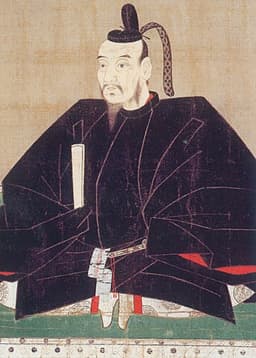
Chosokabe Motochika
General · Modern
55.9Total
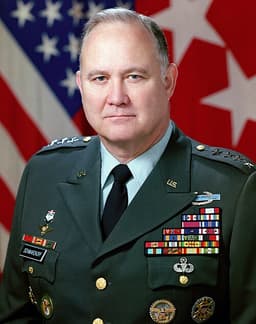
Norman Schwarzkopf
General · Modern
58.9Total
Basic Information
Born
1539
1934
Died
1599
—
Era
Modern
Modern
Nationality
Japan
United States
Occupation
General
General
Civilization
Eastern
Western
Score Comparison
Military (10%)
72.5
78.0
Political (20%)
68.0
45.0
Influence (20%)
56.4
55.0
Legacy (20%)
46.7
58.0
Leadership (15%)
40.0
62.0
Strategy (15%)
66.3
68.1
TOTAL
55.9
58.9
Chosokabe Motochika — Complete Timeline
1575 AD
Battle of Shimanto RiverWar
Chosokabe Motochika defeated the Ichijo clan at the Battle of Shimanto River in Tosa. This victory eliminated a major rival and solidified Motochika's control over Tosa Province.
Sengoku PeriodBattleTosa
constructive
1576 AD
Battle of HiketaWar◆ Major
Chosokabe Motochika defeated the Miyoshi clan at Hiketa in Sanuki Province. This victory allowed Motochika to gain control over much of Sanuki, advancing his unification of Shikoku.
Sengoku PeriodBattleUnification
Impact: regionalconstructive
1585 AD
Unification of ShikokuWar
Chosokabe Motochika completed the unification of Shikoku island under his control. He defeated the Kono clan in Iyo and the Sogo clan in Sanuki, becoming the dominant daimyo on the island.
Sengoku PeriodUnificationShikoku
Impact: regionalconstructive
Invasion of Shikoku by Toyotomi HideyoshiWar◆ Major
Toyotomi Hideyoshi launched a massive invasion of Shikoku, overwhelming Chosokabe Motochika's forces. Motochika surrendered and was forced to cede most of his territory, retaining only Tosa Province.
Sengoku PeriodInvasionSurrender
Impact: regionaldestructive
Norman Schwarzkopf — Complete Timeline
1990 AD
Appointed Commander of Coalition Forces for Operation Desert ShieldOther◆ Major
In August 1990, Schwarzkopf was appointed Commander-in-Chief of U.S. Central Command and overall commander of coalition forces in the Persian Gulf. He oversaw the buildup of over 500,000 troops in Saudi Arabia to deter Iraqi aggression after the invasion of Kuwait.
Gulf WarMilitary BuildupCoalition Command
Impact: global
1991 AD
Executed Operation Desert Storm Ground CampaignWar◆ Major
Schwarzkopf planned and executed the 100-hour ground offensive that began on February 24, 1991. Using a left-hook maneuver through the Iraqi desert, coalition forces outflanked Iraqi defenses, liberating Kuwait and destroying much of the Iraqi Republican Guard with minimal coalition casualties.
Gulf WarMilitary VictoryOperational Planning
Impact: global
Negotiated Ceasefire at SafwanOther◆ Major
On March 3, 1991, Schwarzkopf met with Iraqi military commanders at Safwan airfield to negotiate the terms of the ceasefire ending the Gulf War. He secured Iraqi agreement to return prisoners, provide minefield maps, and cease military operations, though he allowed Iraqi helicopters to fly, later criticized as enabling suppression of uprisings.
Gulf WarCeasefirePost-War Settlement
Impact: regional
1992 AD
Published Autobiography 'It Doesn't Take a Hero'Other
Schwarzkopf published his autobiography 'It Doesn't Take a Hero' in September 1992. The book detailed his military career from Vietnam through the Gulf War, becoming a bestseller and providing his personal account of the decision-making process during Operation Desert Storm.
AutobiographyMilitary MemoirPublic Figure
Impact: national
Expert Analysis
Origins
Chosokabe Motochika (1538–1599) was born into a minor samurai family in Tosa Province on Shikoku, Japan's smallest main island. His father, Chosokabe Kunichika, was a local warlord. Motochika inherited leadership in 1560 at age 22, after his father's death. He received classical military training and was influenced by the Sengoku period's culture of constant warfare.
Norman Schwarzkopf (1934–2012) was born in Trenton, New Jersey, to Norman Schwarzkopf Sr., a police officer and later superintendent of the New Jersey State Police, and Ruth Schwarzkopf. He graduated from West Point in 1956, then earned a master's degree in mechanical engineering from the University of Southern California. His early career included two tours in Vietnam.
Rise to Power
Motochika's rise began with the Battle of Shimanto River (1570), where he defeated the Ichijo clan, eliminating a major rival in Tosa. Over the next decade, he conquered neighboring provinces: Iyo (defeating the Kono clan in 1579) and Sanuki (defeating the Sogo clan and Miyoshi clan at the Battle of Hiketa in 1581). By 1583, he unified all of Shikoku, controlling roughly 18,000 square kilometers.
Schwarzkopf's rise was more gradual. He served as a battalion advisor in Vietnam (1965–1966), then commanded a battalion in the 23rd Infantry Division (1969–1970). He held various staff positions and commanded the 1st Brigade of the 9th Infantry Division. His big break came in 1988 when he was appointed Commander-in-Chief of U.S. Central Command. In August 1990, following Iraq's invasion of Kuwait, he was named overall commander of coalition forces for Operation Desert Shield.
Leadership & Governance
Motochika ruled as a daimyo, implementing the Chosokabe clan law code (Chosokabe Okitegaki) to control his domain. He centralized power, reduced the influence of local samurai, and promoted land surveys to increase tax revenues. He also built castle towns and improved infrastructure. However, his governance was feudal and autocratic, with no representative institutions.
Schwarzkopf led a multinational coalition of 34 countries, coordinating air, land, and naval forces. His leadership style was direct and demanding, earning him the nickname "Stormin' Norman." He emphasized clear communication and delegation, but also micromanaged key decisions. His governance was temporary and military-focused, with no lasting political structure.
Triumph & Tragedy
Motochika's greatest triumph was unifying Shikoku, a feat achieved through military skill and political maneuvering. He defeated multiple clans and secured control of the island. His tragedy came in 1585 when Toyotomi Hideyoshi invaded Shikoku with a force of 100,000 men, overwhelming Motochika's 20,000. Motochika surrendered and was forced to cede most of his territory, retaining only Tosa. He later served under Hideyoshi but died in 1599 with his domain reduced.
Schwarzkopf's triumph was the Gulf War's 100-hour ground campaign (February 24–28, 1991), which liberated Kuwait and destroyed Iraq's military. The "left hook" maneuver through the Iraqi desert was a strategic masterpiece. His tragedy was the incomplete end of the war: he negotiated a ceasefire at Safwan (March 3, 1991) that allowed Saddam Hussein to remain in power and later suppress uprisings. Critics argue this failure led to prolonged conflict.
Character & Destiny
Motochika was pragmatic and adaptable, as shown by his surrender to Hideyoshi to preserve his clan. He was also ruthless, eliminating rivals like the Ichijo. His character suited the Sengoku era's survival-of-the-fittest ethos. His destiny was to be a regional unifier ultimately subsumed by a national unifier.
Schwarzkopf was known for his temper and bluntness, but also for his strategic insight. He was a careful planner who insisted on overwhelming force. His character made him effective in a short, decisive war but less suited for post-conflict stability operations. His destiny was to be a hero of a limited war with ambiguous political outcomes.
Legacy
Motochika's legacy is mixed. He is remembered as a capable daimyo who unified Shikoku, but his achievements were temporary; the island was later divided under Toyotomi rule. He contributed to the development of Tosa, but his clan declined after his death. His military scores (72.5) reflect his tactical successes, but his political (68.0) and influence (56.4) scores show limited lasting impact.
Schwarzkopf's legacy is more enduring. He is celebrated as the commander of the Gulf War, a model of modern coalition warfare. His strategy influenced U.S. military doctrine. However, his failure to remove Saddam Hussein tarnished his legacy. His military score is 78.0, leadership 62.0, and legacy 58.0, indicating a mixed but significant impact.
Conclusion
Norman Schwarzkopf had greater overall impact, reflected in his total score of 58.9 vs Motochika's 55.9. While Motochika unified a region, his accomplishments were undone within two years. Schwarzkopf's Gulf War victory reshaped international relations and demonstrated the effectiveness of modern combined arms warfare. His leadership of a 34-nation coalition set a precedent for future interventions. Motochika's legacy is confined to Japanese history; Schwarzkopf's influenced global military strategy.
Rankings
🥇
Norman SchwarzkopfLeader
Mil: 78.0Pol: 45.0Inf: 55.0
58.9
🥈
Chosokabe Motochika
Mil: 72.5Pol: 68.0Inf: 56.4
55.9
+3.0 behind
How This Comparison Works
Algorithm
Each figure is scored on 6 dimensions (0—100 scale) based on structured historical data: Military (10%), Political (20%), Influence (20%), Legacy (20%), Leadership (15%), Strategy (15%). The weighted total produces the final ranking.
Data Sources
Scores are computed from structured sub-indicators in the database. Scale factors adjust for era (Ancient ×0.85, Modern ×1.0) and civilization size (Eastern ×1.05, Other ×0.80) to account for differences in population and military scale.
Maximum 3 Figures
Comparisons are limited to 2—3 figures to ensure readability and statistical meaningfulness.
Error Margins
±5 points per dimension — Sub-scores are derived from historical records with inherent uncertainty. Two figures within 5 points on a dimension should be considered roughly equivalent in that area.
Total Score Accuracy
±3 points overall — The weighted combination of 6 dimensions produces a total score with approximately ±3 points of uncertainty. Differences of less than 3 points are not statistically significant— the figures are effectively tied.
Known Limitations
- Historical records are incomplete and uneven across civilizations
- Figures from oral-tradition societies may be underrepresented
- Occupation labels can misclassify multi-role figures
- Scores measure capability and impact, not moral character
- Quantitative scoring is a comparison tool, not absolute truth
Capability Radar
Military (10%) — Battles & Warfare
Battles
55
85
Win Rate
60
95
Expansion
55
70
Political (20%) — Governance & Reform
Reform
45
40
Diplomacy
40
75
Economy
50
50
Influence (20%) — Cultural & Global Reach
Cultural
40
55
Global
30
65
Legacy (20%) — Historical Impact
Historical
45
65
Longevity
35
50
Leadership (15%) — Power & Stability
Tenure
55
55
Stability
40
70
Strategy (15%) — Tactics & Innovation
Strategy
60
85
Tactics
65
80
Reform
50
60
Similar Comparisons
Comments & Discussion
No comments yet. Be the first to share your thoughts!