Loading...
Chosokabe Motochika vs Jonas Savimbi
Jonas Savimbi leads by 0.6 pts · 2 figures compared
…
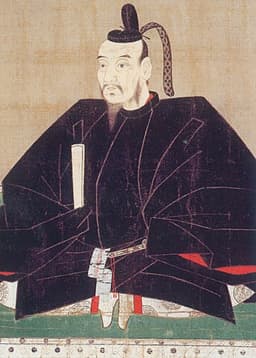
Chosokabe Motochika
General · Modern
55.9Total

Jonas Savimbi
General · Modern
56.5Total
Basic Information
Born
1539
1934
Died
1599
—
Era
Modern
Modern
Nationality
Japan
Angola
Occupation
General
General
Civilization
Eastern
Other
Score Comparison
Military (10%)
72.5
67.5
Political (20%)
68.0
48.0
Influence (20%)
56.4
59.0
Legacy (20%)
46.7
48.3
Leadership (15%)
40.0
68.0
Strategy (15%)
66.3
55.0
TOTAL
55.9
56.5
Chosokabe Motochika — Complete Timeline
1575 AD
Battle of Shimanto RiverWar
Chosokabe Motochika defeated the Ichijo clan at the Battle of Shimanto River in Tosa. This victory eliminated a major rival and solidified Motochika's control over Tosa Province.
Sengoku PeriodBattleTosa
constructive
1576 AD
Battle of HiketaWar◆ Major
Chosokabe Motochika defeated the Miyoshi clan at Hiketa in Sanuki Province. This victory allowed Motochika to gain control over much of Sanuki, advancing his unification of Shikoku.
Sengoku PeriodBattleUnification
Impact: regionalconstructive
1585 AD
Unification of ShikokuWar
Chosokabe Motochika completed the unification of Shikoku island under his control. He defeated the Kono clan in Iyo and the Sogo clan in Sanuki, becoming the dominant daimyo on the island.
Sengoku PeriodUnificationShikoku
Impact: regionalconstructive
Invasion of Shikoku by Toyotomi HideyoshiWar◆ Major
Toyotomi Hideyoshi launched a massive invasion of Shikoku, overwhelming Chosokabe Motochika's forces. Motochika surrendered and was forced to cede most of his territory, retaining only Tosa Province.
Sengoku PeriodInvasionSurrender
Impact: regionaldestructive
Jonas Savimbi — Complete Timeline
1966 AD
Founding of UNITAPolitical Action◆ Major
Jonas Savimbi founded the National Union for the Total Independence of Angola (UNITA) as a breakaway from the FNLA. UNITA began a guerrilla war against Portuguese colonial rule, establishing a base in eastern Angola and gaining support from China and the Ovimbundu people.
UNITAGuerrilla MovementAnti-Colonial
Impact: national
1975 AD
Civil War Against MPLAWar
After Angolan independence, Savimbi's UNITA launched a civil war against the MPLA government. Backed by the US and South Africa, UNITA fought for control of the country, leading to a decades-long conflict that caused immense suffering and destabilized the region.
Civil WarCold War ProxyDestabilization
Impact: nationaldestructive
1991 AD
Bicesse Accords and Election DefeatPolitical Action◆ Major
Savimbi signed the Bicesse Accords with the MPLA, ending the civil war and leading to UN-monitored elections in 1992. When Savimbi lost the presidential election to Jos
Peace AccordsElection RejectionRenewed War
Impact: nationaldestructive
2002 AD
Death in CombatWar
Savimbi was killed in a firefight with Angolan government forces in Moxico province. His death effectively ended the 27-year civil war, as UNITA quickly sued for peace. His removal allowed for the consolidation of MPLA rule and the beginning of post-war reconstruction.
DeathEnd of Civil WarUNITA Collapse
Impact: national
Expert Analysis
Origins
Chosokabe Motochika was born in 1538 in Tosa Province, Shikoku, Japan, into a minor samurai family. His father, Chosokabe Kunichika, was a local lord. Motochika received military training and education in strategy, rising to lead the clan after his father's death. Jonas Savimbi was born on August 3, 1934, in Munhango, Angola, to a railway worker father and a mother from the Ovimbundu ethnic group. He studied medicine in Portugal and later political science in Switzerland, where he was influenced by Maoist guerrilla theory. Both men emerged from regional settings to become dominant figures in their respective conflicts.
Rise to Power
Motochika began his rise by defeating the Ichijo clan at the Battle of Shimanto River in 1575, eliminating a major rival. He then conquered the Kono clan in Iyo and the Sogo clan in Sanuki, unifying Shikoku by 1585. His military score of 72.5 reflects his effective campaigns. Savimbi founded UNITA in 1966 as a breakaway from the FNLA, initiating a guerrilla war against Portuguese colonial rule. After Angola's independence in 1975, he turned against the MPLA government, backed by the US and South Africa. His leadership score of 68.0 highlights his ability to sustain a prolonged insurgency.
Leadership & Governance
Motochika governed Shikoku through a mix of military control and alliances, imposing land reforms and centralizing authority. However, his rule was cut short when Toyotomi Hideyoshi invaded in 1585; Motochika surrendered and lost most of his territory, retaining only Tosa. His political score of 68.0 indicates moderate governance skills. Savimbi led UNITA as a personalized movement, relying on charisma and foreign support. He controlled territory in central and southern Angola, but his governance was marred by authoritarianism and human rights abuses. His political score of 48.0 reflects poor state-building abilities.
Triumph & Tragedy
Motochika's greatest triumph was unifying Shikoku, a feat that made him a major daimyo. His tragedy came with Hideyoshi's invasion, which forced him to submit and cede power. He died in 1599, his legacy limited to regional unification. Savimbi's triumph was sustaining a 27-year civil war, forcing the MPLA to negotiate. His tragedy was his death in combat in 2002, which ended the war and led to UNITA's collapse. His influence score of 59.0 reflects his lasting impact on Angolan politics, but his legacy score of 48.3 is low due to the destruction he caused.
Character & Destiny
Motochika was pragmatic and adaptable, surrendering to Hideyoshi to preserve his clan. His strategy score of 66.3 indicates careful planning. Savimbi was charismatic and ruthless, often prioritizing his own power over peace. His military score of 67.5 shows tactical skill, but his refusal to accept election defeat in 1992 led to renewed war. Both men's characters shaped their fates: Motochika's pragmatism saved his clan, while Savimbi's intransigence led to his death.
Legacy
Motochika is remembered as a skilled general who briefly unified Shikoku, but his achievements were overshadowed by Hideyoshi's unification of Japan. His legacy score of 46.7 reflects limited long-term impact. Savimbi is remembered as a divisive figure who prolonged a devastating civil war that killed hundreds of thousands. His legacy is tied to Angola's instability, but he also highlighted the Ovimbundu people's grievances. His influence score of 59.0 is higher than Motochika's 56.4.
Conclusion
Jonas Savimbi had greater impact than Chosokabe Motochika. Despite similar total scores (Savimbi 56.5 vs Motochika 55.9), Savimbi's actions shaped a nation's trajectory for decades, while Motochika's unification was temporary and localized. Savimbi's leadership score of 68.0 exceeds Motochika's 40.0, and his influence score of 59.0 is higher. Savimbi's legacy, though negative, is more significant in modern history. Motochika remains a notable figure in Japanese history, but his impact is dwarfed by the scale of the Angolan Civil War.
Rankings
🥇
Jonas SavimbiLeader
Mil: 67.5Pol: 48.0Inf: 59.0
56.5
🥈
Chosokabe Motochika
Mil: 72.5Pol: 68.0Inf: 56.4
55.9
+0.6 behind
How This Comparison Works
Algorithm
Each figure is scored on 6 dimensions (0—100 scale) based on structured historical data: Military (10%), Political (20%), Influence (20%), Legacy (20%), Leadership (15%), Strategy (15%). The weighted total produces the final ranking.
Data Sources
Scores are computed from structured sub-indicators in the database. Scale factors adjust for era (Ancient ×0.85, Modern ×1.0) and civilization size (Eastern ×1.05, Other ×0.80) to account for differences in population and military scale.
Maximum 3 Figures
Comparisons are limited to 2—3 figures to ensure readability and statistical meaningfulness.
Error Margins
±5 points per dimension — Sub-scores are derived from historical records with inherent uncertainty. Two figures within 5 points on a dimension should be considered roughly equivalent in that area.
Total Score Accuracy
±3 points overall — The weighted combination of 6 dimensions produces a total score with approximately ±3 points of uncertainty. Differences of less than 3 points are not statistically significant— the figures are effectively tied.
Known Limitations
- Historical records are incomplete and uneven across civilizations
- Figures from oral-tradition societies may be underrepresented
- Occupation labels can misclassify multi-role figures
- Scores measure capability and impact, not moral character
- Quantitative scoring is a comparison tool, not absolute truth
Capability Radar
Military (10%) — Battles & Warfare
Battles
55
65
Win Rate
60
55
Expansion
55
60
Political (20%) — Governance & Reform
Reform
45
30
Diplomacy
40
55
Economy
50
20
Influence (20%) — Cultural & Global Reach
Cultural
40
40
Global
30
45
Legacy (20%) — Historical Impact
Historical
45
50
Longevity
35
30
Leadership (15%) — Power & Stability
Tenure
55
60
Stability
40
15
Strategy (15%) — Tactics & Innovation
Strategy
60
65
Tactics
65
70
Reform
50
50
Similar Comparisons
Comments & Discussion
No comments yet. Be the first to share your thoughts!