Loading...
This comparison has not been analyzed yet.
One-time AI generation (~1 minute). Scores and timeline are already available below.
Chen Tai vs Nicias
Nicias leads by 1.0 pts · 2 figures compared
…
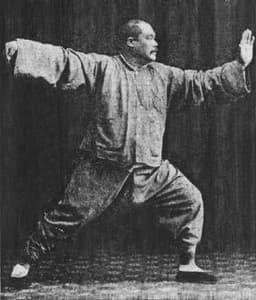
Chen Tai
General · Ancient
42.0Total

Nicias
General · Ancient
43.0Total
Basic Information
Born
200
-470
Died
260
-413
Era
Ancient
Ancient
Nationality
China
Athens
Occupation
General
General
Civilization
Eastern
Western
Score Comparison
Military (10%)
20.0
55.0
Political (20%)
35.0
33.6
Influence (20%)
44.8
48.6
Legacy (20%)
35.8
43.3
Leadership (15%)
57.1
33.5
Strategy (15%)
60.0
45.0
TOTAL
42.0
43.0
Chen Tai — Complete Timeline
255 AD
Defended Against Jiang Wei's Northern ExpeditionsWar◆ Major
Chen Tai led Wei forces to repel Jiang Wei's invasions from Shu. He successfully defended the border, preventing Shu from gaining territory.
DefenseShu-Wei WarThree Kingdoms
Impact: regional
260 AD
Opposed Sima Zhao's UsurpationPolitical Action◆ Major
Chen Tai openly criticized Sima Zhao's execution of Emperor Cao Mao, arguing it was a crime. His protest was noted but did not prevent the Sima clan's rise.
ProtestLoyaltyWei Dynasty
Impact: nationalconstructive
Died of GriefOther◆ Major
Chen Tai died shortly after the execution of Cao Mao, reportedly from grief and despair over the fall of Wei. His death symbolized the end of loyalist resistance.
DeathLoyaltyWei Dynasty
Impact: nationaltragic
Nicias — Complete Timeline
425 BC
Battle of Pylos (Opposition to Cleon)Political Action
Nicias opposed the aggressive policies of Cleon during the Battle of Pylos. When Cleon boasted he could capture the Spartan garrison, Nicias offered him the command. Cleon succeeded, boosting his popularity and undermining Nicias' position as a moderate leader.
Political RivalryPeloponnesian WarAthens
Impact: national
421 BC
Peace of NiciasPolitical Action◆ Major
Nicias negotiated a peace treaty with Sparta, ending the first phase of the Peloponnesian War. The treaty established a 50-year alliance between Athens and Sparta, but it was fragile and broke down within a few years. Nicias was the leading advocate for peace in Athens.
Peace TreatyPeloponnesian WarDiplomacy
Impact: globalconstructive
415 BC
Sicilian ExpeditionWar
Nicias was appointed co-commander of the Athenian expedition to Sicily, despite his strong opposition to the campaign. He led the siege of Syracuse but was indecisive and failed to press advantages. The expedition became a disaster, with the entire Athenian force destroyed.
Peloponnesian WarExpeditionDisaster
Impact: globaldestructive
413 BC
Capture and Execution in SicilyWar◆ Major
After the Athenian defeat at Syracuse, Nicias surrendered to the Syracusans. Despite his attempts to negotiate, he was executed by the Syracusans, along with his fellow commander Demosthenes. His death marked the end of the Sicilian Expedition and a major blow to Athens.
ExecutionSicilian ExpeditionPeloponnesian War
Impact: regionaltragic
This comparison has not been analyzed yet.
One-time AI generation (~1 minute). Scores and timeline are already available below.
Rankings
🥇
NiciasLeader
Mil: 55.0Pol: 33.6Inf: 48.6
43.0
🥈
Chen Tai
Mil: 20.0Pol: 35.0Inf: 44.8
42.0
+1.0 behind
How This Comparison Works
Algorithm
Each figure is scored on 6 dimensions (0—100 scale) based on structured historical data: Military (10%), Political (20%), Influence (20%), Legacy (20%), Leadership (15%), Strategy (15%). The weighted total produces the final ranking.
Data Sources
Scores are computed from structured sub-indicators in the database. Scale factors adjust for era (Ancient ×0.85, Modern ×1.0) and civilization size (Eastern ×1.05, Other ×0.80) to account for differences in population and military scale.
Maximum 3 Figures
Comparisons are limited to 2—3 figures to ensure readability and statistical meaningfulness.
Error Margins
±5 points per dimension — Sub-scores are derived from historical records with inherent uncertainty. Two figures within 5 points on a dimension should be considered roughly equivalent in that area.
Total Score Accuracy
±3 points overall — The weighted combination of 6 dimensions produces a total score with approximately ±3 points of uncertainty. Differences of less than 3 points are not statistically significant— the figures are effectively tied.
Known Limitations
- Historical records are incomplete and uneven across civilizations
- Figures from oral-tradition societies may be underrepresented
- Occupation labels can misclassify multi-role figures
- Scores measure capability and impact, not moral character
- Quantitative scoring is a comparison tool, not absolute truth
Capability Radar
Military (10%) — Battles & Warfare
Battles
30
25
Win Rate
35
20
Expansion
10
10
Political (20%) — Governance & Reform
Reform
10
20
Diplomacy
15
30
Economy
10
20
Influence (20%) — Cultural & Global Reach
Cultural
10
20
Global
5
20
Legacy (20%) — Historical Impact
Historical
15
40
Longevity
10
30
Leadership (15%) — Power & Stability
Tenure
20
50
Stability
15
15
Strategy (15%) — Tactics & Innovation
Strategy
35
15
Tactics
40
30
Reform
10
10
Similar Comparisons
Comments & Discussion
No comments yet. Be the first to share your thoughts!