Loading...
Chen Tai vs Julius Caesar
Julius Caesar leads by 40.8 pts · 2 figures compared
…
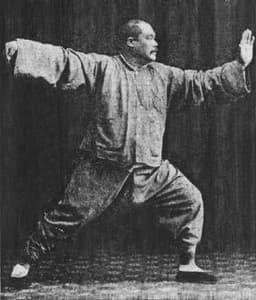
Chen Tai
General · Ancient
42.0Total

Julius Caesar
General · Ancient
82.8Total
Basic Information
Born
200
-100
Died
260
-44
Era
Ancient
Ancient
Nationality
China
Roman Republic
Occupation
General
General
Civilization
Eastern
Western
Score Comparison
Military (10%)
20.0
88.0
Political (20%)
35.0
78.0
Influence (20%)
44.8
85.0
Legacy (20%)
35.8
82.0
Leadership (15%)
57.1
80.0
Strategy (15%)
60.0
85.0
TOTAL
42.0
82.8
Chen Tai — Complete Timeline
255 AD
Defended Against Jiang Wei's Northern ExpeditionsWar◆ Major
Chen Tai led Wei forces to repel Jiang Wei's invasions from Shu. He successfully defended the border, preventing Shu from gaining territory.
DefenseShu-Wei WarThree Kingdoms
Impact: regional
260 AD
Opposed Sima Zhao's UsurpationPolitical Action◆ Major
Chen Tai openly criticized Sima Zhao's execution of Emperor Cao Mao, arguing it was a crime. His protest was noted but did not prevent the Sima clan's rise.
ProtestLoyaltyWei Dynasty
Impact: nationalconstructive
Died of GriefOther◆ Major
Chen Tai died shortly after the execution of Cao Mao, reportedly from grief and despair over the fall of Wei. His death symbolized the end of loyalist resistance.
DeathLoyaltyWei Dynasty
Impact: nationaltragic
Julius Caesar — Complete Timeline
58 BC
Gallic WarsWar◆ Major
Caesar, as proconsul of Gaul, launched a series of campaigns that conquered all of Gaul (modern France, Belgium, and parts of Switzerland). He fought numerous battles, including against the Helvetii, the Belgae, and the Gallic chieftain Vercingetorix. The wars brought immense wealth and a loyal army to Caesar.
Gallic WarsConquestRoman Expansion
Impact: regional
49 BC
Crossing the RubiconPolitical Action◆ Major
Caesar led Legio XIII across the Rubicon River into Italy, defying the Roman Senate's order to disband his army. This act triggered a civil war against Pompey and the Optimates, ultimately leading to Caesar's dictatorship and the end of the Roman Republic.
Roman Civil WarEnd of RepublicPower Struggle
Impact: global
48 BC
Battle of PharsalusWar◆ Major
Caesar's outnumbered army defeated the larger forces of Pompey the Great at Pharsalus in Greece. Caesar's tactical use of a reserve line to counter Pompey's cavalry charge proved decisive. Pompey fled to Egypt, where he was assassinated, leaving Caesar as the undisputed master of the Roman world.
Roman Civil WarBattleDecisive Victory
Impact: regional
44 BC
Appointment as Dictator for LifePolitical Action◆ Major
The Roman Senate appointed Caesar dictator perpetuo (dictator for life), granting him unprecedented personal power. This move concentrated military, legislative, and judicial authority in one person, effectively ending the Roman Republic's traditional system of checks and balances and alarming many senators.
DictatorshipEnd of RepublicPower Consolidation
Impact: regionaldestructive
Assassination on the Ides of MarchPolitical Action◆ Major
A group of Roman senators, led by Marcus Junius Brutus and Gaius Cassius Longinus, stabbed Caesar to death at a meeting of the Senate in the Theatre of Pompey. The assassination was intended to restore the Republic, but instead triggered another civil war that led to the rise of the Roman Empire.
AssassinationRoman PoliticsEnd of Republic
Impact: globaldestructive
Expert Analysis
chen-tai-vs-julius-caesar
# The General Who Crossed the Rubicon, and the General Who Died of Grief
On a January morning in 49 BCE, Julius Caesar stood at the banks of the Rubicon River in northern Italy, a small stream that separated his province of Gaul from the Roman heartland. To cross with his army was treason, a declaration of civil war. He hesitated, then uttered the famous words, "The die is cast," and plunged into history. Four hundred years later and half a world away, another general, Chen Tai of the Chinese kingdom of Wei, faced his own Rubicon—not a river, but a moral abyss. In 260 CE, the usurper Sima Zhao executed the young Emperor Cao Mao in cold blood. Chen Tai, a loyal servant of Wei, could have chosen silence, could have bent his knee to the new order. Instead, he openly condemned the act, and then, as the chronicles record, he died of grief. One general remade the world through audacity; the other was broken by it. What drove these two men, both commanders, both sons of their civilizations, to such divergent fates?
Origins
Julius Caesar was born into the patrician Julian clan in 100 BCE, a family that traced its lineage to the goddess Venus, but one that had lost much of its political power. Rome was a republic in crisis—racked by class conflict, civil wars, and the ambitions of warlords like Marius and Sulla. Caesar's youth was shaped by this turbulence: he fled Sulla's proscriptions, served as a priest of Jupiter, and was captured by pirates who he famously told, "You will crucify me," before he did exactly that. His world was one of ruthless competition, where a man's worth was measured in legions and gold.
Chen Tai was born in 200 CE, near the end of the Han dynasty's collapse. His father, Chen Qun, was a minister under the Wei kingdom, one of the Three Kingdoms that had carved up China after centuries of imperial unity. Unlike Caesar's chaotic republic, Chen Tai's China was a world of rigid hierarchy and Confucian ethics, where loyalty to one's ruler was the highest virtue. The Wei kingdom was constantly at war with its rivals, Shu-Han and Wu, but the real struggle was internal: the Sima clan, a family of powerful regents, was slowly strangling the Wei imperial house. Chen Tai grew up in a court where duty meant obedience, and where the state was a machine of ritual and law.
Rise to Power
Caesar's path to power was a masterclass in ambition. He climbed the Roman political ladder—quaestor, aedile, praetor—borrowing enormous sums to fund games and bribes. In 60 BCE, he formed the First Triumvirate with Pompey and Crassus, an informal alliance that controlled Rome. Then came his military command in Gaul (58–50 BCE), where he conquered a territory larger than Italy, wrote a best-selling memoir, and forged an army loyal to him alone, not to the Republic. His crossing of the Rubicon was the final gamble of a man who had spent his life betting on himself.
Chen Tai's rise was quieter, more procedural. He served as a governor and military commander on Wei's western frontier, defending against the relentless invasions of Jiang Wei, the Shu-Han general. In 255 CE, he led a successful defense that repelled Jiang Wei's northern expeditions, earning him a reputation for competence rather than genius. His father's legacy and his own steady service brought him to the inner circles of power, but he never sought the spotlight. Where Caesar courted fame, Chen Tai accepted duty.
Leadership & Governance
As a general, Caesar was revolutionary. He built bridges across the Rhine in ten days, besieged Alesia with double fortifications, and defeated armies three times his size through speed and deception. His Commentaries on the Gallic Wars are still studied in military academies. As a ruler, he reformed the calendar, granted citizenship to provincials, and began public works that transformed Rome. But his political wisdom was flawed: he centralized power, appointed himself dictator for life, and dismissed the Senate's traditions, sowing the seeds of his own destruction.
Chen Tai's military record is modest by comparison—successful defenses, no great conquests. His strategy was conservative, focused on holding ground rather than seizing it. His true test came in politics. When Sima Zhao murdered Emperor Cao Mao in 260, Chen Tai was the only official who dared to protest, carrying the emperor's body to a carriage and weeping before the court. He demanded that the killers be punished, a futile act that could have cost him his life. His leadership was not about expanding power but about preserving honor, a choice that reveals the deep divide between Roman and Chinese values: Caesar believed the state was what he made it; Chen Tai believed the state was a moral order he must serve.
Triumph & Tragedy
Caesar's triumph was his conquest of Gaul and his victory in the civil war that made him master of Rome. His tragedy was the Ides of March, 44 BCE, when sixty senators stabbed him to death on the Senate floor. He fell at the feet of a statue of Pompey, his former ally, bleeding out from twenty-three wounds. His last words, according to legend, were "Et tu, Brute?"—a cry of betrayal from a man who trusted too much in his own invincibility.
Chen Tai's triumph was his defense of Wei's borders, a quiet success that bought his kingdom a few more years of life. His tragedy was his death, not by the sword but by sorrow. After Sima Zhao's usurpation, Chen Tai reportedly died of grief, a phrase that Chinese historians used to describe a man whose heart simply broke. He did not lead a rebellion; he did not flee. He lay down and let the weight of a fallen world crush him.
Character & Destiny
Caesar was audacity incarnate. He pardoned his enemies, seduced his rivals' wives, and rewrote the rules of Roman politics. His confidence was boundless, his ambition limitless. He once said, "I came, I saw, I conquered," and he meant it literally. This personality drove him to cross the Rubicon, to seize power, and to ignore the warnings of soothsayers and friends. It also drove him to his death—he dismissed his bodyguard, walked unarmed into the Senate, and paid the price.
Chen Tai was the opposite: cautious, principled, and bound by duty. He lived in a culture that valued harmony and filial piety, where a general's first loyalty was to the emperor, not to himself. His tragedy was that his world was already corrupt, and his virtues—loyalty, grief, protest—were powerless against the Sima clan's machinations. Where Caesar died because he believed too much in his own agency, Chen Tai died because he believed too much in a system that had already abandoned him.
Legacy
Caesar's legacy is the Roman Empire. His name became a title—"Caesar" meant emperor for centuries, from Tsar to Kaiser. His reforms outlived him, his military tactics shaped warfare, and his writings defined Latin prose. He is remembered as a genius, a tyrant, and a martyr, a figure who straddles the line between hero and villain.
Chen Tai's legacy is more obscure. He is remembered in Chinese history as a loyal minister, a model of Confucian virtue, but his name does not echo through the ages like Caesar's. The Wei kingdom fell to Sima Zhao's son, who founded the Jin dynasty, and Chen Tai's protest became a footnote. Yet his story has survived because it captures something universal: the tragedy of a good man in a bad time. While Caesar reshaped the world through action, Chen Tai's lesson is about the limits of action—about what happens when a man chooses integrity over survival.
Conclusion
Standing on opposite sides of history, Caesar and Chen Tai illuminate the two poles of human leadership: the will to change the world and the will to serve it. Caesar crossed his Rubicon and changed the course of Western civilization; Chen Tai faced his own moral river and could not cross it. One built an empire; the other kept his honor. In the end, both were destroyed by the very forces they embodied—Caesar by his own ambition, Chen Tai by his own loyalty. Perhaps the deepest difference lies not in their achievements but in their definitions of success. For Caesar, success was power; for Chen Tai, it was principle. And history, ever ambiguous, has room for both.
Rankings
🥇
Julius CaesarLeader
Mil: 88.0Pol: 78.0Inf: 85.0
82.8
🥈
Chen Tai
Mil: 20.0Pol: 35.0Inf: 44.8
42.0
+40.8 behind
How This Comparison Works
Algorithm
Each figure is scored on 6 dimensions (0—100 scale) based on structured historical data: Military (10%), Political (20%), Influence (20%), Legacy (20%), Leadership (15%), Strategy (15%). The weighted total produces the final ranking.
Data Sources
Scores are computed from structured sub-indicators in the database. Scale factors adjust for era (Ancient ×0.85, Modern ×1.0) and civilization size (Eastern ×1.05, Other ×0.80) to account for differences in population and military scale.
Maximum 3 Figures
Comparisons are limited to 2—3 figures to ensure readability and statistical meaningfulness.
Error Margins
±5 points per dimension — Sub-scores are derived from historical records with inherent uncertainty. Two figures within 5 points on a dimension should be considered roughly equivalent in that area.
Total Score Accuracy
±3 points overall — The weighted combination of 6 dimensions produces a total score with approximately ±3 points of uncertainty. Differences of less than 3 points are not statistically significant— the figures are effectively tied.
Known Limitations
- Historical records are incomplete and uneven across civilizations
- Figures from oral-tradition societies may be underrepresented
- Occupation labels can misclassify multi-role figures
- Scores measure capability and impact, not moral character
- Quantitative scoring is a comparison tool, not absolute truth
Capability Radar
Military (10%) — Battles & Warfare
Battles
30
95
Win Rate
35
92
Expansion
10
97
Political (20%) — Governance & Reform
Reform
10
90
Diplomacy
15
85
Economy
10
82
Influence (20%) — Cultural & Global Reach
Cultural
10
88
Global
5
94
Legacy (20%) — Historical Impact
Historical
15
95
Longevity
10
96
Leadership (15%) — Power & Stability
Tenure
20
75
Stability
15
60
Strategy (15%) — Tactics & Innovation
Strategy
35
94
Tactics
40
96
Reform
10
88
Similar Comparisons
Comments & Discussion
No comments yet. Be the first to share your thoughts!