Loading...
Chaudhry Muhammad Ali vs Guy Verhofstadt
Guy Verhofstadt leads by 1.2 pts · 2 figures compared
…

Chaudhry Muhammad Ali
Politician · Modern
53.6Total
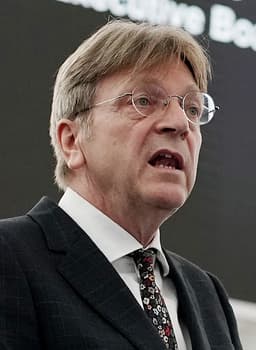
Guy Verhofstadt
Politician · Modern
54.8Total
Basic Information
Born
1905
1953
Died
1982
—
Era
Modern
Modern
Nationality
Pakistan
Belgium
Occupation
Politician
Politician
Civilization
Indian
Western
Score Comparison
Military (10%)
39.7
49.4
Political (20%)
68.0
60.0
Influence (20%)
51.0
59.0
Legacy (20%)
43.3
48.3
Leadership (15%)
65.7
66.0
Strategy (15%)
60.0
41.0
TOTAL
53.6
54.8
Chaudhry Muhammad Ali — Complete Timeline
1955 AD
Appointed Prime Minister of PakistanPolitical Action◆ Major
Chaudhry Muhammad Ali became Prime Minister during a period of political turmoil. He was a former civil servant known for his administrative skills. His main task was to finalize the constitution, which had been delayed for years.
Prime MinisterConstitution
Impact: national
1956 AD
Framed the 1956 Constitution of PakistanReform
Chaudhry Muhammad Ali oversaw the drafting and adoption of Pakistan's first constitution, which declared the country an Islamic republic. The constitution established a parliamentary system with a unicameral legislature. It was a landmark achievement but was abrogated after the 1958 coup.
ConstitutionIslamic Republic
Impact: nationalconstructive
Resigned as Prime MinisterPolitical Action
After the constitution was enacted, Chaudhry Muhammad Ali resigned due to political differences with President Iskander Mirza. His resignation reflected the instability of coalition politics. He was succeeded by Huseyn Shaheed Suhrawardy.
ResignationPolitical Instability
Impact: national
Guy Verhofstadt — Complete Timeline
1999 AD
Prime Minister of Belgium (first term)Political Action◆ Major
Guy Verhofstadt became Prime Minister of Belgium, leading a coalition government of liberals, socialists, and greens. His tenure focused on economic liberalization, social reforms, and European integration.
Prime MinisterBelgian Politics
Impact: national
2001 AD
Belgian presidency of the European UnionPolitical Action◆ Major
As Prime Minister, Guy Verhofstadt led Belgium's presidency of the European Union. The presidency focused on the Laeken Declaration, which launched the European Convention that drafted the EU Constitution. Verhofstadt was a vocal advocate for a federal Europe.
European UnionPresidencyFederalism
Impact: regionalconstructive
2003 AD
Legalization of same-sex marriageReform◆ Major
Under Prime Minister Guy Verhofstadt, Belgium became the second country in the world to legalize same-sex marriage. The law granted same-sex couples the same rights as heterosexual couples, including adoption rights later extended.
LGBTQ RightsSocial ReformMarriage Equality
Impact: nationalprogressive
2009 AD
Member of the European ParliamentPolitical Action
After leaving the Belgian premiership, Guy Verhofstadt became a Member of the European Parliament. He led the Alliance of Liberals and Democrats for Europe (ALDE) group and became a prominent voice for European federalism and reform.
European ParliamentFederalism
Impact: regionalconstructive
Expert Analysis
Origins
Chaudhry Muhammad Ali was born in 1905 in Jalandhar, Punjab, British India. He came from a modest background and pursued education at the University of Punjab, later joining the Indian Civil Service. His bureaucratic career included key roles in finance and administration, shaping his methodical approach to governance. In contrast, Guy Verhofstadt was born in 1953 in Dendermonde, Belgium, into a Flemish liberal family. He studied law at Ghent University and quickly entered politics, becoming a prominent figure in the Party for Freedom and Progress. His early exposure to European integration debates influenced his federalist vision.
Rise to Power
Chaudhry Muhammad Ali rose through civil service ranks, serving as Finance Secretary and later as Secretary-General of the newly formed Pakistan. In 1955, he was appointed Prime Minister amid political instability, tasked with drafting the country's first constitution. His administrative expertise was critical in navigating competing interests. Verhofstadt's ascent was more rapid: he became the leader of the Flemish Liberals and Democrats in 1989 and served as Deputy Prime Minister before becoming Prime Minister in 1999, heading a coalition government. His rise was marked by a focus on economic liberalization and social reforms.
Leadership & Governance
Chaudhry Muhammad Ali's leadership style was technocratic and consensus-driven. He oversaw the drafting of the 1956 Constitution, which declared Pakistan an Islamic republic and introduced parliamentary democracy. However, his governance was hampered by conflicts with President Iskander Mirza, leading to his resignation in 1956. Verhofstadt, by contrast, was a dynamic reformer. His government legalized same-sex marriage in 2003, making Belgium the second country globally. He also pursued economic deregulation and tax cuts. His leadership in EU affairs, especially the Laeken Declaration, set the stage for the European Convention. While Ali scored 65.7 in leadership, Verhofstadt scored slightly higher at 66.0.
Triumph & Tragedy
Chaudhry Muhammad Ali's greatest triumph was the promulgation of Pakistan's first constitution, a milestone in the nation's history. His tragedy was his resignation soon after, unable to consolidate power or prevent subsequent political instability. Verhofstadt's triumphs include legalizing same-sex marriage and advancing EU integration through the Laeken Declaration. However, his federalist ambitions faced setbacks, such as the rejection of the European Constitution in referendums. His influence score of 59.0 reflects his impact, but his strategy score of 41.0 indicates limitations in achieving long-term goals.
Character & Destiny
Chaudhry Muhammad Ali was a cautious, procedural figure, preferring stability over bold moves. His civil service background made him an effective administrator but less adept at political maneuvering. His resignation highlighted a pattern of avoiding conflict. Verhofstadt, in contrast, was an assertive and ideological politician, often polarizing. His federalist zeal drove his agenda but also led to strategic missteps. Historians note that Verhofstadt's character was better suited for opposition than governance, as seen in his later role as a vocal MEP.
Legacy
Chaudhry Muhammad Ali's legacy is tied to the 1956 Constitution, which, though short-lived due to martial law, set foundational principles for Pakistan. His influence score of 51.0 and legacy score of 43.3 reflect a limited but enduring impact. Verhofstadt's legacy is more multifaceted: his domestic reforms, especially same-sex marriage, have had lasting social effects, while his EU federalism continues to shape debates. His legacy score of 48.3 is slightly higher, but his influence score of 59.0 surpasses Ali's. Both figures left marks in constitutional and institutional development.
Conclusion
While Chaudhry Muhammad Ali and Guy Verhofstadt operated in vastly different contexts, Verhofstadt's broader and more sustained impact on both national and supranational levels gives him an edge. His total score of 54.8 edges out Ali's 53.6, driven by higher influence and legacy. Ali's constitution was critical for Pakistan but quickly overturned, whereas Verhofstadt's reforms and EU contributions have endured. Therefore, Guy Verhofstadt had a greater overall impact on history.
Rankings
🥇
Guy VerhofstadtLeader
Mil: 49.4Pol: 60.0Inf: 59.0
54.8
🥈
Chaudhry Muhammad Ali
Mil: 39.7Pol: 68.0Inf: 51.0
53.6
+1.2 behind
How This Comparison Works
Algorithm
Each figure is scored on 6 dimensions (0—100 scale) based on structured historical data: Military (10%), Political (20%), Influence (20%), Legacy (20%), Leadership (15%), Strategy (15%). The weighted total produces the final ranking.
Data Sources
Scores are computed from structured sub-indicators in the database. Scale factors adjust for era (Ancient ×0.85, Modern ×1.0) and civilization size (Eastern ×1.05, Other ×0.80) to account for differences in population and military scale.
Maximum 3 Figures
Comparisons are limited to 2—3 figures to ensure readability and statistical meaningfulness.
Error Margins
±5 points per dimension — Sub-scores are derived from historical records with inherent uncertainty. Two figures within 5 points on a dimension should be considered roughly equivalent in that area.
Total Score Accuracy
±3 points overall — The weighted combination of 6 dimensions produces a total score with approximately ±3 points of uncertainty. Differences of less than 3 points are not statistically significant— the figures are effectively tied.
Known Limitations
- Historical records are incomplete and uneven across civilizations
- Figures from oral-tradition societies may be underrepresented
- Occupation labels can misclassify multi-role figures
- Scores measure capability and impact, not moral character
- Quantitative scoring is a comparison tool, not absolute truth
Capability Radar
Military (10%) — Battles & Warfare
Battles
45
27
Win Rate
44
32
Expansion
51
37
Political (20%) — Governance & Reform
Reform
55
65
Diplomacy
40
70
Economy
30
60
Influence (20%) — Cultural & Global Reach
Cultural
15
40
Global
20
55
Legacy (20%) — Historical Impact
Historical
40
50
Longevity
20
40
Leadership (15%) — Power & Stability
Tenure
20
60
Stability
25
55
Strategy (15%) — Tactics & Innovation
Strategy
51
36
Tactics
55
39
Reform
61
44
Similar Comparisons
Comments & Discussion
No comments yet. Be the first to share your thoughts!