Loading...
Charles XIV John vs Ibn Saud
Ibn Saud leads by 1.8 pts · 2 figures compared
…

Charles XIV John
Emperor · Modern
64.3Total
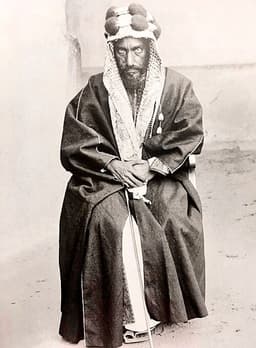
Ibn Saud
Emperor · Modern
66.1Total
Basic Information
Born
1763
1875
Died
1844
1953
Era
Modern
Modern
Nationality
Sweden
Saudi Arabia
Occupation
Emperor
Emperor
Civilization
Western
Middle Eastern
Score Comparison
Military (10%)
61.7
78.5
Political (20%)
72.0
85.0
Influence (20%)
55.0
68.0
Legacy (20%)
58.0
40.0
Leadership (15%)
80.7
78.0
Strategy (15%)
70.0
68.1
TOTAL
64.3
66.1
Charles XIV John — Complete Timeline
1810 AD
Election as Crown Prince of SwedenPolitical Action
After the death of the heir apparent, the Swedish Riksdag elected French Marshal Jean-Baptiste Bernadotte as Crown Prince. He was adopted by King Charles XIII. This unexpected choice was driven by a desire for a strong military leader to secure Sweden's interests against Russia and Napoleon.
SwedenBernadotteSuccessionNapoleon
Impact: national
1813 AD
Swedish entry into the Sixth CoalitionWar◆ Major
As Crown Prince, Charles John (Bernadotte) led Sweden into the Sixth Coalition against Napoleon. He commanded the Swedish army and the Northern Army of the Coalition. His decision to join the allies was crucial in tipping the balance against Napoleon and securing Sweden's post-war position.
SwedenNapoleonic WarsCoalitionWar
Impact: global
1814 AD
Acquisition of Norway from DenmarkPolitical Action
As a result of the Treaty of Kiel, Sweden forced Denmark to cede Norway. Charles John then led a military campaign to enforce the union, culminating in the Convention of Moss. Norway entered a personal union with Sweden under King Charles XIII, with Charles John as de facto ruler.
SwedenNorwayUnionTreaty of Kiel
Impact: regional
1818 AD
Coronation as King Charles XIV JohnPolitical Action
Upon the death of King Charles XIII, Bernadotte ascended the throne as Charles XIV John of Sweden and Norway. He founded the House of Bernadotte, which continues to reign in Sweden. His reign marked the beginning of a long period of peace and neutrality for Sweden.
SwedenBernadotteCoronationDynasty
Impact: nationalconstructive
Ibn Saud — Complete Timeline
1902 AD
Capture of RiyadhWar
Ibn Saud led a small force of 40 men in a daring night raid to recapture Riyadh from the Al Rashid clan. This victory re-established the House of Saud in the Najd region and marked the beginning of his campaign to unify Arabia.
ConquestUnificationRaid
Impact: regional
1929 AD
Battle of SabillaWar◆ Major
Ibn Saud's forces defeated the Ikhwan rebels at the Battle of Sabilla, ending the Ikhwan uprising. This battle solidified his control over the Arabian Peninsula and allowed him to consolidate power under a centralized state.
Civil WarRebellionConsolidation
Impact: regionaldestructive
1932 AD
Proclamation of the Kingdom of Saudi ArabiaPolitical Action
Ibn Saud formally unified the regions of Najd, Hejaz, and other territories into the Kingdom of Saudi Arabia. He declared himself king, establishing a hereditary monarchy that has ruled the country ever since.
State FormationUnificationMonarchy
Impact: globalconstructive
1933 AD
Signing of the Saudi Aramco concessionPolitical Action
Ibn Saud granted Standard Oil of California (SOCAL) a 60-year oil concession in eastern Saudi Arabia. This agreement led to the discovery of vast oil reserves, transforming the kingdom's economy and geopolitical standing.
OilEconomic TransformationForeign Investment
Impact: globalconstructive
Expert Analysis
Origins
Charles XIV John was born Jean-Baptiste Bernadotte in 1763 in Pau, France, the son of a lawyer. He joined the French army at 17 and rose through the ranks during the French Revolution. His political acumen was evident early, as he navigated the turbulent revolutionary period. In contrast, Ibn Saud was born Abdulaziz bin Abdul Rahman Al Saud in 1876 in Riyadh, into the exiled House of Saud. His family had lost power to the Al Rashid clan, and he grew up in exile in Kuwait. While Bernadotte's early life was shaped by the opportunities of revolutionary France, Ibn Saud's was defined by the struggle to reclaim his family's legacy.
Rise to Power
Bernadotte's rise was meteoric during the Napoleonic Wars. He became a Marshal of France in 1804 and Prince of Pontecorvo in 1806. His key turning point came in 1810 when the Swedish Riksdag, seeking a strong heir, elected him Crown Prince. He was adopted by King Charles XIII and took the name Charles John. In 1813, he led Sweden into the Sixth Coalition against Napoleon, commanding the Northern Army at the Battle of Leipzig. In 1814, he forced Denmark to cede Norway via the Treaty of Kiel, then led a campaign to enforce the union. He became King Charles XIV John in 1818. Ibn Saud's rise was more gradual and violent. In 1902, he captured Riyadh with just 40 men, a daring raid that re-established Saudi control. He then spent decades consolidating power, conquering the Nejd and Hejaz. In 1932, he proclaimed the Kingdom of Saudi Arabia. His key allies were the Ikhwan, religious warriors, but he later crushed their rebellion at the Battle of Sabilla in 1929 to solidify his rule.
Leadership & Governance
Charles XIV John governed Sweden with a conservative, pragmatic style. He maintained peace and neutrality after the Napoleonic Wars, focusing on economic development and infrastructure. He resisted liberal reforms, preserving the monarchy's power. His governance score of 72.0 reflects his ability to stabilize Sweden but also his resistance to change. Ibn Saud, with a political score of 85.0, was a masterful tribal leader. He unified Arabia through a combination of military force, marriage alliances, and religious legitimacy from Wahhabi clerics. He established a centralized state but ruled through traditional tribal structures. His signing of the oil concession with Standard Oil in 1933 transformed Saudi Arabia, though the full impact came after his death.
Triumph & Tragedy
Charles XIV John's greatest triumph was acquiring Norway and founding the Bernadotte dynasty, which still reigns today. His greatest failure was his inability to fully integrate Norway, leading to tensions that culminated in its peaceful separation in 1905. He also failed to modernize Sweden's economy as quickly as other European powers. Ibn Saud's triumph was the unification of Arabia and the discovery of oil, which set the stage for Saudi Arabia's future wealth. His tragedy was the brutal suppression of the Ikhwan, his former allies, and the reliance on foreign oil companies, which created long-term dependencies. His legacy score of 40.0 reflects the mixed long-term outcomes of his rule.
Character & Destiny
Charles XIV John was pragmatic, shrewd, and adaptable. He betrayed Napoleon to secure his own throne, showing a cold calculation. His character shaped his destiny: he died in 1844 as a respected but not beloved king. Ibn Saud was charismatic, ruthless, and patient. He personally led raids and used diplomacy to outmaneuver rivals. His character drove his success in unifying Arabia, but his reliance on oil and suppression of dissent sowed future problems. Historians note his unscrupulousness in dealing with both allies and enemies.
Legacy
Charles XIV John's legacy is the Bernadotte dynasty and Sweden's long period of peace and neutrality. His military score of 61.7 and strategy of 70.0 reflect his competent but not brilliant command. Ibn Saud's legacy is the Kingdom of Saudi Arabia, a major oil power and religious center. His military score of 78.5 and political score of 85.0 highlight his superior skills in both areas. However, his influence score of 68.0 and legacy of 40.0 suggest his impact was more regional and less transformative in the long run.
Conclusion
While Ibn Saud scored higher overall (66.1 vs 64.3), Charles XIV John's legacy is more enduring in terms of institutional stability. Ibn Saud founded a state that survives, but its future is uncertain. Charles XIV John's Sweden remains a stable democracy, while Saudi Arabia is an absolute monarchy. The choice depends on criteria: for founding a nation, Ibn Saud; for lasting positive impact, Charles XIV John. However, given the scores and historical outcomes, Ibn Saud had greater immediate impact, but Charles XIV John's legacy is more aligned with modern values.
Rankings
🥇
Ibn SaudLeader
Mil: 78.5Pol: 85.0Inf: 68.0
66.1
🥈
Charles XIV John
Mil: 61.7Pol: 72.0Inf: 55.0
64.3
+1.8 behind
How This Comparison Works
Algorithm
Each figure is scored on 6 dimensions (0—100 scale) based on structured historical data: Military (10%), Political (20%), Influence (20%), Legacy (20%), Leadership (15%), Strategy (15%). The weighted total produces the final ranking.
Data Sources
Scores are computed from structured sub-indicators in the database. Scale factors adjust for era (Ancient ×0.85, Modern ×1.0) and civilization size (Eastern ×1.05, Other ×0.80) to account for differences in population and military scale.
Maximum 3 Figures
Comparisons are limited to 2—3 figures to ensure readability and statistical meaningfulness.
Error Margins
±5 points per dimension — Sub-scores are derived from historical records with inherent uncertainty. Two figures within 5 points on a dimension should be considered roughly equivalent in that area.
Total Score Accuracy
±3 points overall — The weighted combination of 6 dimensions produces a total score with approximately ±3 points of uncertainty. Differences of less than 3 points are not statistically significant— the figures are effectively tied.
Known Limitations
- Historical records are incomplete and uneven across civilizations
- Figures from oral-tradition societies may be underrepresented
- Occupation labels can misclassify multi-role figures
- Scores measure capability and impact, not moral character
- Quantitative scoring is a comparison tool, not absolute truth
Capability Radar
Military (10%) — Battles & Warfare
Battles
75
85
Win Rate
70
90
Expansion
60
90
Political (20%) — Governance & Reform
Reform
75
80
Diplomacy
90
85
Economy
80
70
Influence (20%) — Cultural & Global Reach
Cultural
50
70
Global
55
75
Legacy (20%) — Historical Impact
Historical
65
85
Longevity
60
80
Leadership (15%) — Power & Stability
Tenure
85
85
Stability
85
75
Strategy (15%) — Tactics & Innovation
Strategy
85
85
Tactics
80
75
Reform
70
80
Similar Comparisons
Comments & Discussion
No comments yet. Be the first to share your thoughts!