Loading...
Charles XIII of Sweden vs Frederick Augustus I of Saxony
Frederick Augustus I of Saxony leads by 11.9 pts · 2 figures compared
…

Charles XIII of Sweden
Emperor · Modern
41.5Total
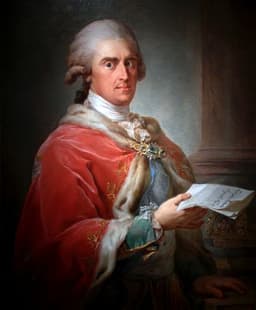
Frederick Augustus I of Saxony
Emperor · Modern
53.4Total
Basic Information
Born
1748
1750
Died
1818
1827
Era
Modern
Modern
Nationality
Sweden
Saxony
Occupation
Emperor
Emperor
Civilization
Western
Western
Score Comparison
Military (10%)
21.2
50.0
Political (20%)
37.9
68.0
Influence (20%)
47.1
51.8
Legacy (20%)
36.7
41.7
Leadership (15%)
55.3
74.0
Strategy (15%)
45.0
36.8
TOTAL
41.5
53.4
Charles XIII of Sweden — Complete Timeline
1809 AD
Loss of Finland to RussiaWar
Charles XIII, as regent and later king, oversaw the conclusion of the Finnish War against Russia. The Treaty of Fredrikshamn ceded Finland to Russia, ending centuries of Swedish rule over the region.
Finnish WarTerritorial LossRussia
Impact: regionaldestructive
Coronation of Charles XIIIPolitical Action◆ Major
Charles XIII was crowned King of Sweden after the deposition of Gustav IV Adolf. His coronation followed the adoption of the 1809 constitution, which established a balance of power between the king and the Riksdag.
CoronationConstitutionSuccession
Impact: national
1810 AD
Adoption of Jean-Baptiste Bernadotte as Crown PrincePolitical Action
Charles XIII, having no legitimate heirs, adopted the French Marshal Jean-Baptiste Bernadotte as his successor. Bernadotte became Crown Prince Charles John and effectively ruled Sweden, founding the Bernadotte dynasty.
SuccessionBernadotteDynasty
Impact: nationalconstructive
1814 AD
Union with NorwayPolitical Action◆ Major
Charles XIII, under the influence of Crown Prince Charles John, accepted the Treaty of Kiel and the Convention of Moss, which forced Norway into a personal union with Sweden. Charles XIII became King of Norway as Charles II.
UnionNorwayTreaty of Kiel
Impact: regionalconstructive
1818 AD
Death of Charles XIIIOther
Charles XIII died in Stockholm at age 69. His death ended the Holstein-Gottorp dynasty's rule in Sweden, as he was succeeded by his adopted son, Charles XIV John (Bernadotte).
DeathSuccession
Impact: national
Frederick Augustus I of Saxony — Complete Timeline
1806 AD
Alliance with Napoleon in the Napoleonic WarsWar◆ Major
Frederick Augustus I allied Saxony with Napoleon, contributing troops to the French campaigns. Saxon forces fought in the Battle of Jena-Auerstedt (1806) and later in the invasion of Russia (1812), suffering heavy losses.
Napoleonic WarsAllianceInvasion of Russia
Impact: regional
Elevation to King of Saxony by NapoleonPolitical Action◆ Major
Frederick Augustus I was elevated from Elector to King of Saxony by Napoleon Bonaparte after the dissolution of the Holy Roman Empire. He became a key ally of Napoleon, joining the Confederation of the Rhine.
ElevationNapoleonConfederation of the Rhine
Impact: regional
1813 AD
Battle of LeipzigWar
Frederick Augustus I remained loyal to Napoleon during the Battle of Leipzig (1813), where Saxon troops initially fought for the French but later defected to the Allies. After the battle, he was captured by the Allies and Saxony was occupied.
Battle of LeipzigDefectionCapture
Impact: regionaltragic
1815 AD
Congress of Vienna and Loss of TerritoryPolitical Action◆ Major
At the Congress of Vienna, Frederick Augustus I was forced to cede over half of Saxony's territory to Prussia, including the province of Saxony. He retained the title of King but ruled a significantly reduced state.
Congress of ViennaTerritorial LossPrussia
Impact: regionaltragic
Expert Analysis
Origins
Charles XIII of Sweden was born on October 7, 1748, in Stockholm, the second son of King Adolf Frederick and Louisa Ulrika of Prussia. He was raised in the royal court and received a military education, but he was never expected to rule. His early career was shaped by his brother, King Gustav III, under whom he served as an admiral. Charles was known for his interest in the navy and for his support of the monarchical reforms of his brother.
Frederick Augustus I of Saxony was born on December 23, 1750, in Dresden, the eldest son of Elector Frederick Christian and Maria Antonia of Bavaria. He inherited the electorate in 1763 at age 12, with his mother serving as regent. He was educated in law, history, and languages, and was deeply influenced by the Enlightenment. His early reign focused on administrative reforms and economic development.
Rise to Power
Charles XIII came to power indirectly. After his brother Gustav III was assassinated in 1792, Charles served as regent for his nephew Gustav IV Adolf until 1796. The young king proved disastrous, leading Sweden into the Finnish War against Russia. In 1809, a coup d'état deposed Gustav IV Adolf, and Charles was elected king by the Riksdag. He accepted the new 1809 constitution, which limited royal power in favor of parliament. His reign was marked by his lack of legitimate heirs, leading to the adoption of Jean-Baptiste Bernadotte as crown prince in 1810.
Frederick Augustus I became elector in 1763 and was elevated to king by Napoleon in 1806 after the dissolution of the Holy Roman Empire. He was a key member of the Confederation of the Rhine and a loyal ally of Napoleon. His rise was tied to French power; he provided troops for Napoleon's campaigns and received territorial gains, including the Duchy of Warsaw. However, his alliance with Napoleon also brought disaster.
Leadership & Governance
Charles XIII's leadership was largely passive. He reigned but did not rule, as real power shifted to Crown Prince Charles John (Bernadotte) after 1810. His main contribution was the adoption of the 1809 constitution, which established a more balanced government. He scored 55.3 in leadership and 37.9 in political acumen, reflecting his limited role. He oversaw the union with Norway in 1814, but this was achieved by Bernadotte's diplomacy and military threats.
Frederick Augustus I was more active in governance, scoring 74.0 in leadership and 68.0 in political skills. He implemented administrative reforms, promoted agriculture, and supported the arts. However, his decision to remain loyal to Napoleon after the Battle of Leipzig (1813) was a strategic error. He was captured by the Allies and lost over half his territory at the Congress of Vienna in 1815. His political score is high, but his strategy score of 36.8 reflects his poor judgment in foreign policy.
Triumph & Tragedy
Charles XIII's greatest triumph was the peaceful transition to the Bernadotte dynasty, which ensured stability. He also saw the union with Norway, expanding Swedish influence. His greatest tragedy was the loss of Finland to Russia in 1809, which ended centuries of Swedish control in the Baltic. He died in 1818, his dynasty extinguished.
Frederick Augustus I's triumph was his elevation to king and the initial prosperity under Napoleon. He also preserved Saxony's autonomy despite defeat. His tragedy was the loss of 58% of his territory to Prussia, reducing Saxony to a minor state. He died in 1827, having never fully recovered from the territorial losses.
Character & Destiny
Charles XIII was described as well-meaning but weak, with a score of 45.0 in strategy. He was overshadowed by stronger figures: first his brother, then Bernadotte. His lack of heirs forced a dynastic change that ultimately benefited Sweden. His character was indecisive, and he accepted his reduced role.
Frederick Augustus I was principled but inflexible. He remained loyal to Napoleon out of gratitude and a sense of honor, even when it was disastrous. His strategy score of 36.8 reflects his inability to adapt to changing circumstances. He was a competent administrator but a poor diplomat.
Legacy
Charles XIII's legacy is mixed. He is remembered as the last of the Holstein-Gottorp kings, but his adoption of Bernadotte led to a stable dynasty that continues today. The 1809 constitution influenced Swedish governance. His legacy score is 36.7, reflecting his limited impact.
Frederick Augustus I's legacy is more substantial. He was Saxony's first king and a patron of the arts, founding the Dresden State Art Collections. However, his territorial losses permanently weakened Saxony. He is remembered as a loyal but unfortunate ally of Napoleon. His legacy score is 41.7.
Conclusion
Frederick Augustus I had greater impact than Charles XIII, as reflected in his higher total score of 53.4 vs 41.5. While Charles XIII presided over the loss of Finland and a dynastic change, Frederick Augustus I's decisions shaped Saxony's fate for centuries. His alliance with Napoleon and subsequent territorial losses defined Saxony's modern borders. Charles XIII was a transitional figure; Frederick Augustus I was a key player in the Napoleonic Wars. Therefore, Frederick Augustus I of Saxony had a greater historical impact.
Rankings
🥇
Frederick Augustus I of SaxonyLeader
Mil: 50.0Pol: 68.0Inf: 51.8
53.4
🥈
Charles XIII of Sweden
Mil: 21.2Pol: 37.9Inf: 47.1
41.5
+11.9 behind
How This Comparison Works
Algorithm
Each figure is scored on 6 dimensions (0—100 scale) based on structured historical data: Military (10%), Political (20%), Influence (20%), Legacy (20%), Leadership (15%), Strategy (15%). The weighted total produces the final ranking.
Data Sources
Scores are computed from structured sub-indicators in the database. Scale factors adjust for era (Ancient ×0.85, Modern ×1.0) and civilization size (Eastern ×1.05, Other ×0.80) to account for differences in population and military scale.
Maximum 3 Figures
Comparisons are limited to 2—3 figures to ensure readability and statistical meaningfulness.
Error Margins
±5 points per dimension — Sub-scores are derived from historical records with inherent uncertainty. Two figures within 5 points on a dimension should be considered roughly equivalent in that area.
Total Score Accuracy
±3 points overall — The weighted combination of 6 dimensions produces a total score with approximately ±3 points of uncertainty. Differences of less than 3 points are not statistically significant— the figures are effectively tied.
Known Limitations
- Historical records are incomplete and uneven across civilizations
- Figures from oral-tradition societies may be underrepresented
- Occupation labels can misclassify multi-role figures
- Scores measure capability and impact, not moral character
- Quantitative scoring is a comparison tool, not absolute truth
Capability Radar
Military (10%) — Battles & Warfare
Battles
10
20
Win Rate
10
25
Expansion
10
15
Political (20%) — Governance & Reform
Reform
20
40
Diplomacy
30
50
Economy
20
45
Influence (20%) — Cultural & Global Reach
Cultural
10
30
Global
10
20
Legacy (20%) — Historical Impact
Historical
20
35
Longevity
10
25
Leadership (15%) — Power & Stability
Tenure
30
55
Stability
20
35
Strategy (15%) — Tactics & Innovation
Strategy
10
20
Tactics
10
15
Reform
10
10
Similar Comparisons
Comments & Discussion
No comments yet. Be the first to share your thoughts!