Loading...
Charles VI vs Quang Trung
Quang Trung leads by 12.9 pts · 2 figures compared
…
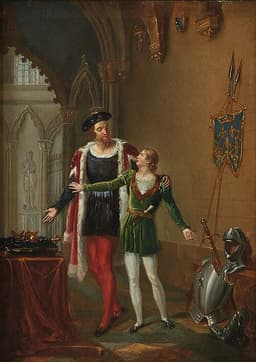
Charles VI
Emperor · Modern
50.0Total

Quang Trung
Emperor · Modern
62.9Total
Basic Information
Born
1685
1753
Died
1740
1792
Era
Modern
Modern
Nationality
Holy Roman Empire
Vietnam
Occupation
Emperor
Emperor
Civilization
Western
Eastern
Score Comparison
Military (10%)
50.0
82.0
Political (20%)
45.0
45.0
Influence (20%)
54.9
62.0
Legacy (20%)
49.2
58.0
Leadership (15%)
53.2
74.0
Strategy (15%)
42.3
68.0
TOTAL
50.0
62.9
Charles VI — Complete Timeline
1713 AD
Issued the Pragmatic SanctionPolitical Action
Charles VI issued the Pragmatic Sanction, a legal instrument to ensure that the Habsburg hereditary lands could be inherited by a female heir (his daughter Maria Theresa) in the absence of a male son. He spent decades securing recognition from European powers, but it failed to prevent the War of the Austrian Succession.
Pragmatic SanctionSuccessionHabsburg
Impact: global
1739 AD
Treaty of BelgradePolitical Action◆ Major
Charles VI's forces, after a disastrous war with the Ottoman Empire, signed the Treaty of Belgrade. The treaty ceded Belgrade and northern Serbia to the Ottomans, reversing the gains of the Treaty of Passarowitz and weakening Habsburg influence in the Balkans.
Ottoman WarTreatyTerritorial Loss
Impact: regionaldestructive
1740 AD
War of the Austrian SuccessionWar◆ Major
Charles VI's death in 1740 triggered the War of the Austrian Succession, as Prussia, France, and Bavaria challenged Maria Theresa's inheritance. The war, lasting until 1748, resulted in the loss of Silesia to Prussia but confirmed Maria Theresa's rule in most Habsburg lands.
War of the Austrian SuccessionMaria TheresaSilesia
Impact: global
Quang Trung — Complete Timeline
1785 AD
Battle of Rach Gam-Xoai MutWar◆ Major
Nguyen Hue defeated a Siamese naval force at Rach Gam-Xoai Mut in the Mekong Delta. This victory eliminated the Siamese threat to the Nguyen lords in the south and consolidated his power.
Siamese WarNaval BattleNguyen Lords
Impact: regional
1788 AD
Coronation as Emperor Quang TrungPolitical Action◆ Major
Nguyen Hue proclaimed himself Emperor Quang Trung, establishing the Tay Son dynasty's rule over all of Dai Viet. He implemented land reforms, promoted education, and strengthened the military.
Tay Son DynastyCoronationReforms
Impact: nationalconstructive
1789 AD
Battle of Ngoc Hoi-Dong DaWar
Nguyen Hue (Quang Trung) led a surprise attack on Qing Chinese forces occupying Thang Long (Hanoi) during the Tet holiday. His army defeated the Qing forces, forcing them to retreat and ending the Chinese invasion.
Qing InvasionTet OffensiveVietnamese Independence
Impact: regional
Land Reform and Tax ReductionReform
Emperor Quang Trung implemented land reforms that redistributed land to peasants and reduced taxes. These policies aimed to alleviate rural poverty and rebuild the economy after years of war.
Land ReformEconomic PolicyPeasant Welfare
Impact: nationalconstructive
Expert Analysis
Origins
Charles VI was born in 1685 in Vienna, the second son of Holy Roman Emperor Leopold I. As a member of the Habsburg dynasty, he received a comprehensive education in statecraft, languages, and military affairs. His elder brother Joseph I died in 1711, making Charles the heir to the Habsburg dominions. Charles's early years were shaped by the War of the Spanish Succession, where he claimed the Spanish throne but ultimately failed to secure it.
Quang Trung, born Nguyen Hue in 1753 in Binh Dinh, Vietnam, was the second son of a peasant family. He grew up during a period of civil war between the Nguyen lords in the south and the Trinh lords in the north. His early life was marked by poverty and conflict, but he received military training from his brother Nguyen Nhac. The Tay Son brothers, including Nguyen Hue, led a peasant uprising in 1771 that would transform Vietnam.
Rise to Power
Charles VI's rise was largely dynastic. After his brother's death, he became Holy Roman Emperor in 1711. He spent years negotiating the Treaty of Utrecht (1713) which ended the War of Spanish Succession but forced him to renounce claims to Spain. His major political achievement was the Pragmatic Sanction of 1713, a decree ensuring that his hereditary lands could be inherited by a female heir (his daughter Maria Theresa). He spent his reign securing international recognition of this document through diplomacy and concessions.
Quang Trung's rise came through military prowess. In 1777, he defeated the Nguyen lords, capturing Saigon. By 1785, he crushed a Siamese invasion at the Battle of Rach Gam-Xoai Mut, eliminating external threats. In 1788, he proclaimed himself Emperor Quang Trung, establishing the Tay Son dynasty. His crowning achievement came in early 1789 when he led a surprise attack on Qing Chinese forces occupying Hanoi during Tet, decisively defeating them at the Battle of Ngoc Hoi-Dong Da. This victory secured Vietnamese independence from Qing interference.
Leadership & Governance
Charles VI's leadership was conservative and legalistic. He focused on maintaining Habsburg power through dynastic policy rather than military expansion. His governance relied on the Pragmatic Sanction, which alienated other powers. He failed to modernize the army or administration, leading to a decline in Habsburg influence. His political score of 45.0 reflects his inability to effectively manage the empire's challenges.
Quang Trung's leadership was dynamic and reformist. As emperor, he implemented land reforms that redistributed land to peasants and reduced taxes. He promoted education and national unity, standardizing the Vietnamese language and promoting culture. His military leadership was exceptional, with a military score of 82.0, but his political reforms were cut short by his early death. He attempted to build a strong centralized state but faced resistance from local elites.
Triumph & Tragedy
Charles VI's greatest success was the Pragmatic Sanction, which allowed his daughter Maria Theresa to inherit the Habsburg lands. However, his death in 1740 triggered the War of the Austrian Succession, as Prussia and others challenged the inheritance. His reign also saw the loss of Belgrade and northern Serbia to the Ottomans in the Treaty of Belgrade (1739), a major defeat. His diplomatic efforts failed to secure lasting peace.
Quang Trung's triumph was the victory over Qing China, which secured Vietnam's independence. His Tet offensive of 1789 is celebrated as a military masterpiece. However, his tragedy was his sudden death in 1792 at age 39, likely from illness. His reforms were incomplete, and the Tay Son dynasty collapsed within a decade after his death, leading to the rise of the Nguyen dynasty.
Character & Destiny
Charles VI was a cautious, methodical ruler who prioritized legal instruments over military strength. His character led him to rely on diplomacy rather than force, but his inability to enforce the Pragmatic Sanction weakened his legacy. He scored 53.2 in leadership, reflecting his steady but uninspiring rule.
Quang Trung was bold, charismatic, and decisive. His leadership score of 74.0 reflects his ability to inspire and command. His character drove him to take risks, such as the Tet offensive, which paid off. However, his early death prevented him from consolidating his gains, leaving his dynasty vulnerable.
Legacy
Charles VI's legacy is tied to the Pragmatic Sanction and the subsequent War of the Austrian Succession. His actions shaped 18th-century European politics, but his reign is often seen as a period of decline for the Habsburgs. His influence score of 54.9 and legacy score of 49.2 reflect his mixed impact.
Quang Trung is a national hero in Vietnam, celebrated for his military genius and anti-imperialist stance. His legacy includes the Tay Son reforms and the spirit of independence. His military score of 82.0 and legacy score of 58.0 show his enduring impact. However, his dynasty's fall limited his long-term influence.
Conclusion
Quang Trung had a greater impact than Charles VI. With a total score of 62.9 versus Charles's 50.0, Quang Trung's military achievements and reforms left a lasting mark on Vietnam. Charles VI's political maneuvering, while significant in European history, failed to prevent the war that followed his death. Quang Trung's defense of Vietnamese independence and his innovative governance, despite his short reign, make him the more impactful figure.
Rankings
🥇
Quang TrungLeader
Mil: 82.0Pol: 45.0Inf: 62.0
62.9
🥈
Charles VI
Mil: 50.0Pol: 45.0Inf: 54.9
50.0
+12.9 behind
How This Comparison Works
Algorithm
Each figure is scored on 6 dimensions (0—100 scale) based on structured historical data: Military (10%), Political (20%), Influence (20%), Legacy (20%), Leadership (15%), Strategy (15%). The weighted total produces the final ranking.
Data Sources
Scores are computed from structured sub-indicators in the database. Scale factors adjust for era (Ancient ×0.85, Modern ×1.0) and civilization size (Eastern ×1.05, Other ×0.80) to account for differences in population and military scale.
Maximum 3 Figures
Comparisons are limited to 2—3 figures to ensure readability and statistical meaningfulness.
Error Margins
±5 points per dimension — Sub-scores are derived from historical records with inherent uncertainty. Two figures within 5 points on a dimension should be considered roughly equivalent in that area.
Total Score Accuracy
±3 points overall — The weighted combination of 6 dimensions produces a total score with approximately ±3 points of uncertainty. Differences of less than 3 points are not statistically significant— the figures are effectively tied.
Known Limitations
- Historical records are incomplete and uneven across civilizations
- Figures from oral-tradition societies may be underrepresented
- Occupation labels can misclassify multi-role figures
- Scores measure capability and impact, not moral character
- Quantitative scoring is a comparison tool, not absolute truth
Capability Radar
Military (10%) — Battles & Warfare
Battles
20
75
Win Rate
15
85
Expansion
10
65
Political (20%) — Governance & Reform
Reform
60
60
Diplomacy
65
55
Economy
40
50
Influence (20%) — Cultural & Global Reach
Cultural
30
60
Global
40
40
Legacy (20%) — Historical Impact
Historical
55
70
Longevity
50
55
Leadership (15%) — Power & Stability
Tenure
70
40
Stability
30
45
Strategy (15%) — Tactics & Innovation
Strategy
15
80
Tactics
10
90
Reform
10
70
Similar Comparisons
Comments & Discussion
No comments yet. Be the first to share your thoughts!