Loading...
Charles VI vs Hans-Adam II of Liechtenstein
Hans-Adam II of Liechtenstein leads by 6.0 pts · 2 figures compared
…
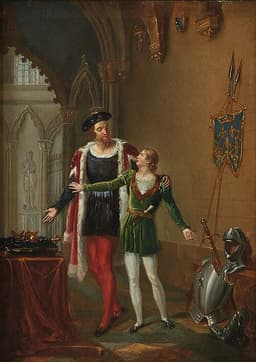
Charles VI
Emperor · Modern
50.0Total

Hans-Adam II of Liechtenstein
Emperor · Modern
56.0Total
Basic Information
Born
1685
1945
Died
1740
—
Era
Modern
Modern
Nationality
Holy Roman Empire
Liechtenstein
Occupation
Emperor
Emperor
Civilization
Western
Western
Score Comparison
Military (10%)
50.0
14.0
Political (20%)
45.0
78.0
Influence (20%)
54.9
54.1
Legacy (20%)
49.2
46.7
Leadership (15%)
53.2
78.0
Strategy (15%)
42.3
60.0
TOTAL
50.0
56.0
Charles VI — Complete Timeline
1713 AD
Issued the Pragmatic SanctionPolitical Action
Charles VI issued the Pragmatic Sanction, a legal instrument to ensure that the Habsburg hereditary lands could be inherited by a female heir (his daughter Maria Theresa) in the absence of a male son. He spent decades securing recognition from European powers, but it failed to prevent the War of the Austrian Succession.
Pragmatic SanctionSuccessionHabsburg
Impact: global
1739 AD
Treaty of BelgradePolitical Action◆ Major
Charles VI's forces, after a disastrous war with the Ottoman Empire, signed the Treaty of Belgrade. The treaty ceded Belgrade and northern Serbia to the Ottomans, reversing the gains of the Treaty of Passarowitz and weakening Habsburg influence in the Balkans.
Ottoman WarTreatyTerritorial Loss
Impact: regionaldestructive
1740 AD
War of the Austrian SuccessionWar◆ Major
Charles VI's death in 1740 triggered the War of the Austrian Succession, as Prussia, France, and Bavaria challenged Maria Theresa's inheritance. The war, lasting until 1748, resulted in the loss of Silesia to Prussia but confirmed Maria Theresa's rule in most Habsburg lands.
War of the Austrian SuccessionMaria TheresaSilesia
Impact: global
Hans-Adam II of Liechtenstein — Complete Timeline
1989 AD
Accession to the thronePolitical Action◆ Major
Hans-Adam II became Prince of Liechtenstein on November 13, 1989, following the death of his father, Prince Franz Joseph II. He inherited a constitutional monarchy with significant powers, including the ability to veto legislation and dissolve parliament.
AccessionMonarchyLiechtenstein
Impact: national
1990 AD
Economic transformation and financial centerReform◆ Major
Under Hans-Adam II's reign, Liechtenstein transformed into a major financial center, leveraging low taxes and banking secrecy. He oversaw the modernization of the economy, including accession to the European Economic Area in 1995, boosting prosperity but also attracting international scrutiny over tax evasion.
Economic ReformFinancial CenterEEA
Impact: regionalconstructive
2003 AD
Constitutional reform of 2003Reform◆ Major
Hans-Adam II pushed through a constitutional reform in a 2003 referendum, expanding his powers to include the right to dismiss the government, veto laws, and appoint judges. The reform was controversial, with critics calling it a step toward absolutism, but it passed with 64% support.
Constitutional ReformMonarchyReferendum
Impact: national
2004 AD
Transfer of executive powers to AloisPolitical Action
On August 15, 2004, Hans-Adam II transferred the day-to-day executive powers to his son, Hereditary Prince Alois, while retaining the role of head of state. This move was part of a planned succession and allowed Alois to gain experience in governance.
SuccessionAloisExecutive Powers
Impact: nationalconstructive
Expert Analysis
Origins
Charles VI was born on October 1, 1685, in Vienna, the second son of Holy Roman Emperor Leopold I and Eleonor Magdalene of Neuburg. As a younger son, he was not initially destined for the throne, but the death of his older brother Joseph I in 1711 made him emperor. He was educated in the Habsburg tradition, focusing on governance, military strategy, and Catholic piety. His family, the Habsburgs, had ruled the Holy Roman Empire for centuries, but the male line was nearing its end. Charles VI's father had fathered many children, but only two sons survived to adulthood.
Hans-Adam II was born on February 14, 1945, in Zurich, Switzerland, to Prince Franz Joseph II and Countess Georgina von Wilczek. He grew up in Liechtenstein after World War II, when the country faced economic hardship. His family, the House of Liechtenstein, had ruled the principality since 1719. He studied at the University of St. Gallen and later worked in banking and finance. His formative experiences included the economic modernization of Liechtenstein and the gradual integration into European institutions.
Rise to Power
Charles VI's rise was shaped by the War of the Spanish Succession (1701–1714). Initially, he was the Habsburg claimant to the Spanish throne, but the war ended with the Treaty of Utrecht, which gave Spain to the Bourbons. Charles became Holy Roman Emperor in 1711 after his brother's death. He focused on securing his dynasty's inheritance, leading to the Pragmatic Sanction of 1713. This document declared the Habsburg lands indivisible and allowed female succession. He spent decades negotiating with European powers to recognize it, securing agreements from Britain, France, and others.
Hans-Adam II became Prince on November 13, 1989, upon his father's death. He had already been involved in state affairs, serving as regent since 1984. His rise was smooth, but he sought to modernize the constitution to increase his powers. The key turning point was the 2003 constitutional referendum, which he championed. The referendum passed with 64% support, giving him the right to dismiss the government, veto legislation, and appoint judges. This made him one of Europe's most powerful monarchs.
Leadership & Governance
Charles VI's leadership was marked by a focus on dynastic security over military or administrative reform. He scored 53.2 in leadership and 42.3 in strategy, reflecting his cautious and legalistic approach. His governance relied on the Pragmatic Sanction, but he neglected military modernization. For example, his army was poorly equipped, leading to defeats in the War of the Polish Succession (1733–1735) and the Austro-Turkish War (1737–1739). The Treaty of Belgrade in 1739 ceded Belgrade and northern Serbia to the Ottomans, a major setback.
Hans-Adam II scored 78.0 in leadership and 60.0 in strategy. He used his powers to transform Liechtenstein into a financial hub, leveraging low taxes and banking secrecy. He pushed for economic diversification and membership in the European Economic Area (1995). However, his governance style was criticized as autocratic; he threatened to move to Vienna if the 2003 reforms failed. His leadership is characterized by a blend of traditional monarchy and modern economic management.
Triumph & Tragedy
Charles VI's greatest triumph was the Pragmatic Sanction, which ensured the Habsburg lands passed intact to his daughter Maria Theresa. However, his greatest tragedy was that the Sanction failed to prevent the War of the Austrian Succession (1740–1748). His death triggered a conflict that nearly dismembered the Habsburg monarchy. Additionally, his military defeats weakened the empire. He scored 49.2 in legacy, reflecting his mixed record.
Hans-Adam II's triumph was the 2003 constitutional reform, which solidified his power and made Liechtenstein a stable constitutional monarchy. His economic policies made the country one of the wealthiest per capita. However, his tragedy includes criticism over banking secrecy and tax evasion scandals, which damaged Liechtenstein's international reputation. He also faced a referendum in 2012 that rejected his proposal to expand his veto powers, showing limits to his influence.
Character & Destiny
Charles VI was obsessed with legal formalities and dynastic continuity. He was described as diligent but indecisive, often relying on advisors. His character led him to prioritize the Pragmatic Sanction over military strength, a decision that proved costly. His destiny was to be the last male Habsburg, and his death marked the end of an era. Historians note that his stubbornness in seeking recognition for the Sanction consumed his reign.
Hans-Adam II is pragmatic and business-oriented. He is known for his directness and willingness to use his powers. His character is shaped by his banking background; he treats the state like a corporation. His destiny has been to modernize a microstate while preserving its sovereignty. He scored 78.0 in political skill, reflecting his ability to navigate domestic and international politics.
Legacy
Charles VI's legacy is the Pragmatic Sanction and the Habsburg succession. It allowed Maria Theresa to rule, but his military failures weakened the empire. His reign is often seen as a prelude to the reforms of his daughter. He scored 49.2 in legacy, lower than Hans-Adam II's 46.7, but his impact on European history is broader.
Hans-Adam II's legacy is the transformation of Liechtenstein into a wealthy financial center. His constitutional reforms created a unique model of monarchy with strong executive powers. However, his legacy is controversial due to banking secrecy. He scored 54.1 in influence, slightly below Charles VI's 54.9, but his political score of 78.0 is much higher.
Conclusion
Charles VI and Hans-Adam II represent different eras and scales of governance. Charles VI, with a total score of 50.0, was a traditional monarch focused on dynasty, but his strategic failures and military weakness (50.0 military) limited his success. Hans-Adam II, with a total of 56.0, achieved greater political and economic transformation within a small state. His leadership score (78.0) and political skill (78.0) far exceed Charles VI's. While Charles VI's Pragmatic Sanction had European significance, Hans-Adam II's reforms created a lasting constitutional model. The data supports Hans-Adam II as having greater impact in terms of effective governance and modernization, despite the smaller stage.
Rankings
🥇
Hans-Adam II of LiechtensteinLeader
Mil: 14.0Pol: 78.0Inf: 54.1
56.0
🥈
Charles VI
Mil: 50.0Pol: 45.0Inf: 54.9
50.0
+6.0 behind
How This Comparison Works
Algorithm
Each figure is scored on 6 dimensions (0—100 scale) based on structured historical data: Military (10%), Political (20%), Influence (20%), Legacy (20%), Leadership (15%), Strategy (15%). The weighted total produces the final ranking.
Data Sources
Scores are computed from structured sub-indicators in the database. Scale factors adjust for era (Ancient ×0.85, Modern ×1.0) and civilization size (Eastern ×1.05, Other ×0.80) to account for differences in population and military scale.
Maximum 3 Figures
Comparisons are limited to 2—3 figures to ensure readability and statistical meaningfulness.
Error Margins
±5 points per dimension — Sub-scores are derived from historical records with inherent uncertainty. Two figures within 5 points on a dimension should be considered roughly equivalent in that area.
Total Score Accuracy
±3 points overall — The weighted combination of 6 dimensions produces a total score with approximately ±3 points of uncertainty. Differences of less than 3 points are not statistically significant— the figures are effectively tied.
Known Limitations
- Historical records are incomplete and uneven across civilizations
- Figures from oral-tradition societies may be underrepresented
- Occupation labels can misclassify multi-role figures
- Scores measure capability and impact, not moral character
- Quantitative scoring is a comparison tool, not absolute truth
Capability Radar
Military (10%) — Battles & Warfare
Battles
20
39
Win Rate
15
41
Expansion
10
42
Political (20%) — Governance & Reform
Reform
60
70
Diplomacy
65
65
Economy
40
80
Influence (20%) — Cultural & Global Reach
Cultural
30
30
Global
40
35
Legacy (20%) — Historical Impact
Historical
55
40
Longevity
50
50
Leadership (15%) — Power & Stability
Tenure
70
75
Stability
30
85
Strategy (15%) — Tactics & Innovation
Strategy
15
44
Tactics
10
48
Reform
10
54
Similar Comparisons
Comments & Discussion
No comments yet. Be the first to share your thoughts!