Loading...
Charles V vs Leovigild
Charles V leads by 8.2 pts · 2 figures compared
…

Charles V
Emperor · Medieval
74.2Total
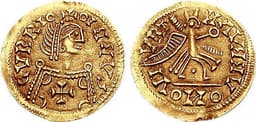
Leovigild
Emperor · Medieval
66.0Total
Basic Information
Born
1500
519
Died
1558
586
Era
Medieval
Medieval
Nationality
Holy Roman Empire
Visigothic Kingdom
Occupation
Emperor
Emperor
Civilization
Western
Western
Score Comparison
Military (10%)
74.0
78.0
Political (20%)
70.3
70.0
Influence (20%)
71.0
60.0
Legacy (20%)
80.0
52.0
Leadership (15%)
78.0
85.0
Strategy (15%)
68.0
69.1
TOTAL
74.2
66.0
Charles V — Complete Timeline
1519 AD
Elected Holy Roman EmperorPolitical Action
Charles V was elected Holy Roman Emperor, defeating Francis I of France through extensive bribery of the prince-electors. This election united the Habsburg lands in Spain, Austria, the Netherlands, and the Holy Roman Empire under his rule.
ElectionHabsburg EmpireImperial Title
Impact: global
1521 AD
Diet of WormsPolitical Action
Charles V presided over the Diet of Worms, where Martin Luther was summoned to recant his teachings. Luther refused, and Charles issued the Edict of Worms, declaring Luther an outlaw and banning his writings, escalating the Protestant Reformation.
ReformationLutherImperial Diet
Impact: global
1525 AD
Battle of PaviaWar◆ Major
Imperial forces under Charles V defeated and captured Francis I of France at Pavia in Italy. This victory secured Spanish dominance in Italy and forced Francis to sign the Treaty of Madrid, though he later repudiated it.
Italian WarsBattleCapture of Francis I
Impact: regional
1527 AD
Sack of RomeWar◆ Major
Mutinous imperial troops under Charles V sacked Rome, looting the city and besieging Pope Clement VII in Castel Sant'Angelo. This event shocked Europe and forced the Pope to align more closely with Charles, leading to the coronation of Charles as Holy Roman Emperor by the Pope in 1530.
Italian WarsSackPapacy
Impact: regionaldestructive
1556 AD
Abdication and Division of the EmpirePolitical Action
Charles V abdicated his thrones, dividing his empire between his son Philip II (Spain, Netherlands, Italy) and his brother Ferdinand I (Holy Roman Empire). This division reflected the administrative challenges of ruling a vast, multi-ethnic empire.
AbdicationEmpire DivisionHabsburg
Impact: global
Leovigild — Complete Timeline
568 AD
Accession as Visigothic KingPolitical Action◆ Major
Leovigild became king of the Visigoths after the death of his brother Athanagild. He inherited a kingdom weakened by internal strife and Byzantine incursions in southern Hispania. Leovigild immediately began a campaign to restore Visigothic power and unity.
Visigothic KingdomSuccessionRestoration
Impact: regional
578 AD
Military Reforms and Foundation of ReccopolisReform◆ Major
Leovigild founded the city of Reccopolis, named after his son Reccared, as a royal capital and administrative center. He also reformed the Visigothic army, introducing new tactics and equipment, and strengthened the monarchy's authority over the nobility.
Visigothic KingdomUrban FoundationMilitary Reform
Impact: regionalconstructive
579 AD
Revolt of HermenegildWar◆ Major
Leovigild's son Hermenegild converted to Catholicism and rebelled against his Arian father, establishing a rival kingdom in Seville. Leovigild suppressed the revolt, captured Hermenegild, and later executed him. This conflict deepened religious tensions within the Visigothic Kingdom.
Visigothic KingdomCivil WarReligious Conflict
Impact: regionaldestructive
585 AD
Conquest of the Suebi KingdomWar
Leovigild launched a military campaign against the Suebi kingdom in northwestern Hispania. He defeated the Suebi king Andeca, annexed their territory, and incorporated it into the Visigothic Kingdom. This conquest nearly unified the Iberian Peninsula under Visigothic rule.
Visigothic KingdomConquestIberian Unification
Impact: regional
Expert Analysis
Origins
Charles V was born in 1500 in Ghent, Flanders, to Philip the Handsome of Burgundy and Joanna of Castile. He inherited a vast collection of territories: the Burgundian Netherlands, Spain, Naples, and claims to the Holy Roman Empire. His education was overseen by advisors like William de Croÿ and Adrian of Utrecht, focusing on chivalry, governance, and Catholic orthodoxy. Leovigild, born around 525, was a Visigothic nobleman who became king in 568 after the death of his brother Athanagild. He inherited a kingdom fractured by internal rivalries, Byzantine incursions in the south, and hostile Suebi in the northwest. Little is known of his early life, but he was likely trained in military command and Arian Christian theology.
Rise to Power
Charles V's rise was propelled by diplomatic maneuvering and inheritance. In 1516, he became king of Spain (as Charles I) upon his grandfather Ferdinand's death, though his mother Joanna was still alive but incapacitated. In 1519, he was elected Holy Roman Emperor, defeating Francis I of France through extensive bribery of the prince-electors—a move that cost over 850,000 florins. Leovigild ascended the throne in 568 without major contest, but his authority was challenged by Byzantine forces occupying southern Iberia and by rebellious nobles. He consolidated power through military campaigns, notably defeating the Suebi in 585 and annexing their kingdom, and by suppressing revolts among the Vascones and other tribes.
Leadership & Governance
Charles V governed a sprawling empire through a system of viceroys and councils, but constant travel and war strained resources. He prioritized Catholic unity, leading to the Edict of Worms (1521) against Martin Luther, but he could not prevent the Protestant Reformation. His financial policies—borrowing heavily from German and Italian bankers—led to state bankruptcies in 1557 and 1560. Leovigild centralized Visigothic rule by founding Reccopolis (578) as a royal capital, minting coins with his image (a break from Roman tradition), and codifying laws. He promoted Arian Christianity, but his tolerance of Catholics was limited; he forced conversion on Suebi and executed his son Hermenegild for converting to Catholicism. Leovigild's military reforms included a professional army and fortifications, but his harshness alienated nobles.
Triumph & Tragedy
Charles V's greatest triumph was the Battle of Pavia (1525), where his forces captured Francis I, securing Spanish dominance in Italy. The Sack of Rome (1527) demonstrated his power over the papacy, though it shocked Europe. His tragedy was the failure to unify Europe religiously: the Peace of Augsburg (1555) recognized Lutheranism, ending his dream of a Catholic empire. He abdicated in 1556, dividing his realms between Philip II and Ferdinand I. Leovigild's triumph was the conquest of the Suebi kingdom (585), nearly unifying Iberia under Visigothic rule. His tragedy was the revolt of his son Hermenegild (579-584), whom he executed—an act that deepened Catholic-Arian tensions and damaged his legacy. Leovigild died natural death in 586, his unification incomplete due to Byzantine holdings.
Character & Destiny
Charles V was pragmatic and devout, but indecisive—he often delayed crucial decisions, such as how to handle the Reformation. His abdication reflected exhaustion and disillusionment. Historians note his sense of duty over ambition; he once said, "My life has been one long journey." Leovigild was determined and ruthless, willing to sacrifice family for political stability. His Arian zeal led him to persecute Catholics, which sowed discord. His military scores (78.0) and leadership (85.0) indicate a capable commander, but his political (70.0) and influence (60.0) scores reflect limited reach beyond Iberia.
Legacy
Charles V's legacy is vast: he shaped modern Europe by uniting Spain and the Habsburg domains, and his reign saw the first circumnavigation of the globe. His influence score of 71.0 and legacy score of 80.0 reflect his enduring impact on geopolitics. Leovigild is less known globally but is considered the greatest Visigothic king; his legal and administrative reforms laid groundwork for medieval Spain. However, his legacy score of 52.0 and influence of 60.0 show limited lasting effect. Charles V's empire inspired the phrase "the empire on which the sun never sets," while Leovigild's achievements are largely confined to Spanish historiography.
Conclusion
Charles V had greater impact than Leovigild, as evidenced by his total score of 74.2 vs. 66.0. His empire spanned continents, his decisions shaped the Reformation and European power balances, and his legacy endures in the Habsburg dynasty. Leovigild unified most of Iberia but failed to create lasting institutions; his kingdom fell to the Moors in 711. Charles V's military (74.0), political (70.3), and legacy (80.0) scores all exceed Leovigild's comparable metrics. While Leovigild's leadership (85.0) is higher, Charles V's broader influence and historical significance make him the more consequential figure.
Rankings
🥇
Charles VLeader
Mil: 74.0Pol: 70.3Inf: 71.0
74.2
🥈
Leovigild
Mil: 78.0Pol: 70.0Inf: 60.0
66.0
+8.2 behind
How This Comparison Works
Algorithm
Each figure is scored on 6 dimensions (0—100 scale) based on structured historical data: Military (10%), Political (20%), Influence (20%), Legacy (20%), Leadership (15%), Strategy (15%). The weighted total produces the final ranking.
Data Sources
Scores are computed from structured sub-indicators in the database. Scale factors adjust for era (Ancient ×0.85, Modern ×1.0) and civilization size (Eastern ×1.05, Other ×0.80) to account for differences in population and military scale.
Maximum 3 Figures
Comparisons are limited to 2—3 figures to ensure readability and statistical meaningfulness.
Error Margins
±5 points per dimension — Sub-scores are derived from historical records with inherent uncertainty. Two figures within 5 points on a dimension should be considered roughly equivalent in that area.
Total Score Accuracy
±3 points overall — The weighted combination of 6 dimensions produces a total score with approximately ±3 points of uncertainty. Differences of less than 3 points are not statistically significant— the figures are effectively tied.
Known Limitations
- Historical records are incomplete and uneven across civilizations
- Figures from oral-tradition societies may be underrepresented
- Occupation labels can misclassify multi-role figures
- Scores measure capability and impact, not moral character
- Quantitative scoring is a comparison tool, not absolute truth
Capability Radar
Military (10%) — Battles & Warfare
Battles
85
75
Win Rate
70
80
Expansion
90
80
Political (20%) — Governance & Reform
Reform
75
85
Diplomacy
80
65
Economy
70
70
Influence (20%) — Cultural & Global Reach
Cultural
85
55
Global
90
45
Legacy (20%) — Historical Impact
Historical
90
60
Longevity
85
50
Leadership (15%) — Power & Stability
Tenure
85
70
Stability
60
60
Strategy (15%) — Tactics & Innovation
Strategy
85
75
Tactics
75
70
Reform
80
85
Similar Comparisons
Comments & Discussion
No comments yet. Be the first to share your thoughts!