Loading...
Leovigild vs Napoleon Bonaparte
Napoleon Bonaparte leads by 4.9 pts · 2 figures compared
…
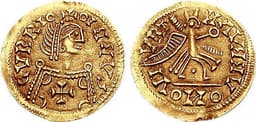
Leovigild
Emperor · Medieval
66.0Total

Napoleon Bonaparte
General · Modern
70.9Total
Basic Information
Born
519
1769
Died
586
1821
Era
Medieval
Modern
Nationality
Visigothic Kingdom
France
Occupation
Emperor
General
Civilization
Western
Western
Score Comparison
Military (10%)
78.0
94.0
Political (20%)
70.0
72.0
Influence (20%)
60.0
40.0
Legacy (20%)
52.0
80.0
Leadership (15%)
85.0
78.0
Strategy (15%)
69.1
90.0
TOTAL
66.0
70.9
Leovigild — Complete Timeline
568 AD
Accession as Visigothic KingPolitical Action◆ Major
Leovigild became king of the Visigoths after the death of his brother Athanagild. He inherited a kingdom weakened by internal strife and Byzantine incursions in southern Hispania. Leovigild immediately began a campaign to restore Visigothic power and unity.
Visigothic KingdomSuccessionRestoration
Impact: regional
578 AD
Military Reforms and Foundation of ReccopolisReform◆ Major
Leovigild founded the city of Reccopolis, named after his son Reccared, as a royal capital and administrative center. He also reformed the Visigothic army, introducing new tactics and equipment, and strengthened the monarchy's authority over the nobility.
Visigothic KingdomUrban FoundationMilitary Reform
Impact: regionalconstructive
579 AD
Revolt of HermenegildWar◆ Major
Leovigild's son Hermenegild converted to Catholicism and rebelled against his Arian father, establishing a rival kingdom in Seville. Leovigild suppressed the revolt, captured Hermenegild, and later executed him. This conflict deepened religious tensions within the Visigothic Kingdom.
Visigothic KingdomCivil WarReligious Conflict
Impact: regionaldestructive
585 AD
Conquest of the Suebi KingdomWar
Leovigild launched a military campaign against the Suebi kingdom in northwestern Hispania. He defeated the Suebi king Andeca, annexed their territory, and incorporated it into the Visigothic Kingdom. This conquest nearly unified the Iberian Peninsula under Visigothic rule.
Visigothic KingdomConquestIberian Unification
Impact: regional
Napoleon Bonaparte — Complete Timeline
1799 AD
Coup of 18 BrumaireOther◆ Major
Napoleon Bonaparte, with support from his brother Lucien and key political figures, overthrew the Directory in a bloodless coup. He established the Consulate with himself as First Consul, effectively becoming the ruler of France. This event ended the French Revolution's most unstable period.
French RevolutionCoupRise to Power
Impact: regional
1804 AD
Promulgation of the Napoleonic CodeOther◆ Major
Napoleon enacted the Civil Code of the French, known as the Napoleonic Code, a comprehensive set of laws that replaced the fragmented feudal legal systems. The code established legal equality, protected property rights, and secularized law. It became the basis for legal systems in many European and world countries.
Legal ReformNapoleonic CodeCivil Law
Impact: globalconstructive
1805 AD
Battle of AusterlitzWar◆ Major
Napoleon's Grande Arm
Napoleonic WarsBattleDecisive Victory
Impact: global
1812 AD
Invasion of RussiaWar◆ Major
Napoleon led the Grande Arm
Napoleonic WarsInvasionDisaster
Impact: globaldestructive
1815 AD
Battle of WaterlooWar◆ Major
Napoleon's French army was defeated by the combined forces of the Duke of Wellington's Anglo-Allied army and Gebhard Leberecht von Bl
Napoleonic WarsBattleFinal Defeat
Impact: globaldestructive
Expert Analysis
Origins
Leovigild (c. 519–586) was born into the Visigothic royal family, likely in the region of Septimania (modern southern France). His brother Athanagild became king in 554, and Leovigild served as a military commander. The Visigoths were a Germanic people who had settled in Hispania after the fall of the Western Roman Empire, but they faced internal divisions between Arian Christians and Catholic Romans, as well as external threats from the Byzantine Empire, which held coastal territories. Leovigild's early life was shaped by these conflicts and the need to consolidate Visigothic power.
Napoleon Bonaparte (1769–1821) was born in Ajaccio, Corsica, to a minor noble family of Italian origin. His father Carlo was a lawyer who secured a scholarship for Napoleon to attend military school in France. Napoleon graduated from the École Militaire in Paris in 1785 and became a second lieutenant in the artillery. The French Revolution (1789–1799) provided opportunities for rapid advancement, as the old aristocracy was purged. Napoleon's early career was marked by his role in the Siege of Toulon (1793), where he commanded artillery and forced the British fleet to withdraw, earning him promotion to brigadier general at age 24.
Rise to Power
Leovigild became king of the Visigoths in 568 after the death of his brother Athanagild. His accession was not without challenge: the Visigothic nobility was fractious, and Byzantine forces occupied the south. Leovigild immediately launched campaigns to expand his realm. In 572, he conquered the Suebi kingdom in northwestern Hispania, absorbing their territory into the Visigothic domain. He also fought against the Byzantines, recapturing cities such as Córdoba in 572 and Málaga later. Leovigild's military reforms created a more professional army, and he founded the city of Reccopolis in 578 as a royal capital. His rise was defined by aggressive expansion and centralization of power.
Napoleon's rise came through a combination of military brilliance and political maneuvering. After his success in Italy (1796–1797) against the Austrians, he returned to France as a national hero. In 1799, he participated in the Coup of 18 Brumaire, overthrowing the Directory and establishing the Consulate with himself as First Consul. Napoleon then consolidated power through the Constitution of the Year VIII (1799) and later crowned himself Emperor in 1804. His rise was meteoric, leveraging victories at Austerlitz (1805), Jena-Auerstedt (1806), and Friedland (1807) to dominate Europe.
Leadership & Governance
Leovigild's leadership style was autocratic and focused on unification. He imposed Arian Christianity on his subjects, suppressing Catholic revolts, including a rebellion by his own son Hermenegild (579–584). He reformed the Visigothic legal code, issuing the Codex Revisus (580) that standardized laws across his kingdom. Leovigild also minted gold coins with his image, asserting royal authority. His governance was pragmatic: he allowed Catholic Romans to retain their laws but demanded political loyalty. His military leadership scored 71.0, reflecting his success in expanding territory but limited by the lack of a standing army comparable to later empires.
Napoleon's governance was transformative. He centralized the French state, reorganized the educational system, and established the Napoleonic Code (1804), which influenced legal systems worldwide. His leadership style was charismatic but dictatorial; he appointed prefects to oversee departments and used propaganda to maintain support. Napoleon's political score (75.0) reflects his administrative reforms but also his authoritarian tendencies. His military strategy scored 93.0, as he revolutionized warfare with the corps system and rapid maneuvers. However, his governance of conquered territories often sparked resistance, as seen in the Spanish Ulcer (1808–1814).
Triumph & Tragedy
Leovigild's greatest triumph was the near-unification of Hispania. He conquered the Suebi, pushed back the Byzantines, and established a strong Visigothic kingdom. His founding of Reccopolis demonstrated his vision for a centralized state. However, his greatest tragedy was the revolt of his son Hermenegild, who converted to Catholicism and rebelled. Leovigild crushed the revolt but executed Hermenegild, causing a rift with the Catholic population. This failure undermined his goal of religious unity; after his death, his successor Reccared converted to Catholicism, reversing Leovigild's Arian policies.
Napoleon's triumphs include the Battle of Austerlitz (1805), where he defeated a larger Russo-Austrian army, and the Napoleonic Code, which modernized law. He conquered most of Europe and created a vast empire. However, his invasion of Russia (1812) was a disaster: the Grande Armée of over 600,000 men was reduced to fewer than 100,000 due to scorched-earth tactics and winter. Napoleon was exiled to Elba in 1814, returned for the Hundred Days, and was finally defeated at Waterloo (1815) by Wellington and Blücher. His ambition led to his downfall, with a legacy of millions dead.
Character & Destiny
Leovigild was pragmatic and ruthless. He prioritized state unity over family ties, executing his son Hermenegild for rebellion. His decision to remain Arian despite Catholic majority showed ideological rigidity. Historical assessments note his military skill but lack of long-term vision; his kingdom collapsed after his death due to internal divisions. Leovigild's character shaped a destiny of temporary success but ultimate failure to create enduring unity.
Napoleon was ambitious, brilliant, and overconfident. His strategic genius was matched by a megalomania that led to overextension. He believed in his own destiny, famously stating, "I am not a man but a thing." His character drove him to conquer Europe but also to alienate allies and provoke coalitions. Historians like David Chandler note his tactical brilliance but criticize his strategic blunders, such as the Continental System and the Peninsular War. Napoleon's destiny was to be a revolutionary figure who reshaped Europe but ended in exile.
Legacy
Leovigild's legacy is mixed. He is remembered as the Visigothic king who nearly unified Iberia, but his Arian policies were reversed. His legal reforms influenced later Visigothic codes, but his kingdom fell to the Umayyad Caliphate in 711. In Spanish historiography, he is seen as a precursor to the Reconquista unity. His influence score (73.1) reflects his regional impact but limited global reach.
Napoleon's legacy is immense. The Napoleonic Code influenced legal systems in Europe, the Americas, and beyond. He spread nationalism and liberal ideas through his conquests, inadvertently leading to the rise of nation-states. His military tactics are studied in war colleges. However, his wars caused millions of deaths and destabilized Europe for decades. Napoleon's legacy score (78.0) and influence (82.0) reflect his profound and lasting impact on world history.
Conclusion
Napoleon Bonaparte had a greater impact than Leovigild. While Leovigild's total score (72.2) is respectable, Napoleon's (82.4) reflects a higher level of military and strategic achievement, as well as a more enduring legacy. Napoleon's reforms, especially the Napoleonic Code, continue to shape modern legal systems, whereas Leovigild's unification of Hispania was reversed within a century. Napoleon's influence extends globally, while Leovigild's influence is confined to Iberian history. The score gap of 10.2 points underscores Napoleon's superior impact. Thus, although Leovigild was a skilled ruler, Napoleon's transformative effect on Europe and the world makes him the more significant historical figure.
Rankings
🥇
Napoleon BonaparteLeader
Mil: 94.0Pol: 72.0Inf: 40.0
70.9
🥈
Leovigild
Mil: 78.0Pol: 70.0Inf: 60.0
66.0
+4.9 behind
How This Comparison Works
Algorithm
Each figure is scored on 6 dimensions (0—100 scale) based on structured historical data: Military (10%), Political (20%), Influence (20%), Legacy (20%), Leadership (15%), Strategy (15%). The weighted total produces the final ranking.
Data Sources
Scores are computed from structured sub-indicators in the database. Scale factors adjust for era (Ancient ×0.85, Modern ×1.0) and civilization size (Eastern ×1.05, Other ×0.80) to account for differences in population and military scale.
Maximum 3 Figures
Comparisons are limited to 2—3 figures to ensure readability and statistical meaningfulness.
Error Margins
±5 points per dimension — Sub-scores are derived from historical records with inherent uncertainty. Two figures within 5 points on a dimension should be considered roughly equivalent in that area.
Total Score Accuracy
±3 points overall — The weighted combination of 6 dimensions produces a total score with approximately ±3 points of uncertainty. Differences of less than 3 points are not statistically significant— the figures are effectively tied.
Known Limitations
- Historical records are incomplete and uneven across civilizations
- Figures from oral-tradition societies may be underrepresented
- Occupation labels can misclassify multi-role figures
- Scores measure capability and impact, not moral character
- Quantitative scoring is a comparison tool, not absolute truth
Capability Radar
Military (10%) — Battles & Warfare
Battles
75
95
Win Rate
80
90
Expansion
80
95
Political (20%) — Governance & Reform
Reform
85
95
Diplomacy
65
80
Economy
70
85
Influence (20%) — Cultural & Global Reach
Cultural
55
85
Global
45
90
Legacy (20%) — Historical Impact
Historical
60
95
Longevity
50
90
Leadership (15%) — Power & Stability
Tenure
70
85
Stability
60
70
Strategy (15%) — Tactics & Innovation
Strategy
75
95
Tactics
70
98
Reform
85
92
Similar Comparisons
Comments & Discussion
No comments yet. Be the first to share your thoughts!