Loading...
This comparison has not been analyzed yet.
One-time AI generation (~1 minute). Scores and timeline are already available below.
Charles Njonjo vs Keir Starmer
Charles Njonjo leads by 1.0 pts · 2 figures compared
…

Charles Njonjo
Politician · Modern
53.0Total
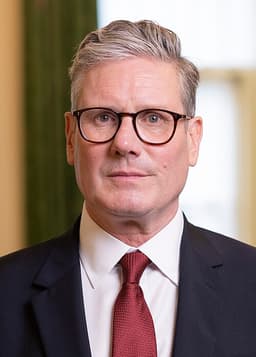
Keir Starmer
Politician · Modern
52.0Total
Basic Information
Born
1920
1962
Died
—
—
Era
Modern
Modern
Nationality
Kenya
United Kingdom
Occupation
Politician
Politician
Civilization
Other
Western
Score Comparison
Military (10%)
43.3
49.7
Political (20%)
68.0
68.0
Influence (20%)
51.8
54.9
Legacy (20%)
45.0
43.3
Leadership (15%)
66.0
53.2
Strategy (15%)
43.9
43.0
TOTAL
53.0
52.0
Charles Njonjo — Complete Timeline
1963 AD
Attorney General of KenyaPolitical Action◆ Major
Charles Njonjo served as the first Attorney General of independent Kenya from 1963 to 1979. He played a key role in drafting Kenya's constitution and legal framework, establishing the judiciary and legal institutions of the new nation.
Attorney GeneralKenyaLegal Framework
Impact: nationalconstructive
1970 AD
Duke of KabeteshireCultural
Njonjo was informally known as the 'Duke of Kabeteshire' due to his aristocratic demeanor and influence. This nickname reflected his powerful position in Kenyan politics and his close association with President Jomo Kenyatta.
NicknameKenyaPolitical Influence
Impact: national
1982 AD
Involvement in the 1982 coup attemptPolitical Action◆ Major
Njonjo was accused of involvement in the 1982 coup attempt against President Moi. Although he denied the charges, the allegations led to his political downfall and a commission of inquiry that cleared him but damaged his reputation.
Coup AttemptKenyaPolitical Crisis
Impact: nationaldestructive
1983 AD
Resignation from governmentPolitical Action◆ Major
Njonjo resigned as Attorney General in 1979 and later served as Minister for Constitutional Affairs. In 1983, he was forced to resign from the government after being implicated in a plot to overthrow President Daniel arap Moi, though he was later pardoned.
ResignationKenyaPolitical Scandal
Impact: nationaldestructive
Keir Starmer — Complete Timeline
2008 AD
Appointed Director of Public ProsecutionsPolitical Action◆ Major
Keir Starmer was appointed Director of Public Prosecutions (DPP) and head of the Crown Prosecution Service. He served until 2013, overseeing major cases including the prosecution of MPs over expenses fraud and the London riots.
DPPCPSJustice
Impact: nationalconstructive
2020 AD
Elected Leader of the Labour PartyPolitical Action◆ Major
Starmer was elected Labour leader after Jeremy Corbyn's resignation, winning 56.2% of the vote. He pledged to unite the party and rebuild trust after the 2019 election defeat. His leadership focused on competence and electability.
Labour PartyLeadershipElection
Impact: nationalconstructive
Suspended Jeremy Corbyn from Labour PartyPolitical Action◆ Major
Starmer suspended Jeremy Corbyn from the Labour Party after Corbyn's response to the Equality and Human Rights Commission report on antisemitism. The move deepened internal party divisions and was seen as a break from Corbyn's leadership.
Labour PartyAntisemitismSuspension
Impact: nationaldestructive
2024 AD
Became Prime Minister of the United KingdomPolitical Action
Starmer led Labour to a landslide victory in the 2024 general election, winning 411 seats. He became Prime Minister, ending 14 years of Conservative rule. His government focused on economic growth, public services, and green energy.
Prime MinisterElectionLabour Party
Impact: globalconstructive
This comparison has not been analyzed yet.
One-time AI generation (~1 minute). Scores and timeline are already available below.
Rankings
🥇
Charles NjonjoLeader
Mil: 43.3Pol: 68.0Inf: 51.8
53.0
🥈
Keir Starmer
Mil: 49.7Pol: 68.0Inf: 54.9
52.0
+1.0 behind
How This Comparison Works
Algorithm
Each figure is scored on 6 dimensions (0—100 scale) based on structured historical data: Military (10%), Political (20%), Influence (20%), Legacy (20%), Leadership (15%), Strategy (15%). The weighted total produces the final ranking.
Data Sources
Scores are computed from structured sub-indicators in the database. Scale factors adjust for era (Ancient ×0.85, Modern ×1.0) and civilization size (Eastern ×1.05, Other ×0.80) to account for differences in population and military scale.
Maximum 3 Figures
Comparisons are limited to 2—3 figures to ensure readability and statistical meaningfulness.
Error Margins
±5 points per dimension — Sub-scores are derived from historical records with inherent uncertainty. Two figures within 5 points on a dimension should be considered roughly equivalent in that area.
Total Score Accuracy
±3 points overall — The weighted combination of 6 dimensions produces a total score with approximately ±3 points of uncertainty. Differences of less than 3 points are not statistically significant— the figures are effectively tied.
Known Limitations
- Historical records are incomplete and uneven across civilizations
- Figures from oral-tradition societies may be underrepresented
- Occupation labels can misclassify multi-role figures
- Scores measure capability and impact, not moral character
- Quantitative scoring is a comparison tool, not absolute truth
Capability Radar
Military (10%) — Battles & Warfare
Battles
22
31
Win Rate
25
30
Expansion
27
35
Political (20%) — Governance & Reform
Reform
55
45
Diplomacy
60
50
Economy
50
40
Influence (20%) — Cultural & Global Reach
Cultural
30
30
Global
20
40
Legacy (20%) — Historical Impact
Historical
40
35
Longevity
30
25
Leadership (15%) — Power & Stability
Tenure
60
55
Stability
55
45
Strategy (15%) — Tactics & Innovation
Strategy
28
36
Tactics
31
41
Reform
38
47
Similar Comparisons
Comments & Discussion
No comments yet. Be the first to share your thoughts!