Loading...
This comparison has not been analyzed yet.
One-time AI generation (~1 minute). Scores and timeline are already available below.
Charles Maurice de Talleyrand vs Walter Nash
Charles Maurice de Talleyrand leads by 21.3 pts · 2 figures compared
…
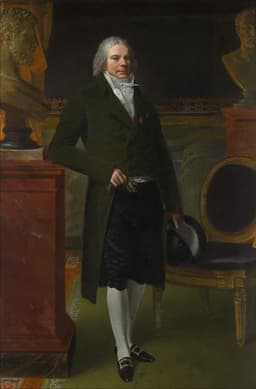
Charles Maurice de Talleyrand
Politician · Modern
70.0Total

Walter Nash
Politician · Modern
48.7Total
Basic Information
Born
1754
1882
Died
1838
1968
Era
Modern
Modern
Nationality
France
New Zealand
Occupation
Politician
Politician
Civilization
Western
Western
Score Comparison
Military (10%)
49.6
10.0
Political (20%)
70.3
62.7
Influence (20%)
88.0
52.5
Legacy (20%)
65.0
42.5
Leadership (15%)
78.0
74.0
Strategy (15%)
45.0
34.0
TOTAL
70.0
48.7
Charles Maurice de Talleyrand — Complete Timeline
1788 AD
Ordained as a BishopPolitical Action
Talleyrand was ordained as Bishop of Autun, despite his reputation for skepticism and libertine behavior. His ecclesiastical position gave him a platform in the Estates-General of 1789.
French RevolutionChurchEstates-General
Impact: national
1789 AD
Proposed the Nationalization of Church LandsPolitical Action◆ Major
As a member of the National Assembly, Talleyrand proposed the confiscation of Church lands to address France's financial crisis. The proposal led to the Civil Constitution of the Clergy and his excommunication.
French RevolutionChurch PropertyFinancial Reform
Impact: nationalconstructive
1794 AD
Exiled to the United StatesPolitical Action
Talleyrand fled France during the Reign of Terror and lived in exile in the United States until 1796. He engaged in land speculation and wrote about American politics.
French RevolutionExileUnited States
Impact: national
1799 AD
Appointed Foreign Minister under NapoleonPolitical Action◆ Major
Talleyrand was appointed Minister of Foreign Affairs by Napoleon Bonaparte after the Coup of 18 Brumaire. He served as Napoleon's chief diplomat, negotiating treaties and shaping French foreign policy.
Napoleonic WarsDiplomacyFrench Empire
Impact: global
1802 AD
Negotiated the Treaty of AmiensPolitical Action◆ Major
Talleyrand negotiated the Treaty of Amiens with Britain, which temporarily ended the Napoleonic Wars. The treaty brought a brief peace but collapsed within a year due to mutual distrust.
Napoleonic WarsPeace TreatyAnglo-French Relations
Impact: globalconstructive
1814 AD
Defected to the Bourbon RestorationPolitical Action
As Napoleon's empire collapsed, Talleyrand negotiated with the Allies to restore the Bourbon monarchy. He served as foreign minister under Louis XVIII and represented France at the Congress of Vienna.
Bourbon RestorationCongress of ViennaDiplomacy
Impact: global
1815 AD
Represented France at the Congress of ViennaPolitical Action◆ Major
Talleyrand represented defeated France at the Congress of Vienna. He skillfully exploited divisions among the Allies to secure lenient terms for France, including maintaining its 1792 borders.
Congress of ViennaDiplomacyPost-Napoleonic Europe
Impact: globalconstructive
Walter Nash — Complete Timeline
1957 AD
Became Prime Minister of New ZealandPolitical Action◆ Major
Nash became Prime Minister on 12 December 1957 at the age of 75, leading the Labour Party to victory. He was the oldest person to become prime minister in New Zealand history.
Prime MinisterLabour Party
Impact: national
1958 AD
Introduced the 40-Hour Work WeekReform◆ Major
Nash's government introduced the 40-hour work week through the Industrial Conciliation and Arbitration Act. This labor reform aimed to improve working conditions and reduce unemployment.
Labor ReformWork Week
Impact: nationalprogressive
1960 AD
Lost the 1960 General ElectionPolitical Action◆ Major
Nash's Labour government was defeated in the 1960 general election by the National Party under Keith Holyoake. This ended his three-year term as prime minister.
Election DefeatChange of Government
Impact: nationaldestructive
This comparison has not been analyzed yet.
One-time AI generation (~1 minute). Scores and timeline are already available below.
Rankings
🥇
Charles Maurice de TalleyrandLeader
Mil: 49.6Pol: 70.3Inf: 88.0
70.0
🥈
Walter Nash
Mil: 10.0Pol: 62.7Inf: 52.5
48.7
+21.3 behind
How This Comparison Works
Algorithm
Each figure is scored on 6 dimensions (0—100 scale) based on structured historical data: Military (10%), Political (20%), Influence (20%), Legacy (20%), Leadership (15%), Strategy (15%). The weighted total produces the final ranking.
Data Sources
Scores are computed from structured sub-indicators in the database. Scale factors adjust for era (Ancient ×0.85, Modern ×1.0) and civilization size (Eastern ×1.05, Other ×0.80) to account for differences in population and military scale.
Maximum 3 Figures
Comparisons are limited to 2—3 figures to ensure readability and statistical meaningfulness.
Error Margins
±5 points per dimension — Sub-scores are derived from historical records with inherent uncertainty. Two figures within 5 points on a dimension should be considered roughly equivalent in that area.
Total Score Accuracy
±3 points overall — The weighted combination of 6 dimensions produces a total score with approximately ±3 points of uncertainty. Differences of less than 3 points are not statistically significant— the figures are effectively tied.
Known Limitations
- Historical records are incomplete and uneven across civilizations
- Figures from oral-tradition societies may be underrepresented
- Occupation labels can misclassify multi-role figures
- Scores measure capability and impact, not moral character
- Quantitative scoring is a comparison tool, not absolute truth
Capability Radar
Military (10%) — Battles & Warfare
Battles
30
23
Win Rate
33
27
Expansion
34
26
Political (20%) — Governance & Reform
Reform
60
55
Diplomacy
95
60
Economy
70
55
Influence (20%) — Cultural & Global Reach
Cultural
65
30
Global
70
25
Legacy (20%) — Historical Impact
Historical
80
35
Longevity
75
30
Leadership (15%) — Power & Stability
Tenure
85
40
Stability
75
50
Strategy (15%) — Tactics & Innovation
Strategy
39
31
Tactics
39
35
Reform
41
37
Similar Comparisons
Comments & Discussion
No comments yet. Be the first to share your thoughts!