Loading...
Charles IX of France vs Mohammad Reza Pahlavi
Mohammad Reza Pahlavi leads by 9.0 pts · 2 figures compared
…

Charles IX of France
Emperor · Modern
44.5Total
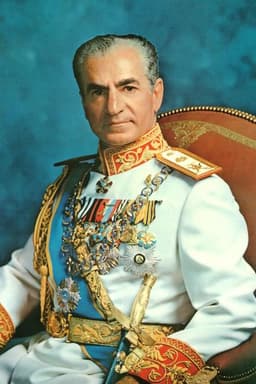
Mohammad Reza Pahlavi
Emperor · Modern
53.5Total
Basic Information
Born
1550
1919
Died
1574
1980
Era
Modern
Modern
Nationality
France
Iran
Occupation
Emperor
Emperor
Civilization
Western
Middle Eastern
Score Comparison
Military (10%)
21.2
22.6
Political (20%)
36.5
55.0
Influence (20%)
51.0
62.0
Legacy (20%)
47.5
48.3
Leadership (15%)
55.3
74.0
Strategy (15%)
39.6
43.3
TOTAL
44.5
53.5
Charles IX of France — Complete Timeline
1562 AD
Edict of Saint-GermainPolitical Action◆ Major
Charles IX issued the Edict of Saint-Germain, granting limited tolerance to Huguenots and allowing them to worship outside towns. This was a major concession to the Protestant minority but failed to prevent the outbreak of the French Wars of Religion later that year.
Religious ToleranceEdictFrench Wars of Religion
Impact: nationalconstructive
1570 AD
Peace of Saint-Germain-en-LayePolitical Action◆ Major
Charles IX signed the Peace of Saint-Germain-en-Laye, ending the third phase of the French Wars of Religion. The treaty granted Huguenots freedom of conscience, limited worship rights, and control of four fortified towns, including La Rochelle. This peace was fragile and preceded the St. Bartholomew's Day Massacre.
Peace TreatyFrench Wars of ReligionHuguenots
Impact: nationalconstructive
1572 AD
St. Bartholomew's Day MassacrePolitical Action
Under the authority of Charles IX and his mother Catherine de' Medici, Catholic mobs in Paris and other cities murdered thousands of Huguenots (French Protestants) who had gathered for the wedding of Henry of Navarre. The massacre began on August 24, 1572, and lasted for weeks, escalating the French Wars of Religion.
French Wars of ReligionMassacreHuguenots
Impact: nationaldestructive
1573 AD
Siege of La Rochelle (1573)War◆ Major
Charles IX ordered a royal siege of the Huguenot stronghold of La Rochelle. The siege lasted from February to June 1573, ending in a negotiated peace that allowed the city to retain its Protestant worship. The failure to capture the city weakened royal authority.
SiegeHuguenotsFrench Wars of Religion
Impact: regional
Mohammad Reza Pahlavi — Complete Timeline
1953 AD
1953 Iranian coup d'étatPolitical Action
Mohammad Reza Pahlavi was reinstated as Shah after a CIA- and MI6-backed coup overthrew Prime Minister Mohammad Mossadegh. The coup ended Iran's democratic experiment and established the Shah's authoritarian rule, fueling long-term resentment.
CoupMossadeghUS intervention
Impact: nationaldestructive
1963 AD
White RevolutionReform◆ Major
The Shah launched the White Revolution, a series of land reforms, modernization, and women's suffrage. While it aimed to modernize Iran, it disrupted traditional rural life, concentrated wealth, and alienated the clergy and landowners.
Land reformModernizationWomen's rights
Impact: national
1971 AD
1971 2,500-year celebration of the Persian EmpireCultural
The Shah hosted an extravagant celebration at Persepolis to mark 2,500 years of the Persian monarchy. The event was criticized for its opulence and disregard for Iran's poverty, fueling opposition to his regime.
ExtravagancePropagandaOpposition
Impact: nationaldestructive
1979 AD
Islamic Revolution and exilePolitical Action
Mass protests led by Ayatollah Khomeini overthrew the Shah's regime. Mohammad Reza Pahlavi fled Iran in January 1979, eventually seeking medical treatment abroad. He died in exile in Egypt in 1980, never returning to Iran.
RevolutionExileKhomeini
Impact: globaltragic
Expert Analysis
Origins
**Charles IX of France** (born 1550) was the third son of King Henry II and Catherine de' Medici. He ascended the throne at age 10 after the death of his brother Francis II. His early years were dominated by his mother's regency and the intense religious conflicts between Catholics and Huguenots. He was educated in the humanist tradition but remained heavily influenced by his mother's political machinations.
**Mohammad Reza Pahlavi** (born 1919) was the eldest son of Reza Shah, the founder of the Pahlavi dynasty. He was educated in Switzerland and at Tehran's military academy. His father's authoritarian modernization shaped his worldview. He became crown prince at birth and assumed the throne in 1941 after his father was forced into exile by Allied powers.
Rise to Power
Charles IX became king at age 10 in 1560, with Catherine de' Medici as regent. The French Wars of Religion (1562-1598) defined his reign. He issued the Edict of Saint-Germain (1570) granting limited tolerance to Huguenots, but this fragile peace collapsed. In 1572, under pressure from Catholic factions and his mother, he authorized the St. Bartholomew's Day Massacre, which killed thousands of Huguenots and radicalized the conflict.
Mohammad Reza Pahlavi's rise was interrupted by a 1953 coup that reinstated him after Prime Minister Mohammad Mossadegh's nationalization of oil. The coup, orchestrated by the CIA and MI6, cemented his autocratic rule. He then launched the White Revolution (1963), a series of reforms including land redistribution, women's suffrage, and modernization. However, his increasing authoritarianism and reliance on the West alienated traditionalists and leftists alike.
Leadership & Governance
Charles IX's leadership was marked by vacillation between toleration and persecution. His personal rule was weak; he was often controlled by his mother and Catholic nobles. The St. Bartholomew's Day Massacre (scoring 21.2 in military and 36.5 in political) demonstrated his inability to control events. His governance score of 55.3 reflects his limited authority during a period of civil war.
Mohammad Reza Pahlavi scored 74.0 in leadership and 55.0 in political. He centralized power, used SAVAK (secret police) to suppress dissent, and pursued rapid Westernization. The White Revolution improved literacy and women's rights but disrupted rural economies. His governance was top-down, ignoring democratic institutions. The 1971 Persepolis celebration highlighted his detachment from Iranian society.
Triumph & Tragedy
Charles IX's greatest triumph was the Edict of Saint-Germain, which temporarily eased religious tensions. His tragedy was the St. Bartholomew's Day Massacre (August 24, 1572), which tarnished his reign and led to the fourth religious war. He died at age 23, possibly from tuberculosis, haunted by the massacre.
Mohammad Reza Pahlavi's triumph was the White Revolution, which modernized Iran's infrastructure and women's rights. His tragedy was the 1979 Islamic Revolution, which overthrew him due to widespread discontent with his authoritarianism, corruption, and Western alignment. He died in exile in 1980.
Character & Destiny
Charles IX was indecisive and easily influenced, as seen in the massacre's aftermath. His character was shaped by his mother's domination and the era's religious extremism. He scored 39.6 in strategy, reflecting poor decision-making.
Mohammad Reza Pahlavi was ambitious and autocratic, believing in his divine right to rule. His strategic score of 43.3 was undermined by his failure to gauge public discontent. His character led to isolation and eventual overthrow.
Legacy
Charles IX is remembered primarily for the St. Bartholomew's Day Massacre, which intensified the French Wars of Religion. His legacy score of 47.5 reflects his reign's negative impact on religious tolerance. The massacre became a symbol of religious violence.
Mohammad Reza Pahlavi's legacy is mixed: his modernization efforts laid groundwork for Iran's development, but his repression fueled the 1979 revolution. His legacy score of 48.3 is slightly higher due to ongoing debates about his reforms. The Islamic Republic still uses his rule as a cautionary tale.
Conclusion
Mohammad Reza Pahlavi had a greater impact than Charles IX, as his policies shaped modern Iran's trajectory more than Charles's reign shaped France. The White Revolution's effects persist, while Charles's massacre was a tragic episode in a longer conflict. Pahlavi's total score of 53.5 versus Charles's 44.5 reflects this. However, both rulers failed to maintain stable governance, leading to upheaval. Pahlavi's modernization vs. Charles's religious war: Pahlavi's influence endures more clearly.
Rankings
🥇
Mohammad Reza PahlaviLeader
Mil: 22.6Pol: 55.0Inf: 62.0
53.5
🥈
Charles IX of France
Mil: 21.2Pol: 36.5Inf: 51.0
44.5
+9.0 behind
How This Comparison Works
Algorithm
Each figure is scored on 6 dimensions (0—100 scale) based on structured historical data: Military (10%), Political (20%), Influence (20%), Legacy (20%), Leadership (15%), Strategy (15%). The weighted total produces the final ranking.
Data Sources
Scores are computed from structured sub-indicators in the database. Scale factors adjust for era (Ancient ×0.85, Modern ×1.0) and civilization size (Eastern ×1.05, Other ×0.80) to account for differences in population and military scale.
Maximum 3 Figures
Comparisons are limited to 2—3 figures to ensure readability and statistical meaningfulness.
Error Margins
±5 points per dimension — Sub-scores are derived from historical records with inherent uncertainty. Two figures within 5 points on a dimension should be considered roughly equivalent in that area.
Total Score Accuracy
±3 points overall — The weighted combination of 6 dimensions produces a total score with approximately ±3 points of uncertainty. Differences of less than 3 points are not statistically significant— the figures are effectively tied.
Known Limitations
- Historical records are incomplete and uneven across civilizations
- Figures from oral-tradition societies may be underrepresented
- Occupation labels can misclassify multi-role figures
- Scores measure capability and impact, not moral character
- Quantitative scoring is a comparison tool, not absolute truth
Capability Radar
Military (10%) — Battles & Warfare
Battles
15
15
Win Rate
10
10
Expansion
5
10
Political (20%) — Governance & Reform
Reform
20
70
Diplomacy
25
60
Economy
20
55
Influence (20%) — Cultural & Global Reach
Cultural
30
55
Global
35
55
Legacy (20%) — Historical Impact
Historical
55
60
Longevity
40
30
Leadership (15%) — Power & Stability
Tenure
40
65
Stability
10
20
Strategy (15%) — Tactics & Innovation
Strategy
10
25
Tactics
10
20
Reform
5
60
Similar Comparisons
Comments & Discussion
No comments yet. Be the first to share your thoughts!