Loading...
Ahmed I vs Mohammad Reza Pahlavi
Ahmed I leads by 0.9 pts · 2 figures compared
…

Ahmed I
Emperor · Modern
54.4Total
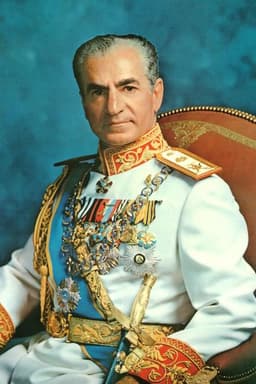
Mohammad Reza Pahlavi
Emperor · Modern
53.5Total
Basic Information
Born
1590
1919
Died
1617
1980
Era
Modern
Modern
Nationality
Ottoman Empire
Iran
Occupation
Emperor
Emperor
Civilization
Middle Eastern
Middle Eastern
Score Comparison
Military (10%)
50.0
22.6
Political (20%)
68.0
55.0
Influence (20%)
61.0
62.0
Legacy (20%)
49.2
48.3
Leadership (15%)
53.2
74.0
Strategy (15%)
36.8
43.3
TOTAL
54.4
53.5
Ahmed I — Complete Timeline
1603 AD
Abolished the Law of FratricideReform
Upon his accession, Ahmed I spared his brother Mustafa I from execution, breaking the tradition of fratricide established by Mehmed II. Instead, he placed Mustafa in confinement (kafes). This reform changed Ottoman succession practices, ending the killing of brothers.
Succession ReformFratricideKafes
Impact: nationalprogressive
1606 AD
Treaty of ZsitvatorokPolitical Action◆ Major
Ahmed I's empire signed the Treaty of Zsitvatorok with the Habsburg monarchy, ending the Long Turkish War. The treaty recognized the Habsburg emperor as equal to the Ottoman sultan and established a peace that lasted for decades.
Peace TreatyHabsburgsLong Turkish War
Impact: regionalconstructive
1608 AD
Suppressed the Celali RebellionsWar◆ Major
Ahmed I's grand vizier Kuyucu Murad Pasha brutally suppressed the Celali rebellions in Anatolia, killing tens of thousands. The rebellion was crushed by 1610, restoring order but at a high human cost, leaving the countryside devastated.
Celali RebellionsKuyucu Murad PashaAnatolia
Impact: nationaldestructive
1609 AD
Built the Sultan Ahmed Mosque (Blue Mosque)Cultural◆ Major
Ahmed I commissioned the construction of the Sultan Ahmed Mosque in Istanbul, known as the Blue Mosque for its blue tiles. Completed in 1616, it was the first imperial mosque built in over 40 years and became a symbol of Ottoman architecture.
ArchitectureMosqueIstanbul
Impact: globalconstructive
Mohammad Reza Pahlavi — Complete Timeline
1953 AD
1953 Iranian coup d'étatPolitical Action
Mohammad Reza Pahlavi was reinstated as Shah after a CIA- and MI6-backed coup overthrew Prime Minister Mohammad Mossadegh. The coup ended Iran's democratic experiment and established the Shah's authoritarian rule, fueling long-term resentment.
CoupMossadeghUS intervention
Impact: nationaldestructive
1963 AD
White RevolutionReform◆ Major
The Shah launched the White Revolution, a series of land reforms, modernization, and women's suffrage. While it aimed to modernize Iran, it disrupted traditional rural life, concentrated wealth, and alienated the clergy and landowners.
Land reformModernizationWomen's rights
Impact: national
1971 AD
1971 2,500-year celebration of the Persian EmpireCultural
The Shah hosted an extravagant celebration at Persepolis to mark 2,500 years of the Persian monarchy. The event was criticized for its opulence and disregard for Iran's poverty, fueling opposition to his regime.
ExtravagancePropagandaOpposition
Impact: nationaldestructive
1979 AD
Islamic Revolution and exilePolitical Action
Mass protests led by Ayatollah Khomeini overthrew the Shah's regime. Mohammad Reza Pahlavi fled Iran in January 1979, eventually seeking medical treatment abroad. He died in exile in Egypt in 1980, never returning to Iran.
RevolutionExileKhomeini
Impact: globaltragic
Expert Analysis
Origins
**Ahmed I** (born 1590) was the son of Sultan Mehmed III and Handan Sultan. He ascended the Ottoman throne at age 13. His early education was in the imperial palace, learning Islamic sciences and governance. He was influenced by his mother and the powerful Safiye Sultan.
**Mohammad Reza Pahlavi** (born 1919) was the son of Reza Shah, founder of the Pahlavi dynasty. He was educated in Iran and later at a Swiss boarding school, Le Rosey. He was groomed for kingship from an early age, but his father's authoritarian rule and forced abdication in 1941 shaped his worldview.
Rise to Power
Ahmed I became sultan in 1603 after his father's death. His early reign was marked by the Long Turkish War with the Habsburgs. He broke tradition by sparing his brother Mustafa, ending the Law of Fratricide (1603). This decision was a turning point, establishing the principle of seniority in succession.
Mohammad Reza Pahlavi became Shah in 1941 after the Allied forced abdication of his father. His early reign was weak, with power in the hands of parliament and foreign powers. His turning point came in 1953 when a CIA- and MI6-backed coup overthrew Prime Minister Mossadegh. This restored his authority but at the cost of democratic legitimacy.
Leadership & Governance
Ahmed I's leadership style was relatively hands-off; he relied heavily on grand viziers. He suppressed the Celali rebellions (1605-1610) through brutal force under Kuyucu Murad Pasha, killing tens of thousands. His governance focused on maintaining order and prestige, as seen in the construction of the Blue Mosque (1609-1616), a symbol of imperial power. He scored 53.2 in leadership.
Mohammad Reza Pahlavi centralized power through the White Revolution (1963), a series of reforms including land redistribution, women's suffrage, and modernization. However, his authoritarian rule, reliance on SAVAK (secret police), and suppression of dissent alienated traditionalists and intellectuals. His leadership score of 74.0 reflects his proactive but flawed governance.
Triumph & Tragedy
Ahmed I's greatest triumph was the Treaty of Zsitvatorok (1606), which ended the Long Turkish War with the Habsburgs. Though it recognized the Habsburg emperor as equal, it preserved Ottoman borders. His greatest failure was the costly suppression of the Celali rebellions, which devastated Anatolia and weakened the empire's rural economy.
Mohammad Reza Pahlavi's triumph was the White Revolution, which modernized Iran's infrastructure, education, and women's rights. His tragedy was the Islamic Revolution (1979), which overthrew his regime due to corruption, repression, and cultural insensitivity. He died in exile in 1980.
Character & Destiny
Ahmed I was a pious and cautious ruler, influenced by his mother and the ulema. His decision to end fratricide was a moral choice, but it led to the 'Sultanate of Women' as royal women gained influence. His character shaped a more stable but less dynamic rule.
Mohammad Reza Pahlavi was ambitious and insecure, driven by a vision of a modern Iran but unable to balance reform with tradition. His indecisiveness during the 1978 protests and his reliance on foreign support sealed his fate. Historians view him as a tragic figure whose desire for progress was undermined by autocracy.
Legacy
Ahmed I's legacy is the Blue Mosque, a major tourist attraction, and the end of fratricide, which changed Ottoman succession. He scored 49.2 in legacy. His reign is seen as a period of stability but also of decline.
Mohammad Reza Pahlavi's legacy is mixed: he modernized Iran but his authoritarianism and corruption led to the Islamic Republic. His scores: military 22.6, political 55.0, influence 62.0, legacy 48.3. He is remembered as the last Shah, a symbol of both progress and tyranny.
Conclusion
Ahmed I had a greater impact on the Ottoman Empire's long-term stability by ending fratricide, while Mohammad Reza Pahlavi's reforms were reversed by the Islamic Revolution. Although their total scores are close (54.4 vs 53.5), Ahmed I's influence on Ottoman succession was more enduring. The Shah's modernization failed due to lack of popular support. Thus, Ahmed I's legacy, though less dramatic, was more sustainable.
Rankings
🥇
Ahmed ILeader
Mil: 50.0Pol: 68.0Inf: 61.0
54.4
🥈
Mohammad Reza Pahlavi
Mil: 22.6Pol: 55.0Inf: 62.0
53.5
+0.9 behind
How This Comparison Works
Algorithm
Each figure is scored on 6 dimensions (0—100 scale) based on structured historical data: Military (10%), Political (20%), Influence (20%), Legacy (20%), Leadership (15%), Strategy (15%). The weighted total produces the final ranking.
Data Sources
Scores are computed from structured sub-indicators in the database. Scale factors adjust for era (Ancient ×0.85, Modern ×1.0) and civilization size (Eastern ×1.05, Other ×0.80) to account for differences in population and military scale.
Maximum 3 Figures
Comparisons are limited to 2—3 figures to ensure readability and statistical meaningfulness.
Error Margins
±5 points per dimension — Sub-scores are derived from historical records with inherent uncertainty. Two figures within 5 points on a dimension should be considered roughly equivalent in that area.
Total Score Accuracy
±3 points overall — The weighted combination of 6 dimensions produces a total score with approximately ±3 points of uncertainty. Differences of less than 3 points are not statistically significant— the figures are effectively tied.
Known Limitations
- Historical records are incomplete and uneven across civilizations
- Figures from oral-tradition societies may be underrepresented
- Occupation labels can misclassify multi-role figures
- Scores measure capability and impact, not moral character
- Quantitative scoring is a comparison tool, not absolute truth
Capability Radar
Military (10%) — Battles & Warfare
Battles
20
15
Win Rate
25
10
Expansion
10
10
Political (20%) — Governance & Reform
Reform
60
70
Diplomacy
40
60
Economy
35
55
Influence (20%) — Cultural & Global Reach
Cultural
65
55
Global
40
55
Legacy (20%) — Historical Impact
Historical
55
60
Longevity
50
30
Leadership (15%) — Power & Stability
Tenure
55
65
Stability
45
20
Strategy (15%) — Tactics & Innovation
Strategy
20
25
Tactics
15
20
Reform
10
60
Similar Comparisons
Comments & Discussion
No comments yet. Be the first to share your thoughts!