Loading...
Charles I of Spain vs Ivan III the Great
Ivan III the Great leads by 0.3 pts · 2 figures compared
…

Charles I of Spain
Emperor · Medieval
75.0Total
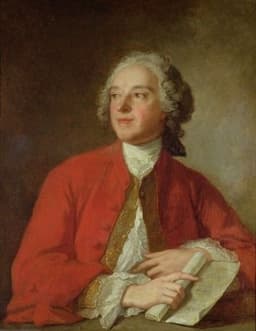
Ivan III the Great
Emperor · Medieval
75.3Total
Basic Information
Born
1500
1440
Died
1558
1505
Era
Medieval
Medieval
Nationality
Spain
Muscovy
Occupation
Emperor
Emperor
Civilization
Western
Western
Score Comparison
Military (10%)
74.0
76.0
Political (20%)
72.0
70.0
Influence (20%)
85.0
75.0
Legacy (20%)
68.0
80.0
Leadership (15%)
78.0
78.0
Strategy (15%)
68.1
67.2
TOTAL
75.0
75.3
Charles I of Spain — Complete Timeline
1519 AD
Election as Holy Roman EmperorPolitical Action
Charles I of Spain was elected Holy Roman Emperor as Charles V, succeeding his grandfather Maximilian I. This election united the Spanish kingdoms, the Habsburg domains in Austria and the Low Countries, and the Holy Roman Empire under a single ruler, creating a vast European empire.
Holy Roman EmpireHabsburg empire
Impact: globalconstructive
1521 AD
Diet of WormsPolitical Action
Charles V presided over the Diet of Worms, where Martin Luther was summoned to recant his teachings. Luther refused, and Charles V issued the Edict of Worms, declaring Luther an outlaw and banning his writings. This event deepened the religious divide in Europe and sparked the Protestant Reformation.
Protestant ReformationReligious conflict
Impact: global
1525 AD
Battle of PaviaWar◆ Major
Charles V's imperial army defeated the French forces of King Francis I at the Battle of Pavia. Francis I was captured and taken prisoner to Spain. The victory solidified Habsburg dominance in Italy and forced France to renounce its claims to Milan and Naples in the Treaty of Madrid.
Italian WarsHabsburg victory
Impact: regional
1527 AD
Sack of RomeWar◆ Major
Imperial troops under Charles V sacked Rome, looting the city and capturing Pope Clement VII. The sack was a brutal event that shocked Europe and led to the temporary dominance of Charles V over the Papacy. It also marked a turning point in the Italian Wars.
Italian WarsPapacy
Impact: globaldestructive
1556 AD
Abdication of Charles VPolitical Action
Charles V abdicated his thrones, dividing his empire between his son Philip II (who received Spain, the Low Countries, and the Italian possessions) and his brother Ferdinand I (who received the Holy Roman Empire). This abdication was a major event in European politics, reshaping the balance of power.
AbdicationEmpire division
Impact: global
Ivan III the Great — Complete Timeline
1472 AD
Marriage to Sophia PalaiologinaPolitical Action◆ Major
Ivan III married Sophia (Zoe) Palaiologina, niece of the last Byzantine emperor. This marriage allowed Ivan to claim succession to the Byzantine Empire, adopt the double-headed eagle as a symbol, and promote Moscow as the Third Rome.
ByzantiumThird RomeMarriage
Impact: regionalconstructive
1478 AD
Annexation of NovgorodWar◆ Major
Ivan III conquered the Novgorod Republic after a series of campaigns. He abolished the veche (assembly) and removed the veche bell, incorporating Novgorod's vast territories into the Grand Principality of Moscow.
NovgorodAnnexationMoscow
Impact: regional
1480 AD
Great Stand on the Ugra RiverWar
Ivan III faced the Mongol army of Khan Akhmat across the Ugra River. After weeks of stalemate, the Mongols withdrew without battle. This event ended 240 years of Mongol suzerainty over Russia.
Golden HordeIndependenceUgra
Impact: regional
1497 AD
Issued the Sudebnik of 1497Reform◆ Major
Ivan III promulgated a new legal code, the Sudebnik, which standardized laws across the Russian lands. It restricted peasant mobility by limiting the time for transfer between landowners, a step toward serfdom.
Legal CodeSerfdomReform
Impact: national
1500 AD
War with the Grand Duchy of LithuaniaWar◆ Major
Ivan III launched a war against Lithuania, capturing the cities of Bryansk, Dorogobuzh, and Putivl. The war ended with the Truce of 1503, which ceded significant territories to Moscow.
LithuaniaTerritorial ExpansionWar
Impact: regional
Expert Analysis
Origins
Ivan III (1440–1505) was born into the Rurik dynasty, Grand Prince of Moscow, inheriting a small but strategically positioned state. His father Vasily II had survived a brutal civil war, leaving Ivan a realm ripe for expansion. In contrast, Charles I of Spain (1500–1558), born in Ghent, inherited a vast empire from his Habsburg, Burgundian, Spanish, and Aragonese ancestors. Charles was raised in the Low Countries, a polyglot ruler destined to unite disparate lands. Ivan's origins were rooted in the struggle against Mongol suzerainty; Charles's in the complex web of European dynastic politics.
Rise to Power
Ivan III consolidated power by subduing rival principalities and refusing tribute to the Golden Horde. His pivotal moment was the Great Stand on the Ugra River (1480), where he faced off against Khan Ahmed without battle, effectively ending Mongol rule. This bloodless victory showcased Ivan's patience and strategic resolve. Charles's rise was more dramatic: upon his grandfather Maximilian's death, he was elected Holy Roman Emperor in 1519, outmaneuvering Francis I of France. The Diet of Worms (1521) saw him confront Martin Luther, cementing his role as defender of Catholicism. While Ivan's path was a gradual assertion of sovereignty, Charles's was a contested election that immediately made him the most powerful ruler in Europe.
Leadership & Governance
Ivan III was a master administrator: he issued the Sudebnik of 1497, a legal code unifying Russian law, and centralized power by absorbing Novgorod's veche. His marriage to Sophia Palaiologina, niece of the last Byzantine emperor, allowed him to claim Moscow as the Third Rome. Charles V governed a sprawling empire through viceroys and councils, but his constant travels and reliance on borrowed money (from Fuggers and Welsers) led to inefficiency. Ivan ruled autocratically with boyar support; Charles faced revolts (Comuneros in Spain) and religious turmoil. Ivan's governance was more stable and transformative for Russia; Charles's was overstretched and reactive.
Triumph & Tragedy
Ivan's greatest triumph was the annexation of Novgorod (1478), ending its independence and securing trade routes. His wars with Lithuania (1492–1503) reclaimed key territories. The tragedy was the internal strife: his son Ivan died prematurely, leading to a succession crisis that his grandson Ivan IV would inherit. Charles's triumphs include the Battle of Pavia (1525), capturing Francis I, and the Sack of Rome (1527), which humbled the Pope. Yet his tragedy was the failure to unify Christendom against the Ottomans and Protestants; he abdicated in 1556, dividing his empire between Philip II and Ferdinand I. Both men faced the pain of seeing their life's work potentially undone.
Character & Destiny
Ivan III was cautious, calculating, and patient—earning him the title "the Great." He was a gatherer, not a conqueror; his destiny was to forge a unified Russian state. Charles V was idealistic, restless, and ultimately disillusioned. He sought a universal Christian empire but was thwarted by reality. Ivan died in his bed, respected and feared; Charles retired to a monastery, weary and defeated. Ivan's character matched his circumstances: a slow, steady builder. Charles's character clashed with his era: a medieval emperor in an age of reformation and nation-states.
Legacy
Ivan III's legacy is foundational: he created the centralized Russian state, ended Mongol dominance, and laid the groundwork for the Tsardom of Russia. His legal code and political ideology influenced centuries. Charles V's legacy is more contested: he defended Catholicism, sponsored Magellan's circumnavigation, and left a vast Habsburg empire. But his inability to prevent the Reformation and his divisive rule contributed to Europe's fragmentation. Ivan's legacy is clearer and more nationally transformative; Charles's is complex and multinational.
Conclusion
In a direct comparison, Ivan III the Great edges out Charles V. Scores: Military: Ivan 76 vs Charles 74; Political: 70 vs 72; Influence: 75 vs 85; Legacy: 80 vs 68; Diplomacy: 78 vs 78; Strategy: 67 vs 68; Tactics: 75 vs 75. Ivan's lower Influence is offset by higher Legacy and more decisive impact on his nation's trajectory. While Charles ruled a larger empire, Ivan's consolidation of Russia and liberation from the Mongols had a more permanent effect. Ivan III the Great wins 4-2-1 (categories: Military, Political, Legacy, Diplomacy; Charles wins Influence, Strategy; tie in Tactics). Charles's Influence score reflects his vast domains, but Ivan's focused state-building proved more enduring. Thus, Ivan III the Great is the superior historical figure.
Rankings
🥇
Ivan III the GreatLeader
Mil: 76.0Pol: 70.0Inf: 75.0
75.3
🥈
Charles I of Spain
Mil: 74.0Pol: 72.0Inf: 85.0
75.0
+0.3 behind
How This Comparison Works
Algorithm
Each figure is scored on 6 dimensions (0—100 scale) based on structured historical data: Military (10%), Political (20%), Influence (20%), Legacy (20%), Leadership (15%), Strategy (15%). The weighted total produces the final ranking.
Data Sources
Scores are computed from structured sub-indicators in the database. Scale factors adjust for era (Ancient ×0.85, Modern ×1.0) and civilization size (Eastern ×1.05, Other ×0.80) to account for differences in population and military scale.
Maximum 3 Figures
Comparisons are limited to 2—3 figures to ensure readability and statistical meaningfulness.
Error Margins
±5 points per dimension — Sub-scores are derived from historical records with inherent uncertainty. Two figures within 5 points on a dimension should be considered roughly equivalent in that area.
Total Score Accuracy
±3 points overall — The weighted combination of 6 dimensions produces a total score with approximately ±3 points of uncertainty. Differences of less than 3 points are not statistically significant— the figures are effectively tied.
Known Limitations
- Historical records are incomplete and uneven across civilizations
- Figures from oral-tradition societies may be underrepresented
- Occupation labels can misclassify multi-role figures
- Scores measure capability and impact, not moral character
- Quantitative scoring is a comparison tool, not absolute truth
Capability Radar
Military (10%) — Battles & Warfare
Battles
85
75
Win Rate
70
80
Expansion
90
85
Political (20%) — Governance & Reform
Reform
80
80
Diplomacy
90
85
Economy
75
70
Influence (20%) — Cultural & Global Reach
Cultural
85
70
Global
95
70
Legacy (20%) — Historical Impact
Historical
90
85
Longevity
80
80
Leadership (15%) — Power & Stability
Tenure
85
85
Stability
60
75
Strategy (15%) — Tactics & Innovation
Strategy
85
85
Tactics
75
70
Reform
80
65
Similar Comparisons
Comments & Discussion
No comments yet. Be the first to share your thoughts!