Loading...
This comparison has not been analyzed yet.
One-time AI generation (~1 minute). Scores and timeline are already available below.
Charles De Geer vs Tsakhiagiin Elbegdorj
Charles De Geer leads by 4.2 pts · 2 figures compared
…
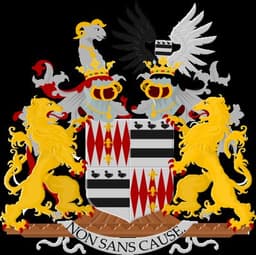
Charles De Geer
Politician · Modern
51.6Total

Tsakhiagiin Elbegdorj
Politician · Modern
47.4Total
Basic Information
Born
1720
1963
Died
1778
—
Era
Modern
Modern
Nationality
Sweden
Mongolia
Occupation
Politician
Politician
Civilization
Western
Eastern
Score Comparison
Military (10%)
49.0
12.4
Political (20%)
53.8
55.0
Influence (20%)
51.8
52.5
Legacy (20%)
45.0
42.5
Leadership (15%)
68.0
72.0
Strategy (15%)
42.6
33.1
TOTAL
51.6
47.4
Charles De Geer — Complete Timeline
1738 AD
Leader of the Hat PartyPolitical Action◆ Major
Charles De Geer became the leader of the Hat Party in the Swedish Riksdag, advocating for a more aggressive foreign policy against Russia and closer ties with France. His leadership shaped Swedish politics during the Age of Liberty.
Swedish PoliticsHat PartyAge of Liberty
Impact: national
1740 AD
Industrial Expansion in SwedenReform◆ Major
De Geer expanded his family's ironworks and textile mills, becoming one of Sweden's leading industrialists. His enterprises boosted Swedish exports and economic growth during the 18th century.
IndustryEconomySwedish History
Impact: nationalconstructive
1741 AD
Hat Party's War PolicyPolitical Action◆ Major
De Geer supported the Hat Party's decision to declare war on Russia in 1741, known as the Hats' Russian War. The war ended in Swedish defeat and territorial losses, damaging the party's reputation.
WarHat PartyForeign Policy
Impact: nationaldestructive
Tsakhiagiin Elbegdorj — Complete Timeline
1998 AD
Resigned as Prime Minister After 1998 ProtestPolitical Action◆ Major
As Prime Minister, Elbegdorj resigned following a no-confidence vote triggered by the 'Mongolian Democratic Union' protests against corruption and economic mismanagement. This was a key moment in Mongolia's democratic consolidation.
ResignationPolitical CrisisDemocracy
Impact: national
2009 AD
Elected President of MongoliaPolitical Action◆ Major
Elbegdorj won the 2009 presidential election as the Democratic Party candidate, defeating incumbent Nambaryn Enkhbayar. This marked the first peaceful transfer of power to a non-communist party in Mongolia's history.
ElectionDemocracyPeaceful Transition
Impact: nationalconstructive
2010 AD
Abolished the Death Penalty in MongoliaReform◆ Major
President Elbegdorj commuted all death sentences and signed a moratorium on executions, leading to Mongolia's de facto abolition of capital punishment. The death penalty was formally removed from the criminal code in 2016.
Human RightsLegal ReformAbolition
Impact: nationalprogressive
Initiated the 'Mongolia 2050' Long-Term Development PolicyReform
Elbegdorj launched the 'Mongolia 2050' vision, a comprehensive development strategy focusing on sustainable economic growth, environmental protection, and social welfare. The policy aimed to transform Mongolia into a developed nation by 2050.
Development PolicyEconomic Planning
Impact: nationalconstructive
2011 AD
Signed the 'Mongolia-United States Comprehensive Partnership' AgreementPolitical Action◆ Major
During a state visit to the United States, Elbegdorj signed a comprehensive partnership agreement with President Barack Obama, strengthening bilateral ties in trade, security, and democracy promotion.
DiplomacyBilateral RelationsUS-Mongolia
Impact: regionalconstructive
2013 AD
Re-elected President of MongoliaPolitical Action◆ Major
Elbegdorj won a second term in the 2013 presidential election with 50.2% of the vote, defeating two other candidates. His re-election demonstrated continued public support for democratic reforms.
ElectionDemocracy
Impact: nationalconstructive
This comparison has not been analyzed yet.
One-time AI generation (~1 minute). Scores and timeline are already available below.
Rankings
🥇
Charles De GeerLeader
Mil: 49.0Pol: 53.8Inf: 51.8
51.6
🥈
Tsakhiagiin Elbegdorj
Mil: 12.4Pol: 55.0Inf: 52.5
47.4
+4.2 behind
How This Comparison Works
Algorithm
Each figure is scored on 6 dimensions (0—100 scale) based on structured historical data: Military (10%), Political (20%), Influence (20%), Legacy (20%), Leadership (15%), Strategy (15%). The weighted total produces the final ranking.
Data Sources
Scores are computed from structured sub-indicators in the database. Scale factors adjust for era (Ancient ×0.85, Modern ×1.0) and civilization size (Eastern ×1.05, Other ×0.80) to account for differences in population and military scale.
Maximum 3 Figures
Comparisons are limited to 2—3 figures to ensure readability and statistical meaningfulness.
Error Margins
±5 points per dimension — Sub-scores are derived from historical records with inherent uncertainty. Two figures within 5 points on a dimension should be considered roughly equivalent in that area.
Total Score Accuracy
±3 points overall — The weighted combination of 6 dimensions produces a total score with approximately ±3 points of uncertainty. Differences of less than 3 points are not statistically significant— the figures are effectively tied.
Known Limitations
- Historical records are incomplete and uneven across civilizations
- Figures from oral-tradition societies may be underrepresented
- Occupation labels can misclassify multi-role figures
- Scores measure capability and impact, not moral character
- Quantitative scoring is a comparison tool, not absolute truth
Capability Radar
Military (10%) — Battles & Warfare
Battles
29
16
Win Rate
35
19
Expansion
33
20
Political (20%) — Governance & Reform
Reform
55
65
Diplomacy
50
55
Economy
70
50
Influence (20%) — Cultural & Global Reach
Cultural
30
30
Global
20
25
Legacy (20%) — Historical Impact
Historical
40
35
Longevity
30
20
Leadership (15%) — Power & Stability
Tenure
60
60
Stability
45
45
Strategy (15%) — Tactics & Innovation
Strategy
38
24
Tactics
40
29
Reform
45
26
Similar Comparisons
Comments & Discussion
No comments yet. Be the first to share your thoughts!