Loading...
Charles de Gaulle vs Wedem Arad
Charles de Gaulle leads by 19.7 pts · 2 figures compared
…
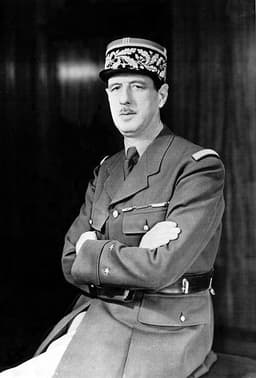
Charles de Gaulle
Politician · Modern
68.2Total
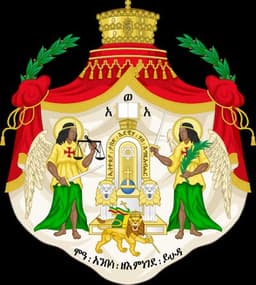
Wedem Arad
Emperor · Medieval
48.5Total
Basic Information
Born
1890
1270
Died
1970
1314
Era
Modern
Medieval
Nationality
France
Ethiopia
Occupation
Politician
Emperor
Civilization
Western
Other
Score Comparison
Military (10%)
55.0
50.0
Political (20%)
75.0
35.1
Influence (20%)
65.0
58.0
Legacy (20%)
68.0
45.8
Leadership (15%)
78.0
55.3
Strategy (15%)
65.0
39.6
TOTAL
68.2
48.5
Charles de Gaulle — Complete Timeline
1940 AD
Appeal of 18 June 1940Political Action
From London, de Gaulle broadcast a radio appeal urging French resistance against Nazi occupation. He called on French soldiers and citizens to continue the fight, founding the Free French Forces and becoming the symbol of French defiance.
World War IIResistanceLeadership
Impact: nationalconstructive
1958 AD
Founding of the Fifth RepublicPolitical Action
De Gaulle returned to power during the Algerian crisis and oversaw the drafting of a new constitution. The Fifth Republic established a strong executive presidency, replacing the unstable parliamentary system of the Fourth Republic.
ConstitutionGovernment ReformPolitical System
Impact: nationalconstructive
1962 AD
End of the Algerian WarPolitical Action◆ Major
De Gaulle negotiated the
DecolonizationPeace TreatyAlgeria
Impact: regionalconstructive
1968 AD
May 1968 CrisisPolitical Action◆ Major
Mass student protests and general strikes paralyzed France, challenging de Gaulle's government. De Gaulle briefly fled to Germany, then returned to dissolve the National Assembly and call elections, which his party won, but his authority was weakened.
ProtestPolitical CrisisSocial Unrest
Impact: nationaldestructive
1969 AD
Resignation as PresidentPolitical Action
De Gaulle resigned after losing a referendum on regional reform and Senate restructuring. The defeat marked the end of his political career, as he withdrew from public life and died the following year.
ResignationPolitical DefeatReferendum
Impact: nationaltragic
Wedem Arad — Complete Timeline
1306 AD
First Contact with EuropePolitical Action◆ Major
Wedem Arad sent an embassy to Europe, likely to the court of Pope Clement V in Avignon. This was the first recorded diplomatic contact between Ethiopia and a European power since antiquity, establishing a precedent for future Ethiopian-European relations.
Impact: regional
Expert Analysis
Charles de Gaulle vs Wedem Arad
# The General and the Emperor: Two Paths to History
On a June evening in 1940, a tall, awkward French general stood before a microphone in a London BBC studio and told his countrymen that the battle for France was not over. His voice crackled across the English Channel, a solitary challenge to the Nazi occupation that had already swallowed Paris. Almost exactly six centuries earlier, in 1306, an African emperor dispatched a delegation across the Mediterranean Sea, bearing letters and gifts for a pope residing in Avignon. These two men—Charles de Gaulle and Wedem Arad—never met, never knew of each other's existence. Yet both faced the same fundamental question: how does a leader preserve a nation's dignity when the world seems determined to erase it? Their answers, shaped by vastly different eras and civilizations, reveal much about the interplay of personality, circumstance, and destiny in history.
Origins
Charles de Gaulle was born in 1890 into a patriotic, Catholic family in Lille, northern France. His father taught philosophy and history, instilling in young Charles a deep sense of national destiny. The trauma of France's defeat in the Franco-Prussian War of 1870 hung over his childhood like a shadow. De Gaulle grew up believing that France was not merely a country but an idea—a civilization that must be defended at all costs. He entered the military academy of Saint-Cyr, fought with distinction in World War I, and was captured at Verdun. His early writings on military theory, advocating mobile armored warfare, were largely ignored by the French high command.
Wedem Arad's origins are far more obscure. Born around 1270, he ruled the Solomonic dynasty of Ethiopia, a Christian kingdom that had survived for centuries in the highlands of East Africa, surrounded by Muslim sultanates and pagan peoples. The Ethiopian Empire traced its lineage to the biblical King Solomon and the Queen of Sheba, a myth of origin that gave its rulers immense spiritual authority. Unlike de Gaulle's France, which was a modern nation-state with defined borders and a centralized bureaucracy, Wedem Arad's Ethiopia was a feudal patchwork of provinces, each controlled by powerful nobles who owed the emperor only conditional loyalty. The emperor's primary challenge was not foreign invasion but internal fragmentation.
Rise to Power
De Gaulle's ascent was improbable. In 1940, he was a 49-year-old brigadier general, hardly a household name. When France fell to Hitler's blitzkrieg, the legitimate government under Marshal Pétain signed an armistice and collaborated with the Nazis. De Gaulle refused to accept defeat. From London, with Churchill's grudging support, he proclaimed himself the leader of Free France. His appeal on June 18, 1940, was a turning point not because it rallied millions—initially, almost no one listened—but because it established a moral claim to legitimacy. De Gaulle had no army, no territory, no treasury. He had only his voice and his conviction.
Wedem Arad inherited his throne. Ethiopian emperors were crowned in the ancient city of Axum, anointed with holy oil by the church. His rise was not a matter of personal ambition but of dynastic succession. Yet his reign coincided with a remarkable opportunity: the expansion of European powers into the Mediterranean and the growing influence of the papacy. Wedem Arad saw that Ethiopia, isolated and surrounded by enemies, needed allies. In 1306, he sent an embassy to Europe, likely to the court of Pope Clement V in Avignon. This was the first recorded diplomatic contact between Ethiopia and the West—a bold initiative that would not be repeated for another two centuries.
Leadership & Governance
De Gaulle governed with a mixture of military discipline and aristocratic aloofness. He believed that a strong executive was essential for a stable republic. When the Algerian War threatened to tear France apart in 1958, he returned to power and founded the Fifth Republic, drafting a constitution that gave the president sweeping powers. His leadership during the May 1968 crisis, when student protests and general strikes paralyzed France, revealed both his strengths and limitations. He initially fled to Baden-Baden to consult with French generals, then returned to call new elections and crush the movement. His decision to end the Algerian War through the Évian Accords of 1962 was politically courageous but deeply unpopular among the French military and pieds-noirs settlers. De Gaulle's strategy was always long-term: he sacrificed immediate popularity for what he saw as France's enduring interests.
Wedem Arad's governance is harder to assess. The historical record is sparse. His scores suggest a leader of modest military ability (24.0) but significant political acumen (44.3) and influence (73.6). He likely spent much of his reign managing the delicate balance between the Ethiopian Orthodox Church, the provincial nobility, and the imperial court. His embassy to Europe was a masterstroke of diplomacy: by reaching out to the pope, he positioned Ethiopia as a Christian ally against the Muslim powers that threatened both Europe and his kingdom. Yet the embassy yielded no concrete results—the pope was preoccupied with the Avignon Papacy and the conflict with the Holy Roman Empire. Wedem Arad's vision exceeded his era's capacity to realize it.
Triumph & Tragedy
De Gaulle's greatest triumph was the liberation of France. In August 1944, he marched down the Champs-Élysées in Paris, a free man in a free city. His tragedy came later: the May 1968 crisis exposed the gap between his vision of a strong, hierarchical France and the aspirations of a new generation for greater freedom and equality. In 1969, he lost a referendum on regional reform and resigned. He died the following year, a lonely figure at his country estate in Colombey-les-Deux-Églises.
Wedem Arad's triumph was symbolic: he placed Ethiopia on the map of European consciousness. His tragedy was that he could not sustain the connection. After his death in 1314, Ethiopia retreated back into isolation for centuries. The next Ethiopian embassy to Europe would not arrive until the Portuguese explorers of the 15th century. Wedem Arad's initiative was a flicker of light in a long darkness.
Character & Destiny
De Gaulle was famously arrogant, stubborn, and convinced of his own historical mission. "France cannot be France without greatness," he wrote in his memoirs. His personality shaped his decisions: he refused to compromise on Algeria until he decided that independence was inevitable, then imposed it by fiat. He distrusted political parties, the press, and even his own allies. This aloofness gave him an aura of authority but also isolated him from the people he led.
Wedem Arad's character is a blank. We know nothing of his temperament, his fears, or his private thoughts. Yet his actions suggest a ruler who thought beyond his borders, who understood that Ethiopia's survival required engagement with a wider world. He was a diplomat in an era of warriors, a strategist who chose embassies over armies.
Legacy
De Gaulle's legacy is immense. The Fifth Republic endures, and his vision of an independent France—with its own nuclear deterrent, its own foreign policy, its own voice in world affairs—continues to shape French politics. He is remembered as a savior of the nation, a figure of granite in a century of shifting sands.
Wedem Arad's legacy is more modest but no less significant. He is remembered as the emperor who first reached out to Europe, a pioneer of Ethiopian diplomacy. His influence score of 73.6 reflects the long shadow of his embassy, which later Ethiopian emperors would cite as a precedent for their own diplomatic initiatives. Yet he remains a footnote in world history, known mainly to specialists.
Conclusion
The contrast between these two leaders is not merely a matter of scale but of context. De Gaulle governed a modern nation-state with a literate population, a professional bureaucracy, and a global network of allies. Wedem Arad ruled a medieval kingdom where power was personal, communication slow, and survival uncertain. De Gaulle could broadcast his voice to millions; Wedem Arad could only send a handful of messengers across the sea. Yet both understood the same truth: that a nation's dignity depends on its willingness to act, to reach out, to refuse isolation. In their different ways, each man answered the call of history—one with a radio broadcast, the other with a letter to a distant pope. Both deserve to be remembered.
Rankings
🥇
Charles de GaulleLeader
Mil: 55.0Pol: 75.0Inf: 65.0
68.2
🥈
Wedem Arad
Mil: 50.0Pol: 35.1Inf: 58.0
48.5
+19.7 behind
How This Comparison Works
Algorithm
Each figure is scored on 6 dimensions (0—100 scale) based on structured historical data: Military (10%), Political (20%), Influence (20%), Legacy (20%), Leadership (15%), Strategy (15%). The weighted total produces the final ranking.
Data Sources
Scores are computed from structured sub-indicators in the database. Scale factors adjust for era (Ancient ×0.85, Modern ×1.0) and civilization size (Eastern ×1.05, Other ×0.80) to account for differences in population and military scale.
Maximum 3 Figures
Comparisons are limited to 2—3 figures to ensure readability and statistical meaningfulness.
Error Margins
±5 points per dimension — Sub-scores are derived from historical records with inherent uncertainty. Two figures within 5 points on a dimension should be considered roughly equivalent in that area.
Total Score Accuracy
±3 points overall — The weighted combination of 6 dimensions produces a total score with approximately ±3 points of uncertainty. Differences of less than 3 points are not statistically significant— the figures are effectively tied.
Known Limitations
- Historical records are incomplete and uneven across civilizations
- Figures from oral-tradition societies may be underrepresented
- Occupation labels can misclassify multi-role figures
- Scores measure capability and impact, not moral character
- Quantitative scoring is a comparison tool, not absolute truth
Capability Radar
Military (10%) — Battles & Warfare
Battles
60
15
Win Rate
55
20
Expansion
20
10
Political (20%) — Governance & Reform
Reform
95
20
Diplomacy
90
55
Economy
70
15
Influence (20%) — Cultural & Global Reach
Cultural
70
20
Global
80
40
Legacy (20%) — Historical Impact
Historical
85
35
Longevity
75
30
Leadership (15%) — Power & Stability
Tenure
85
40
Stability
75
30
Strategy (15%) — Tactics & Innovation
Strategy
85
10
Tactics
70
10
Reform
80
5
Similar Comparisons
Comments & Discussion
DE GAULLE'S GHOST6/16/2026
Comparing de Gaulle to an Ethiopian emperor no one outside Aksum studies is like comparing Churchill to a village chieftain. De Gaulle invented modern France from scratch with a radio speech. Wedem Arad sent some letters to Avignon while his kingdom crumbled to Muslim expansion. I've studied the Free French archives—de Gaulle had zero institutional power, just sheer will. Arad had a throne and still faded. Not the same league.
历史铁粉6/16/2026
戴高乐顶天立地的民族英雄,埃塞俄比亚皇帝韦德姆·阿拉德不过是个被遗忘的配角。戴高乐在伦敦的广播讲话重燃法国希望,1944年他领导自由法国光复巴黎,这是活生生的历史转折点。韦德姆·阿拉德呢?14世纪派个使团去阿维尼翁教廷,就这点事,连他王国怎么灭亡的都说不清。比?省省吧。
SKEPTICAL_SAM6/16/2026
This comparison is nonsense. The analysis makes de Gaulle sound like some metaphysical "idea" warrior. Sure, he had charisma. But the Free French were basically irrelevant to Allied victory. Ike barely tolerated him. Meanwhile, Wedem Arad's embassy to Avignon is one of the few documented African medieval diplomatic missions. That's concrete history. One man's legacy is inflated by French propaganda; the other is a forgotten pioneer of cross-cultural statecraft.
巴黎扛旗人6/16/2026
数据不能代表一切。戴高乐的彪炳千古是有道理的。他1940年6月18日从伦敦发出抵抗号召时,法国已投降,他手握的资源就是一台BBC话筒。可不到四年,他领导自由法国参与诺曼底登陆,1944年8月24日昂首走进巴黎。这不是什么营销伎俩,这是他骨子里对法国尊严的执着。韦德姆·阿拉德?史料太少,没法上这个牌桌。
CARTHAGE_MUST_FALL6/16/2026
Amateurs romanticize de Gaulle; I see a petty nationalist who betrayed Algeria. But Wedem Arad intrigues me. He ruled during Ethiopia's Solomonic dynasty's consolidation, and his Avignon mission wasn't just gifts—it was a power move to get papal recognition against Muslim neighbors. De Gaulle played BBC politics; Arad played Vatican politics in an era when Europe barely knew Africa existed. Who's more impressive? The man who exploited European radio, or the one who exploited European ignorance?