Loading...
Charles de Gaulle vs Theodore I Laskaris
Charles de Gaulle leads by 6.4 pts · 2 figures compared
…
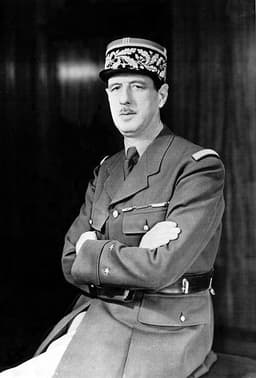
Charles de Gaulle
Politician · Modern
68.2Total
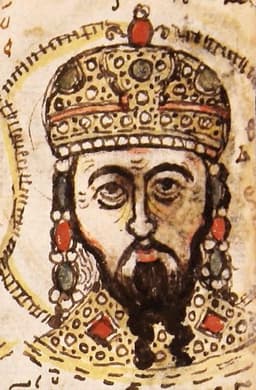
Theodore I Laskaris
Emperor · Medieval
61.8Total
Basic Information
Born
1890
1174
Died
1970
1222
Era
Modern
Medieval
Nationality
France
Nicaean Empire
Occupation
Politician
Emperor
Civilization
Western
Western
Score Comparison
Military (10%)
55.0
65.0
Political (20%)
75.0
60.0
Influence (20%)
65.0
61.0
Legacy (20%)
68.0
56.0
Leadership (15%)
78.0
77.2
Strategy (15%)
65.0
55.0
TOTAL
68.2
61.8
Charles de Gaulle — Complete Timeline
1940 AD
Appeal of 18 June 1940Political Action
From London, de Gaulle broadcast a radio appeal urging French resistance against Nazi occupation. He called on French soldiers and citizens to continue the fight, founding the Free French Forces and becoming the symbol of French defiance.
World War IIResistanceLeadership
Impact: nationalconstructive
1958 AD
Founding of the Fifth RepublicPolitical Action
De Gaulle returned to power during the Algerian crisis and oversaw the drafting of a new constitution. The Fifth Republic established a strong executive presidency, replacing the unstable parliamentary system of the Fourth Republic.
ConstitutionGovernment ReformPolitical System
Impact: nationalconstructive
1962 AD
End of the Algerian WarPolitical Action◆ Major
De Gaulle negotiated the
DecolonizationPeace TreatyAlgeria
Impact: regionalconstructive
1968 AD
May 1968 CrisisPolitical Action◆ Major
Mass student protests and general strikes paralyzed France, challenging de Gaulle's government. De Gaulle briefly fled to Germany, then returned to dissolve the National Assembly and call elections, which his party won, but his authority was weakened.
ProtestPolitical CrisisSocial Unrest
Impact: nationaldestructive
1969 AD
Resignation as PresidentPolitical Action
De Gaulle resigned after losing a referendum on regional reform and Senate restructuring. The defeat marked the end of his political career, as he withdrew from public life and died the following year.
ResignationPolitical DefeatReferendum
Impact: nationaltragic
Theodore I Laskaris — Complete Timeline
1204 AD
Foundation of the Empire of NicaeaPolitical Action
After the Fourth Crusade captured Constantinople, Theodore I Laskaris fled to Nicaea in Asia Minor and established a Byzantine government-in-exile. He organized resistance against the Latin Empire and the Seljuk Turks, laying the foundation for the Nicaean Empire as the primary successor state of Byzantium.
Fourth CrusadeSuccessor StateExile Government
Impact: regionalconstructive
1208 AD
Coronation as emperor by the Patriarch of ConstantinoplePolitical Action◆ Major
Theodore I Laskaris was formally crowned as emperor by the newly elected Patriarch of Constantinople-in-exile, Michael IV Autoreianos. This coronation legitimized the Nicaean Empire as the rightful continuation of the Byzantine Empire, with full ecclesiastical authority.
CoronationLegitimacyPatriarchate
Impact: regionalconstructive
1211 AD
Battle of Antioch on the MeanderWar◆ Major
Theodore I Laskaris defeated the Seljuk Sultanate of Rum at the Battle of Antioch on the Meander. The victory secured Nicaean control over western Anatolia and prevented Seljuk expansion into Byzantine territories, establishing Theodore as a major regional power.
Byzantine-Seljuk WarsMilitary VictoryAnatolian Campaign
Impact: regional
Defeat of the Latin Empire at the Battle of RhyndacusWar
Theodore I Laskaris led Nicaean forces to a victory over the Latin Empire at the Battle of Rhyndacus. The battle halted Latin expansion into Asia Minor and secured Nicaean control over the region, strengthening the Byzantine resistance against the crusader states.
Latin EmpireMilitary VictoryAsia Minor
Impact: regional
Expert Analysis
Charles de Gaulle vs Theodore I Laskaris
# The Man Who Would Not Bend
In the summer of 1940, a towering French general stood before a microphone in a London studio, his voice crackling across the English Channel to a defeated nation. Charles de Gaulle, virtually unknown to his countrymen, declared that France had lost a battle but not the war. Seven centuries earlier, another man faced his own moment of annihilation. As crusaders sacked Constantinople in 1204, a Byzantine aristocrat named Theodore Laskaris slipped through the flames, carrying not just his life but the seed of an empire. Both men built nations from ashes. But their paths—and their endings—could not have been more different.
Origins
De Gaulle was born into a devoutly Catholic, patriotic family in Lille in 1890. His father taught history and philosophy, instilling in young Charles a sense of France's eternal destiny. The boy devoured the works of Nietzsche and Bergson, developing an almost mystical belief in national greatness. He entered Saint-Cyr military academy, where his height and aloofness earned him the nickname "the Great Asparagus." The Franco-Prussian War of 1870, which ended in French humiliation, haunted his generation. De Gaulle would spend his life trying to erase that shame.
Theodore Laskaris emerged from a very different world. Born in 1174, he belonged to the Byzantine aristocracy, a class accustomed to court intrigue and imperial decline. The Byzantine Empire had been crumbling for decades, weakened by Latin aggression and internal decay. Theodore was not a philosopher-soldier but a survivor, a man who understood that in the chaos of the early thirteenth century, only the ruthless and adaptable could endure. He had witnessed the Fourth Crusade's betrayal—crusaders who had promised to fight Muslims instead turned on fellow Christians, looting the greatest city in Christendom.
Rise to Power
De Gaulle's ascent was improbable. In 1940, he was a junior general, a tank commander who had briefly tasted combat. When Marshal Pétain surrendered, de Gaulle fled to London with almost nothing: no army, no treasury, no legitimacy. Churchill gave him a radio microphone. That single broadcast on June 18, 1940 transformed an obscure officer into the voice of French resistance. For four years, he battled not just Nazis but Allied leaders who viewed him as a nuisance. Roosevelt called him a prima donna. Churchill found him insufferable. Yet de Gaulle refused to be a puppet, insisting that France must reclaim its sovereignty.
Theodore's rise was quicker and bloodier. When Constantinople fell in 1204, he escaped to Nicaea, a city in western Anatolia. There he gathered Byzantine refugees, proclaimed himself emperor, and began rebuilding. In 1208, he secured formal coronation by the newly elected Patriarch of Constantinople-in-exile, Michael IV Autoreianos. This gave him religious legitimacy—a crucial weapon. Unlike de Gaulle, Theodore did not have to beg for foreign support. He fought for every inch of his realm, defeating the Seljuk Turks at the Battle of Antioch on the Meander in 1211 and repelling the Latin Empire at the Battle of Rhyndacus the same year.
Leadership & Governance
De Gaulle governed through sheer force of personality. When he returned to power in 1958, during the Algerian crisis, he wrote a new constitution for the Fifth Republic that concentrated power in the presidency. He believed France needed a strong leader, not squabbling parliamentarians. His decisions were often ruthless: he ended the Algerian War in 1962 by granting independence, betraying the French colonists who had brought him to power. He withdrew France from NATO's integrated command, expelled foreign troops, and insisted on an independent nuclear deterrent. "France cannot be France without greatness," he declared.
Theodore ruled differently. He built a Byzantine court-in-exile, complete with bureaucrats, generals, and clergy. His empire was small—just a sliver of Asia Minor—but he made it work. He minted coins, appointed governors, and maintained diplomatic relations with the Seljuks and the Pope. He understood that survival required not just military victories but institutional stability. Unlike de Gaulle, who often governed by decree, Theodore worked within Byzantine traditions of consensus and hierarchy.
Triumph & Tragedy
De Gaulle's greatest triumph was the creation of the Fifth Republic, a system that gave France political stability for decades. His tragic failure came in May 1968, when student protests and a general strike paralyzed France. The old general seemed bewildered by the young rebels chanting "It is forbidden to forbid." He briefly fled to Germany, consulting with French generals, then returned to call elections. He won, but the magic was gone. In 1969, he resigned after losing a referendum on regional reform—a petty defeat for a man who had defied Hitler and Churchill.
Theodore's triumph was survival itself. He kept the Byzantine flame alive when all seemed lost. His tragedy was that he never saw Constantinople restored. He died in 1222, his successor John III Doukas Vatatzes would continue the work, but Theodore himself never marched through the gates of the Queen of Cities. He built a foundation, not a monument.
Character & Destiny
De Gaulle's character was his destiny. He was arrogant, stubborn, and cold—qualities that made him a terrible colleague but a magnificent leader in crisis. He once said, "The graveyards are full of indispensable men." Yet he acted as if he were indispensable. His aloofness cost him friendships and nearly cost him power. But without that granite certainty, France might have remained a vassal state.
Theodore was more pragmatic. He knew when to fight and when to negotiate. He allied with the Seljuks against the Latins, then with the Latins against the Seljuks. He was not a visionary like de Gaulle but a craftsman, patiently rebuilding what the crusaders had shattered. His personality was less magnetic, but his achievement was no less remarkable.
Legacy
De Gaulle is remembered as the savior of French honor, the architect of modern France. His name adorns airports, streets, and the world's most visited monument—Charles de Gaulle Airport. Yet his legacy is contested: critics see a nationalist who weakened Europe, a democrat who governed like a monarch.
Theodore is less famous, known mainly to Byzantinists. But his legacy is profound. Without his Nicaean empire, there would have been no Byzantine restoration in 1261, no Paleologan Renaissance, no preservation of Greek learning that later fueled the Italian Renaissance. He kept a civilization alive.
Conclusion
Both men faced the same question: what do you do when your world ends? De Gaulle answered with words, Theodore with deeds. One built a constitution, the other a dynasty. One died in retirement, the other on his throne. Yet both understood that history does not belong to the strong but to the stubborn. In the end, the great general and the forgotten emperor shared one truth: that a nation's soul is not carried in armies or treaties, but in the will of those who refuse to let it die.
Rankings
🥇
Charles de GaulleLeader
Mil: 55.0Pol: 75.0Inf: 65.0
68.2
🥈
Theodore I Laskaris
Mil: 65.0Pol: 60.0Inf: 61.0
61.8
+6.4 behind
How This Comparison Works
Algorithm
Each figure is scored on 6 dimensions (0—100 scale) based on structured historical data: Military (10%), Political (20%), Influence (20%), Legacy (20%), Leadership (15%), Strategy (15%). The weighted total produces the final ranking.
Data Sources
Scores are computed from structured sub-indicators in the database. Scale factors adjust for era (Ancient ×0.85, Modern ×1.0) and civilization size (Eastern ×1.05, Other ×0.80) to account for differences in population and military scale.
Maximum 3 Figures
Comparisons are limited to 2—3 figures to ensure readability and statistical meaningfulness.
Error Margins
±5 points per dimension — Sub-scores are derived from historical records with inherent uncertainty. Two figures within 5 points on a dimension should be considered roughly equivalent in that area.
Total Score Accuracy
±3 points overall — The weighted combination of 6 dimensions produces a total score with approximately ±3 points of uncertainty. Differences of less than 3 points are not statistically significant— the figures are effectively tied.
Known Limitations
- Historical records are incomplete and uneven across civilizations
- Figures from oral-tradition societies may be underrepresented
- Occupation labels can misclassify multi-role figures
- Scores measure capability and impact, not moral character
- Quantitative scoring is a comparison tool, not absolute truth
Capability Radar
Military (10%) — Battles & Warfare
Battles
60
65
Win Rate
55
70
Expansion
20
60
Political (20%) — Governance & Reform
Reform
95
65
Diplomacy
90
70
Economy
70
60
Influence (20%) — Cultural & Global Reach
Cultural
70
50
Global
80
45
Legacy (20%) — Historical Impact
Historical
85
65
Longevity
75
55
Leadership (15%) — Power & Stability
Tenure
85
70
Stability
75
65
Strategy (15%) — Tactics & Innovation
Strategy
85
75
Tactics
70
60
Reform
80
55
Similar Comparisons
Comments & Discussion
No comments yet. Be the first to share your thoughts!