Loading...
Charles de Gaulle vs Louis XI
Charles de Gaulle leads by 0.5 pts · 2 figures compared
…
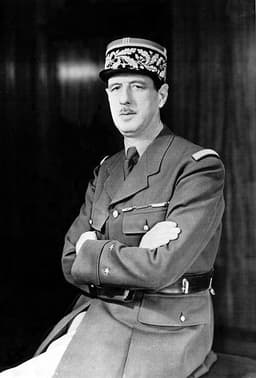
Charles de Gaulle
Politician · Modern
68.2Total
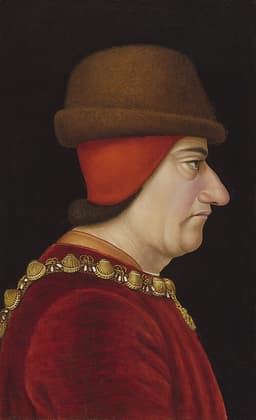
Louis XI
Emperor · Medieval
67.7Total
Basic Information
Born
1890
1423
Died
1970
1483
Era
Modern
Medieval
Nationality
France
France
Occupation
Politician
Emperor
Civilization
Western
Western
Score Comparison
Military (10%)
55.0
45.0
Political (20%)
75.0
78.0
Influence (20%)
65.0
68.0
Legacy (20%)
68.0
65.0
Leadership (15%)
78.0
85.0
Strategy (15%)
65.0
55.0
TOTAL
68.2
67.7
Charles de Gaulle — Complete Timeline
1940 AD
Appeal of 18 June 1940Political Action
From London, de Gaulle broadcast a radio appeal urging French resistance against Nazi occupation. He called on French soldiers and citizens to continue the fight, founding the Free French Forces and becoming the symbol of French defiance.
World War IIResistanceLeadership
Impact: nationalconstructive
1958 AD
Founding of the Fifth RepublicPolitical Action
De Gaulle returned to power during the Algerian crisis and oversaw the drafting of a new constitution. The Fifth Republic established a strong executive presidency, replacing the unstable parliamentary system of the Fourth Republic.
ConstitutionGovernment ReformPolitical System
Impact: nationalconstructive
1962 AD
End of the Algerian WarPolitical Action◆ Major
De Gaulle negotiated the
DecolonizationPeace TreatyAlgeria
Impact: regionalconstructive
1968 AD
May 1968 CrisisPolitical Action◆ Major
Mass student protests and general strikes paralyzed France, challenging de Gaulle's government. De Gaulle briefly fled to Germany, then returned to dissolve the National Assembly and call elections, which his party won, but his authority was weakened.
ProtestPolitical CrisisSocial Unrest
Impact: nationaldestructive
1969 AD
Resignation as PresidentPolitical Action
De Gaulle resigned after losing a referendum on regional reform and Senate restructuring. The defeat marked the end of his political career, as he withdrew from public life and died the following year.
ResignationPolitical DefeatReferendum
Impact: nationaltragic
Louis XI — Complete Timeline
1464 AD
Established the Postal SystemReform
Louis XI created a royal postal system with relay stations across France, enabling faster communication between the crown and provincial officials. This administrative reform improved governance and intelligence gathering.
AdministrationCommunicationReform
Impact: nationalconstructive
1465 AD
Defeated the League of the Public WealWar◆ Major
Louis XI faced a coalition of powerful nobles, the League of the Public Weal, led by Charles the Bold of Burgundy. Although the Battle of Montlh
Civil WarNoble RebellionBurgundy
Impact: national
1475 AD
Treaty of PicquignyPolitical Action◆ Major
Louis XI negotiated the Treaty of Picquigny with Edward IV of England, ending English military intervention in France. Louis paid a large pension to Edward in exchange for English withdrawal, avoiding a costly war and securing his northern border.
TreatyDiplomacyEngland
Impact: regionalconstructive
1477 AD
Acquired BurgundyPolitical Action
After Charles the Bold's death at the Battle of Nancy, Louis XI seized the Duchy of Burgundy and other Burgundian territories, including Picardy and the Somme towns. This expansion significantly increased royal domain and weakened the Burgundian state.
Territorial ExpansionBurgundyRoyal Domain
Impact: regionalconstructive
1481 AD
Annexed Anjou and MainePolitical Action
Louis XI annexed the counties of Anjou and Maine after the death of Charles of Anjou, incorporating them into the royal domain. This further consolidated French territory and reduced the power of the Angevin nobility.
Territorial ExpansionAnjouMaine
Impact: nationalconstructive
Expert Analysis
Charles de Gaulle vs Louis XI
# The Spider and the Sword
In the summer of 1940, a tall, awkward general stood before a BBC microphone in London and told the French people that a battle had been lost, but the war was not over. Five centuries earlier, another Frenchman—small, secretive, and dressed in plain clothes—sat in a drafty castle at Plessis-lès-Tours, weaving a web of letters, spies, and treaties that would stitch a fractured kingdom into the fabric of modern France. Charles de Gaulle and Louis XI lived worlds apart, yet both faced the same fundamental question: how do you hold France together when everything seems to be falling apart? Their answers, forged in radically different eras, tell us as much about the nature of power as they do about the men who wielded it.
Origins
Louis XI was born in 1423, into a France still bleeding from the Hundred Years' War. His father, Charles VII, was a king so uncertain of his own legitimacy that he was known as "the Well-Served"—a monarch who owed his crown to Joan of Arc's sword. Louis grew up in the shadow of that uncertainty, and he learned early that the world was a chessboard where every piece could be turned against you. He rebelled against his father, fought in the shadows, and emerged with a mind that saw conspiracy in every smile.
Charles de Gaulle entered the world in 1890, in Lille, to a devoutly Catholic, nationalist family. His father taught philosophy and history, and young Charles absorbed the conviction that France possessed a unique destiny. The France he knew was a republic bruised by the Franco-Prussian War, a nation nursing a wound that would fester into the catastrophe of 1914. De Gaulle was shaped not by the cunning of the medieval court, but by the discipline of the army and the clarity of the written word. He wrote books on military theory; Louis XI wrote letters in code.
Here, then, is the first great difference. Louis XI was formed by a world where power was personal—where a duke's loyalty could be bought with a title, a town, or a threat. De Gaulle was formed by a world where power was ideological—where nations rose and fell on the strength of their ideas, their constitutions, and their capacity to inspire. One man learned to manipulate men; the other, to embody France itself.
Rise to Power
Louis XI became king in 1461, but he had been preparing for power since adolescence. His path was that of the spider: patient, invisible, and relentless. He did not conquer his kingdom through glorious battles—his military score is a mere 14.5, the lowest among major French rulers. Instead, he conquered through patience. When the League of the Public Weal—a coalition of powerful nobles led by Charles the Bold of Burgundy—rose against him in 1465, Louis did not crush them in a single, decisive battle. He negotiated, divided, and waited. He understood that time was his ally, and that the pride of his enemies would eventually destroy them.
De Gaulle's rise was the opposite: dramatic, public, and forged in crisis. In 1940, he was a junior general with no political base, no party, and no army. His Appeal of 18 June was an act of sheer audacity—a man speaking for a country that had not yet chosen him. He spent the war years in exile, struggling to be recognized as the legitimate voice of France. His turning point came not on a battlefield, but at the moment of national collapse in 1958, when the Fourth Republic imploded under the weight of the Algerian War. De Gaulle returned not as a conqueror, but as a savior—a role he had been rehearsing for nearly two decades.
Leadership & Governance
If Louis XI governed like a spider, de Gaulle governed like a statue—immovable, monumental, and designed to be seen from a distance. Louis XI's political genius lay in the small, the intimate, the invisible. He established a royal postal system in 1464, not as a grand reform, but as a tool of control: the king would know everything first. He negotiated the Treaty of Picquigny with England's Edward IV in 1475, paying off the English king to leave France alone—a bribe disguised as diplomacy. And when Charles the Bold died at Nancy in 1477, Louis moved with breathtaking speed to seize Burgundy, Anjou, and Maine, absorbing them into the royal domain through a combination of legal claims, marriages, and sheer opportunism.
De Gaulle governed on a grander scale, with a vision that was constitutional, not conspiratorial. He founded the Fifth Republic in 1958, crafting a constitution that gave the president unprecedented power—a direct response to the paralysis of the parliamentary system that had failed France. He ended the Algerian War in 1962 through the Évian Accords, a decision that horrified his own supporters but was, in his view, the only path to national unity. He faced the May 1968 crisis with bewilderment—student protests and general strikes that he could not understand, because they were not about territory or treaties, but about culture, freedom, and the meaning of authority itself.
Triumph & Tragedy
Louis XI's greatest triumph was the unification of France. When he died in 1483, the kingdom was larger, richer, and more centralized than it had ever been. His tragedy was that he was feared, not loved. He died alone, surrounded by guards and astrologers, a man who had trusted no one and was trusted by none.
De Gaulle's greatest moment was the liberation of Paris in 1944, when he walked down the Champs-Élysées as the living symbol of a resurrected France. His tragedy came in 1969, when he resigned after losing a referendum on regional reform—a small, almost trivial issue compared to the wars and crises he had weathered. He had spent his entire career trying to make France great, only to be undone by a vote on local government.
Character & Destiny
Louis XI was small, secretive, and superstitious. He wore plain clothes, ate simple food, and surrounded himself with commoners and clerics rather than nobles. He was called "the Universal Spider" not just because of his web of alliances, but because he seemed to be everywhere, always watching. His personality shaped his destiny: his cunning unified France, but his paranoia isolated him.
De Gaulle was tall, aloof, and theatrical. He spoke of France as a "princess in a fairy tale" and saw himself as her protector. His personality was his strength—his obstinacy, his sense of destiny, his refusal to compromise—but it was also his weakness. In 1968, he could not understand why the young people of France were protesting, because he had never been young in the way they were. He was a man of the nineteenth century trying to rule in the twentieth.
Legacy
Louis XI's legacy is the modern French state. The centralized administration, the postal system, the absorption of Burgundy and Provence—these were the building blocks of the nation that would later produce Joan of Arc, Louis XIV, and the Revolution. He is remembered as a cunning, effective ruler, but not a beloved one.
De Gaulle's legacy is the Fifth Republic, which still governs France today. He gave France a constitution that worked, a sense of national pride after the humiliation of World War II, and a foreign policy independent of the great powers. He is remembered as a giant, but also as a lonely one.
Conclusion
The spider and the sword—one wove in darkness, the other struck in light. Louis XI built France through patience and cunning; de Gaulle saved it through pride and vision. Both succeeded, and both paid the price. What drove their different outcomes was not just their eras, but their souls: Louis XI saw France as a kingdom to be assembled, piece by piece; de Gaulle saw France as an idea to be embodied, moment by moment. In the end, the France we know today is the child of both—a nation woven from threads of intrigue and forged in the fire of will.
Rankings
🥇
Charles de GaulleLeader
Mil: 55.0Pol: 75.0Inf: 65.0
68.2
🥈
Louis XI
Mil: 45.0Pol: 78.0Inf: 68.0
67.7
+0.5 behind
How This Comparison Works
Algorithm
Each figure is scored on 6 dimensions (0—100 scale) based on structured historical data: Military (10%), Political (20%), Influence (20%), Legacy (20%), Leadership (15%), Strategy (15%). The weighted total produces the final ranking.
Data Sources
Scores are computed from structured sub-indicators in the database. Scale factors adjust for era (Ancient ×0.85, Modern ×1.0) and civilization size (Eastern ×1.05, Other ×0.80) to account for differences in population and military scale.
Maximum 3 Figures
Comparisons are limited to 2—3 figures to ensure readability and statistical meaningfulness.
Error Margins
±5 points per dimension — Sub-scores are derived from historical records with inherent uncertainty. Two figures within 5 points on a dimension should be considered roughly equivalent in that area.
Total Score Accuracy
±3 points overall — The weighted combination of 6 dimensions produces a total score with approximately ±3 points of uncertainty. Differences of less than 3 points are not statistically significant— the figures are effectively tied.
Known Limitations
- Historical records are incomplete and uneven across civilizations
- Figures from oral-tradition societies may be underrepresented
- Occupation labels can misclassify multi-role figures
- Scores measure capability and impact, not moral character
- Quantitative scoring is a comparison tool, not absolute truth
Capability Radar
Military (10%) — Battles & Warfare
Battles
60
45
Win Rate
55
40
Expansion
20
65
Political (20%) — Governance & Reform
Reform
95
80
Diplomacy
90
95
Economy
70
70
Influence (20%) — Cultural & Global Reach
Cultural
70
55
Global
80
60
Legacy (20%) — Historical Impact
Historical
85
75
Longevity
75
70
Leadership (15%) — Power & Stability
Tenure
85
75
Stability
75
65
Strategy (15%) — Tactics & Innovation
Strategy
85
70
Tactics
70
55
Reform
80
60
Similar Comparisons
Comments & Discussion
Le Cœur du Lion Manqué6/16/2026
Louis XI built France through paranoia and paperwork, but De Gaulle? He's the overrated ego who nearly let France fall twice—once in 1940, then again in 1968. The Spider kept nobles in check with spies and taxes; the Sword fled to London and called it resistance. Give me the man who actually held the realm together, not the one who posed for statues. Louis’s France survived him. De Gaulle’s legacy is a constitution he bulldozed through.
蜘蛛算盘6/16/2026
路易十一靠间谍网和联姻吞了勃艮第,但戴高乐?他那个第五共和国的宪法根本就是皇帝新衣——表面增强总统权力,实际上是为他量身定做的独裁玩具。看看1962年全民公投改选举制吧,投票箱都还没凉透他就撕了程序。什么"自由法国",配不上"蜘蛛"的阴险智慧。
The Gaullist Ghost6/16/2026
You revisionists miss the point entirely. De Gaulle wasn't a king; he was a foundation layer. When France collapsed in 1940, Louis XI wouldn’t have saved it—he’d have cut a deal with the English. De Gaulle said no to surrender, rebuilt the army in exile, and later created the Fifth Republic that gave France fifty years of stability. Louis XI manipulated; De Gaulle inspired. That’s the difference between a spider and a sword.
数据拆穿家6/16/2026
说什么战略共识?戴高乐撤离阿尔及利亚时根本没救法国经济——1960年代殖民帝国解体让GDP直接缩水7%。路易十一至少靠吞并勃艮第公国促进了领土税收效率。所谓"法兰西命运"请用图表说话:前者靠抽签式外交,后者实打实合并了法国三分之一的领土。别把传记文学当历史分析。
The Silk and Steel Scholar6/16/2026
Both were pragmatists, but let’s stop romanticizing the spider. Louis XI starved prisoners in iron cages at Plessis-lès-Tours—that’s not statecraft, that’s petty cruelty. De Gaulle, for all his arrogance, never resorted to personal torture. He put France above himself, even when it meant resigning in 1969. Louis put himself above France, even when it meant betraying his own father. One built a nation through fear; the other through pride. I know which legacy I’d choose.