Loading...
Charles de Gaulle vs Empress Dowager Cixi
Charles de Gaulle leads by 13.2 pts · 2 figures compared
…
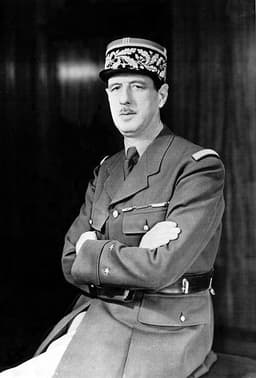
Charles de Gaulle
Politician · Modern
68.2Total
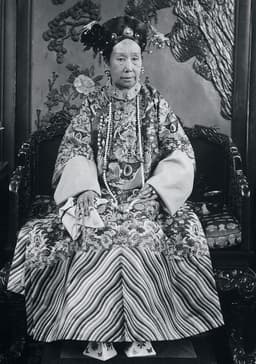
Empress Dowager Cixi
Politician · Modern
55.0Total
Basic Information
Born
1890
1835
Died
1970
1908
Era
Modern
Modern
Nationality
France
China
Occupation
Politician
Politician
Civilization
Western
Eastern
Score Comparison
Military (10%)
55.0
25.9
Political (20%)
75.0
53.8
Influence (20%)
65.0
58.3
Legacy (20%)
68.0
52.0
Leadership (15%)
78.0
72.0
Strategy (15%)
65.0
60.0
TOTAL
68.2
55.0
Charles de Gaulle — Complete Timeline
1940 AD
Appeal of 18 June 1940Political Action
From London, de Gaulle broadcast a radio appeal urging French resistance against Nazi occupation. He called on French soldiers and citizens to continue the fight, founding the Free French Forces and becoming the symbol of French defiance.
World War IIResistanceLeadership
Impact: nationalconstructive
1958 AD
Founding of the Fifth RepublicPolitical Action
De Gaulle returned to power during the Algerian crisis and oversaw the drafting of a new constitution. The Fifth Republic established a strong executive presidency, replacing the unstable parliamentary system of the Fourth Republic.
ConstitutionGovernment ReformPolitical System
Impact: nationalconstructive
1962 AD
End of the Algerian WarPolitical Action◆ Major
De Gaulle negotiated the
DecolonizationPeace TreatyAlgeria
Impact: regionalconstructive
1968 AD
May 1968 CrisisPolitical Action◆ Major
Mass student protests and general strikes paralyzed France, challenging de Gaulle's government. De Gaulle briefly fled to Germany, then returned to dissolve the National Assembly and call elections, which his party won, but his authority was weakened.
ProtestPolitical CrisisSocial Unrest
Impact: nationaldestructive
1969 AD
Resignation as PresidentPolitical Action
De Gaulle resigned after losing a referendum on regional reform and Senate restructuring. The defeat marked the end of his political career, as he withdrew from public life and died the following year.
ResignationPolitical DefeatReferendum
Impact: nationaltragic
Empress Dowager Cixi — Complete Timeline
1861 AD
Self-Strengthening MovementReform◆ Major
Cixi supported the Self-Strengthening Movement, which modernized China's military and infrastructure. Arsenals, shipyards, and railways were built, and the Tongwen Guan language school was established. However, the movement avoided political reform, limiting its effectiveness.
Qing dynastyModernizationReform
Impact: nationalconstructive
Xinyou CoupPolitical Action
Cixi, with Prince Gong, staged a coup against the eight regents appointed by the dying Xianfeng Emperor. She had the regents arrested and executed, establishing herself as co-regent for the young Tongzhi Emperor. This began her effective control over the Qing government.
Qing dynastyCoupRegency
Impact: national
1898 AD
Hundred Days' Reform CoupPolitical Action◆ Major
Cixi staged a coup to end the Hundred Days' Reform, a series of modernization edicts by the Guangxu Emperor. She imprisoned the emperor, executed six reform leaders, and rescinded most reforms. This reversed political liberalization and strengthened conservative forces.
Qing dynastyReform suppressionCoup
Impact: nationaldestructive
1900 AD
Boxer RebellionWar◆ Major
Cixi declared war on eight foreign powers after the Boxers besieged foreign legations in Beijing. The Eight-Nation Alliance invaded, defeated Qing forces, and occupied Beijing. Cixi fled to Xi'an. The resulting Boxer Protocol imposed heavy reparations and further weakened the Qing.
Qing dynastyForeign interventionWar
Impact: globaldestructive
1901 AD
Late Qing ReformsReform◆ Major
After the Boxer Rebellion, Cixi initiated the Late Qing Reforms, including abolition of the civil service examination, establishment of modern schools, and military modernization. These reforms aimed to strengthen the dynasty but came too late to prevent its collapse.
Qing dynastyModernizationReform
Impact: nationalconstructive
Expert Analysis
Charles de Gaulle vs Empress Dowager Cixi
# The Iron Will: Charles de Gaulle and Empress Dowager Cixi
In the spring of 1968, Paris erupted. Students built barricades in the Latin Quarter, factories shut down, and ten million workers went on strike. The French Fifth Republic, the proud creation of Charles de Gaulle, teetered on the edge of collapse. De Gaulle, then seventy-seven, did something extraordinary: he disappeared. For a few hours, no one knew where he was. He had flown secretly to Baden-Baden, Germany, to consult with the commander of French forces there, seeking reassurance of military loyalty. It was a moment of profound vulnerability for a man who had built his entire political identity on unyielding strength. A century earlier and half a world away, another leader faced her own moment of crisis. In 1900, as foreign troops marched toward Beijing, the Empress Dowager Cixi, then sixty-four, had made a catastrophic miscalculation. She had declared war on eight foreign powers simultaneously, and now the Eight-Nation Alliance was closing in. Both leaders, in their darkest hours, revealed the same truth: power, however absolute, is never safe.
Origins
Charles de Gaulle was born into a devoutly Catholic, patriotic family in Lille in 1890. His father, a professor of philosophy and literature, instilled in him a sense of duty to France that bordered on the mystical. The young de Gaulle grew up in the shadow of the Franco-Prussian War of 1870, a national humiliation that shaped his generation. He entered the military academy of Saint-Cyr, where his towering height—six feet five inches—and his aloof manner set him apart. He was a man of ideas, writing books on military strategy that argued for the use of armored divisions and professional armies, theories that would later prove prophetic.
Empress Dowager Cixi entered history from an entirely different world. Born in 1835 into a Manchu family of modest rank, she was selected as a low-ranking concubine to the Xianfeng Emperor at the age of sixteen. The Forbidden City was a gilded cage, a world of rigid hierarchy, whispered conspiracies, and constant danger. Cixi survived by intelligence and ruthlessness. She bore the emperor a son, her only child, and when the emperor died in 1861, she seized the opportunity. In the Xinyou Coup of 1861, she allied with Prince Gong, arrested the eight regents appointed to rule for her young son, and installed herself as co-regent. From concubine to empress dowager in a single, bloody stroke.
Rise to Power
De Gaulle's path was slower and more conventional. He served with distinction in World War I, was wounded and captured at Verdun, and spent nearly three years as a prisoner of war. Between the wars, he wrote and argued, but his ideas were ignored by the French military establishment. When Germany invaded France in 1940, de Gaulle was a little-known brigadier general. But as the French government collapsed and prepared to surrender, he made his move. On June 18, 1940, from a BBC studio in London, he broadcast a radio appeal. "France has lost a battle," he said, "but France has not lost the war." It was an act of extraordinary audacity. He was a junior officer, speaking without authorization, calling on French soldiers to resist. Yet that single broadcast made him the living symbol of French defiance.
Cixi's rise was more violent. After the Xinyou Coup, she ruled as regent for her son, the Tongzhi Emperor, and after his death, for her nephew, the Guangxu Emperor. She mastered the arts of court politics: patronage, manipulation, and the careful balancing of factions. She was no mere figurehead. She read memorials, made appointments, and controlled the flow of information. When the Guangxu Emperor attempted to launch the Hundred Days' Reform in 1898, she saw it as a direct threat to her power. She staged a coup, imprisoned the emperor, and executed six reform leaders. She would not share power, not even with the emperor himself.
Leadership & Governance
De Gaulle's leadership was defined by a single, unshakable vision: the grandeur of France. He believed that France was not a nation like others but a beacon of civilization. This vision drove his wartime resistance, his postwar creation of the Fifth Republic in 1958, and his controversial decision to end the Algerian War in 1962 through the Évian Accords. He granted Algeria independence despite fierce opposition from the French army and the pieds-noirs, the European settlers who had lived there for generations. It was a betrayal to some, a necessary sacrifice to others. De Gaulle understood that holding onto Algeria would destroy France from within. His political wisdom lay in knowing when to bend.
Cixi's governance was more pragmatic. She supported the Self-Strengthening Movement of the 1860s and 1870s, which built arsenals, shipyards, and modern armies. She understood that China needed Western technology to survive. But she drew the line at political reform. The Hundred Days' Reform of 1898, which proposed constitutional monarchy, elections, and modern education, was too radical. Cixi crushed it because she saw it as a threat not just to her power but to the entire Confucian order that underpinned the Qing dynasty. She modernized China's hardware but refused to modernize its software. After the Boxer Rebellion disaster in 1900, she finally relented, launching the Late Qing Reforms that abolished the civil service examination and began educational and military modernization. But it was too little, too late.
Triumph & Tragedy
De Gaulle's greatest triumph was the creation of the Fifth Republic, a system with a strong executive presidency designed to end the instability of the Fourth Republic. He led France through postwar reconstruction, decolonization, and the Cold War, restoring its place as a major power. His greatest tragedy came in May 1968, when student protests and a general strike nearly brought down his government. He survived, won a snap election, but his authority was broken. In 1969, he resigned after losing a referendum on regional reform. He died the following year, a solitary figure in his village of Colombey-les-Deux-Églises.
Cixi's triumph was survival itself. She ruled for forty-seven years, outliving emperors, coup plotters, and foreign invasions. She modernized China's military, built railways, and even sent students abroad. Her tragedy was the Boxer Rebellion of 1900, when she backed the Boxers, a violent anti-foreign movement, and declared war on eight powers. The result was catastrophic: Beijing was sacked, the Qing dynasty was humiliated, and China was forced to pay crippling reparations. Cixi had to flee the Forbidden City disguised as a peasant woman. It was the ultimate humiliation for a woman who had spent her life accumulating power.
Character & Destiny
De Gaulle was a man of immense self-discipline and cold calculation. He kept his emotions hidden, even from his closest advisors. His famous aloofness was a strategy: he believed that a leader must be distant to be respected. He once said, "A man of character finds an attraction in difficulty, since it is only by coming to grips with difficulty that he can realize his potential." This belief drove him to choose the hardest path, again and again. His character shaped his destiny: he was never more effective than when France was in crisis.
Cixi was more complex. She was ruthless but also shrewd, capable of both cruelty and charm. She was not an ideologue; she was a survivalist. She adapted when necessary but resisted when threatened. Her character reflected the impossible position she occupied: a woman ruling a patriarchal empire, a Manchu ruling a Han population, a conservative ruling during an age of revolution. She did what she had to do to survive, but survival was not enough. China needed transformation, and she could not provide it.
Legacy
De Gaulle is remembered as the father of modern France. The Fifth Republic endures, and his vision of an independent, sovereign France remains a touchstone of French politics. He is a national hero, though a controversial one: his wartime record, his treatment of Algeria, and his authoritarian tendencies are still debated. But his legacy is secure: he saved France's honor in 1940 and restored its power in 1958.
Cixi's legacy is more ambiguous. In China, she is often portrayed as a corrupt, conservative empress who held back progress. In the West, some historians have revised this view, seeing her as a capable ruler in an impossible situation. The Late Qing Reforms she launched after 1901 paved the way for the end of the imperial system itself. She destroyed the old order, even as she tried to preserve it. Her legacy is a paradox: a woman who modernized China while fighting modernity itself.
Conclusion
De Gaulle and Cixi were both survivors, both builders, both destroyers. De Gaulle built a republic that outlasted him; Cixi ruled an empire that collapsed a few years after her death. De Gaulle faced crises with strategic clarity; Cixi faced them with tactical cunning. One looked forward, the other backward. Their differences were not just personal but historical. De Gaulle lived in an age of nationalism and democracy; Cixi lived in an age of imperialism and revolution. Both did what they could with what they had. In the end, the same question haunts both legacies: Was their iron will a strength or a curse? The answer, like history itself, is never simple.
Rankings
🥇
Charles de GaulleLeader
Mil: 55.0Pol: 75.0Inf: 65.0
68.2
🥈
Empress Dowager Cixi
Mil: 25.9Pol: 53.8Inf: 58.3
55.0
+13.2 behind
How This Comparison Works
Algorithm
Each figure is scored on 6 dimensions (0—100 scale) based on structured historical data: Military (10%), Political (20%), Influence (20%), Legacy (20%), Leadership (15%), Strategy (15%). The weighted total produces the final ranking.
Data Sources
Scores are computed from structured sub-indicators in the database. Scale factors adjust for era (Ancient ×0.85, Modern ×1.0) and civilization size (Eastern ×1.05, Other ×0.80) to account for differences in population and military scale.
Maximum 3 Figures
Comparisons are limited to 2—3 figures to ensure readability and statistical meaningfulness.
Error Margins
±5 points per dimension — Sub-scores are derived from historical records with inherent uncertainty. Two figures within 5 points on a dimension should be considered roughly equivalent in that area.
Total Score Accuracy
±3 points overall — The weighted combination of 6 dimensions produces a total score with approximately ±3 points of uncertainty. Differences of less than 3 points are not statistically significant— the figures are effectively tied.
Known Limitations
- Historical records are incomplete and uneven across civilizations
- Figures from oral-tradition societies may be underrepresented
- Occupation labels can misclassify multi-role figures
- Scores measure capability and impact, not moral character
- Quantitative scoring is a comparison tool, not absolute truth
Capability Radar
Military (10%) — Battles & Warfare
Battles
60
30
Win Rate
55
25
Expansion
20
15
Political (20%) — Governance & Reform
Reform
95
65
Diplomacy
90
60
Economy
70
50
Influence (20%) — Cultural & Global Reach
Cultural
70
60
Global
80
60
Legacy (20%) — Historical Impact
Historical
85
75
Longevity
75
55
Leadership (15%) — Power & Stability
Tenure
85
85
Stability
75
40
Strategy (15%) — Tactics & Innovation
Strategy
85
55
Tactics
70
40
Reform
80
70
Similar Comparisons
Comments & Discussion
GeneralLegacy6/16/2026
De Gaulle was the genius of French resilience, Cixi the architect of Chinese decay. His 1968 disappearance to Baden-Baden showed strategic cunning, not weakness, securing military loyalty to crush the revolt. Cixi, by contrast, backed the Boxers in 1900, a suicidal gamble that invited foreign occupation. One man saved his republic, the other doomed her empire. Judged by outcomes, de Gaulle’s iron will built power; Cixi’s brittle pride eroded it.
历史侦探6/16/2026
别被表面镇定骗了。1968年戴高乐飞去巴登-巴登,那是为了向军方确认忠诚,但这也暴露了他的脆弱——靠军队存活的领袖终究不是铁打的。对比慈禧,1900年她逃往西安,同样在寻找支持,只是她依赖的是地主官僚而非坦克。两者本质一样:权力垄断者最终都要向实权派低头,只是戴高乐更会演戏罢了。
DataSkeptic6/16/2026
This comparison inflates personal agency. De Gaulle’s 1968 crisis—10 million strikers—was a structural blow to post-war capitalism, not just his weakness. Cixi’s 1900 war was doomed by China’s 1894 naval defeat against Japan, which exposed systemic rot. Both faced systemic collapses, not just “iron will” failures. Focus on economic and military data, not heroic narratives.
宫廷观察者6/16/2026
真是讽刺:一个西方共和之父,一个东方帝国太后,却共享着相同的生存焦虑。戴高乐1968年逃往德国军营,和慈禧1900年逃往西安如出一辙——都是在权力真正被挑战时的本能反应。他俩都是控制狂,都迷恋个人权威高于制度。区别只在:法国有宪政兜底,清朝却没人敢和太后讲规矩。
EurocentricCritic6/16/2026
Stop romanticizing de Gaulle’s crisis. He fled to Baden-Baden because his pet project—the strongman republic—crumbled against student riots. Meanwhile Cixi backed the Boxers in 1900, a desperate attempt to fight off imperialism. Both failures stem from over-reliance on personal prestige over adaptive governance. De Gaulle just had better PR.