Loading...
This comparison has not been analyzed yet.
One-time AI generation (~1 minute). Scores and timeline are already available below.
Charles Atangana vs Eugenia Charles
Eugenia Charles leads by 7.8 pts · 2 figures compared
…

Charles Atangana
Politician · Modern
47.9Total
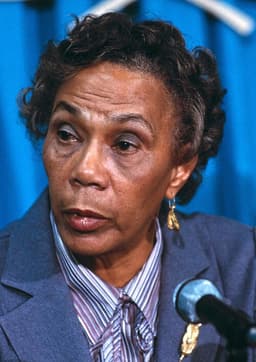
Eugenia Charles
Politician · Modern
55.7Total
Basic Information
Born
1883
1919
Died
1943
2005
Era
Modern
Modern
Nationality
Cameroon
Dominica
Occupation
Politician
Politician
Civilization
Other
Western
Score Comparison
Military (10%)
40.4
49.7
Political (20%)
42.3
62.7
Influence (20%)
52.5
60.0
Legacy (20%)
42.5
48.3
Leadership (15%)
64.0
66.0
Strategy (15%)
41.2
43.3
TOTAL
47.9
55.7
Charles Atangana — Complete Timeline
1910 AD
Appointment as Paramount Chief by German AdministrationPolitical Action◆ Major
German colonial authorities appointed Charles Atangana as paramount chief of the Ewondo and Bene peoples. He served as an intermediary between the colonial government and local populations, implementing German policies and collecting taxes.
Colonial AdministrationChiefGerman Cameroon
Impact: regional
1916 AD
Collaboration with French Colonial RulePolitical Action
After Germany's defeat in World War I, Atangana continued as paramount chief under French colonial administration. He helped the French consolidate control over the Ewondo and Bene regions, maintaining his authority through cooperation.
Colonial CollaborationFrench CameroonChief
Impact: regional
1920 AD
Promotion of Ewondo Language and CultureCultural
Charles Atangana supported the documentation and teaching of the Ewondo language. He worked with missionaries to produce written materials in Ewondo, contributing to the preservation and standardization of the language.
Language PreservationCultural PromotionEwondo
Impact: regionalconstructive
Eugenia Charles — Complete Timeline
1980 AD
Implemented Economic ReformsReform◆ Major
Charles's government implemented free-market economic reforms, including privatization, tax cuts, and attracting foreign investment. These policies stabilized Dominica's economy but increased inequality.
Economic ReformFree MarketPrivatization
Impact: nationalconstructive
Became First Female Prime Minister of DominicaPolitical Action
Charles led the Dominica Freedom Party to victory in the 1980 general election, becoming the first female Prime Minister of Dominica and the first female head of government in the Caribbean.
First Female PMGender EqualityMilestone
Impact: regionalprogressive
1981 AD
Survived a Coup AttemptPolitical Action◆ Major
Charles's government survived a coup attempt by white supremacist mercenaries, who planned to overthrow her and install a white-led government. The plot was foiled by US and Dominican authorities.
Coup AttemptMercenariesPolitical Violence
Impact: nationaltragic
1983 AD
Led the US Invasion of GrenadaPolitical Action◆ Major
Charles was a key advocate for the US-led invasion of Grenada in 1983, following the execution of Maurice Bishop. She argued that the invasion was necessary to restore democracy and stability in the region.
US InvasionGrenadaForeign PolicyRegional Intervention
Impact: regionalconstructive
This comparison has not been analyzed yet.
One-time AI generation (~1 minute). Scores and timeline are already available below.
Rankings
🥇
Eugenia CharlesLeader
Mil: 49.7Pol: 62.7Inf: 60.0
55.7
🥈
Charles Atangana
Mil: 40.4Pol: 42.3Inf: 52.5
47.9
+7.8 behind
How This Comparison Works
Algorithm
Each figure is scored on 6 dimensions (0—100 scale) based on structured historical data: Military (10%), Political (20%), Influence (20%), Legacy (20%), Leadership (15%), Strategy (15%). The weighted total produces the final ranking.
Data Sources
Scores are computed from structured sub-indicators in the database. Scale factors adjust for era (Ancient ×0.85, Modern ×1.0) and civilization size (Eastern ×1.05, Other ×0.80) to account for differences in population and military scale.
Maximum 3 Figures
Comparisons are limited to 2—3 figures to ensure readability and statistical meaningfulness.
Error Margins
±5 points per dimension — Sub-scores are derived from historical records with inherent uncertainty. Two figures within 5 points on a dimension should be considered roughly equivalent in that area.
Total Score Accuracy
±3 points overall — The weighted combination of 6 dimensions produces a total score with approximately ±3 points of uncertainty. Differences of less than 3 points are not statistically significant— the figures are effectively tied.
Known Limitations
- Historical records are incomplete and uneven across civilizations
- Figures from oral-tradition societies may be underrepresented
- Occupation labels can misclassify multi-role figures
- Scores measure capability and impact, not moral character
- Quantitative scoring is a comparison tool, not absolute truth
Capability Radar
Military (10%) — Battles & Warfare
Battles
21
30
Win Rate
22
29
Expansion
30
37
Political (20%) — Governance & Reform
Reform
30
55
Diplomacy
45
65
Economy
25
50
Influence (20%) — Cultural & Global Reach
Cultural
30
45
Global
15
45
Legacy (20%) — Historical Impact
Historical
25
50
Longevity
20
40
Leadership (15%) — Power & Stability
Tenure
40
60
Stability
35
55
Strategy (15%) — Tactics & Innovation
Strategy
31
38
Tactics
34
43
Reform
38
43
Similar Comparisons
Comments & Discussion
No comments yet. Be the first to share your thoughts!