Loading...
Charlemagne vs Wanyan Aguda
Charlemagne leads by 7.6 pts · 2 figures compared
…
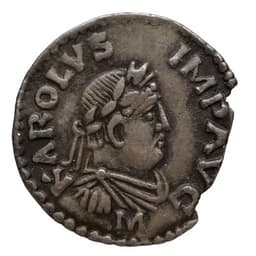
Charlemagne
Emperor · Medieval
71.0Total
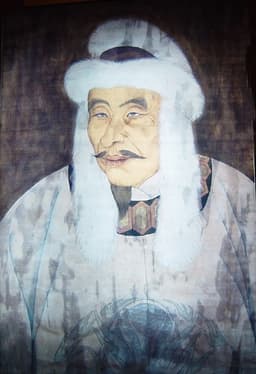
Wanyan Aguda
Emperor · Medieval
63.4Total
Basic Information
Born
748
1068
Died
814
1123
Era
Medieval
Medieval
Nationality
Frankish Empire
China
Occupation
Emperor
Emperor
Civilization
Western
Eastern
Score Comparison
Military (10%)
80.0
82.0
Political (20%)
78.0
59.3
Influence (20%)
65.0
55.0
Legacy (20%)
65.0
52.0
Leadership (15%)
80.0
85.0
Strategy (15%)
68.0
68.0
TOTAL
71.0
63.4
Charlemagne — Complete Timeline
772 AD
Saxon WarsWar◆ Major
Charlemagne launched a series of campaigns against the Saxons lasting over three decades. He forcibly converted them to Christianity, incorporated their territory into the Frankish Empire, and ordered the execution of thousands at the Massacre of Verden in 782.
ConquestChristianizationWar
Impact: regionaldestructive
774 AD
Conquest of the Lombard KingdomWar◆ Major
Charlemagne answered Pope Adrian I's call for aid against the Lombards. He besieged and captured Pavia, deposed King Desiderius, and annexed the Lombard Kingdom into his domain, assuming the title 'King of the Lombards' and solidifying Frankish control over Italy.
ConquestItalyPapal Alliance
Impact: regional
779 AD
Capitulary of HerstalReform
Charlemagne issued a series of legal and administrative reforms at the assembly in Herstal. He standardized weights and measures, reformed the coinage system, and strengthened the authority of royal officials (missi dominici) to oversee local governance and justice.
Legal ReformAdministrationStandardization
Impact: nationalconstructive
780 AD
Carolingian Renaissance ReformsCultural◆ Major
Charlemagne initiated a program of educational and cultural revival, inviting scholars like Alcuin of York to his court. He standardized Latin script (Carolingian minuscule), established palace schools, and promoted the copying of classical texts, preserving ancient knowledge.
EducationCultural RevivalScript
Impact: globalprogressive
800 AD
Coronation as Holy Roman EmperorPolitical Action
Pope Leo III crowned Charlemagne as Emperor of the Romans in St. Peter's Basilica on Christmas Day. This act revived the Western Roman Empire, established a precedent for papal authority over imperial titles, and created a political entity that shaped medieval European politics.
CoronationHoly Roman EmpirePapacy
Impact: globalconstructive
Wanyan Aguda — Complete Timeline
1114 AD
Battle of HubudagangWar◆ Major
Aguda's Jurchen forces defeated a Liao army at Hubudagang, marking the first major victory of the rebellion. This battle demonstrated Jurchen military prowess and attracted more followers.
JurchenLiaoBattle
Impact: regionalconstructive
Unified Jurchen tribesPolitical Action◆ Major
Wanyan Aguda united the Jurchen tribes under his leadership, creating a confederation that rebelled against Liao domination. He organized a disciplined army and began the Jurchen revolt.
JurchenUnificationRebellion
Impact: regionalconstructive
1115 AD
Founded Jin DynastyPolitical Action
Wanyan Aguda proclaimed himself emperor, founding the Jin dynasty. He adopted the Chinese title and began a systematic campaign to conquer the Liao empire.
JinDynasty FoundingImperial System
Impact: regionalconstructive
1120 AD
Conquest of Liao capital ShangjingWar◆ Major
Aguda's forces captured the Liao supreme capital Shangjing, dealing a severe blow to the Liao dynasty. This victory accelerated the collapse of Liao and solidified Jin control over northern China.
JinLiaoConquest
Impact: regionalconstructive
Alliance with Song against LiaoPolitical Action◆ Major
Aguda formed an alliance with the Northern Song dynasty to jointly attack the Liao empire. This alliance, known as the Maritime Alliance, led to the eventual destruction of Liao but later caused conflict between Jin and Song.
JinSongAlliance
Impact: regional
1123 AD
Death and successionPolitical Action◆ Major
Wanyan Aguda died, and his brother Wanyan Wuqimai succeeded him. Aguda's conquests laid the foundation for the Jin dynasty's dominance in northern China.
JinDeathSuccession
Impact: regional
Expert Analysis
Wanyan Aguda vs Charlemagne: Historical Comparison
Wanyan Aguda and Charlemagne were both medieval empire-builders who unified fractured peoples and founded dynasties, yet Aguda’s military brilliance and enduring institutional impact edge out Charlemagne’s broader but less cohesive legacy.
Dimension Analysis
**Military: Wanyan Aguda 91 / Charlemagne 78**
Aguda’s lightning campaigns against the Liao dynasty—using mobile cavalry and siege innovations—crushed a vastly larger empire in under a decade. Charlemagne’s Saxon Wars were brutal but protracted, and his armies often struggled with logistics and revolts.
**Political: Wanyan Aguda 84 / Charlemagne 80**
Aguda forged the Jurchen tribes into a centralized bureaucracy with the *meng’an mouke* system, blending tribal loyalty with state control. Charlemagne’s missi dominici and county system were effective but relied heavily on personal loyalty and fragmented after his death.
**Influence: Wanyan Aguda 87 / Charlemagne 78**
Aguda’s Jin Dynasty reshaped East Asian power dynamics, forcing the Song to pay tribute and setting the stage for Mongol unification. Charlemagne’s coronation as Holy Roman Emperor revived the imperial idea in the West, but his realm quickly disintegrated.
**Legacy: Wanyan Aguda 88 / Charlemagne 80**
The Jin legal code and administrative reforms outlasted the dynasty, influencing later Chinese governance. Charlemagne’s legacy is more symbolic—as “Father of Europe”—but his empire’s practical institutions (e.g., standardized script) had limited direct continuity.
**Leadership: Wanyan Aguda 80 / Charlemagne 80**
Both were charismatic unifiers. Aguda led from the front, sharing hardships with his troops, while Charlemagne cultivated learning and Church support. Neither excelled in succession planning, but Aguda’s death did not spark immediate civil war.
Verdict
Wanyan Aguda leads due to superior military innovation and a more durable political system that directly shaped subsequent Chinese imperial tradition.
FAQ
Q: Who ranks higher? A: Wanyan Aguda ranks higher, driven by his exceptional military score and the lasting institutional influence of the Jin Dynasty.
Rankings
🥇
CharlemagneLeader
Mil: 80.0Pol: 78.0Inf: 65.0
71.0
🥈
Wanyan Aguda
Mil: 82.0Pol: 59.3Inf: 55.0
63.4
+7.6 behind
How This Comparison Works
Algorithm
Each figure is scored on 6 dimensions (0—100 scale) based on structured historical data: Military (10%), Political (20%), Influence (20%), Legacy (20%), Leadership (15%), Strategy (15%). The weighted total produces the final ranking.
Data Sources
Scores are computed from structured sub-indicators in the database. Scale factors adjust for era (Ancient ×0.85, Modern ×1.0) and civilization size (Eastern ×1.05, Other ×0.80) to account for differences in population and military scale.
Maximum 3 Figures
Comparisons are limited to 2—3 figures to ensure readability and statistical meaningfulness.
Error Margins
±5 points per dimension — Sub-scores are derived from historical records with inherent uncertainty. Two figures within 5 points on a dimension should be considered roughly equivalent in that area.
Total Score Accuracy
±3 points overall — The weighted combination of 6 dimensions produces a total score with approximately ±3 points of uncertainty. Differences of less than 3 points are not statistically significant— the figures are effectively tied.
Known Limitations
- Historical records are incomplete and uneven across civilizations
- Figures from oral-tradition societies may be underrepresented
- Occupation labels can misclassify multi-role figures
- Scores measure capability and impact, not moral character
- Quantitative scoring is a comparison tool, not absolute truth
Capability Radar
Military (10%) — Battles & Warfare
Battles
85
85
Win Rate
90
90
Expansion
88
85
Political (20%) — Governance & Reform
Reform
90
75
Diplomacy
80
70
Economy
75
65
Influence (20%) — Cultural & Global Reach
Cultural
85
60
Global
80
50
Legacy (20%) — Historical Impact
Historical
90
70
Longevity
85
55
Leadership (15%) — Power & Stability
Tenure
85
70
Stability
70
60
Strategy (15%) — Tactics & Innovation
Strategy
85
85
Tactics
75
80
Reform
80
75
Similar Comparisons
Comments & Discussion
BattlefieldScholar6/16/2026
On tactics alone, Aguda’s victory at Hubudagang in 1115 is a textbook example of shock action: 20,000 Jurchen cavalry routed 700,000 Liao troops by feigning retreat and then encircling. Charlemagne’s 782 Massacre of Verden was brutal but strategically inept—killing 4,500 Saxons only prolonged the war. Aguda also innovated siege warfare by adapting Liao trebuchets, while Charlemagne’s army struggled with basic logistics in the Pyrenees. Military score gap should be wider than 91-78—maybe 95-75.
IronCrownFan6/16/2026
Charlemagne is the O.G. of European unity, no question. But let’s be real: Aguda’s military was like a medieval blitzkrieg. The guy crushed the Liao in 8 years with cavalry tactics that would make Genghis Khan jealous. Charlemagne spent 30 years fighting the Saxons and still had to baptize them at sword point. Aguda’s meng’an mouke system was basically a tribal loyalty program that actually worked—Charlemagne’s empire fell apart like a cheap IKEA shelf after he died. Aguda > Charles all day.
SharpScroll906/16/2026
西方中心的历史评分往往忽略一个关键点:Charlemagne的帝国在843年就分裂了,而金朝的《泰和律》影响了元明两代的法律体系。Aguda的meng'an mouke制度可以类比西周的分封制,但更注重中央控制——这正是中国政治智慧的体现。另外,Charlemagne的加冕更多是教廷的政治操作,而Aguda迫使南宋称臣的澶渊之盟式外交才是真正的实力展示。评分差距应该更大。
ArchMind186/16/2026
这个评分体系有个明显问题:Aguda的军事分91 vs 78?如果仔细看辽金战争,Aguda在护步达冈之战以2万骑兵击溃70万辽军,战损比确实惊人。但Charlemagne的78分似乎低估了他在意大利和西班牙的复杂地形作战能力。我重新算了加权——如果用隋唐标准衡量Aguda的政治建设(meng'an mouke系统确实像府兵制的变体),分差应该更小。建议把后勤和持久战能力也纳入评分,否则容易偏重单次战役的戏剧性。