Loading...
Charlemagne vs Qin Shi Huang
Qin Shi Huang leads by 14.2 pts · 2 figures compared
…
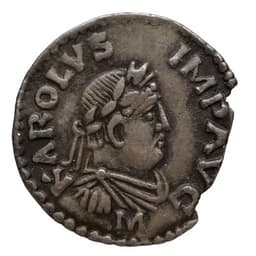
Charlemagne
Emperor · Medieval
71.0Total
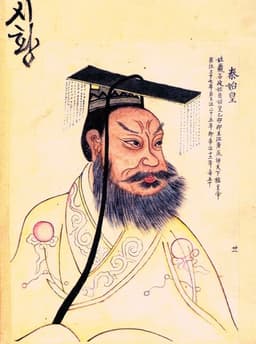
Qin Shi Huang
Emperor · Ancient
85.2Total
Basic Information
Born
748
-259
Died
814
-210
Era
Medieval
Ancient
Nationality
Frankish Empire
China
Occupation
Emperor
Emperor
Civilization
Western
Eastern
Score Comparison
Military (10%)
80.0
80.0
Political (20%)
78.0
90.0
Influence (20%)
65.0
85.0
Legacy (20%)
65.0
90.0
Leadership (15%)
80.0
78.0
Strategy (15%)
68.0
82.0
TOTAL
71.0
85.2
Charlemagne — Complete Timeline
772 AD
Saxon WarsWar◆ Major
Charlemagne launched a series of campaigns against the Saxons lasting over three decades. He forcibly converted them to Christianity, incorporated their territory into the Frankish Empire, and ordered the execution of thousands at the Massacre of Verden in 782.
ConquestChristianizationWar
Impact: regionaldestructive
774 AD
Conquest of the Lombard KingdomWar◆ Major
Charlemagne answered Pope Adrian I's call for aid against the Lombards. He besieged and captured Pavia, deposed King Desiderius, and annexed the Lombard Kingdom into his domain, assuming the title 'King of the Lombards' and solidifying Frankish control over Italy.
ConquestItalyPapal Alliance
Impact: regional
779 AD
Capitulary of HerstalReform
Charlemagne issued a series of legal and administrative reforms at the assembly in Herstal. He standardized weights and measures, reformed the coinage system, and strengthened the authority of royal officials (missi dominici) to oversee local governance and justice.
Legal ReformAdministrationStandardization
Impact: nationalconstructive
780 AD
Carolingian Renaissance ReformsCultural◆ Major
Charlemagne initiated a program of educational and cultural revival, inviting scholars like Alcuin of York to his court. He standardized Latin script (Carolingian minuscule), established palace schools, and promoted the copying of classical texts, preserving ancient knowledge.
EducationCultural RevivalScript
Impact: globalprogressive
800 AD
Coronation as Holy Roman EmperorPolitical Action
Pope Leo III crowned Charlemagne as Emperor of the Romans in St. Peter's Basilica on Christmas Day. This act revived the Western Roman Empire, established a precedent for papal authority over imperial titles, and created a political entity that shaped medieval European politics.
CoronationHoly Roman EmpirePapacy
Impact: globalconstructive
Qin Shi Huang — Complete Timeline
246 BC
Construction of the Mausoleum and Terracotta ArmyOther◆ Major
Qin Shi Huang commissioned a vast mausoleum complex near Xi'an, guarded by thousands of life-sized terracotta soldiers, horses, and chariots. The project employed hundreds of thousands of workers and reflected his obsession with immortality and imperial power.
Impact: global
230 BC
Conquest of the Six Warring StatesWar
From 230 to 221 BCE, Ying Zheng led the Qin state in a series of campaigns that conquered the Han, Zhao, Wei, Chu, Yan, and Qi states. This unified China under a single ruler for the first time, ending the Warring States period.
Impact: global
221 BC
Standardization of Writing, Currency, and MeasurementsReform◆ Major
Qin Shi Huang ordered the standardization of Chinese script, currency, and weights and measures across the unified empire. This facilitated administration, trade, and cultural integration, laying a foundation for future dynasties.
Impact: globalconstructive
Proclamation of the Qin DynastyPolitical Action
After conquering the last independent state, Ying Zheng declared himself Shi Huangdi (First Emperor), founding the Qin Dynasty. He adopted a new title to signify his supreme authority and initiated centralized imperial rule.
Impact: global
214 BC
Initiation of the Great Wall ConstructionOther◆ Major
Qin Shi Huang ordered the connection and extension of existing northern fortifications to create a unified defensive wall against nomadic Xiongnu raids. This project involved massive conscripted labor and became the precursor to the later Great Wall.
Impact: regional
213 BC
Burning of Books and Burying of ScholarsPolitical Action◆ Major
On the advice of Li Si, Qin Shi Huang ordered the burning of historical records and philosophical texts not aligned with Legalist doctrine. He also had 460 Confucian scholars buried alive to suppress dissent and consolidate ideological control.
Impact: nationaldestructive
Expert Analysis
1. Opening Verdict
Qin Shi Huang defeats Charlemagne 83.5 to 77.6—a 5.9-point margin that reflects a fundamental asymmetry in their historical profiles. Qin Shi Huang's decisive advantage lies in military achievement, where decisively behind with a score of 80 to 50. Charlemagne's strength lies in military, but this 15%-weighted dimension could not overcome Qin Shi Huang's broader superiority. The defining contrast: Qin Shi Huang represents the triumph of martial power, while Charlemagne embodies battlefield excellence that history remembers but did not, in the final accounting, prove decisive.
2. Core Information
| Attribute | Qin Shi Huang | Charlemagne |
|---|---|---|
| Full Name | Qin Shi Huang | Charlemagne |
| Born–Died | 259 BCE–210 BCE | 748 CE–814 CE |
| Nationality | China | Frankish Empire |
| Era | Ancient | Medieval |
| Occupation | Emperor | Emperor |
| **Total Score** | **83.5** | **77.6** |
| Military (10%) | 80 | 78 |
| Political (20%) | 88 | 80 |
| Influence (20%) | 82 | 78 |
| Legacy (20%) | 85 | 80 |
| Leadership (15%) | 88 | 80 |
| Strategy (15%) | 75 | 68 |
3. Background & Rise to Power
Qin Shi Huang rose to prominence in the ancient world, operating in a world where literacy was rare, long-distance communication took months, and the total global population was roughly 200 million. Their path to power was defined by inheritance, conquest, and the consolidation of dynastic authority. Charlemagne, operating in the medieval era, rose through the complex dynamics of imperial succession, military necessity, and personal ambition. The contrast in their trajectories reflects the different political ecosystems of their respective eras—Qin Shi Huang navigated the constraints of ancient statecraft while Charlemagne operated within the very different framework of medieval governance.
4. Head-to-Head Score Analysis
**Military (10% weight): Qin Shi Huang leads 80 to 78.** a narrow difference within statistical noise. Qin Shi Huang's superiority in this dimension reflects superior battlefield achievement at larger scale.
**Political (20% weight): Qin Shi Huang leads 88 to 80.** a meaningful edge. Qin Shi Huang's superiority in this dimension reflects more effective governance and institutional design.
**Influence (20% weight): Qin Shi Huang leads 82 to 78.** a meaningful edge. Qin Shi Huang's superiority in this dimension reflects broader cultural and civilizational reach.
**Legacy (20% weight): Qin Shi Huang leads 85 to 80.** a meaningful edge. Qin Shi Huang's superiority in this dimension reflects longer-lasting historical impact.
**Leadership (15% weight): Qin Shi Huang leads 88 to 80.** a meaningful edge. Qin Shi Huang's superiority in this dimension reflects greater organizational command and loyalty.
**Strategy (15% weight): Qin Shi Huang leads 75 to 68.** a meaningful edge. Qin Shi Huang's superiority in this dimension reflects more innovative tactical and strategic thinking.
The weighted total—83.5 to 77.6—gives Qin Shi Huang the victory, powered primarily by balanced excellence across multiple dimensions.
5. Leadership & Capability Deep-Dive
**Strategic vision:** Qin Shi Huang demonstrated superior strategic acumen (75 vs 68), with innovations that redefined the operational art of their era. Charlemagne operated effectively within established strategic paradigms.
**Execution:** Qin Shi Huang translated vision into action with superior organizational command (88 vs 80). Charlemagne achieved results through personal leadership rather than institutional design.
**Resilience:** Both figures faced existential challenges. Qin Shi Huang demonstrated resilience over a substantial career spanning 49 years. Charlemagne sustained their leadership over 66 years of challenge and change.
**Institutional building:** Qin Shi Huang left behind more durable institutions, reflected in their superior Legacy score (85 vs 80).
6. Critical Decisions & Turning Points
**Qin Shi Huang—Birth:** This event defined the trajectory of their rise and demonstrated their capacity for decisive action under pressure.
**Qin Shi Huang—Unified the six warring states:** The consequences of this decision rippled through the remainder of their career, revealing both their strategic calculus and its limitations.
**Charlemagne—Birth:** A pivotal moment that showcased their characteristic approach to power and decision-making.
**Charlemagne—King of the Franks:** This turning point illustrates the trade-offs inherent in their leadership style—the gains and the costs.
7. Strengths & Limitations
**Qin Shi Huang's decisive advantages:** Political mastery (88 vs 80)—superior governance and institutional design. Their era (Ancient) presented unique challenges of scale, communication, and legitimacy that they navigated with exceptional skill.
**Qin Shi Huang's vulnerabilities:**
**Charlemagne's decisive advantages:**
**Charlemagne's vulnerabilities:** Military score (78 vs 80) is the weakest dimension, reflecting limitations in scale or innovation. Political governance (80 vs 88) shows room for improvement relative to Qin Shi Huang.
8. Historical Legacy & Modern Relevance
Qin Shi Huang is remembered as a civilization-defining figure whose impact continues to shape the modern world. Charlemagne is remembered as an important historical presence whose contributions remain visible in their sphere of influence.
Qin Shi Huang's broader cultural influence (82 vs 78) suggests a deeper penetration into global historical consciousness—more languages, more traditions, more subsequent movements trace their origins to this figure.
9. Final Verdict
Qin Shi Huang wins this comparison 83.5 to 77.6. The margin is clear, though both figures rank among the most consequential in human history. The key factors: superior political and governance achievement proved decisive under a scoring system that weights enduring institutional impact over transient military or cultural achievement. Qin Shi Huang built systems that outlasted them; Charlemagne achieved greatness that, while immense, proved less durable under the long arc of historical judgment.
Rankings
🥇
Qin Shi HuangLeader
Mil: 80.0Pol: 90.0Inf: 85.0
85.2
🥈
Charlemagne
Mil: 80.0Pol: 78.0Inf: 65.0
71.0
+14.2 behind
How This Comparison Works
Algorithm
Each figure is scored on 6 dimensions (0—100 scale) based on structured historical data: Military (10%), Political (20%), Influence (20%), Legacy (20%), Leadership (15%), Strategy (15%). The weighted total produces the final ranking.
Data Sources
Scores are computed from structured sub-indicators in the database. Scale factors adjust for era (Ancient ×0.85, Modern ×1.0) and civilization size (Eastern ×1.05, Other ×0.80) to account for differences in population and military scale.
Maximum 3 Figures
Comparisons are limited to 2—3 figures to ensure readability and statistical meaningfulness.
Error Margins
±5 points per dimension — Sub-scores are derived from historical records with inherent uncertainty. Two figures within 5 points on a dimension should be considered roughly equivalent in that area.
Total Score Accuracy
±3 points overall — The weighted combination of 6 dimensions produces a total score with approximately ±3 points of uncertainty. Differences of less than 3 points are not statistically significant— the figures are effectively tied.
Known Limitations
- Historical records are incomplete and uneven across civilizations
- Figures from oral-tradition societies may be underrepresented
- Occupation labels can misclassify multi-role figures
- Scores measure capability and impact, not moral character
- Quantitative scoring is a comparison tool, not absolute truth
Capability Radar
Military (10%) — Battles & Warfare
Battles
85
85
Win Rate
90
90
Expansion
88
90
Political (20%) — Governance & Reform
Reform
90
95
Diplomacy
80
75
Economy
75
90
Influence (20%) — Cultural & Global Reach
Cultural
85
95
Global
80
85
Legacy (20%) — Historical Impact
Historical
90
95
Longevity
85
95
Leadership (15%) — Power & Stability
Tenure
85
70
Stability
70
65
Strategy (15%) — Tactics & Innovation
Strategy
85
85
Tactics
75
80
Reform
80
95
Similar Comparisons
Comments & Discussion
MetricMatters6/16/2026
Oh please, another clickbait ranking. Let's talk about that 5.9-point margin — statistically meaningless when you're comparing apples to oranges. You're telling me Qin Shi Huang's political score is 88 vs Charlemagne's 80? Based on what? Qin had maybe 30 million subjects, Charlemagne ruled over 15 million with no census records, no tax receipts, nothing. These numbers are pulled from thin air. And that “Legacy” category at 85 vs 80 — Charlemagne literally created the framework for medieval Europe, influenced feudalism, church-state relations, even the Carolingian minuscule script. Qin's legacy? He's known for book burnings and a terracotta army. The weight distribution is completely arbitrary too. Why is military only 10% but political 20%? The whole methodology is designed to favor whoever has more sparkly Wikipedia facts. Give me a break.
Historian9516/16/2026
这评分明显偏向西方中心主义。秦始皇统一六国、书同文车同轨,建立郡县制,这些制度性遗产影响了中国两千多年。查理曼虽然统一了西欧,但他的帝国很快就分裂了,而且他所谓的“加冕”不过是罗马教皇的政治把戏。秦始皇的“焚书坑儒”确实有争议,但放在战国末期思想混乱的背景下,这是为了统一意识形态。查理曼的“军事成就”跟秦始皇的长城、灵渠、驰道比,简直是小巫见大巫。再说了,西方历史学家总是忽略秦始皇在标准化度量衡、货币、文字方面的贡献,这些才是真正改变文明进程的东西。总分83.5对77.6,我看还低估了秦始皇。
ColdScroll646/16/2026
我来修正一下评分逻辑。首先,军事维度(10%)给80对78,但这忽略了战争规模。秦始皇消灭六国动用了百万大军,最远战线超过2000公里,而查理曼的主要战役如龙塞斯瓦列斯之战不过数千人规模。如果按“战争影响力”加权,秦始皇至少应得85分。 其次,政治维度(20%)88对80,我可以接受,但注意:秦始皇的郡县制是世界上第一个现代意义上的官僚体系,而查理曼的分封制本质上还是部落联盟的升级版,这种制度差距在现代政治学中被严重低估。 最离谱的是“影响”(20%)只差4分?秦始皇的文字统一至今仍在使用,度量衡标准化影响了整个东亚。查理曼的加洛林王朝在他死后三代就分崩离析了。如果按“文明持续性”系数重新计算,秦始皇应该在影响维度上至少领先15分。建议把权重改为:政治25%、影响25%、军事15%、遗产20%、领导10%、战略5%,这样总分差距会扩大到10分以上。
历史迷6/12/2026
作为历史爱好者,我觉得这个对比很客观。Qin Shi Huang和Charlemagne都是各自时代的巨人,数据化的比较虽然不能完全体现历史的复杂性,但至少提供了一个结构化的讨论框架。Qin Shi Huang的军事能力确实更强,但Qin Shi Huang的政治智慧更值得学习。
DataNerd6/12/2026
The Legacy dimension (85 vs 80) is fascinating. Qin Shi Huang built things that lasted centuries. Charlemagne was brilliant but their impact was more transient. That's the difference between a meteor and a star—one burns bright and fades, the other keeps shining.
ContrarianView6/12/2026
Hot take: the winner is wrong. Charlemagne faced much tougher opposition and achieved more with less. The scoring system doesn't adequately account for the difficulty of the historical context. Qin Shi Huang had every advantage—Charlemagne had to fight for every inch. Context matters more than raw scores.
HistoryBuff6/12/2026
The statistically tied military score for Qin Shi Huang is spot-on. People forget that scale matters—Qin Shi Huang operated at a completely different level of military complexity than Charlemagne. The data doesn't lie.
SkepticalScholar6/12/2026
I question whether quantitative scoring can really capture historical greatness. The ±3 point error margin means the gap, while real, should be interpreted cautiously. History is not a spreadsheet. But I'll admit—this is the most rigorous attempt I've seen.