Loading...
Charlemagne vs Franklin D. Roosevelt
Charlemagne leads by 0.0 pts · 2 figures compared
…
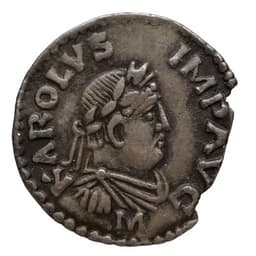
Charlemagne
Emperor · Medieval
71.0Total
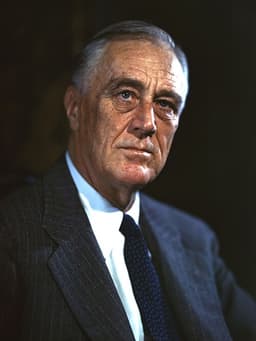
Franklin D. Roosevelt
Politician · Modern
71.0Total
Basic Information
Born
748
1882
Died
814
1945
Era
Medieval
Modern
Nationality
Frankish Empire
United States
Occupation
Emperor
Politician
Civilization
Western
Western
Score Comparison
Military (10%)
80.0
45.0
Political (20%)
78.0
85.0
Influence (20%)
65.0
75.0
Legacy (20%)
65.0
65.0
Leadership (15%)
80.0
85.0
Strategy (15%)
68.0
60.0
TOTAL
71.0
71.0
Charlemagne — Complete Timeline
772 AD
Saxon WarsWar◆ Major
Charlemagne launched a series of campaigns against the Saxons lasting over three decades. He forcibly converted them to Christianity, incorporated their territory into the Frankish Empire, and ordered the execution of thousands at the Massacre of Verden in 782.
ConquestChristianizationWar
Impact: regionaldestructive
774 AD
Conquest of the Lombard KingdomWar◆ Major
Charlemagne answered Pope Adrian I's call for aid against the Lombards. He besieged and captured Pavia, deposed King Desiderius, and annexed the Lombard Kingdom into his domain, assuming the title 'King of the Lombards' and solidifying Frankish control over Italy.
ConquestItalyPapal Alliance
Impact: regional
779 AD
Capitulary of HerstalReform
Charlemagne issued a series of legal and administrative reforms at the assembly in Herstal. He standardized weights and measures, reformed the coinage system, and strengthened the authority of royal officials (missi dominici) to oversee local governance and justice.
Legal ReformAdministrationStandardization
Impact: nationalconstructive
780 AD
Carolingian Renaissance ReformsCultural◆ Major
Charlemagne initiated a program of educational and cultural revival, inviting scholars like Alcuin of York to his court. He standardized Latin script (Carolingian minuscule), established palace schools, and promoted the copying of classical texts, preserving ancient knowledge.
EducationCultural RevivalScript
Impact: globalprogressive
800 AD
Coronation as Holy Roman EmperorPolitical Action
Pope Leo III crowned Charlemagne as Emperor of the Romans in St. Peter's Basilica on Christmas Day. This act revived the Western Roman Empire, established a precedent for papal authority over imperial titles, and created a political entity that shaped medieval European politics.
CoronationHoly Roman EmpirePapacy
Impact: globalconstructive
Franklin D. Roosevelt — Complete Timeline
1933 AD
Inaugurated as 32nd PresidentOther◆ Major
Franklin D. Roosevelt was inaugurated as President of the United States on March 4, 1933, during the Great Depression. His inaugural address declared 'the only thing we have to fear is fear itself,' and he immediately called Congress into special session to address the banking crisis.
Great DepressionPresidencyInauguration
Impact: national
Enacted the New DealOther◆ Major
Roosevelt launched the New Deal in 1933, a series of federal programs including the Civilian Conservation Corps, the Agricultural Adjustment Act, and the Tennessee Valley Authority. These measures aimed to provide relief, recovery, and reform during the Great Depression, fundamentally expanding the role of the federal government.
Great DepressionEconomic PolicySocial Reform
Impact: nationalconstructive
1935 AD
Signed the Social Security ActOther◆ Major
Roosevelt signed the Social Security Act into law on August 14, 1935, establishing a federal system of old-age pensions, unemployment insurance, and aid for dependent children. This created the modern American welfare state and provided a safety net for millions of citizens.
Social WelfareLegislationNew Deal
Impact: nationalconstructive
1941 AD
Lend-Lease ActOther◆ Major
Roosevelt signed the Lend-Lease Act on March 11, 1941, authorizing the transfer of military equipment and supplies to Allied nations, particularly Britain and the Soviet Union. This program provided critical material support to countries fighting the Axis powers before U.S. entry into World War II.
World War IIForeign PolicyMilitary Aid
Impact: globalconstructive
Declaration of War on JapanPolitical Action◆ Major
Following the Japanese attack on Pearl Harbor on December 7, 1941, Roosevelt delivered his 'Day of Infamy' speech to Congress the next day, requesting a declaration of war. Congress approved the declaration, bringing the United States into World War II.
World War IIPearl HarborDeclaration of War
Impact: globaldestructive
1942 AD
Executive Order 9066Other◆ Major
Roosevelt signed Executive Order 9066 on February 19, 1942, authorizing the forced relocation and internment of Japanese Americans living on the West Coast. Over 110,000 people, mostly U.S. citizens, were incarcerated in camps for the duration of the war, a decision later widely condemned as a violation of civil rights.
World War IICivil RightsInternment
Impact: nationaldestructive
1944 AD
Elected to Fourth TermOther◆ Major
Roosevelt was elected to an unprecedented fourth term as president in November 1944, defeating Republican Thomas E. Dewey. This election occurred during the final stages of World War II, and Roosevelt's continued leadership ensured stability in the war effort and post-war planning.
PresidencyElectionWorld War II
Impact: national
1945 AD
Yalta ConferenceOther◆ Major
Roosevelt met with Winston Churchill and Joseph Stalin at the Yalta Conference in February 1945 to discuss post-war Europe. Agreements included the division of Germany, Soviet entry into the war against Japan, and the creation of the United Nations, shaping the post-war world order.
World War IIDiplomacyPost-War Planning
Impact: global
Expert Analysis
Charlemagne vs Franklin D. Roosevelt
# The Emperor and the Democrat: Charlemagne and Franklin D. Roosevelt
On Christmas Day in the year 800, an aging Frankish king knelt before the Pope in St. Peter’s Basilica and rose as Emperor of the Romans. Thirteen centuries later, on a bitter March morning in 1933, a man in a wheelchair faced a nation where one in four workers had no job and told them, “The only thing we have to fear is fear itself.” Charlemagne and Franklin D. Roosevelt ruled worlds apart—one a medieval warlord crowned by God, the other a modern democrat elected by the people. Yet both faced the same essential challenge: how to forge unity from chaos, and how to build a lasting order from the ruins of the old.
Origins
Charlemagne was born in 748 into a world of warring tribes and crumbling empires. His father, Pepin the Short, had seized the Frankish throne, and his grandfather, Charles Martel, had stopped the Muslim advance at Tours. The young prince grew up in the saddle, learning that power came from the sword and that loyalty was won through victory. His era was one of illiteracy, superstition, and constant violence—a time when the Roman Empire existed only in memory and the Church alone preserved the flicker of civilization.
Franklin Delano Roosevelt was born in 1882 into a very different world. At his family estate in Hyde Park, New York, he enjoyed the privileges of American aristocracy: private tutors, summers in Europe, and a Harvard education. His fifth cousin, Theodore Roosevelt, had already occupied the White House. Yet the Gilded Age that cradled him was also an age of brutal inequality, labor wars, and the first tremors of a global economy. Roosevelt grew up believing that the world could be managed, reformed, and perfected—a distinctly modern faith.
Rise to Power
Charlemagne’s path was paved with blood. In 772, he launched the first of the Saxon Wars, a brutal, three-decade campaign to conquer and convert the pagan tribes of northern Germany. He ordered the massacre of 4,500 Saxon prisoners at Verden in 782, a act that still stains his reputation. But he also understood that conquest required more than force. In 774, when Pope Adrian I called for help against the Lombards, Charlemagne crossed the Alps, besieged Pavia, and added the Lombard crown to his own. By 800, he had united nearly all of Christian Western Europe under his rule—an achievement unmatched since Rome.
Roosevelt’s rise was quieter but no less determined. He entered politics as a New York state senator, then served as Assistant Secretary of the Navy under Woodrow Wilson. In 1921, at age 39, he was struck by polio, losing the use of his legs. The illness could have ended his career. Instead, it gave him something rare: a deep empathy for suffering. His wife Eleanor became his eyes and ears. In 1928, he was elected Governor of New York, and in 1932, as the Great Depression deepened, he won the presidency in a landslide. Where Charlemagne had conquered armies, Roosevelt had conquered himself.
Leadership & Governance
Charlemagne ruled through personal presence. He rode constantly across his vast empire, holding court in palaces and churches, dispensing justice and hearing petitions. In 779, he issued the Capitulary of Herstal, standardizing weights, measures, and laws across his domains. He promoted the Carolingian Renaissance, inviting the scholar Alcuin of York to his court and founding schools where monks copied ancient texts. He reformed the Church, standardized the liturgy, and insisted that priests learn Latin. His empire was held together by loyalty, fear, and the constant motion of a king who never stopped.
Roosevelt governed through words and institutions. In his first hundred days, he pushed through a blizzard of legislation: the Emergency Banking Act, the Civilian Conservation Corps, the Agricultural Adjustment Act, and the Tennessee Valley Authority. He created Social Security, the Securities and Exchange Commission, and the National Labor Relations Board. He spoke to the nation through “fireside chats” on the radio, his calm voice a lifeline in a storm. Where Charlemagne commanded from horseback, Roosevelt persuaded from a microphone. Both were pragmatists, but Charlemagne’s tools were swords and councils; Roosevelt’s were laws and agencies.
Triumph & Tragedy
Charlemagne’s greatest triumph came on Christmas Day, 800, when Pope Leo III crowned him Emperor. The act was a turning point in history: it revived the idea of a unified Christian empire, created the foundation for the Holy Roman Empire, and set the stage for a thousand years of tension between church and state. Yet it also sowed tragedy. Charlemagne’s empire was too vast, too personal, and too dependent on his own authority. After his death in 814, his son Louis the Pious could not hold it together. Within a generation, the empire was divided among his grandsons, and Europe slid back into fragmentation.
Roosevelt’s triumph was winning World War II. After Pearl Harbor, he mobilized the American economy with astonishing speed, turning Detroit into the “Arsenal of Democracy.” He stood with Churchill and Stalin, planned D-Day, and laid the groundwork for the United Nations. But his tragedy was that he did not live to see the peace. On April 12, 1945, he died of a cerebral hemorrhage in Warm Springs, Georgia, just weeks before Germany’s surrender. He left behind a world he had helped to shape but could not guide through the Cold War that followed.
Character & Destiny
Charlemagne was a man of immense energy, fierce piety, and cold brutality. He loved learning but could barely write his own name. He prayed with monks and slaughtered Saxons. He was driven by a vision of Christendom united under his sword—a vision that was both noble and impossible. His personality shaped his destiny: he could conquer, but he could not create institutions that outlasted him. He remained a warrior-king in an age that needed a builder.
Roosevelt was a man of charm, calculation, and resilience. He was a master of indirection, often keeping his plans secret even from his closest advisors. He was criticized for being too ambitious, too secretive, and too willing to expand executive power. Yet his polio gave him a patience and a toughness that his opponents underestimated. He could wait, he could persuade, and he could inspire. His personality allowed him to hold together a fractious coalition of Southern Democrats, urban machines, labor unions, and African Americans—a feat of political alchemy.
Legacy
Charlemagne is remembered as the “Father of Europe.” His empire did not last, but his reforms did. The Carolingian Renaissance preserved classical learning. The idea of a united Europe, rooted in Christian civilization, survived in the imagination of kings and scholars. His legacy is a shadow that still falls across the continent.
Roosevelt is remembered as the architect of modern America. The New Deal created the welfare state. Social Security, the minimum wage, and bank regulation are his monuments. He transformed the presidency from a limited office into the center of American government. His legacy is not a shadow but a foundation—one that is still debated, still defended, and still contested.
Conclusion
Charlemagne and Roosevelt faced the same problem: how to build order from chaos. Charlemagne answered with the sword and the cross, creating an empire that died with him. Roosevelt answered with laws and institutions, creating a system that endures. One built for eternity; the other built for history. Both failed, in some ways, and both succeeded beyond measure. Perhaps the lesson is that no leader can truly master his age—only serve it, shape it, and hope that something of his work outlasts the grave.
Rankings
🥇
CharlemagneLeader
Mil: 80.0Pol: 78.0Inf: 65.0
71.0
🥈
Franklin D. Roosevelt
Mil: 45.0Pol: 85.0Inf: 75.0
71.0
How This Comparison Works
Algorithm
Each figure is scored on 6 dimensions (0—100 scale) based on structured historical data: Military (10%), Political (20%), Influence (20%), Legacy (20%), Leadership (15%), Strategy (15%). The weighted total produces the final ranking.
Data Sources
Scores are computed from structured sub-indicators in the database. Scale factors adjust for era (Ancient ×0.85, Modern ×1.0) and civilization size (Eastern ×1.05, Other ×0.80) to account for differences in population and military scale.
Maximum 3 Figures
Comparisons are limited to 2—3 figures to ensure readability and statistical meaningfulness.
Error Margins
±5 points per dimension — Sub-scores are derived from historical records with inherent uncertainty. Two figures within 5 points on a dimension should be considered roughly equivalent in that area.
Total Score Accuracy
±3 points overall — The weighted combination of 6 dimensions produces a total score with approximately ±3 points of uncertainty. Differences of less than 3 points are not statistically significant— the figures are effectively tied.
Known Limitations
- Historical records are incomplete and uneven across civilizations
- Figures from oral-tradition societies may be underrepresented
- Occupation labels can misclassify multi-role figures
- Scores measure capability and impact, not moral character
- Quantitative scoring is a comparison tool, not absolute truth
Capability Radar
Military (10%) — Battles & Warfare
Battles
85
10
Win Rate
90
10
Expansion
88
10
Political (20%) — Governance & Reform
Reform
90
95
Diplomacy
80
90
Economy
75
95
Influence (20%) — Cultural & Global Reach
Cultural
85
80
Global
80
90
Legacy (20%) — Historical Impact
Historical
90
90
Longevity
85
85
Leadership (15%) — Power & Stability
Tenure
85
90
Stability
70
75
Strategy (15%) — Tactics & Innovation
Strategy
85
65
Tactics
75
10
Reform
80
70
Similar Comparisons
Comments & Discussion
No comments yet. Be the first to share your thoughts!