Loading...
Changling vs Efrain Rios Montt
Changling leads by 9.8 pts · 2 figures compared
…

Changling
General · Modern
47.8Total
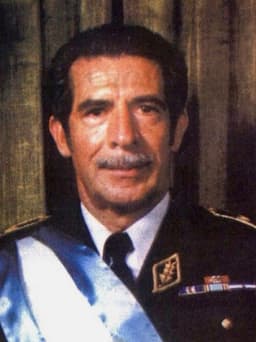
Efrain Rios Montt
General · Modern
38.0Total
Basic Information
Born
1758
1926
Died
1838
—
Era
Modern
Modern
Nationality
China
Guatemala
Occupation
General
General
Civilization
Eastern
Western
Score Comparison
Military (10%)
40.0
25.9
Political (20%)
36.5
25.0
Influence (20%)
48.6
47.9
Legacy (20%)
40.0
38.3
Leadership (15%)
68.0
47.3
Strategy (15%)
60.0
30.3
TOTAL
47.8
38.0
Changling — Complete Timeline
1795 AD
Led Campaign Against the Miao RebellionsWar◆ Major
Changling led Qing forces in suppressing Miao rebellions in the mountainous regions of Guizhou and Hunan. The campaigns were brutal and resulted in significant casualties, but ultimately restored Qing control over the area.
Military CampaignMiaoRebellion Suppression
Impact: regional
1796 AD
Suppressed the White Lotus RebellionWar◆ Major
Changling was appointed as a commander of Qing forces to suppress the White Lotus Rebellion, a massive peasant uprising in central China. The rebellion lasted until 1804, and Changling played a key role in coordinating military operations and implementing pacification strategies.
Military CampaignRebellion SuppressionWhite Lotus
Impact: national
1805 AD
Appointed Grand SecretaryPolitical Action◆ Major
Changling was appointed Grand Secretary of the Qing Empire in recognition of his military successes against the White Lotus Rebellion. He became a senior official in the Jiaqing Emperor's administration.
AppointmentGovernmentJiaqing Era
Impact: national
Efrain Rios Montt — Complete Timeline
1982 AD
Scorched earth campaign against Maya communitiesWar◆ Major
Under Ríos Montt's 'Beans and Bullets' policy, the Guatemalan army conducted a scorched earth campaign in the highlands, destroying hundreds of Maya villages, killing thousands, and displacing tens of thousands. The campaign aimed to eliminate support for leftist guerrillas.
Scorched EarthCounterinsurgencyMaya Genocide
Impact: nationaldestructive
Coup d'état and assumption of powerPolitical Action◆ Major
Ríos Montt led a military coup that overthrew President Fernando Romeo Lucas García. He assumed power as head of a military junta, suspending the constitution and dissolving Congress. His rule marked the bloodiest period of Guatemala's 36-year civil war.
CoupMilitary RuleCivil War
Impact: nationaldestructive
2013 AD
Conviction for genocide against Maya IxilPolitical Action
Ríos Montt was convicted of genocide and crimes against humanity for the massacre of over 1,700 Maya Ixil people during his 1982-83 rule. He was sentenced to 80 years in prison, but the conviction was later overturned on procedural grounds by the Constitutional Court.
GenocideHuman RightsMayaTrial
Impact: globaldestructive
Expert Analysis
Origins
Changling (born 1739) was a Manchu noble of the Qing dynasty, hailing from the Bordered Yellow Banner. His early life was shaped by the military traditions of the Eight Banners, and he rose through the ranks as a cavalry officer. He received a classical Confucian education, which emphasized loyalty and order. His formative experiences included campaigns against the Dzungars and Gurkhas, where he learned the brutal realities of imperial warfare.
Efraín Ríos Montt (born 1926) was the son of a poor family in Huehuetenango, Guatemala. He joined the military at a young age, attending the Escuela Politécnica. He later studied at the U.S. Army's School of the Americas, where he absorbed counterinsurgency doctrines. His early career was marked by service in the 1960s counterinsurgency campaigns against leftist guerrillas, shaping his view of indigenous communities as potential enemy supporters.
Rise to Power
Changling's rise came through the White Lotus Rebellion (1796–1804). Appointed as imperial commissioner in 1799, he commanded up to 100,000 troops. His key ally was the Heshen faction, but after Heshen's fall, Changling proved his worth to the Jiaqing Emperor. He suppressed the rebellion by deploying a combination of military force and amnesty offers, capturing rebel leaders like Wang Cong'er. By 1804, he was appointed Grand Secretary, the highest civil post, and a viscount.
Ríos Montt seized power in a coup on March 23, 1982, overthrowing General Romeo Lucas García. He led a three-man junta, but quickly consolidated power. His rise was aided by the support of the military's hardline faction and the U.S. government, which saw him as a bulwark against communism. He suspended the constitution and imposed martial law, establishing a regime based on 'beans and bullets'—a policy of military repression and limited food aid.
Leadership & Governance
Changling governed as a traditional Qing official, emphasizing discipline and hierarchy. He implemented the baojia system for local control and used rewards to encourage surrender. His military leadership was methodical, scoring 60.0 in strategy, but his political score of 36.5 reflects his lack of innovation in governance. He was a loyal executor of imperial policy, not a reformer.
Ríos Montt's leadership was authoritarian and ideological. He launched a 'scorched earth' campaign against Maya communities, destroying over 600 villages. His governance was marked by the creation of 'model villages' and civil patrols, but also by mass atrocities. His political score of 25.0 and military score of 25.9 reflect the brutal inefficiency of his rule: he killed thousands but failed to defeat the guerrillas. His leadership score of 47.3 indicates some ability to command loyalty among his officers, but his overall impact was destructive.
Triumph & Tragedy
Changling's greatest triumph was crushing the White Lotus Rebellion, which had threatened the Qing dynasty. He restored order in central China and secured the emperor's trust. However, his tragedy was the cost: the rebellion resulted in millions of deaths and drained the treasury. His campaigns also involved harsh reprisals, earning him a legacy of brutality. His legacy score of 40.0 reflects mixed historical assessments.
Ríos Montt's triumph was his rise to power, but his tragedy was his conviction for genocide. In 2013, he was found guilty of the massacre of 1,771 Maya Ixil people and sentenced to 80 years in prison. Though the conviction was later overturned on procedural grounds, it marked a historic moment for human rights. His influence score of 47.9 is driven by this notoriety, but his total score of 38.0 is low due to his failures in military and political realms.
Character & Destiny
Changling was cautious and methodical, but also ruthless. He followed orders without question, which led to his success but also to his complicity in atrocities. His character was shaped by Manchu martial values and Confucian loyalty. His destiny was to be a tool of the Qing state, neither a great reformer nor a tyrant.
Ríos Montt was charismatic and fanatical. He believed he was on a divine mission to save Guatemala from communism. His personality combined religious fervor (he was an evangelical Christian) with military discipline. This led him to commit genocide, but also to a dramatic downfall. His conviction showed that even dictators can face justice.
Legacy
Changling's legacy is as a capable but brutal Qing general. He is remembered for suppressing the White Lotus Rebellion, which delayed the dynasty's decline. His methods influenced later Qing campaigns against rebels. However, his reputation is tarnished by the high civilian death toll. His total score of 47.8 reflects a competent but not exceptional figure.
Ríos Montt's legacy is overwhelmingly negative. He is a symbol of state terror and genocide in Latin America. His trial set a precedent for prosecuting former heads of state. His military score of 25.9 and political score of 25.0 show his ineffectiveness as a leader. Yet his influence score of 47.9 is high because of the lasting impact of his crimes on international law.
Conclusion
Changling had a greater impact on history than Ríos Montt, though both are associated with mass violence. Changling's suppression of the White Lotus Rebellion helped preserve the Qing dynasty for another century, affecting millions. Ríos Montt's rule lasted only 17 months and his policies were ultimately counterproductive. Changling's total score of 47.8 exceeds Ríos Montt's 38.0, and his leadership (68.0 vs 47.3) and strategy (60.0 vs 30.3) were significantly higher. While Ríos Montt's genocide conviction is historically important, Changling's actions had a larger demographic and political impact. Thus, Changling is the more historically significant figure.
Rankings
🥇
ChanglingLeader
Mil: 40.0Pol: 36.5Inf: 48.6
47.8
🥈
Efrain Rios Montt
Mil: 25.9Pol: 25.0Inf: 47.9
38.0
+9.8 behind
How This Comparison Works
Algorithm
Each figure is scored on 6 dimensions (0—100 scale) based on structured historical data: Military (10%), Political (20%), Influence (20%), Legacy (20%), Leadership (15%), Strategy (15%). The weighted total produces the final ranking.
Data Sources
Scores are computed from structured sub-indicators in the database. Scale factors adjust for era (Ancient ×0.85, Modern ×1.0) and civilization size (Eastern ×1.05, Other ×0.80) to account for differences in population and military scale.
Maximum 3 Figures
Comparisons are limited to 2—3 figures to ensure readability and statistical meaningfulness.
Error Margins
±5 points per dimension — Sub-scores are derived from historical records with inherent uncertainty. Two figures within 5 points on a dimension should be considered roughly equivalent in that area.
Total Score Accuracy
±3 points overall — The weighted combination of 6 dimensions produces a total score with approximately ±3 points of uncertainty. Differences of less than 3 points are not statistically significant— the figures are effectively tied.
Known Limitations
- Historical records are incomplete and uneven across civilizations
- Figures from oral-tradition societies may be underrepresented
- Occupation labels can misclassify multi-role figures
- Scores measure capability and impact, not moral character
- Quantitative scoring is a comparison tool, not absolute truth
Capability Radar
Military (10%) — Battles & Warfare
Battles
55
15
Win Rate
60
10
Expansion
10
5
Political (20%) — Governance & Reform
Reform
15
5
Diplomacy
30
10
Economy
20
10
Influence (20%) — Cultural & Global Reach
Cultural
15
5
Global
5
20
Legacy (20%) — Historical Impact
Historical
20
30
Longevity
10
10
Leadership (15%) — Power & Stability
Tenure
40
40
Stability
35
5
Strategy (15%) — Tactics & Innovation
Strategy
55
15
Tactics
50
20
Reform
20
5
Similar Comparisons
Comments & Discussion
No comments yet. Be the first to share your thoughts!