Loading...
Chanakya vs Qin Shi Huang
Qin Shi Huang leads by 19.5 pts · 2 figures compared
…

Chanakya
Politician · Ancient
65.7Total
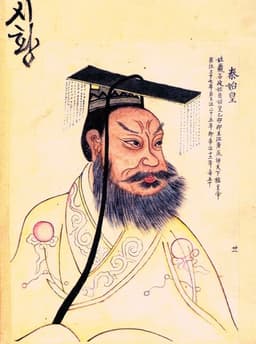
Qin Shi Huang
Emperor · Ancient
85.2Total
Basic Information
Born
-375
-259
Died
-283
-210
Era
Ancient
Ancient
Nationality
India
China
Occupation
Politician
Emperor
Civilization
Indian
Eastern
Score Comparison
Military (10%)
47.5
80.0
Political (20%)
78.0
90.0
Influence (20%)
40.0
85.0
Legacy (20%)
82.0
90.0
Leadership (15%)
79.8
78.0
Strategy (15%)
68.1
82.0
TOTAL
65.7
85.2
Chanakya — Complete Timeline
322 BC
Alliance with Chandragupta MauryaPolitical Action◆ Major
Chanakya met the young Chandragupta Maurya and recognized his potential. He trained him in military and political strategy, forming a partnership that would lead to the creation of the Maurya Empire and the defeat of Alexander's successors in India.
AllianceMentorshipChandragupta
Impact: nationalconstructive
321 BC
Overthrow of the Nanda DynastyPolitical Action
Chanakya orchestrated the overthrow of the Nanda dynasty, using Chandragupta Maurya as his instrument. He exploited internal dissent and used guerrilla tactics to defeat the Nanda army, establishing the Maurya Empire.
CoupMaurya EmpireNanda
Impact: national
Appointment as Chief Minister of the Maurya EmpirePolitical Action◆ Major
Chanakya served as the chief minister and advisor to Chandragupta Maurya. He helped consolidate the empire, establish administrative systems, and implement policies from the Arthashastra, including a centralized bureaucracy and spy network.
Chief MinisterAdministrationMaurya Empire
Impact: nationalconstructive
320 BC
Composition of the ArthashastraCultural
Chanakya authored the Arthashastra, a comprehensive treatise on statecraft, economic policy, and military strategy. The text covers topics from taxation and diplomacy to espionage and warfare, becoming a foundational work of Indian political thought.
Political TreatiseEconomicsStatecraft
Impact: globalconstructive
Qin Shi Huang — Complete Timeline
246 BC
Construction of the Mausoleum and Terracotta ArmyOther◆ Major
Qin Shi Huang commissioned a vast mausoleum complex near Xi'an, guarded by thousands of life-sized terracotta soldiers, horses, and chariots. The project employed hundreds of thousands of workers and reflected his obsession with immortality and imperial power.
Impact: global
230 BC
Conquest of the Six Warring StatesWar
From 230 to 221 BCE, Ying Zheng led the Qin state in a series of campaigns that conquered the Han, Zhao, Wei, Chu, Yan, and Qi states. This unified China under a single ruler for the first time, ending the Warring States period.
Impact: global
221 BC
Standardization of Writing, Currency, and MeasurementsReform◆ Major
Qin Shi Huang ordered the standardization of Chinese script, currency, and weights and measures across the unified empire. This facilitated administration, trade, and cultural integration, laying a foundation for future dynasties.
Impact: globalconstructive
Proclamation of the Qin DynastyPolitical Action
After conquering the last independent state, Ying Zheng declared himself Shi Huangdi (First Emperor), founding the Qin Dynasty. He adopted a new title to signify his supreme authority and initiated centralized imperial rule.
Impact: global
214 BC
Initiation of the Great Wall ConstructionOther◆ Major
Qin Shi Huang ordered the connection and extension of existing northern fortifications to create a unified defensive wall against nomadic Xiongnu raids. This project involved massive conscripted labor and became the precursor to the later Great Wall.
Impact: regional
213 BC
Burning of Books and Burying of ScholarsPolitical Action◆ Major
On the advice of Li Si, Qin Shi Huang ordered the burning of historical records and philosophical texts not aligned with Legalist doctrine. He also had 460 Confucian scholars buried alive to suppress dissent and consolidate ideological control.
Impact: nationaldestructive
Expert Analysis
chanakya-vs-qin-shi-huang
# The Emperor and the Strategist: Two Visions of Power
On a spring morning in 221 BCE, Ying Zheng stood before his assembled generals in the captured palace of the last independent kingdom. He had conquered them all—Han, Zhao, Wei, Chu, Yan, Qi—six warring states that had torn China apart for centuries. He declared himself *Shi Huangdi*, the First Emperor, and set about erasing the past to build an eternal empire. Half a world away, a hundred years earlier, a Brahmin scholar named Chanakya had watched a different tyrant, the Nanda king of Magadha, insult him at court. He vowed revenge, not with an army of his own, but by finding a boy he could mold into a ruler. Both men remade civilizations. One built a monument of stone and bone that still stands; the other built a system of thought that still governs minds. Why did one end in fire and the other in philosophy?
Origins
Qin Shi Huang was born into war. In 259 BCE, the Warring States period had raged for two centuries. His father was a prince of Qin, a semi-barbaric western state that had already begun to surpass its rivals through brutal efficiency and Legalist philosophy—a doctrine that valued order over morality. Ying Zheng inherited the throne at thirteen, a boy surrounded by eunuchs, regents, and the ghost of his mother’s lover, who had plotted against him. He learned early that trust was a weapon for fools.
Chanakya came from a world equally fractured but differently ordered. Born around 375 BCE in Taxila, then the intellectual capital of India, he was a Brahmin of the highest learning. His India was a patchwork of kingdoms, republics, and tribal confederacies, all overshadowed by the Nanda Empire, which had grown rich through taxation and exploitation. Chanakya’s father had been a teacher; his son became one. But when the Nanda king humiliated him in public—some say for his unattractive appearance—Chanakya’s pride burned. He cursed the king and fled, vowing to uproot the dynasty.
Both men were shaped by chaos, but Qin Shi Huang saw chaos as an enemy to be crushed, while Chanakya saw it as a puzzle to be solved.
Rise to Power
The First Emperor’s path was paved with blood. From 230 to 221 BCE, he personally oversaw campaigns that annihilated six kingdoms. He did not merely conquer; he erased. He forced the nobility of defeated states into his capital, Xianyang, where he could watch them. His general Wang Jian knew that the emperor’s favor could turn to poison overnight. By 221 BCE, at age thirty-eight, Ying Zheng ruled from the Yellow Sea to the Tibetan plateau. He had no rivals left—only subjects.
Chanakya’s rise was subtler. In the forests of Magadha, he met a young man named Chandragupta Maurya—a boy of humble birth but fierce ambition. Chanakya recognized something rare: raw potential combined with desperation. He trained Chandragupta in swordsmanship, strategy, and the art of deception. They built a small army from mercenaries and tribal allies. In 321 BCE, Chanakya orchestrated a coup that exploited internal Nanda divisions, and the dynasty fell. Chandragupta became king; Chanakya became chief minister.
Where Qin Shi Huang relied on his own sword and the terror of his name, Chanakya worked through a proxy. The Brahmin never wore a crown. He preferred the shadow.
Leadership & Governance
Qin Shi Huang governed as he conquered—with absolute, terrifying uniformity. He standardized writing, currency, and measurements across his empire. He ordered the construction of a network of roads and canals. He connected the northern walls into what would become the Great Wall. But his methods were draconian. In 213 BCE, on the advice of his minister Li Si, he ordered the Burning of Books and the Burying of Scholars—any text not related to medicine, agriculture, or Legalist doctrine was destroyed; scholars who resisted were executed. He believed that history began with him. The past was a competitor to be eliminated.
Chanakya governed through the *Arthashastra*, a treatise he composed around 320 BCE. It is a cold, pragmatic manual: “The king shall consider as good not what pleases himself but what pleases his subjects.” He advocated for spies, assassinations, and manipulation, but always in service of stability. He created a bureaucracy of ministers, tax collectors, and judges. He built roads and irrigation systems. He did not burn books; he wrote one.
Both men were geniuses of organization, but Qin Shi Huang centralized through terror, while Chanakya centralized through law. The First Emperor wanted obedience; Chanakya wanted order.
Triumph & Tragedy
The First Emperor’s greatest moment was also his most macabre. From 246 BCE onward, he commissioned a mausoleum near Xi’an, guarded by thousands of life-sized terracotta soldiers—each one unique, each one ready for an afterlife of war. It was a monument to his obsession with immortality. Yet his greatest failure was the same obsession. He searched for the elixir of life, consuming mercury pills prescribed by court alchemists. In 210 BCE, at age forty-nine, he died—likely from mercury poisoning. His empire collapsed within four years.
Chanakya’s triumph was the Maurya Empire itself, which became the largest in Indian history. He saw Chandragupta conquer the northwest, defeating Seleucus Nicator, a successor of Alexander the Great. But his tragedy was personal. According to legend, an old enemy, the minister Subandhu, tricked the king into turning against Chanakya. The Brahmin, realizing his life’s work was undone, walked into a fire and immolated himself. The empire survived his death, but not his wisdom.
Character & Destiny
Qin Shi Huang was paranoid, ruthless, and grandiose. He believed himself divine. He built a network of hidden palaces connected by tunnels, so no one could know where he slept. He executed his own ministers when they displeased him. His character drove him to conquer, but also to destroy. He left no heir worthy of his throne—only a court of sycophants and a son too weak to hold the empire together.
Chanakya was proud, vengeful, but ultimately selfless. He could have taken the throne; he chose not to. He wrote, “A king who is not wise, though he be wealthy, is soon destroyed.” His character was that of a teacher who never stopped teaching. Even in death, he left behind a book.
Legacy
Qin Shi Huang’s legacy is a contradiction. He unified China—the very idea of China as a single state begins with him. The Great Wall, the standardized script, the administrative divisions—all survive. But he is remembered as a tyrant. Confucian historians, whose books he burned, later painted him as a monster. The First Emperor’s name is a warning.
Chanakya’s legacy is a blueprint. The *Arthashastra* was lost for centuries, rediscovered only in 1905. Today, it is studied by political scientists, corporate strategists, and military academies. He is remembered as the Indian Machiavelli—but Machiavelli wrote after the fact; Chanakya wrote before the empire. He is the architect, not the builder.
Conclusion
Qin Shi Huang built with stone and iron; Chanakya built with words and ideas. One empire lasted fourteen years; the other lasted a hundred and forty. But both men understood a terrible truth: that power, once seized, must be held by any means. The First Emperor tried to erase the past to control the future. Chanakya tried to understand the past to master the present. In the end, the scholar’s work outlasted the emperor’s wall. The terracotta soldiers still stand, silent and frozen, waiting for a commander who will never return. But the *Arthashastra* is still read, still debated, still used. The difference between a monument and a manual is the difference between a corpse and a living idea.
Rankings
🥇
Qin Shi HuangLeader
Mil: 80.0Pol: 90.0Inf: 85.0
85.2
🥈
Chanakya
Mil: 47.5Pol: 78.0Inf: 40.0
65.7
+19.5 behind
How This Comparison Works
Algorithm
Each figure is scored on 6 dimensions (0—100 scale) based on structured historical data: Military (10%), Political (20%), Influence (20%), Legacy (20%), Leadership (15%), Strategy (15%). The weighted total produces the final ranking.
Data Sources
Scores are computed from structured sub-indicators in the database. Scale factors adjust for era (Ancient ×0.85, Modern ×1.0) and civilization size (Eastern ×1.05, Other ×0.80) to account for differences in population and military scale.
Maximum 3 Figures
Comparisons are limited to 2—3 figures to ensure readability and statistical meaningfulness.
Error Margins
±5 points per dimension — Sub-scores are derived from historical records with inherent uncertainty. Two figures within 5 points on a dimension should be considered roughly equivalent in that area.
Total Score Accuracy
±3 points overall — The weighted combination of 6 dimensions produces a total score with approximately ±3 points of uncertainty. Differences of less than 3 points are not statistically significant— the figures are effectively tied.
Known Limitations
- Historical records are incomplete and uneven across civilizations
- Figures from oral-tradition societies may be underrepresented
- Occupation labels can misclassify multi-role figures
- Scores measure capability and impact, not moral character
- Quantitative scoring is a comparison tool, not absolute truth
Capability Radar
Military (10%) — Battles & Warfare
Battles
20
85
Win Rate
30
90
Expansion
40
90
Political (20%) — Governance & Reform
Reform
95
95
Diplomacy
90
75
Economy
95
90
Influence (20%) — Cultural & Global Reach
Cultural
85
95
Global
80
85
Legacy (20%) — Historical Impact
Historical
90
95
Longevity
95
95
Leadership (15%) — Power & Stability
Tenure
60
70
Stability
70
65
Strategy (15%) — Tactics & Innovation
Strategy
90
85
Tactics
85
80
Reform
80
95
Similar Comparisons
Comments & Discussion
THE_FIRST_BOOK_BURNER6/17/2026
Qin Shi Huang didn't just unify China—he *invented* imperial autocracy. While Chanakya wrote clever manuals on statecraft, the First Emperor standardized weights, measures, and even the axle width of carts across a continent. That's real power, not abstract philosophy. The burning of books wasn't just censorship; it was a brutal acknowledgment that history belongs to the victor. Chanakya's Arthashastra survives in fragments; the Terracotta Army still marches. Philosophy ages; granite endures.
反秦真君6/17/2026
别被兵马俑骗了!秦始皇是个妄想症患者,活人殉葬、焚书坑儒,把帝国搞成监狱。笑死,说什么标准化文字度量,他灭六国时屠杀了多少人?人家Chanakya用脑子治国,培养出一个开明王朝,而你始皇靠铁血暴政,帝国十五年就垮台。还花岗岩呢,修长城的民夫骨头早烂了,而考底利耶的思想直到今天还被印度政治家引用。谁更“永恒”?