Loading...
Chagatai Khan vs Emperor Ichijo
Chagatai Khan leads by 1.3 pts · 2 figures compared
…
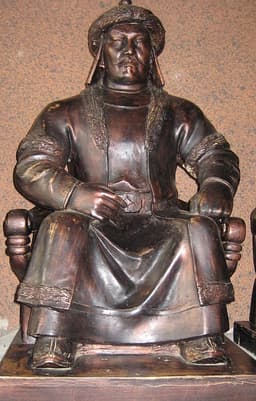
Chagatai Khan
Emperor · Medieval
54.7Total
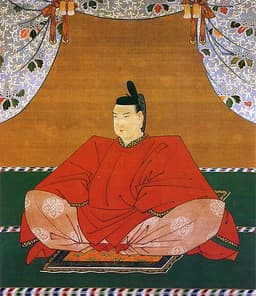
Emperor Ichijo
Emperor · Medieval
53.4Total
Basic Information
Born
1183
980
Died
1242
1011
Era
Medieval
Medieval
Nationality
Mongol Empire
Japan
Occupation
Emperor
Emperor
Civilization
Eastern
Eastern
Score Comparison
Military (10%)
55.0
54.9
Political (20%)
45.1
30.8
Influence (20%)
55.7
60.0
Legacy (20%)
45.8
52.0
Leadership (15%)
74.0
56.0
Strategy (15%)
60.0
69.3
TOTAL
54.7
53.4
Chagatai Khan — Complete Timeline
1221 AD
Conflict with JochiPolitical Action
Chagatai had a longstanding rivalry with his brother Jochi, questioning Jochi's legitimacy as Genghis's son. This conflict caused tension within the Mongol royal family and influenced succession disputes after Genghis's death.
Mongol Family FeudSuccession
Impact: regionaldestructive
1227 AD
Enforcement of Yassa LawReform
Chagatai was known for strictly enforcing the Yassa, the Mongol legal code established by Genghis Khan. He imposed harsh punishments for violations, maintaining order in his khanate and preserving Mongol traditions.
Mongol LawYassa
Impact: regional
Appointed as Ruler of the Chagatai KhanatePolitical Action◆ Major
Following Genghis Khan's death, Chagatai was granted the Central Asian territories of the Mongol Empire, forming the Chagatai Khanate. He ruled from his capital at Almaligh, overseeing the region's administration and military.
Mongol EmpireSuccessionChagatai Khanate
Impact: regional
Emperor Ichijo — Complete Timeline
986 AD
Reign during the height of Fujiwara regencyPolitical Action◆ Major
Ichijo ascended the throne at age six under the regency of Fujiwara no Michinaga. His reign marked the peak of Fujiwara power, with Michinaga effectively ruling Japan through the emperor as a figurehead, limiting Ichijo's direct political influence.
Fujiwara RegencyHeian PeriodPolitical Structure
Impact: national
1000 AD
Patronage of Lady Murasaki ShikibuCultural◆ Major
Emperor Ichijo served as patron to Lady Murasaki Shikibu, a lady-in-waiting at his court. Under his reign, she wrote The Tale of Genji, widely considered the world's first novel, which profoundly influenced Japanese literature and court culture.
LiteratureHeian PeriodCourt Culture
Impact: globalconstructive
Promotion of Heian court cultureCultural
Ichijo's court became a center for literary and artistic flourishing, including poetry contests, calligraphy, and the composition of The Pillow Book by Sei Shonagon. This cultural efflorescence defined the Heian period's aesthetic legacy.
Heian CultureLiteratureArts
Impact: nationalconstructive
Expert Analysis
Origins
Chagatai Khan, born around 1183, was the second son of Genghis Khan and his principal wife Börte. His early life was shaped by the harsh Mongolian steppe and his father's rise to power. Chagatai received a traditional Mongol warrior education, learning horseback riding, archery, and tribal politics. He participated in his father's campaigns from a young age, gaining military experience.
Emperor Ichijo, born on July 15, 980, was the 66th emperor of Japan. He was the first son of Emperor En'yu and Fujiwara no Senshi. His upbringing was immersed in the refined Heian court culture, with emphasis on poetry, calligraphy, and ritual. He ascended the throne at age six, entirely under the regency of the Fujiwara clan, particularly Fujiwara no Michinaga.
Rise to Power
Chagatai rose to prominence as a capable commander in Genghis Khan's campaigns against the Khwarezmian Empire and the Jin dynasty. He was known for his strict adherence to Mongol customs and his father's laws. After Genghis Khan's death in 1227, Chagatai was granted the Central Asian territories of the Mongol Empire, forming the Chagatai Khanate. His rivalry with his brother Jochi, whom he considered illegitimate, created lasting tensions.
Emperor Ichijo became emperor at age six in 986, but real power rested with the Fujiwara regents. His reign saw the peak of Fujiwara no Michinaga's influence, who served as regent (sessho) and later chancellor (kampaku). Ichijo's role was largely ceremonial, focusing on religious rites and cultural patronage. His marriage to Fujiwara no Shoshi (Michinaga's daughter) further cemented Fujiwara control.
Leadership & Governance
Chagatai governed his khanate with a firm hand, strictly enforcing the Yassa legal code. He imposed harsh punishments for violations, such as death for adultery or theft. His leadership style was authoritarian and conservative, preserving Mongol traditions. He maintained a stable but repressive rule over a diverse population of Turks, Persians, and Mongols. His military score is 55.0, reflecting his role as a subordinate commander rather than a conqueror.
Emperor Ichijo, scoring 30.8 in political power, was a figurehead. His governance was passive, allowing the Fujiwara to administer the state. He focused on cultural activities, such as poetry contests and imperial pilgrimages. Under his reign, the Heian court reached its cultural zenith, but political decay set in as the emperor's authority waned. He promoted the arts, leading to the creation of literary masterpieces.
Triumph & Tragedy
Chagatai's greatest success was establishing the Chagatai Khanate, which endured for centuries and became a center of Central Asian culture. He successfully preserved Mongol identity and law in his domain. However, his failure to resolve the Jochi rivalry and his harsh rule alienated subjects, leading to internal strife. His legacy score of 45.8 reflects the khanate's eventual fragmentation.
Emperor Ichijo's triumph was his patronage of Lady Murasaki Shikibu, who wrote *The Tale of Genji*, considered the world's first novel. He also supported Sei Shonagon, author of *The Pillow Book*. His court became a beacon of cultural achievement. Yet his tragedy was his powerlessness; he could not prevent the Fujiwara from monopolizing political power, setting a precedent for imperial weakness that lasted centuries.
Character & Destiny
Chagatai was known for his strictness, conservatism, and loyalty to his father's legacy. He was less charismatic than his brothers but reliable. His character shaped his destiny: his rigid enforcement of Yassa law maintained order but stifled innovation. He scored 74.0 in leadership, indicating his effectiveness in administration, but 60.0 in strategy, showing limited adaptability.
Emperor Ichijo was gentle, cultured, and devout. He was described as calm and fond of literature. His character made him an ideal patron but a weak ruler. His destiny was to be a passive emperor, remembered not for political acts but for fostering a golden age of Japanese literature.
Legacy
Chagatai's legacy is the Chagatai Khanate, which survived until the 17th century and influenced Central Asian politics, language, and culture. The Yassa law continued to be cited, and the Chagatai language became a literary language. However, his impact is overshadowed by his father and brothers. His influence score is 55.7.
Emperor Ichijo's legacy is immense in cultural terms. *The Tale of Genji* remains a classic, influencing literature worldwide. The Heian court culture he patronized defined Japanese aesthetics. His reign is a symbol of imperial patronage. His influence score is 60.0, higher than Chagatai's.
Conclusion
While Chagatai Khan had a more direct political impact through his khanate, Emperor Ichijo's cultural influence is more enduring and widespread. Chagatai's total score of 54.7 edges out Ichijo's 53.4, but Ichijo's legacy in global literature surpasses Chagatai's regional political impact. In terms of lasting influence on human civilization, Emperor Ichijo had greater impact. His patronage produced works that continue to be read and studied, while Chagatai's khanate eventually dissolved. Therefore, Emperor Ichijo is the more significant figure for world culture.
Rankings
🥇
Chagatai KhanLeader
Mil: 55.0Pol: 45.1Inf: 55.7
54.7
🥈
Emperor Ichijo
Mil: 54.9Pol: 30.8Inf: 60.0
53.4
+1.3 behind
How This Comparison Works
Algorithm
Each figure is scored on 6 dimensions (0—100 scale) based on structured historical data: Military (10%), Political (20%), Influence (20%), Legacy (20%), Leadership (15%), Strategy (15%). The weighted total produces the final ranking.
Data Sources
Scores are computed from structured sub-indicators in the database. Scale factors adjust for era (Ancient ×0.85, Modern ×1.0) and civilization size (Eastern ×1.05, Other ×0.80) to account for differences in population and military scale.
Maximum 3 Figures
Comparisons are limited to 2—3 figures to ensure readability and statistical meaningfulness.
Error Margins
±5 points per dimension — Sub-scores are derived from historical records with inherent uncertainty. Two figures within 5 points on a dimension should be considered roughly equivalent in that area.
Total Score Accuracy
±3 points overall — The weighted combination of 6 dimensions produces a total score with approximately ±3 points of uncertainty. Differences of less than 3 points are not statistically significant— the figures are effectively tied.
Known Limitations
- Historical records are incomplete and uneven across civilizations
- Figures from oral-tradition societies may be underrepresented
- Occupation labels can misclassify multi-role figures
- Scores measure capability and impact, not moral character
- Quantitative scoring is a comparison tool, not absolute truth
Capability Radar
Military (10%) — Battles & Warfare
Battles
45
48
Win Rate
50
45
Expansion
50
52
Political (20%) — Governance & Reform
Reform
40
20
Diplomacy
45
30
Economy
40
25
Influence (20%) — Cultural & Global Reach
Cultural
35
60
Global
30
40
Legacy (20%) — Historical Impact
Historical
40
55
Longevity
35
55
Leadership (15%) — Power & Stability
Tenure
55
31
Stability
50
40
Strategy (15%) — Tactics & Innovation
Strategy
45
56
Tactics
40
59
Reform
30
58
Similar Comparisons
Comments & Discussion
No comments yet. Be the first to share your thoughts!