Loading...
This comparison has not been analyzed yet.
One-time AI generation (~1 minute). Scores and timeline are already available below.
Cecil Rhodes vs Kang Youwei
Cecil Rhodes leads by 15.6 pts · 2 figures compared
…
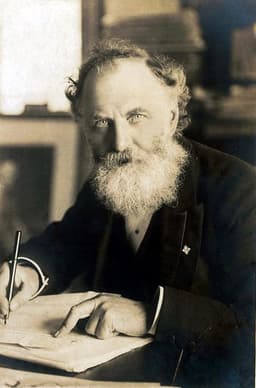
Cecil Rhodes
Politician · Modern
62.6Total

Kang Youwei
Politician · Modern
47.0Total
Basic Information
Born
1853
1858
Died
1902
1927
Era
Modern
Modern
Nationality
United Kingdom
China
Occupation
Politician
Politician
Civilization
Western
Eastern
Score Comparison
Military (10%)
50.0
11.1
Political (20%)
72.0
53.8
Influence (20%)
72.0
60.0
Legacy (20%)
55.0
52.0
Leadership (15%)
64.0
40.4
Strategy (15%)
54.1
37.9
TOTAL
62.6
47.0
Cecil Rhodes — Complete Timeline
1888 AD
Founding of De Beers Mining CompanyPolitical Action◆ Major
Cecil Rhodes consolidated diamond mining operations in Kimberley, South Africa, into De Beers Consolidated Mines. The company gained near-monopoly control over the global diamond supply, generating immense wealth for Rhodes and funding his imperial ambitions.
Diamond IndustryMonopolyEconomic Imperialism
Impact: global
1890 AD
Founding of RhodesiaPolitical Action◆ Major
Rhodes's British South Africa Company sent the Pioneer Column into Mashonaland, establishing Fort Salisbury (Harare). This led to the colonization of the territory later named Rhodesia, which became a British colony and later a white-ruled state.
ColonialismSouthern AfricaImperialism
Impact: regionaldestructive
1895 AD
Jameson RaidWar◆ Major
Rhodes orchestrated the Jameson Raid, an armed incursion into the Transvaal Republic led by Leander Starr Jameson. The raid failed, causing a political scandal that forced Rhodes to resign as Prime Minister of the Cape Colony and damaged British relations with the Boers.
Boer WarImperialismPolitical Scandal
Impact: regionaldestructive
1899 AD
Siege of KimberleyWar◆ Major
During the Second Boer War, Rhodes was trapped in Kimberley during a 124-day siege by Boer forces. His presence and demands for relief caused friction with British military commanders, but the siege ended with the relief of Kimberley in February 1900.
Boer WarSiegeMilitary History
Impact: regional
1902 AD
Establishment of the Rhodes ScholarshipCultural◆ Major
Rhodes's will established the Rhodes Scholarship program, funding students from British colonies, the United States, and Germany to study at Oxford University. The program aimed to promote international understanding and Anglo-Saxon leadership, and continues to operate.
EducationScholarshipLegacy
Impact: globalconstructive
Kang Youwei — Complete Timeline
1897 AD
Published 'A Study of Confucius as a Reformer'Cultural◆ Major
Kang Youwei published a work arguing that Confucius was a reformer who advocated for institutional change. This reinterpretation provided a Confucian justification for his own reform proposals.
ConfucianismReformScholarship
Impact: nationalprogressive
1898 AD
Led the Hundred Days' ReformReform
Kang Youwei advised the Guangxu Emperor to implement a series of sweeping reforms, including modernizing education, government, and military. The reforms lasted 103 days before being crushed by Empress Dowager Cixi.
ReformModernizationHundred Days
Impact: nationalprogressive
Fled to Japan after the reform failurePolitical Action◆ Major
After Empress Dowager Cixi's coup ended the Hundred Days' Reform, Kang Youwei fled to Japan to avoid execution. He continued advocating for constitutional monarchy and reform from exile.
ExileReformCoup
Impact: nationaltragic
This comparison has not been analyzed yet.
One-time AI generation (~1 minute). Scores and timeline are already available below.
Rankings
🥇
Cecil RhodesLeader
Mil: 50.0Pol: 72.0Inf: 72.0
62.6
🥈
Kang Youwei
Mil: 11.1Pol: 53.8Inf: 60.0
47.0
+15.6 behind
How This Comparison Works
Algorithm
Each figure is scored on 6 dimensions (0—100 scale) based on structured historical data: Military (10%), Political (20%), Influence (20%), Legacy (20%), Leadership (15%), Strategy (15%). The weighted total produces the final ranking.
Data Sources
Scores are computed from structured sub-indicators in the database. Scale factors adjust for era (Ancient ×0.85, Modern ×1.0) and civilization size (Eastern ×1.05, Other ×0.80) to account for differences in population and military scale.
Maximum 3 Figures
Comparisons are limited to 2—3 figures to ensure readability and statistical meaningfulness.
Error Margins
±5 points per dimension — Sub-scores are derived from historical records with inherent uncertainty. Two figures within 5 points on a dimension should be considered roughly equivalent in that area.
Total Score Accuracy
±3 points overall — The weighted combination of 6 dimensions produces a total score with approximately ±3 points of uncertainty. Differences of less than 3 points are not statistically significant— the figures are effectively tied.
Known Limitations
- Historical records are incomplete and uneven across civilizations
- Figures from oral-tradition societies may be underrepresented
- Occupation labels can misclassify multi-role figures
- Scores measure capability and impact, not moral character
- Quantitative scoring is a comparison tool, not absolute truth
Capability Radar
Military (10%) — Battles & Warfare
Battles
15
16
Win Rate
20
17
Expansion
60
21
Political (20%) — Governance & Reform
Reform
30
75
Diplomacy
65
40
Economy
80
30
Influence (20%) — Cultural & Global Reach
Cultural
40
55
Global
65
45
Legacy (20%) — Historical Impact
Historical
70
60
Longevity
60
50
Leadership (15%) — Power & Stability
Tenure
55
5
Stability
20
10
Strategy (15%) — Tactics & Innovation
Strategy
25
22
Tactics
10
24
Reform
5
28
Similar Comparisons
Comments & Discussion
No comments yet. Be the first to share your thoughts!