Loading...
Catherine the Great vs Nelson Mandela
Catherine the Great leads by 9.8 pts · 2 figures compared
…
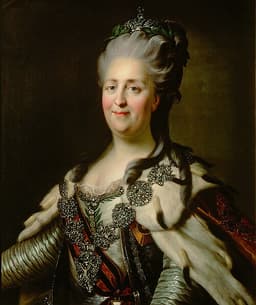
Catherine the Great
Emperor · Modern
66.8Total
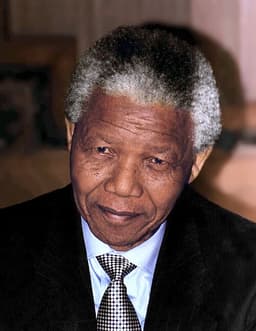
Nelson Mandela
Politician · Modern
57.0Total
Basic Information
Born
1729
1918
Died
1796
2013
Era
Modern
Modern
Nationality
Russia
South Africa
Occupation
Emperor
Politician
Civilization
Western
Other
Score Comparison
Military (10%)
78.5
10.0
Political (20%)
90.0
78.0
Influence (20%)
65.0
40.0
Legacy (20%)
40.0
68.0
Leadership (15%)
80.0
82.0
Strategy (15%)
72.0
50.0
TOTAL
66.8
57.0
Catherine the Great — Complete Timeline
1762 AD
Coup d'État of 1762Political Action
Catherine II led a coup d'
CoupAccessionPower
Impact: national
1764 AD
Hermitage Museum FoundedCultural◆ Major
Catherine the Great founded the Hermitage Museum in St. Petersburg by purchasing a large collection of paintings from Berlin. The museum grew into one of the world's largest art collections, reflecting her patronage of Enlightenment culture.
ArtMuseumEnlightenment
Impact: globalconstructive
1768 AD
Russo-Turkish War (1768-1774)War◆ Major
Catherine the Great initiated a war against the Ottoman Empire, resulting in Russian victory. The Treaty of K
WarOttoman EmpireExpansion
Impact: regional
1783 AD
Annexation of CrimeaPolitical Action◆ Major
Catherine the Great formally annexed the Crimean Peninsula from the Ottoman Empire. This strategic acquisition gave Russia a dominant position in the Black Sea and a warm-water port, fulfilling a long-standing imperial ambition.
AnnexationCrimeaBlack Sea
Impact: regional
1785 AD
Charter to the Gentry GrantedReform◆ Major
Catherine the Great issued the Charter to the Gentry, which codified the rights and privileges of the Russian nobility. It exempted nobles from taxation and military service, solidifying their social status and support for her rule.
NobilityReformSocial Structure
Impact: nationalconstructive
Nelson Mandela — Complete Timeline
1964 AD
Rivonia TrialPolitical Action
Nelson Mandela and other anti-apartheid leaders were tried for sabotage and conspiracy. Mandela was sentenced to life imprisonment, delivering a speech from the dock that became a rallying cry against apartheid. The trial drew international attention to the anti-apartheid struggle.
Impact: global
1990 AD
Release from PrisonPolitical Action
After 27 years of imprisonment, Mandela was released from Victor Verster Prison by President F.W. de Klerk. His release was a pivotal moment in South Africa's transition from apartheid to multiracial democracy, leading to negotiations for a new constitution.
Impact: globalprogressive
1993 AD
Awarding of the Nobel Peace PrizeCultural◆ Major
Mandela and F.W. de Klerk were jointly awarded the Nobel Peace Prize for their roles in ending apartheid and laying the foundations for a democratic South Africa. The award recognized their peaceful transition and commitment to reconciliation.
Impact: globalprogressive
1994 AD
Inauguration as President of South AfricaPolitical Action
Mandela was inaugurated as South Africa's first Black president after the country's first fully democratic elections. His presidency focused on national reconciliation, establishing the Truth and Reconciliation Commission, and dismantling the legacy of apartheid.
Impact: globalprogressive
Expert Analysis
Catherine the Great vs Nelson Mandela
# The Prisoner and the Empress
On a winter morning in 1762, Catherine, a German-born princess who had become Empress of Russia, stood before the Winter Palace’s frozen Neva River and watched her husband’s guards switch their allegiance to her. She had not fired a shot. Nearly two centuries later, on a summer afternoon in 1990, a man in his seventies walked out of Victor Verster Prison in South Africa, his hand raised in a clenched fist salute. He had not fired a shot either, but he had spent twenty-seven years behind bars. Two leaders, two revolutions—one a coup d’état, the other a moral triumph. What drove Catherine the Great to expand an empire, and Nelson Mandela to dismantle a system of racial oppression? The answer lies not merely in their actions, but in the worlds that shaped them.
Origins
Catherine the Great was born Sophie of Anhalt-Zerbst in 1729, a minor German princess in a patchwork of petty states. Her father was a Prussian general, her mother a calculating social climber. She arrived in Russia at age fourteen, a foreigner in a court rife with intrigue, and quickly learned that survival meant mastering the language of power. She converted to Orthodoxy, studied Voltaire and Montesquieu, and watched as her husband, Peter III, alienated everyone around him. Her era was the Enlightenment, a time when philosophers dreamed of rational kings, but Russia was a land of serfdom, where the nobility held absolute sway over millions of souls.
Nelson Mandela was born Rolihlahla Mandela in 1918 in the village of Mvezo, South Africa. His father was a Thembu chief, his mother a devout Christian. He grew up in a world where a white minority ruled through apartheid—a system of racial segregation enforced by law, police, and prisons. His era was the twentieth century, a time of decolonization, civil rights movements, and the Cold War. Where Catherine inherited a throne through marriage, Mandela inherited a struggle through birth.
Rise to Power
Catherine’s path to power was a palace conspiracy. In 1762, with the support of the Orlov brothers and the Imperial Guard, she overthrew her husband, Peter III, in a bloodless coup. She was thirty-three years old. The coup was not a popular uprising but a noble coup, orchestrated by a handful of elites who saw in Catherine a more capable ruler. She had no army, no political party, no mass movement—only charm, intelligence, and the willingness to act.
Mandela’s rise was the opposite. He joined the African National Congress in 1944, then led the Defiance Campaign against apartheid laws in the 1950s. When peaceful protest failed, he co-founded Umkhonto we Sizwe, the armed wing of the ANC, and was arrested in 1962. At the Rivonia Trial in 1964, he faced life imprisonment for sabotage and conspiracy. His rise was not a coup but a slow, painful climb through the ranks of a liberation movement. He did not seize power; he earned it through sacrifice.
Leadership & Governance
Catherine ruled as an enlightened despot. She corresponded with Voltaire, founded the Hermitage Museum in 1764 by purchasing a collection of paintings from Berlin, and reformed education by establishing the Smolny Institute for noble girls. But her reforms stopped at the serfs. The Charter to the Gentry in 1785 codified the privileges of the nobility, while the condition of the peasantry worsened. She expanded Russia’s borders through war—the Russo-Turkish War of 1768–1774 brought victory and the Treaty of Küçük Kaynarca, and the annexation of Crimea in 1783 gave Russia its Black Sea fleet. Her governance was a paradox: she admired Enlightenment ideals but ruled through autocracy.
Mandela governed as a reconciler. As South Africa’s first Black president from 1994 to 1999, he did not seek revenge. He established the Truth and Reconciliation Commission, invited his former jailers to his inauguration, and shared the Nobel Peace Prize with F.W. de Klerk, the man who had released him. His leadership was not about military conquest but moral authority. He dismantled apartheid not by force but by negotiation, creating a multiracial democracy where none had existed. Where Catherine expanded an empire, Mandela built a nation.
Triumph & Tragedy
Catherine’s greatest triumph was the expansion of Russia. She added Crimea, the Black Sea coast, and vast territories in Poland. The Hermitage Museum became a symbol of Russian culture, housing one of the world’s greatest art collections. But her tragedy was the failure of reform. The Pugachev Rebellion of 1773–1775, a peasant uprising crushed with brutal force, revealed the limits of her enlightenment. She died in 1796, leaving a Russia that was larger but no freer.
Mandela’s greatest triumph was his release from prison in 1990 and his inauguration as president in 1994. The moment he stood on the balcony of the Union Buildings in Pretoria, the world watched a miracle unfold. But his tragedy was personal: his marriage to Winnie Mandela collapsed, his health declined, and he spent his final years in quiet retirement, haunted by the knowledge that apartheid’s economic legacy remained. He died in 2013, having achieved his goal but not his dream.
Character & Destiny
Catherine was pragmatic, ambitious, and ruthless. She used her intellect to survive a hostile court, her charm to win allies, and her will to expand an empire. She was a woman in a man’s world, and she played by its rules. Her personality drove her decisions: she annexed Crimea because she saw opportunity, granted the gentry their charter because she needed their support. Her destiny was to be a builder of empire, not a liberator of people.
Mandela was patient, disciplined, and forgiving. He endured twenty-seven years in prison without bitterness, emerging with a vision of reconciliation. His personality shaped his decisions: he negotiated with his oppressors because he understood that hatred destroys the hater. His destiny was to be a healer of wounds, not a conqueror of lands.
Legacy
Catherine’s legacy is a museum, a navy, and a nation. The Hermitage stands today as a testament to her cultural ambition. Russia’s presence on the Black Sea owes much to her wars. But she is also remembered as a despot who tightened the bonds of serfdom. Her scores—Military 65, Political 82, Legacy 72—reflect a ruler who was effective but not transformative.
Mandela’s legacy is a democracy, a constitution, and a symbol. South Africa’s peaceful transition remains a model for divided societies. The Nobel Peace Prize, the statues, the films—all celebrate a man who chose forgiveness over revenge. His scores—Political 80, Influence 80, Legacy 78—reflect a leader who changed the world not by force but by example.
Conclusion
Two leaders, two centuries apart. Catherine the Great built an empire from a palace coup; Nelson Mandela built a nation from a prison cell. One expanded borders, the other broke them down. One ruled through power, the other through moral authority. Yet both understood that leadership is not about the throne but about the choices made in its shadow. Catherine chose to enlarge Russia; Mandela chose to heal South Africa. In the end, the question is not who was greater, but what kind of world each sought to leave behind. One left a museum; the other left a hope.
Rankings
🥇
Catherine the GreatLeader
Mil: 78.5Pol: 90.0Inf: 65.0
66.8
🥈
Nelson Mandela
Mil: 10.0Pol: 78.0Inf: 40.0
57.0
+9.8 behind
How This Comparison Works
Algorithm
Each figure is scored on 6 dimensions (0—100 scale) based on structured historical data: Military (10%), Political (20%), Influence (20%), Legacy (20%), Leadership (15%), Strategy (15%). The weighted total produces the final ranking.
Data Sources
Scores are computed from structured sub-indicators in the database. Scale factors adjust for era (Ancient ×0.85, Modern ×1.0) and civilization size (Eastern ×1.05, Other ×0.80) to account for differences in population and military scale.
Maximum 3 Figures
Comparisons are limited to 2—3 figures to ensure readability and statistical meaningfulness.
Error Margins
±5 points per dimension — Sub-scores are derived from historical records with inherent uncertainty. Two figures within 5 points on a dimension should be considered roughly equivalent in that area.
Total Score Accuracy
±3 points overall — The weighted combination of 6 dimensions produces a total score with approximately ±3 points of uncertainty. Differences of less than 3 points are not statistically significant— the figures are effectively tied.
Known Limitations
- Historical records are incomplete and uneven across civilizations
- Figures from oral-tradition societies may be underrepresented
- Occupation labels can misclassify multi-role figures
- Scores measure capability and impact, not moral character
- Quantitative scoring is a comparison tool, not absolute truth
Capability Radar
Military (10%) — Battles & Warfare
Battles
85
0
Win Rate
80
7
Expansion
90
9
Political (20%) — Governance & Reform
Reform
90
95
Diplomacy
85
95
Economy
85
60
Influence (20%) — Cultural & Global Reach
Cultural
85
85
Global
80
90
Legacy (20%) — Historical Impact
Historical
85
90
Longevity
80
80
Leadership (15%) — Power & Stability
Tenure
95
60
Stability
80
80
Strategy (15%) — Tactics & Innovation
Strategy
85
8
Tactics
75
12
Reform
90
17
Similar Comparisons
Comments & Discussion
RedcoatReader6/16/2026
You want to compare Catherine and Mandela? One took an empire by seducing generals and reading Voltaire; the other took a nation by suffering and silence. Catherine expanded serfdom while scribbling letters to Diderot about liberty—classic Enlightenment hypocrisy. Mandela spent 27 years breaking rocks, not building prisons. This comparison flatters Catherine too much. Not all revolutions are equal.
GlazedPotato6/16/2026
Two pacifists, one palace coup, one moral crusade. Catherine read Montesquieu but crushed Pugachev's rebellion and tightened serfdom. Mandela read freedom in prison, then walked out to give South Africa a constitution. Catherine expanded borders; Mandela expanded souls. This chart gives them equal billing—Catherine wouldn't even have given Mandela dinner.
帝国往事6/16/2026
说两人都没开枪,但性质完全不同。叶卡捷琳娜的“不流血政变”是宫廷内斗,背后有近卫军团选边站。曼德拉不流血是用了27年坐牢换来的道德资本。把政变和解放混为一谈,这图表适合历史入门课,不适合严肃对比。一个征服,一个和解,别硬凑对比。
自由之锚6/16/2026
曼德拉打的是法律仗,叶卡捷琳娜打的是权力仗。她写信说“自由是灵魂的呼吸”,却给了农奴铁链。曼德拉没有双重标准:他出狱后推动和解而不是复仇。把两人放一起,似乎暗示“伟大”可以平等衡量——但在奴隶主和解放者之间,天平不会中立。
Historian1206/16/2026
As a military historian, I see this differently. Catherine fought six wars, took Crimea and partitioned Poland—she understood power projection. Mandela dismantled apartheid without firing a shot—remarkable, but a political negotiation, not a military strategy. Comparing them is like comparing a chess grandmaster to a saint. The chart mixes apples and oranges; revolution is not the same as reconciliation.