Loading...
Catherine the Great vs Mahatma Gandhi
Mahatma Gandhi leads by 1.9 pts · 2 figures compared
…
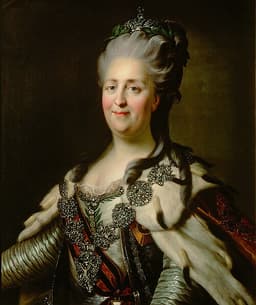
Catherine the Great
Emperor · Modern
66.8Total
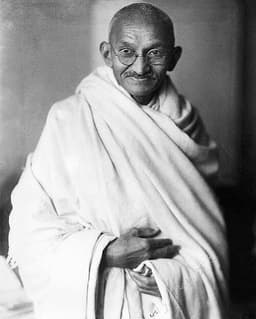
Mahatma Gandhi
Politician · Modern
68.7Total
Basic Information
Born
1729
1869
Died
1796
1948
Era
Modern
Modern
Nationality
Russia
India
Occupation
Emperor
Politician
Civilization
Western
Indian
Score Comparison
Military (10%)
78.5
42.3
Political (20%)
90.0
65.0
Influence (20%)
65.0
80.0
Legacy (20%)
40.0
75.0
Leadership (15%)
80.0
70.0
Strategy (15%)
72.0
55.0
TOTAL
66.8
68.7
Catherine the Great — Complete Timeline
1762 AD
Coup d'État of 1762Political Action
Catherine II led a coup d'
CoupAccessionPower
Impact: national
1764 AD
Hermitage Museum FoundedCultural◆ Major
Catherine the Great founded the Hermitage Museum in St. Petersburg by purchasing a large collection of paintings from Berlin. The museum grew into one of the world's largest art collections, reflecting her patronage of Enlightenment culture.
ArtMuseumEnlightenment
Impact: globalconstructive
1768 AD
Russo-Turkish War (1768-1774)War◆ Major
Catherine the Great initiated a war against the Ottoman Empire, resulting in Russian victory. The Treaty of K
WarOttoman EmpireExpansion
Impact: regional
1783 AD
Annexation of CrimeaPolitical Action◆ Major
Catherine the Great formally annexed the Crimean Peninsula from the Ottoman Empire. This strategic acquisition gave Russia a dominant position in the Black Sea and a warm-water port, fulfilling a long-standing imperial ambition.
AnnexationCrimeaBlack Sea
Impact: regional
1785 AD
Charter to the Gentry GrantedReform◆ Major
Catherine the Great issued the Charter to the Gentry, which codified the rights and privileges of the Russian nobility. It exempted nobles from taxation and military service, solidifying their social status and support for her rule.
NobilityReformSocial Structure
Impact: nationalconstructive
Mahatma Gandhi — Complete Timeline
1917 AD
Champaran SatyagrahaPolitical Action
Gandhi led his first nonviolent protest in India, supporting indigo farmers in Champaran, Bihar, against exploitative British planters. He organized a campaign of civil disobedience and negotiations, resulting in the abolition of the oppressive tinkathia system.
Civil disobedienceFarmers' rightsBritish Raj
Impact: nationalprogressive
1919 AD
Jallianwala Bagh massacre aftermathPolitical Action◆ Major
After British troops killed hundreds of unarmed civilians in Amritsar, Gandhi organized a nationwide hartal (strike) and nonviolent protests. He returned his medals and launched the Rowlatt Satyagraha, marking a shift from cooperation to non-cooperation with British rule.
ProtestBritish RajMassacre
Impact: nationaltragic
1930 AD
Salt MarchPolitical Action
Gandhi led a 240-mile march from Sabarmati to Dandi, Gujarat, to defy the British salt monopoly. Thousands joined him, making salt from seawater. This act of civil disobedience sparked mass protests across India and drew global attention to the independence movement.
Civil disobedienceSalt taxIndependence movement
Impact: globalprogressive
1942 AD
Quit India Movement launchPolitical Action◆ Major
Gandhi launched the Quit India Movement, calling for an end to British rule with the slogan 'Do or Die'. The British arrested him and other leaders, but the movement led to widespread protests and repression, accelerating the end of colonial rule.
IndependenceCivil disobedienceBritish Raj
Impact: nationalprogressive
1948 AD
AssassinationPolitical Action
Gandhi was shot and killed by Nathuram Godse, a Hindu nationalist, during a prayer meeting in New Delhi. His assassination shocked the world and led to a wave of grief and violence, but also reinforced his legacy as a martyr for nonviolence.
AssassinationMartyrdomNonviolence
Impact: globaltragic
Expert Analysis
Catherine the Great vs Mahatma Gandhi
# The Saint and the Sovereign: What Separates a Prophet from a Pragmatist?
On a January evening in 1948, an old man in a threadbare shawl walked slowly toward a prayer ground in New Delhi, his arms resting on the shoulders of two young women. Moments later, three bullets tore through his chest. Half a world away and a century and a half earlier, a German princess who had remade herself into the Empress of all Russia died in her bed at the Winter Palace, surrounded by the art and ambition she had amassed. One left a nation born in bloodless sacrifice; the other left an empire expanded by blood and iron. Both changed history. But what drove one to renounce power and the other to seize it? The answer lies not in their goals—both sought greatness for their people—but in the very different worlds that shaped them.
Origins
Mohandas Karamchand Gandhi was born in 1869 in the coastal town of Porbandar, India, into a devout Hindu family of the merchant caste. His father was a chief minister in a small princely state; his mother was deeply religious, fasting and praying with a discipline that left a mark on the boy. Young Gandhi was a mediocre student, painfully shy, and terrified of ghosts and darkness. He married at thirteen, and his early life was a study in ordinariness—until he sailed to London at nineteen to study law. There, in the foggy streets of Victorian England, he encountered Western ideas of justice, but also the sting of racial prejudice. That dual education—in the ethics of the British and the cruelty of their empire—would define him.
Sophie Friederike Auguste von Anhalt-Zerbst was born in 1729 in Stettin, Pomerania, to a minor German prince. Her childhood was modest, even threadbare, by royal standards. She was a tomboyish girl with a sharp mind and a hunger for approval that her cold mother never gave. At fourteen, she was summoned to Russia to marry the Grand Duke Peter, the nephew of Empress Elizabeth. She converted to Orthodox Christianity, learned Russian with fierce determination, and renamed herself Catherine. Where Gandhi’s path was shaped by colonial subordination, Catherine’s was forged in the crucible of a court where survival depended on charm, cunning, and the willingness to play a very long game.
Rise to Power
Gandhi’s ascent was slow, almost accidental. After a failed law practice in India, he accepted a year-long contract in South Africa in 1893. There, he was thrown off a train for refusing to leave a first-class compartment, beaten for walking in a whites-only area, and humiliated repeatedly. These experiences ignited a fire. He organized the Indian community, developed the philosophy of *Satyagraha*—truth-force, or nonviolent resistance—and spent two decades honing his methods. When he returned to India in 1915, he was already a legend. His first major protest, the Champaran Satyagraha of 1917, was a quiet victory: he forced the British to investigate the exploitation of indigo farmers. From there, his rise was not a coup but a pilgrimage.
Catherine’s rise was a coup, literally. In 1762, after enduring a miserable marriage to the unstable and pro-Prussian Peter III—who openly threatened to divorce her and send her to a convent—she struck. With the help of her lover Grigory Orlov and his brothers, she won over the Imperial Guard. On June 28, she rode at the head of 14,000 soldiers to St. Petersburg, dressed in a guardsman’s uniform. Peter abdicated and was murdered days later, likely with her knowledge. She was thirty-three. Where Gandhi entered power through the door of moral authority, Catherine kicked down the door of a throne room.
Leadership & Governance
Gandhi’s leadership was that of a moral architect, not a ruler. He never held a government position. Instead, he shaped India’s independence movement through mass mobilization and personal example. He led the 1930 Salt March—240 miles to the sea to defy the British salt monopoly—turning a tax on a kitchen staple into a national drama. He launched the Quit India Movement in 1942 with the slogan “Do or Die,” and when the British arrested him, he went to prison calmly, fasting and spinning cloth. His political wisdom lay in understanding that British power depended on Indian cooperation; withdraw that cooperation, and the empire would crumble. But his reforms were often social: he fought untouchability, promoted village industries, and insisted on Hindu-Muslim unity.
Catherine governed as an enlightened despot. She corresponded with Voltaire and Diderot, founded the Hermitage Museum in 1764, and issued the Charter to the Gentry in 1785, codifying noble privileges. But her reforms had limits. She expanded education and founded hospitals, yet serfdom grew harsher under her rule—she granted over 800,000 state peasants to her favorites. Her military genius was strategic: she won the Russo-Turkish War of 1768–1774, annexed Crimea in 1783, and partitioned Poland, making Russia the dominant power in Eastern Europe. Where Gandhi’s power came from persuasion, Catherine’s came from policy and the point of a bayonet.
Triumph & Tragedy
Gandhi’s greatest triumph was India’s independence on August 15, 1947—but it came with the tragedy of Partition, the bloody carving of India and Pakistan. He spent his final months in Calcutta and Delhi, fasting to stop communal violence, praying for peace. His assassination on January 30, 1948, by Nathuram Godse, a Hindu nationalist who blamed him for Partition, was the ultimate irony: the apostle of nonviolence killed by one of his own.
Catherine’s triumphs were territorial and cultural. She made Russia a European power, built palaces, and collected art that still fills the Hermitage. But her tragedy was the Pugachev Rebellion of 1773–1775, a massive peasant uprising that shook her throne and hardened her policies. She crushed it with brutal force, and the memory of that fear lingered. Her greatest failure was perhaps her son Paul, whom she despised and who undid many of her reforms after her death.
Character & Destiny
Gandhi was an ascetic—he ate little, slept little, owned nothing, and tested his self-control by sleeping naked next to young women. This was not eccentricity but a weapon: by renouncing everything, he became untouchable by worldly power. His character was stubborn, even dogmatic. He called himself a “practical idealist,” but his insistence on spinning cloth and opposing industrialization frustrated even his allies.
Catherine was a sensualist and a pragmatist. She had many lovers, but she never let passion cloud politics—each favorite served the state. She once wrote, “I praise loudly, I blame softly.” Her character was resilient, curious, and ruthless when necessary. She read fourteen books a week and wrote plays, but she also signed decrees that expanded serfdom. Destiny, for her, was not a moral calling but a stage she had seized and refused to leave.
Legacy
Gandhi’s legacy is global. Martin Luther King Jr., Nelson Mandela, and countless others drew inspiration from his nonviolent resistance. He is remembered as the Father of the Nation in India, his face on every currency note, his ideals still debated. His score of 85.0 in influence and 80.0 in legacy reflects a man who changed how the world thinks about power.
Catherine’s legacy is more ambiguous. She is remembered as Catherine the Great, a name that implies both admiration and irony. She modernized Russia, but at a cost. Her Hermitage survives as a treasure; her annexation of Crimea echoes in today’s geopolitics. Her scores—72.4 total, 82.0 in politics—place her as a master of statecraft, but not a moral beacon.
Conclusion
One was a saint who refused to rule; the other was a sovereign who refused to be a saint. Gandhi’s power came from his weakness, Catherine’s from her strength. Both were outsiders—a colonial lawyer and a German princess—who remade their worlds. But perhaps the deepest difference is this: Gandhi believed that the ends are shaped by the means, that a wrong method corrupts any goal. Catherine believed that the end justifies the means, that a great empire requires great sacrifices. Between these two visions, history is still choosing.
Rankings
🥇
Mahatma GandhiLeader
Mil: 42.3Pol: 65.0Inf: 80.0
68.7
🥈
Catherine the Great
Mil: 78.5Pol: 90.0Inf: 65.0
66.8
+1.9 behind
How This Comparison Works
Algorithm
Each figure is scored on 6 dimensions (0—100 scale) based on structured historical data: Military (10%), Political (20%), Influence (20%), Legacy (20%), Leadership (15%), Strategy (15%). The weighted total produces the final ranking.
Data Sources
Scores are computed from structured sub-indicators in the database. Scale factors adjust for era (Ancient ×0.85, Modern ×1.0) and civilization size (Eastern ×1.05, Other ×0.80) to account for differences in population and military scale.
Maximum 3 Figures
Comparisons are limited to 2—3 figures to ensure readability and statistical meaningfulness.
Error Margins
±5 points per dimension — Sub-scores are derived from historical records with inherent uncertainty. Two figures within 5 points on a dimension should be considered roughly equivalent in that area.
Total Score Accuracy
±3 points overall — The weighted combination of 6 dimensions produces a total score with approximately ±3 points of uncertainty. Differences of less than 3 points are not statistically significant— the figures are effectively tied.
Known Limitations
- Historical records are incomplete and uneven across civilizations
- Figures from oral-tradition societies may be underrepresented
- Occupation labels can misclassify multi-role figures
- Scores measure capability and impact, not moral character
- Quantitative scoring is a comparison tool, not absolute truth
Capability Radar
Military (10%) — Battles & Warfare
Battles
85
45
Win Rate
80
46
Expansion
90
51
Political (20%) — Governance & Reform
Reform
90
85
Diplomacy
85
80
Economy
85
40
Influence (20%) — Cultural & Global Reach
Cultural
85
85
Global
80
90
Legacy (20%) — Historical Impact
Historical
85
90
Longevity
80
85
Leadership (15%) — Power & Stability
Tenure
95
60
Stability
80
55
Strategy (15%) — Tactics & Innovation
Strategy
85
52
Tactics
75
56
Reform
90
55
Similar Comparisons
Comments & Discussion
No comments yet. Be the first to share your thoughts!