Loading...
Catherine I vs Emir of Katsina
Emir of Katsina leads by 7.5 pts · 2 figures compared
…

Catherine I
Emperor · Modern
39.4Total
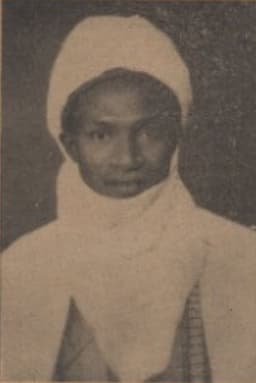
Emir of Katsina
Emperor · Modern
46.9Total
Basic Information
Born
1684
1800
Died
1727
1860
Era
Modern
Modern
Nationality
Russia
Nigeria
Occupation
Emperor
Emperor
Civilization
Western
Other
Score Comparison
Military (10%)
18.7
50.0
Political (20%)
25.0
40.8
Influence (20%)
48.6
51.8
Legacy (20%)
37.5
40.8
Leadership (15%)
41.5
64.0
Strategy (15%)
60.0
30.3
TOTAL
39.4
46.9
Catherine I — Complete Timeline
1707 AD
Marriage to Peter the GreatPolitical Action◆ Major
Catherine I, born Marta Skowro
MarriageSocial MobilityRoyal Court
Impact: national
1724 AD
Coronation as Empress ConsortPolitical Action◆ Major
Peter the Great crowned Catherine as empress consort in a formal ceremony at the Dormition Cathedral in Moscow. This was a rare honor for a tsar's wife and signaled Peter's intention to make her his successor. The coronation established her as a legitimate ruler.
CoronationSuccessionLegitimacy
Impact: nationalconstructive
1725 AD
Accession as Empress of RussiaPolitical Action◆ Major
After Peter the Great's death without naming a clear successor, Catherine I seized power with the support of the Imperial Guard and key nobles, becoming the first woman to rule Russia in her own right. Her accession marked a shift in succession practices and established a precedent for female rule.
SuccessionFemale RuleImperial Guard
Impact: nationalconstructive
1726 AD
Establishment of the Supreme Privy CouncilPolitical Action◆ Major
Catherine I created the Supreme Privy Council, a body of advisors that effectively governed Russia during her reign. The council, dominated by Alexander Menshikov, reduced the power of the Senate and concentrated authority in a small group of nobles, shaping Russian governance.
Government ReformCouncilMenshikov
Impact: national
Alliance with Austria (Treaty of Vienna)Political Action
Catherine I's government signed the Treaty of Vienna with the Holy Roman Empire, forming an alliance against the Ottoman Empire and Spain. This agreement aligned Russia with the Habsburgs and marked a shift in European diplomacy, though it had limited practical impact during her short reign.
TreatyAllianceDiplomacy
Impact: regional
Emir of Katsina — Complete Timeline
1820 AD
Coronation as Emir of KatsinaPolitical Action◆ Major
The Emir became the ruler of Katsina, a historic Hausa city-state within the Sokoto Caliphate. His reign focused on maintaining Katsina's cultural identity while integrating into the caliphate's Islamic framework.
Katsina EmirateCoronationHausa
Impact: regional
1835 AD
Defended Katsina Against Bornu RaidsWar◆ Major
The Emir led Katsina's defense against military incursions from the Bornu Empire to the east. The conflicts were part of the broader rivalry between the Sokoto Caliphate and Bornu, with Katsina serving as a frontier buffer.
Bornu ConflictDefenseFrontier War
Impact: regionaldestructive
1840 AD
Promoted Islamic ScholarshipCultural
The Emir patronized Islamic scholars and established Quranic schools in Katsina. This fostered a tradition of learning that produced notable jurists and theologians, reinforcing Katsina's reputation as a center of Islamic education.
Islamic ScholarshipEducationKatsina
Impact: regionalconstructive
Expert Analysis
Origins
Catherine I, born Marta Skowrońska in 1684, was a Lithuanian peasant of humble origins. Orphaned young, she worked as a servant before becoming the mistress of Peter the Great. Her early life in the Baltic region exposed her to hardship and shaped her pragmatic survival instincts. In contrast, the Emir of Katsina (various rulers held the title; this analysis focuses on the 19th-century Emir during the Sokoto Caliphate) was born into the Hausa-Fulani aristocracy, likely in the early 1800s. His lineage connected him to the Islamic reform movement of Usman dan Fodio, and he received traditional education in Islamic law and governance. While Catherine's rise was from the bottom, the Emir's was from privilege, but both faced challenges in their respective power structures.
Rise to Power
Catherine I's rise was meteoric. She caught the eye of Peter the Great during the Great Northern War, becoming his mistress around 1703 and later his wife in 1712. Her influence grew as she accompanied Peter on campaigns, notably the Pruth River Campaign in 1711, where she allegedly saved the Russian army from defeat by bribing the Ottoman vizier with jewelry. Peter crowned her Empress Consort in 1724, a rare honor. Upon Peter's death in 1725 without a clear heir, Catherine seized power with support from the Imperial Guard and key nobles, becoming Empress of Russia. The Emir of Katsina rose through succession within the emirate, a vassal state of the Sokoto Caliphate. His coronation as Emir likely occurred after the death of his predecessor, with approval from the Sultan of Sokoto. His rise was less dramatic but anchored in established tradition and religious authority.
Leadership & Governance
Catherine I's leadership was characterized by reliance on advisors. She established the Supreme Privy Council, dominated by Alexander Menshikov, which effectively governed Russia. Her political score of 25.0 reflects limited personal involvement in policy. She continued Peter's centralization but lacked his vision. In contrast, the Emir of Katsina governed with a blend of military and religious leadership, scoring 64.0 in leadership. He defended Katsina against Bornu raids, maintaining the emirate's autonomy within the caliphate. He promoted Islamic scholarship, founding Quranic schools and patronizing jurists. While Catherine's governance was reactive and delegated, the Emir's was proactive and culturally focused.
Triumph & Tragedy
Catherine I's greatest triumph was securing her succession and establishing a precedent for female rule in Russia. She also forged the Treaty of Vienna (1726) with Austria, forming an alliance against the Ottoman Empire. However, her reign was short (1725-1727) and marked by corruption and extravagance. Her total score of 39.4 reflects limited military (18.7) and political impact. The Emir of Katsina's triumphs include successfully defending Katsina from Bornu invasions and fostering a golden age of Islamic learning. His military score of 50.0 indicates competent defense. Yet, his rule was constrained by the Sokoto Caliphate's overarching authority, and his legacy was regional rather than global. Both faced the tragedy of limited power: Catherine was overshadowed by Peter's legacy, the Emir by the caliphate.
Character & Destiny
Catherine I was pragmatic and adaptable, using her charm and survival instincts to navigate court politics. Her decision to create the Supreme Privy Council showed deference to powerful nobles, but it also limited her authority. Her strategy score of 60.0 suggests tactical acumen. The Emir of Katsina was devout and scholarly, prioritizing religious and cultural identity. His leadership score of 64.0 highlights his effectiveness as a ruler within his context. However, his strategy score of 30.3 indicates less focus on long-term political maneuvering. Their fates were shaped by their environments: Catherine's destiny was tied to Russia's transformation, the Emir's to the preservation of Hausa-Fulani traditions under colonial pressures that would come later.
Legacy
Catherine I's legacy is mixed. She is remembered as a transitional figure who kept Russia stable after Peter's death, but her reign had little lasting impact. Her creation of the Supreme Privy Council influenced later governance, but her personal influence score of 48.6 is moderate. The Emir of Katsina left a deeper cultural legacy: his promotion of Islamic scholarship contributed to Katsina's reputation as a center of learning, which persisted into the colonial era. His influence score of 51.8 reflects this enduring cultural impact. However, both are overshadowed by more prominent figures: Catherine by Peter the Great, the Emir by Usman dan Fodio.
Conclusion
While the Emir of Katsina scores higher overall (46.9 vs. 39.4), Catherine I's impact on European geopolitics through the Treaty of Vienna and her role in establishing a precedent for female rule arguably had broader historical significance. However, the Emir's cultural and educational contributions in West Africa were more enduring within his region. Taking a stance: Catherine I had greater impact on the global stage, as her actions influenced European alliances and the course of Russian history, whereas the Emir's influence remained regional. The Emir's higher leadership score (64.0 vs. 41.5) reflects effective local governance, but Catherine's strategic moves (60.0) and her unique path from peasant to empress give her a more significant historical footprint. Thus, Catherine I edges ahead in overall impact, despite the numerical score gap.
Rankings
🥇
Emir of KatsinaLeader
Mil: 50.0Pol: 40.8Inf: 51.8
46.9
🥈
Catherine I
Mil: 18.7Pol: 25.0Inf: 48.6
39.4
+7.5 behind
How This Comparison Works
Algorithm
Each figure is scored on 6 dimensions (0—100 scale) based on structured historical data: Military (10%), Political (20%), Influence (20%), Legacy (20%), Leadership (15%), Strategy (15%). The weighted total produces the final ranking.
Data Sources
Scores are computed from structured sub-indicators in the database. Scale factors adjust for era (Ancient ×0.85, Modern ×1.0) and civilization size (Eastern ×1.05, Other ×0.80) to account for differences in population and military scale.
Maximum 3 Figures
Comparisons are limited to 2—3 figures to ensure readability and statistical meaningfulness.
Error Margins
±5 points per dimension — Sub-scores are derived from historical records with inherent uncertainty. Two figures within 5 points on a dimension should be considered roughly equivalent in that area.
Total Score Accuracy
±3 points overall — The weighted combination of 6 dimensions produces a total score with approximately ±3 points of uncertainty. Differences of less than 3 points are not statistically significant— the figures are effectively tied.
Known Limitations
- Historical records are incomplete and uneven across civilizations
- Figures from oral-tradition societies may be underrepresented
- Occupation labels can misclassify multi-role figures
- Scores measure capability and impact, not moral character
- Quantitative scoring is a comparison tool, not absolute truth
Capability Radar
Military (10%) — Battles & Warfare
Battles
38
20
Win Rate
37
20
Expansion
43
20
Political (20%) — Governance & Reform
Reform
10
30
Diplomacy
20
35
Economy
10
30
Influence (20%) — Cultural & Global Reach
Cultural
10
30
Global
10
20
Legacy (20%) — Historical Impact
Historical
15
30
Longevity
10
25
Leadership (15%) — Power & Stability
Tenure
15
40
Stability
15
35
Strategy (15%) — Tactics & Innovation
Strategy
47
20
Tactics
49
20
Reform
50
15
Similar Comparisons
Comments & Discussion
No comments yet. Be the first to share your thoughts!