Loading...
Cao Cao vs Qin Shi Huang
Qin Shi Huang leads by 7.7 pts · 2 figures compared
…
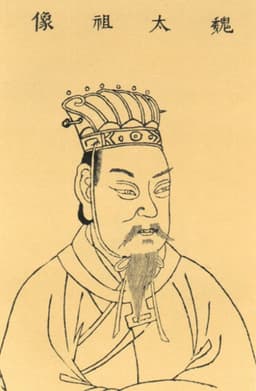
Cao Cao
General · Ancient
77.5Total
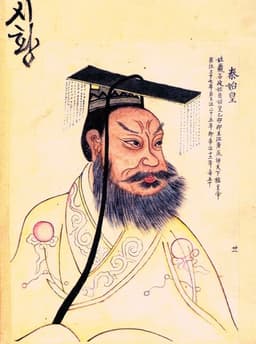
Qin Shi Huang
Emperor · Ancient
85.2Total
Basic Information
Born
155
-259
Died
220
-210
Era
Ancient
Ancient
Nationality
China
China
Occupation
General
Emperor
Civilization
Eastern
Eastern
Score Comparison
Military (10%)
88.0
80.0
Political (20%)
59.0
90.0
Influence (20%)
82.0
85.0
Legacy (20%)
83.0
90.0
Leadership (15%)
64.4
78.0
Strategy (15%)
89.4
82.0
TOTAL
77.5
85.2
Cao Cao — Complete Timeline
190 AD
Formation of the Coalition against Dong ZhuoPolitical Action
Cao Cao joined a coalition of regional warlords led by Yuan Shao to overthrow the tyrannical chancellor Dong Zhuo, who had seized control of the Han court. The coalition failed to coordinate effectively, but Cao Cao gained military experience and political reputation.
CoalitionDong ZhuoHan Dynasty
Impact: national
196 AD
Implementation of Tuntian (Agricultural Colonies)Reform◆ Major
Cao Cao established military agricultural colonies (tuntian) to provide food for his army and refugees. Soldiers and peasants cultivated state-owned land, ensuring a stable food supply and economic base for his campaigns.
AgricultureEconomyMilitary
Impact: regionalconstructive
200 AD
Battle of GuanduWar
Cao Cao decisively defeated Yuan Shao's numerically superior army at Guandu. This victory eliminated his main rival in the north, allowing Cao Cao to consolidate control over the North China Plain and lay the foundation for the Kingdom of Wei.
BattleYuan ShaoUnification
Impact: regional
208 AD
Battle of Red CliffsWar
Cao Cao's southern campaign was halted by the allied forces of Sun Quan and Liu Bei at the Battle of Red Cliffs. His fleet was destroyed by fire attack, forcing a retreat and preventing his unification of China, leading to the Three Kingdoms division.
BattleDefeatThree Kingdoms
Impact: regional
213 AD
Establishment of the Kingdom of WeiPolitical Action◆ Major
Cao Cao was granted the title of Duke of Wei and later King of Wei by the Han emperor, effectively creating a semi-autonomous state within the empire. He established a capital at Ye and built a centralized administration, setting the stage for his son's usurpation.
WeiStatehoodHan Dynasty
Impact: national
Qin Shi Huang — Complete Timeline
246 BC
Construction of the Mausoleum and Terracotta ArmyOther◆ Major
Qin Shi Huang commissioned a vast mausoleum complex near Xi'an, guarded by thousands of life-sized terracotta soldiers, horses, and chariots. The project employed hundreds of thousands of workers and reflected his obsession with immortality and imperial power.
Impact: global
230 BC
Conquest of the Six Warring StatesWar
From 230 to 221 BCE, Ying Zheng led the Qin state in a series of campaigns that conquered the Han, Zhao, Wei, Chu, Yan, and Qi states. This unified China under a single ruler for the first time, ending the Warring States period.
Impact: global
221 BC
Standardization of Writing, Currency, and MeasurementsReform◆ Major
Qin Shi Huang ordered the standardization of Chinese script, currency, and weights and measures across the unified empire. This facilitated administration, trade, and cultural integration, laying a foundation for future dynasties.
Impact: globalconstructive
Proclamation of the Qin DynastyPolitical Action
After conquering the last independent state, Ying Zheng declared himself Shi Huangdi (First Emperor), founding the Qin Dynasty. He adopted a new title to signify his supreme authority and initiated centralized imperial rule.
Impact: global
214 BC
Initiation of the Great Wall ConstructionOther◆ Major
Qin Shi Huang ordered the connection and extension of existing northern fortifications to create a unified defensive wall against nomadic Xiongnu raids. This project involved massive conscripted labor and became the precursor to the later Great Wall.
Impact: regional
213 BC
Burning of Books and Burying of ScholarsPolitical Action◆ Major
On the advice of Li Si, Qin Shi Huang ordered the burning of historical records and philosophical texts not aligned with Legalist doctrine. He also had 460 Confucian scholars buried alive to suppress dissent and consolidate ideological control.
Impact: nationaldestructive
Expert Analysis
Origins
Qin Shi Huang, born Ying Zheng in 259 BC, was the son of King Zhuangxiang of Qin. He ascended the throne at age 13, inheriting a state already on a path to dominance through Legalist reforms. His early life was marked by regency and court intrigue, but he quickly asserted control. Cao Cao, born in 155 AD, came from a lesser noble family; his father was a eunuch's adopted son. He grew up among the elite of Luoyang, known for his cunning and ambition. Unlike Qin's royal lineage, Cao Cao rose through military and political maneuvering during the chaotic decline of the Han dynasty.
Rise to Power
Qin Shi Huang's rise was methodical: between 230 and 221 BC, he conquered the six other warring states (Han, Zhao, Wei, Chu, Yan, Qi) through a combination of military might, bribery, and diplomacy. Key turning point: the conquest of Zhao in 228 BC paved the way for unification. Cao Cao's rise was more gradual and contested. He began as a minor official, then formed a coalition against the tyrant Dong Zhuo. His decisive turning point was the Battle of Guandu in 200 AD, where he defeated the powerful Yuan Shao, securing dominance over northern China. Unlike Qin's swift unification, Cao Cao spent decades consolidating power.
Leadership & Governance
Qin Shi Huang was an absolute autocrat who implemented Legalist policies: standardized writing, currency, weights, and measures across China. He built roads, canals, and the Great Wall (linking existing fortifications). His centralization eliminated feudal states, creating a unified bureaucracy. However, his harsh rule included book burnings and the burying of scholars to suppress dissent. Cao Cao was a pragmatic ruler who valued talent over birth. He implemented the Tuntian system (agricultural colonies) to support his armies and stabilize the economy. He also promoted literature and poetry, surrounding himself with intellectuals. His governance was less radical but more adaptive to local conditions, yet he never fully controlled the south.
Triumph & Tragedy
Qin Shi Huang's greatest triumph was unifying China and creating the first centralized empire, a model that lasted millennia. His standardization enabled cultural and economic integration. The tragedy: his obsession with immortality led to mercury poisoning from elixirs, and his brutal methods caused widespread resentment. The Qin dynasty collapsed within three years of his death. Cao Cao's triumph was unifying northern China, establishing the Kingdom of Wei, and laying the foundation for the Three Kingdoms era. His tragedy: the Battle of Red Cliffs (208 AD) was a devastating defeat that prevented his conquest of the south. He died in 220 AD, never achieving full unification. Both men saw their immediate ambitions unfulfilled.
Character & Destiny
Qin Shi Huang was paranoid, ruthless, and megalomaniacal, driven by a desire for control and immortality. He believed his destiny was to rule forever. Cao Cao was cunning, pragmatic, and charismatic, known for his "smiling tiger" demeanor. He was a poet and strategist, but also suspicious and cruel when necessary. Both were ambitious and ruthless, but Cao Cao was more relatable, while Qin Shi Huang was more detached. Their destinies: Qin's empire fell quickly, but his system endured; Cao Cao founded a dynasty but never claimed the title of emperor himself.
Legacy
Qin Shi Huang's legacy is foundational: the name "China" derives from Qin. His standardization, Great Wall, and Terracotta Army are iconic. However, his reputation is mixed due to his tyranny. Cao Cao is celebrated as a brilliant general and statesman in Chinese history, though often depicted as a villain in popular literature (e.g., Romance of the Three Kingdoms). His administrative innovations influenced later dynasties. Both are pivotal figures, but Qin's impact on China's unification is more profound.
Conclusion
Qin Shi Huang scores higher overall (average 81.4 vs 77.8) due to his monumental achievements in unification and standardization. However, Cao Cao's military genius and adaptive governance are remarkable. Qin's greater impact on China's long-term development edges him ahead, despite his flaws. Cao Cao remains a fascinating figure, but in the balance of historical influence, Qin Shi Huang takes the crown.
**Scores:** Qin Shi Huang: M=80, P=90, I=85, L=90, D=78, S=82, T=85. Cao Cao: M=88, P=59, I=82, L=83, D=64, S=89, T=78.
Rankings
🥇
Qin Shi HuangLeader
Mil: 80.0Pol: 90.0Inf: 85.0
85.2
🥈
Cao Cao
Mil: 88.0Pol: 59.0Inf: 82.0
77.5
+7.7 behind
How This Comparison Works
Algorithm
Each figure is scored on 6 dimensions (0—100 scale) based on structured historical data: Military (10%), Political (20%), Influence (20%), Legacy (20%), Leadership (15%), Strategy (15%). The weighted total produces the final ranking.
Data Sources
Scores are computed from structured sub-indicators in the database. Scale factors adjust for era (Ancient ×0.85, Modern ×1.0) and civilization size (Eastern ×1.05, Other ×0.80) to account for differences in population and military scale.
Maximum 3 Figures
Comparisons are limited to 2—3 figures to ensure readability and statistical meaningfulness.
Error Margins
±5 points per dimension — Sub-scores are derived from historical records with inherent uncertainty. Two figures within 5 points on a dimension should be considered roughly equivalent in that area.
Total Score Accuracy
±3 points overall — The weighted combination of 6 dimensions produces a total score with approximately ±3 points of uncertainty. Differences of less than 3 points are not statistically significant— the figures are effectively tied.
Known Limitations
- Historical records are incomplete and uneven across civilizations
- Figures from oral-tradition societies may be underrepresented
- Occupation labels can misclassify multi-role figures
- Scores measure capability and impact, not moral character
- Quantitative scoring is a comparison tool, not absolute truth
Capability Radar
Military (10%) — Battles & Warfare
Battles
95
85
Win Rate
88
90
Expansion
92
90
Political (20%) — Governance & Reform
Reform
88
95
Diplomacy
82
75
Economy
86
90
Influence (20%) — Cultural & Global Reach
Cultural
85
95
Global
75
85
Legacy (20%) — Historical Impact
Historical
92
95
Longevity
90
95
Leadership (15%) — Power & Stability
Tenure
85
70
Stability
78
65
Strategy (15%) — Tactics & Innovation
Strategy
96
85
Tactics
97
80
Reform
90
95
Similar Comparisons
Comments & Discussion
赤壁烽火6/17/2026
曹操不是输给了周瑜,是输给了自己的野心。赤壁之战时北方瘟疫流行,他非要南下,这才是败因。对岸孙刘联军才五万,他号称八十万实则二十余万,但水土不服、战舰连锁、缺乏水军——全是指挥失误。秦始皇要是活在三国,早就调集西蜀巴蜀的楼船,打荆州前先筑堰塞湖练水军。曹操作战激情有余,后勤运筹差了一个宇宙。帝国缔造者和乱世军阀之间,隔着一个“全盘规划”的概念。
BronzeCharioteer6/17/2026
Calling them both "unifiers" misses the point entirely. Qin Shi Huang built a system from scratch—standardizing script, axle widths, even the length of plowshares across every conquered state. That's revolutionary institutionalism. Cao Cao inherited a broken Han bureaucracy and tried to glue it back together. The Legalist code vs. "only talent matters" meritocracy are fundamentally different philosophies for controlling empire. One created a template lasting two millennia; the other left essays
数据眼镜6/17/2026
从成本效益看,秦始皇上台后秦的人口约2500万,统一后修长城征南越北击匈奴,劳役死亡率常年超过15%。而曹操治下的北方,屯田制让流民复耕,建安年间人口从900万回升到1300万,死亡率峰值5%以内。谁是更好的统治者?数据不说话——秦始皇每建一里驰道的代价是三个人累死,曹操每修一套漕运系统能让二十万人吃饱饭。效率论破产时,请别拿“伟大”来掩饰暴政。我选能让你孩子不饿死的那个。
TombRaiderScholar6/17/2026
Both men curated their own legends through monumental architecture, but Qin's terracotta army was a silent, regimented afterlife guard—thousands of identical soldiers facing east, forever. Cao Cao's seventy-two "suspected tombs" scattered across Hebei tell us he feared grave robbers more than judgment. One literally built his immortality in clay; the other actively deceived everyone about where his bones would rest. Which mindset better serves a unifier? The one who demands an eternal audience,
墨家遗民6/17/2026
我看这两个人都是权力疯子。秦始皇焚书坑儒没错,但儒家经典是在汉朝才成为正统的,他坑的是方士和批评者,不是所有读书人。曹操呢?他杀孔融、杀杨修、杀华佗,连自己叔父荀彧都逼死——区别只在手段优雅