Loading...
Camillus vs Qin Shi Huang
Qin Shi Huang leads by 22.5 pts · 2 figures compared
…

Camillus
General · Ancient
62.7Total
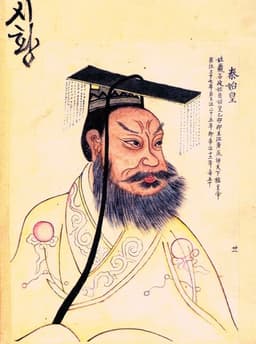
Qin Shi Huang
Emperor · Ancient
85.2Total
Basic Information
Born
-446
-259
Died
-365
-210
Era
Ancient
Ancient
Nationality
Roman Republic
China
Occupation
General
Emperor
Civilization
Western
Eastern
Score Comparison
Military (10%)
74.0
80.0
Political (20%)
68.0
90.0
Influence (20%)
65.0
85.0
Legacy (20%)
40.0
90.0
Leadership (15%)
72.0
78.0
Strategy (15%)
80.9
82.0
TOTAL
62.7
85.2
Camillus — Complete Timeline
396 BC
Siege of VeiiWar◆ Major
Camillus, as dictator, captured the Etruscan city of Veii after a ten-year siege. This victory expanded Roman territory and brought wealth to Rome, establishing Camillus as a leading general.
Military campaignEtruscan war
Impact: regional
391 BC
Exile and RecallPolitical Action
Camillus was exiled from Rome after being accused of misappropriating spoils from Veii. He was later recalled during the Gallic crisis, demonstrating the Romans' reliance on his military skill despite political conflicts.
ExilePolitical conflict
tragic
390 BC
Battle of the Allia and the Sack of RomeWar
Camillus was in exile when the Gauls defeated the Roman army at the Allia and sacked Rome. He was recalled and appointed dictator to lead the defense, eventually negotiating the Gauls' withdrawal.
Gallic invasionDisaster
Impact: nationaltragic
Reconstruction of RomeReform◆ Major
After the Gallic sack, Camillus oversaw the rebuilding of Rome, including the reconstruction of temples and fortifications. He also reformed the military, introducing the manipular legion system.
ReconstructionMilitary reform
Impact: nationalconstructive
389 BC
Defeat of the Volsci and AequiWar
Camillus led campaigns against the Volsci and Aequi tribes, defeating them and securing Roman dominance in central Italy. These victories expanded Roman territory and reduced external threats.
Military campaignItalian wars
Impact: regional
Qin Shi Huang — Complete Timeline
246 BC
Construction of the Mausoleum and Terracotta ArmyOther◆ Major
Qin Shi Huang commissioned a vast mausoleum complex near Xi'an, guarded by thousands of life-sized terracotta soldiers, horses, and chariots. The project employed hundreds of thousands of workers and reflected his obsession with immortality and imperial power.
Impact: global
230 BC
Conquest of the Six Warring StatesWar
From 230 to 221 BCE, Ying Zheng led the Qin state in a series of campaigns that conquered the Han, Zhao, Wei, Chu, Yan, and Qi states. This unified China under a single ruler for the first time, ending the Warring States period.
Impact: global
221 BC
Standardization of Writing, Currency, and MeasurementsReform◆ Major
Qin Shi Huang ordered the standardization of Chinese script, currency, and weights and measures across the unified empire. This facilitated administration, trade, and cultural integration, laying a foundation for future dynasties.
Impact: globalconstructive
Proclamation of the Qin DynastyPolitical Action
After conquering the last independent state, Ying Zheng declared himself Shi Huangdi (First Emperor), founding the Qin Dynasty. He adopted a new title to signify his supreme authority and initiated centralized imperial rule.
Impact: global
214 BC
Initiation of the Great Wall ConstructionOther◆ Major
Qin Shi Huang ordered the connection and extension of existing northern fortifications to create a unified defensive wall against nomadic Xiongnu raids. This project involved massive conscripted labor and became the precursor to the later Great Wall.
Impact: regional
213 BC
Burning of Books and Burying of ScholarsPolitical Action◆ Major
On the advice of Li Si, Qin Shi Huang ordered the burning of historical records and philosophical texts not aligned with Legalist doctrine. He also had 460 Confucian scholars buried alive to suppress dissent and consolidate ideological control.
Impact: nationaldestructive
Expert Analysis
camillus-vs-qin-shi-huang
# The First Emperor and the Second Founder
On a spring morning in 221 BC, Ying Zheng stood before his assembled generals in the captured palace of the Chu king, the last independent kingdom to fall before his armies. He was thirty-eight years old, and he had just accomplished what no Chinese ruler had ever done: the complete unification of the warring states. He declared himself *Shi Huangdi*—the First Emperor—and set about remaking the world in his image. Half a world away and two centuries earlier, another man stood among the smoking ruins of his own city. Marcus Furius Camillus, recalled from exile, looked upon Rome as the Gauls withdrew, their torches still flickering among the temples of the Forum. He too would be called a founder. But the paths these two men walked, and the worlds they built, could not have been more different.
Origins
Qin Shi Huang was born into the violent chaos of the Warring States period, a time when seven Chinese kingdoms fought ceaselessly for supremacy. His father was a king, but the boy grew up in a court rife with intrigue—his mother's lover plotted against him, and he spent his early years as a hostage in another state. This crucible forged a ruler who trusted no one and saw the world as a problem to be solved through absolute control. Camillus, born in 446 BC to a patrician family of the Roman Republic, grew up in a very different world. Rome was then a modest city-state, still struggling for dominance against its Etruscan and Italian neighbors. The Republic was young, its institutions still fluid, and its citizens fiercely proud of their liberties. Camillus learned to command not through inherited power but through election and the approval of the Senate and people.
Rise to Power
Camillus rose through the Roman system of elected magistracies, holding the office of censor before being appointed dictator—a temporary emergency position—to lead the siege of Veii in 396 BC. His capture of that wealthy Etruscan city after a ten-year siege was a masterstroke of military engineering and patience. He tunneled beneath the walls and emerged inside the citadel, a tactic that would be studied for centuries. But his rise was not smooth. After Veii, he was accused of misappropriating spoils and went into exile, bitter and humiliated. Qin Shi Huang's rise was swifter and more brutal. Inheriting the Qin throne at thirteen, he relied on his minister Li Si and the eunuch Zhao Gao to eliminate rivals. From 230 to 221 BC, he personally directed the conquest of six kingdoms, each campaign a deliberate step toward total domination. He did not ask for loyalty; he demanded submission.
Leadership & Governance
Here the two men diverge most sharply. Qin Shi Huang ruled through fear and uniformity. He standardized writing, currency, and measurements across his empire, a monumental achievement that enabled centralized administration. But he also burned books that did not align with his Legalist philosophy and buried scholars alive for criticizing his rule. He connected the northern fortifications into what would become the Great Wall, a project that cost hundreds of thousands of lives. His reign was efficient, terrifying, and short-lived—the Qin Dynasty collapsed within four years of his death. Camillus governed through persuasion and precedent. After the Gallic sack of 390 BC, he did not impose a new order but rebuilt the old one. He persuaded the Romans not to abandon their ruined city for the safer site of Veii, a speech Livy records as turning the tide of Roman history. He defeated the Volsci and Aequi tribes in 389 BC, but he did not exterminate them—he incorporated them into the Roman system through treaties and alliances. His reforms were conservative, strengthening existing institutions rather than inventing new ones.
Triumph & Tragedy
Qin Shi Huang's greatest triumph was also his greatest tragedy. The unification of China was a staggering achievement, but it came at a terrible cost. His obsession with immortality led him to consume mercury pills, likely hastening his death. His mausoleum, guarded by the Terracotta Army, was a monument to his megalomania—a subterranean palace designed to rule the afterlife as he had ruled the living. Camillus's tragedy was more personal: a great man rejected by his own people, only to be called back when they needed him most. His triumph was not conquest but rescue—he saved Rome from extinction and set it on the path to empire. The Gauls had nearly destroyed the city, and Camillus rebuilt it stone by stone, temple by temple.
Character & Destiny
Qin Shi Huang was a man of iron will and paranoia. He slept in different rooms each night to avoid assassination, traveled constantly to inspect his realm, and believed his dynasty would last ten thousand generations. His character drove him to create an empire that was orderly but brittle—when the strong hand of the First Emperor was removed, it shattered. Camillus was a man of duty and pride. His exile was a wound that never fully healed, but his love for Rome was greater than his resentment. When the Gauls demanded a ransom for the city, Camillus arrived with an army and reportedly declared, "Rome ransoms its citizens with iron, not gold." His character built a republic that could absorb defeat, learn from it, and grow stronger.
Legacy
Qin Shi Huang's legacy is the template of Chinese imperial rule. Every subsequent dynasty, from the Han to the Qing, built upon his foundations of centralized bureaucracy, standardized writing, and unified law. He is remembered as both a unifier and a tyrant, a figure of awe and horror. His tomb remains unopened, a mystery that still captivates the world. Camillus is remembered as the Second Founder of Rome, the man who gave the Republic a second chance. He did not create an empire—that would come centuries later—but he made it possible. His reforms and leadership ensured that Rome would not be a footnote in history but the center of the ancient world for a thousand years.
Conclusion
Two founders, two fates. Qin Shi Huang built a mountain that crumbled under its own weight. Camillus rebuilt a house that stood for centuries. One ruled through terror, the other through trust. One sought to erase the past, the other to restore it. Their differences are not merely personal but civilizational—the First Emperor embodied the Chinese ideal of unity through strength, while the Second Founder embodied the Roman ideal of resilience through citizenship. In the end, both men understood that to build something lasting, you must first know what you are willing to sacrifice. Qin Shi Huang sacrificed everything for immortality. Camillus sacrificed his pride for Rome. History, as always, judged them both.
Rankings
🥇
Qin Shi HuangLeader
Mil: 80.0Pol: 90.0Inf: 85.0
85.2
🥈
Camillus
Mil: 74.0Pol: 68.0Inf: 65.0
62.7
+22.5 behind
How This Comparison Works
Algorithm
Each figure is scored on 6 dimensions (0—100 scale) based on structured historical data: Military (10%), Political (20%), Influence (20%), Legacy (20%), Leadership (15%), Strategy (15%). The weighted total produces the final ranking.
Data Sources
Scores are computed from structured sub-indicators in the database. Scale factors adjust for era (Ancient ×0.85, Modern ×1.0) and civilization size (Eastern ×1.05, Other ×0.80) to account for differences in population and military scale.
Maximum 3 Figures
Comparisons are limited to 2—3 figures to ensure readability and statistical meaningfulness.
Error Margins
±5 points per dimension — Sub-scores are derived from historical records with inherent uncertainty. Two figures within 5 points on a dimension should be considered roughly equivalent in that area.
Total Score Accuracy
±3 points overall — The weighted combination of 6 dimensions produces a total score with approximately ±3 points of uncertainty. Differences of less than 3 points are not statistically significant— the figures are effectively tied.
Known Limitations
- Historical records are incomplete and uneven across civilizations
- Figures from oral-tradition societies may be underrepresented
- Occupation labels can misclassify multi-role figures
- Scores measure capability and impact, not moral character
- Quantitative scoring is a comparison tool, not absolute truth
Capability Radar
Military (10%) — Battles & Warfare
Battles
65
85
Win Rate
70
90
Expansion
60
90
Political (20%) — Governance & Reform
Reform
80
95
Diplomacy
75
75
Economy
65
90
Influence (20%) — Cultural & Global Reach
Cultural
75
95
Global
70
85
Legacy (20%) — Historical Impact
Historical
80
95
Longevity
75
95
Leadership (15%) — Power & Stability
Tenure
70
70
Stability
70
65
Strategy (15%) — Tactics & Innovation
Strategy
80
85
Tactics
75
80
Reform
85
95
Similar Comparisons
Comments & Discussion
Camillus the Conqueror6/17/2026
Qin Shi Huang unified China through sheer brute force—his army deployed crossbow volleys and cavalry tactics that would have terrified Camillus's phalanx-based legions. The First Emperor crushed six kingdoms in nine years, while Camillus spent decades fighting the same Etruscan city over and over. Give me standardization over town-by-town slogging any day. Qin's unification was a revolution, not a reaction.
数字暴君6/17/2026
别被“统一”这个词迷惑了。秦始皇用活人陪葬、焚书坑儒,标准化文字和度量衡不过是控制手段的副产品。卡米卢斯至少尊重元老院和公民大会,他重建罗马城靠的是协商和招募,不是苦役和酷刑。数据不会说谎:罗马在卡米卢斯后活了五百年,秦朝十五年就崩了。
The Mithraic Skeptic6/17/2026
Classic Rome-centrism to compare these two. Qin Shi Huang ruled a centralized empire of 30 million people with iron law and script standardization; Camillus was a consul in a city-state of maybe 300,000 that still enslaved its neighbors. The scale alone is laughable. One man unified a civilization, the other saved a village. I'll take the guy who built the Great Wall over the guy who needed Gaulish gold to pay priests.
半路出家的历史迷6/17/2026
说卡米卢斯和秦始皇是创始人级别的,有点不恰当。秦始皇是“第一”,卡米卢斯是“第二”——他重建的罗马还是那个小共和国的副本。而秦始皇创造的帝国框架,从郡县制到官僚体系,直接延续了两千年。对比之下,卡米卢斯更像一个成功的消防队队长,而不是文明的建筑师。
Revisionist Reckoning6/17/2026
Look closer: both men were military strongmen who used crisis to centralize power. Camillus played the savior card after the Gaulish sack, rigging elections and delaying land reforms. Qin just did it faster and with more paperwork. The myth of Camillus as a humble republican servant is pure propaganda—he was a patrician who leveraged war for personal dominance. The difference is Qin owned his tyranny openly.