Loading...
Calvin Coolidge vs Robert Borden
Calvin Coolidge leads by 0.5 pts · 2 figures compared
…

Calvin Coolidge
Politician · Modern
58.2Total
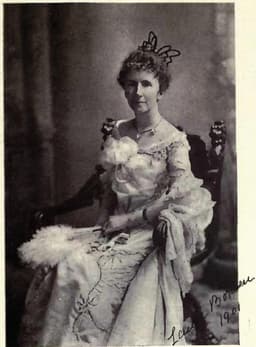
Robert Borden
Politician · Modern
57.7Total
Basic Information
Born
1872
1854
Died
1933
1937
Era
Modern
Modern
Nationality
United States
Canada
Occupation
Politician
Politician
Civilization
Western
Western
Score Comparison
Military (10%)
48.4
36.7
Political (20%)
72.0
72.0
Influence (20%)
57.2
56.4
Legacy (20%)
49.2
49.2
Leadership (15%)
78.0
72.0
Strategy (15%)
42.4
60.0
TOTAL
58.2
57.7
Calvin Coolidge — Complete Timeline
1923 AD
Assumption of the Presidency after Harding's DeathPolitical Action◆ Major
Coolidge became the 30th president upon Harding's sudden death. He was vacationing at his family home in Vermont when he received the news and was sworn in by his father, a notary public, in a historic ceremony.
Presidential SuccessionRepublican Party
Impact: national
1924 AD
Election as President of the United StatesPolitical Action◆ Major
Coolidge won the 1924 presidential election in his own right, defeating Democrat John W. Davis and Progressive Robert M. La Follette. His victory reflected public approval of his conservative policies and the economic prosperity of the Roaring Twenties.
Presidential ElectionRoaring Twenties
Impact: national
Signing of the Immigration Act of 1924Political Action◆ Major
Coolidge signed the Immigration Act of 1924, which established national origins quotas that severely restricted immigration from Southern and Eastern Europe and virtually banned immigration from Asia. The act remained the basis of U.S. immigration policy until 1965.
Immigration PolicyNational Origins Quotas
Impact: nationaldestructive
Robert Borden — Complete Timeline
1911 AD
Became Prime Minister of CanadaPolitical Action◆ Major
Borden became the eighth Prime Minister of Canada, leading a Conservative government. His victory was largely due to opposition to Laurier's reciprocity agreement with the United States.
Government FormationElectionConservatism
Impact: national
1914 AD
Led Canada through World War IWar◆ Major
Borden led Canada's war effort during World War I. He committed over 600,000 troops to the conflict, expanded the military, and managed the domestic war economy. The war deeply divided Canada along linguistic lines.
World War IMilitaryWar Effort
Impact: global
1917 AD
Introduced conscription in CanadaPolitical Action◆ Major
Borden's government passed the Military Service Act, introducing conscription for overseas service. The policy was deeply unpopular in Quebec and led to the Conscription Crisis of 1917, which exacerbated French-English tensions.
ConscriptionCrisisQuebec
Impact: nationaldestructive
1919 AD
Secured Canada's signature on the Treaty of VersaillesPolitical Action
Borden insisted that Canada sign the Treaty of Versailles as an independent nation, separate from Britain. This marked a significant step in Canada's evolution from a colony to a sovereign state, gaining a separate seat in the League of Nations.
TreatySovereigntyLeague of Nations
Impact: globalconstructive
Expert Analysis
Origins
Calvin Coolidge was born on July 4, 1872, in Plymouth Notch, Vermont, a small farming community. His father, John Calvin Coolidge, was a farmer and storekeeper who also served in local politics. Coolidge attended Amherst College, graduating in 1895, and then studied law through an apprenticeship, being admitted to the bar in 1897. His early career in Massachusetts politics included stints as city councilman, city solicitor, and state representative.
Robert Borden was born on June 26, 1854, in Grand Pré, Nova Scotia, to a farming family. He left school at 14 to work as a teacher but later studied law, being called to the Nova Scotia bar in 1878. Borden built a successful legal practice in Halifax, then entered politics as a Conservative in 1896, winning a seat in the House of Commons. His rise was gradual, marked by his reputation as a competent lawyer and party loyalist.
Rise to Power
Coolidge's rise was steady and unspectacular. He served as mayor of Northampton, then in the Massachusetts legislature, and later as Lieutenant Governor. His big break came in 1919 as Governor of Massachusetts, when he gained national fame for calling in the state guard to break the Boston police strike, stating, "There is no right to strike against the public safety by anybody, anywhere, any time." This conservative stance made him a hero to many. In 1920, the Republican convention chose him as Warren G. Harding's running mate. When Harding died in August 1923, Coolidge became president. He won election in his own right in 1924 with 54% of the popular vote.
Borden became Prime Minister in 1911 after leading the Conservatives to victory over Wilfrid Laurier's Liberals, largely due to opposition to reciprocity with the United States. His early years were focused on domestic issues, but the outbreak of World War I in 1914 defined his premiership. He initially supported voluntary enlistment, but as casualties mounted, he shifted to conscription in 1917, leading to a deep political split with French Canada.
Leadership & Governance
Coolidge's leadership style was minimalist. He believed in limited government, cutting taxes, reducing federal spending, and vetoing bills he deemed unnecessary. His presidency saw the Roaring Twenties economic boom, but he also signed the Immigration Act of 1924, which severely restricted immigration from Southern and Eastern Europe. He was known for his silence and frugality, often taking long naps. His political score of 72.0 reflects his effectiveness in implementing his conservative agenda, but his strategy score of 42.4 indicates a lack of proactive planning.
Borden's leadership was more interventionist. He expanded the federal government's role to manage the war economy, including the introduction of income tax in 1917 and the nationalization of railways. His decision to impose conscription via the Military Service Act of 1917 was deeply unpopular, especially in Quebec, leading to riots and the 1918 Easter Riots. Borden's political score is also 72.0, but his strategy score of 60.0 reflects his more calculated approach to war and nation-building. He insisted on Canada signing the Treaty of Versailles independently, a key step toward autonomy.
Triumph & Tragedy
Coolidge's greatest triumph was presiding over a period of peace and economic growth. He reduced the national debt and fostered a business-friendly environment. His greatest failure was his inaction on issues that later contributed to the Great Depression, such as weak banking regulations and agricultural overproduction. His legacy score of 49.2 reflects mixed historical judgment.
Borden's triumph was leading Canada through WWI with a significant military contribution—over 600,000 troops—and securing international recognition for Canada. His tragedy was the deep division caused by conscription, which alienated French Canadians and weakened national unity. His leadership score of 72.0 and military score of 36.7 (reflecting his role as a civilian leader, not a general) underscore his wartime management.
Character & Destiny
Coolidge was reserved, disciplined, and principled. His quiet nature earned him the nickname "Silent Cal." He was content with his role and did not seek dramatic change. This character suited the 1920s but also meant he missed opportunities to address underlying economic vulnerabilities.
Borden was determined and pragmatic, but also stubborn. He pursued conscription despite knowing its political cost, believing it was necessary for the war effort. His character drove Canada toward greater independence but at the expense of internal harmony.
Legacy
Coolidge is remembered as a symbol of 1920s conservatism. His policies influenced later Republican thinking, but his reputation suffered with the Great Depression. His total score of 58.2 places him as a below-average president in many rankings.
Borden is a key figure in Canadian history for asserting sovereignty and managing a major war. His legacy includes Canada's signature on the Treaty of Versailles and the precedent for independent foreign policy. However, the conscription crisis remains a stain on his record. His total score of 57.7 is nearly identical to Coolidge's.
Conclusion
Coolidge and Borden both scored similarly on the composite scale, but their impacts differed. Coolidge's impact was largely domestic and passive, while Borden's was international and active. Borden led Canada through a world war and advanced its autonomy, leaving a more tangible legacy on the global stage. Therefore, Robert Borden had a greater impact on history, despite his lower total score of 57.7 versus Coolidge's 58.2. The score gap of 0.5 points is negligible, but the substance of their achievements tips the balance to Borden.
Rankings
🥇
Calvin CoolidgeLeader
Mil: 48.4Pol: 72.0Inf: 57.2
58.2
🥈
Robert Borden
Mil: 36.7Pol: 72.0Inf: 56.4
57.7
+0.5 behind
How This Comparison Works
Algorithm
Each figure is scored on 6 dimensions (0—100 scale) based on structured historical data: Military (10%), Political (20%), Influence (20%), Legacy (20%), Leadership (15%), Strategy (15%). The weighted total produces the final ranking.
Data Sources
Scores are computed from structured sub-indicators in the database. Scale factors adjust for era (Ancient ×0.85, Modern ×1.0) and civilization size (Eastern ×1.05, Other ×0.80) to account for differences in population and military scale.
Maximum 3 Figures
Comparisons are limited to 2—3 figures to ensure readability and statistical meaningfulness.
Error Margins
±5 points per dimension — Sub-scores are derived from historical records with inherent uncertainty. Two figures within 5 points on a dimension should be considered roughly equivalent in that area.
Total Score Accuracy
±3 points overall — The weighted combination of 6 dimensions produces a total score with approximately ±3 points of uncertainty. Differences of less than 3 points are not statistically significant— the figures are effectively tied.
Known Limitations
- Historical records are incomplete and uneven across civilizations
- Figures from oral-tradition societies may be underrepresented
- Occupation labels can misclassify multi-role figures
- Scores measure capability and impact, not moral character
- Quantitative scoring is a comparison tool, not absolute truth
Capability Radar
Military (10%) — Battles & Warfare
Battles
28
48
Win Rate
34
47
Expansion
36
56
Political (20%) — Governance & Reform
Reform
55
60
Diplomacy
60
70
Economy
70
55
Influence (20%) — Cultural & Global Reach
Cultural
40
30
Global
45
50
Legacy (20%) — Historical Impact
Historical
50
55
Longevity
45
40
Leadership (15%) — Power & Stability
Tenure
65
65
Stability
75
60
Strategy (15%) — Tactics & Innovation
Strategy
39
57
Tactics
42
58
Reform
41
64
Similar Comparisons
Comments & Discussion
No comments yet. Be the first to share your thoughts!