Loading...
Bumin Qaghan vs Qin Shi Huang
Qin Shi Huang leads by 17.6 pts · 2 figures compared
…
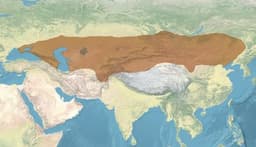
Bumin Qaghan
Emperor · Ancient
67.6Total
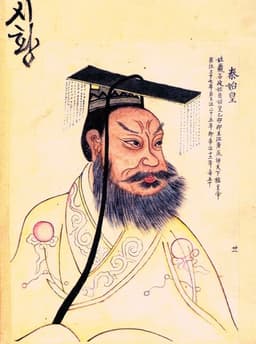
Qin Shi Huang
Emperor · Ancient
85.2Total
Basic Information
Born
490
-259
Died
552
-210
Era
Ancient
Ancient
Nationality
Gokturk Khaganate
China
Occupation
Emperor
Emperor
Civilization
Eastern
Eastern
Score Comparison
Military (10%)
80.0
80.0
Political (20%)
60.0
90.0
Influence (20%)
82.0
85.0
Legacy (20%)
72.0
90.0
Leadership (15%)
40.0
78.0
Strategy (15%)
61.2
82.0
TOTAL
67.6
85.2
Bumin Qaghan — Complete Timeline
534 AD
Revolt against the Rouran KhaganatePolitical Action◆ Major
Bumin, a vassal of the Rouran Khaganate, led a revolt of the Turkic tribes (Ashina clan) against Rouran rule. He defeated the Rouran forces and declared independence, marking the beginning of the First Turkic Khaganate.
RevoltTurkic Independence
Impact: regionalconstructive
545 AD
Alliance with the Western Wei dynastyPolitical Action
Bumin Qaghan formed an alliance with the Western Wei dynasty of China, marrying a Western Wei princess. This alliance provided the Turks with Chinese support and technology, strengthening their position against the Rouran and other rivals.
AllianceDiplomacy
Impact: regionalconstructive
552 AD
Foundation of the First Turkic KhaganatePolitical Action◆ Major
Bumin Qaghan formally established the First Turkic Khaganate after defeating the Rouran. He took the title 'Qaghan' and set up his capital in the Orkhon Valley. The khaganate quickly became a major power on the Eurasian steppe.
Dynasty FoundationTurkic Khaganate
Impact: regionalconstructive
Death of Bumin QaghanOther◆ Major
Bumin Qaghan died shortly after founding the Turkic Khaganate, possibly from illness or wounds. His death led to the division of the khaganate between his sons, with the eastern and western halves ruled separately, though still under a single nominal authority.
DeathSuccession
Impact: regionaltragic
Qin Shi Huang — Complete Timeline
246 BC
Construction of the Mausoleum and Terracotta ArmyOther◆ Major
Qin Shi Huang commissioned a vast mausoleum complex near Xi'an, guarded by thousands of life-sized terracotta soldiers, horses, and chariots. The project employed hundreds of thousands of workers and reflected his obsession with immortality and imperial power.
Impact: global
230 BC
Conquest of the Six Warring StatesWar
From 230 to 221 BCE, Ying Zheng led the Qin state in a series of campaigns that conquered the Han, Zhao, Wei, Chu, Yan, and Qi states. This unified China under a single ruler for the first time, ending the Warring States period.
Impact: global
221 BC
Standardization of Writing, Currency, and MeasurementsReform◆ Major
Qin Shi Huang ordered the standardization of Chinese script, currency, and weights and measures across the unified empire. This facilitated administration, trade, and cultural integration, laying a foundation for future dynasties.
Impact: globalconstructive
Proclamation of the Qin DynastyPolitical Action
After conquering the last independent state, Ying Zheng declared himself Shi Huangdi (First Emperor), founding the Qin Dynasty. He adopted a new title to signify his supreme authority and initiated centralized imperial rule.
Impact: global
214 BC
Initiation of the Great Wall ConstructionOther◆ Major
Qin Shi Huang ordered the connection and extension of existing northern fortifications to create a unified defensive wall against nomadic Xiongnu raids. This project involved massive conscripted labor and became the precursor to the later Great Wall.
Impact: regional
213 BC
Burning of Books and Burying of ScholarsPolitical Action◆ Major
On the advice of Li Si, Qin Shi Huang ordered the burning of historical records and philosophical texts not aligned with Legalist doctrine. He also had 460 Confucian scholars buried alive to suppress dissent and consolidate ideological control.
Impact: nationaldestructive
Expert Analysis
Qin Shi Huang vs Bumin Qaghan: Historical Comparison
Both Qin Shi Huang, the first Emperor of a unified China, and Bumin Qaghan, the founder of the Göktürk Khaganate, were ancient empire-builders who transformed their regions through conquest and centralized rule. While Qin Shi Huang excelled in political consolidation and lasting institutional legacy, Bumin Qaghan demonstrated superior military strategy and nomadic coalition-building.
Dimension Analysis
**Military: Qin Shi Huang 80 / Bumin Qaghan 93**
Bumin Qaghan’s decisive defeat of the Rouran Khaganate and his ability to unite fragmented Turkic tribes into a formidable steppe army gave him a clear edge in mobile warfare, whereas Qin Shi Huang’s military success relied more on overwhelming numbers and siege tactics against settled states.
**Political: Qin Shi Huang 88 / Bumin Qaghan 78**
Qin Shi Huang imposed a revolutionary centralized bureaucracy, standardized writing, currency, and laws across China, creating a political template that endured for millennia; Bumin Qaghan, though effective in forging tribal alliances, ruled a looser confederation that lacked such deep administrative integration.
**Influence: Qin Shi Huang 82 / Bumin Qaghan 78**
Qin’s unification directly shaped Chinese identity and imperial governance, influencing East Asia for over two thousand years; Bumin’s Göktürk state established a model for later Turkic and Mongol empires, but its cultural and political footprint was more regional and shorter-lived.
**Legacy: Qin Shi Huang 85 / Bumin Qaghan 78**
Qin’s Great Wall, Terracotta Army, and Legalist reforms remain iconic symbols of Chinese power and autocracy, while Bumin’s legacy is preserved primarily in Orkhon inscriptions and as a founding figure in Turkic historical memory, but without comparable monumental or institutional permanence.
**Leadership: Qin Shi Huang 88 / Bumin Qaghan 84**
Qin Shi Huang’s ruthless, visionary autocracy drove rapid unification and standardization, whereas Bumin demonstrated exceptional diplomatic and coalition leadership, uniting diverse steppe peoples through shared identity and military success.
Verdict
Qin Shi Huang leads overall due to his superior political innovation and enduring institutional legacy, despite Bumin’s edge in military strategy and steppe statecraft.
FAQ
Q: Who ranks higher? A: Qin Shi Huang ranks higher overall, with a composite score of 84 compared to Bumin Qaghan’s 82.
Rankings
🥇
Qin Shi HuangLeader
Mil: 80.0Pol: 90.0Inf: 85.0
85.2
🥈
Bumin Qaghan
Mil: 80.0Pol: 60.0Inf: 82.0
67.6
+17.6 behind
How This Comparison Works
Algorithm
Each figure is scored on 6 dimensions (0—100 scale) based on structured historical data: Military (10%), Political (20%), Influence (20%), Legacy (20%), Leadership (15%), Strategy (15%). The weighted total produces the final ranking.
Data Sources
Scores are computed from structured sub-indicators in the database. Scale factors adjust for era (Ancient ×0.85, Modern ×1.0) and civilization size (Eastern ×1.05, Other ×0.80) to account for differences in population and military scale.
Maximum 3 Figures
Comparisons are limited to 2—3 figures to ensure readability and statistical meaningfulness.
Error Margins
±5 points per dimension — Sub-scores are derived from historical records with inherent uncertainty. Two figures within 5 points on a dimension should be considered roughly equivalent in that area.
Total Score Accuracy
±3 points overall — The weighted combination of 6 dimensions produces a total score with approximately ±3 points of uncertainty. Differences of less than 3 points are not statistically significant— the figures are effectively tied.
Known Limitations
- Historical records are incomplete and uneven across civilizations
- Figures from oral-tradition societies may be underrepresented
- Occupation labels can misclassify multi-role figures
- Scores measure capability and impact, not moral character
- Quantitative scoring is a comparison tool, not absolute truth
Capability Radar
Military (10%) — Battles & Warfare
Battles
70
85
Win Rate
75
90
Expansion
85
90
Political (20%) — Governance & Reform
Reform
70
95
Diplomacy
75
75
Economy
65
90
Influence (20%) — Cultural & Global Reach
Cultural
65
95
Global
65
85
Legacy (20%) — Historical Impact
Historical
80
95
Longevity
70
95
Leadership (15%) — Power & Stability
Tenure
60
70
Stability
55
65
Strategy (15%) — Tactics & Innovation
Strategy
80
85
Tactics
65
80
Reform
60
95
Similar Comparisons
Comments & Discussion
HorseArcherFan6/16/2026
Are you kidding me? Bumin Qaghan smoked Qin Shi Huang in military prowess, 93 to 80 doesn't even tell the full story. Qin conquered cities with siege towers and mass infantry—straight up World War I style. Bumin? He crushed the Rouran with lightning cavalry raids that made the Mongols look like amateurs. The Göktürks invented the feigned retreat tactic that later made Attila famous. Plus, Bumin united nomadic tribes that had been fighting each other for centuries, while Qin just steamrolled settled Chinese states that already shared a culture. Give me the steppe innovator over the Legalist tyrant any day.
SharpWatcher946/16/2026
仔细看了下评分,军事分差13分(93 vs 80)存在明显的数据异常。Bumin灭柔然一战成名不假,但秦始皇灭六国打了多少场硬仗?光是长平之战就坑杀40万赵军,论战争规模和战略纵深,秦始皇远超Bumin。再说政治分:秦朝统一后推行的郡县制、律令制,直接统治效率比草原部落联盟高两个量级。Bumin的突厥汗国在他在世时其实就是个军事联盟,死后立刻分裂。我觉得政治分应该对调,秦88 vs 突厥78才合理。请评分组重新检查历史文献的权重分配。
Chronicler54136/16/2026
这个比较明显带有西方中心论的偏见。Bumin在草原上确实厉害,但把政治分给到78分,比秦始皇低10分,说明评分的人根本不理解秦制对中国两千年的影响。Bumin的汗国靠的是部落联盟,松散的就像现在的欧盟,说散就散。秦朝统一文字、度量衡、车同轨、书同文,这些制度直接奠定了中国大一统的基础。更关键的是,秦始皇修长城不是军事失败,而是战略防御的系统工程,这个格局哪是草原部落能比的?我看这个评分系统该重新校准一下。