Loading...
This comparison has not been analyzed yet.
One-time AI generation (~1 minute). Scores and timeline are already available below.
Bukka I vs Edward the Confessor
Bukka I leads by 8.0 pts · 2 figures compared
…
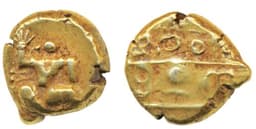
Bukka I
Emperor · Medieval
58.2Total
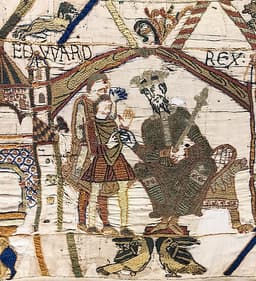
Edward the Confessor
Emperor · Medieval
50.2Total
Basic Information
Born
1356
1003
Died
1377
1066
Era
Medieval
Medieval
Nationality
India
England
Occupation
Emperor
Emperor
Civilization
Indian
Western
Score Comparison
Military (10%)
61.7
20.0
Political (20%)
68.0
45.1
Influence (20%)
61.0
57.2
Legacy (20%)
58.0
52.0
Leadership (15%)
40.0
64.0
Strategy (15%)
60.7
45.0
TOTAL
58.2
50.2
Bukka I — Complete Timeline
1336 AD
Co-founding of the Vijayanagara EmpirePolitical Action
Bukka I, along with his brother Harihara I, founded the Vijayanagara Empire after the collapse of the Hoysala kingdom. They established the capital at Vijayanagara (Hampi) and began consolidating power in the Deccan.
VijayanagaraFoundationEmpire
Impact: regionalconstructive
1360 AD
Expansion of the Vijayanagara EmpireWar◆ Major
Bukka I led military campaigns that expanded the Vijayanagara Empire to include much of southern India. He defeated the Madurai Sultanate and the Bahmani Sultanate, extending Vijayanagara control over the Tamil and Telugu regions.
VijayanagaraExpansionMilitary
Impact: regionalconstructive
1367 AD
War with the Bahmani SultanateWar◆ Major
Bukka I fought a war against the Bahmani Sultanate over control of the Raichur Doab. The conflict was indecisive, with both sides suffering heavy losses, but it established a long-standing rivalry between the two powers.
VijayanagaraBahmaniWar
Impact: regional
1370 AD
Patronage of Hindu culture and literatureCultural
Bukka I was a patron of Hindu culture and literature. He supported the construction of temples and the composition of works in Sanskrit and Telugu, including the Amuktamalyada, a Telugu poem attributed to him.
VijayanagaraCultureLiterature
Impact: regionalconstructive
1377 AD
Death and successionPolitical Action◆ Major
Bukka I died, and his son Harihara II succeeded him. His death marked the end of the founding period of the Vijayanagara Empire, which would continue to grow under his successors.
VijayanagaraSuccessionDeath
Impact: regional
Edward the Confessor — Complete Timeline
1043 AD
Coronation of Edward the ConfessorPolitical Action◆ Major
Edward was crowned king of England at Winchester Cathedral on April 3, 1043. His reign marked the restoration of the Anglo-Saxon monarchy after 27 years of Danish rule.
CoronationRestorationAnglo-Saxon
Impact: nationalconstructive
1045 AD
Construction of Westminster AbbeyCultural◆ Major
Edward began rebuilding Westminster Abbey in the Norman Romanesque style. The abbey was consecrated in 1065, just before his death, and became the coronation church of English monarchs.
ArchitectureReligionLegacy
Impact: nationalconstructive
1051 AD
Conflict with Godwin of WessexPolitical Action◆ Major
Edward exiled Earl Godwin and his sons after a dispute over the treatment of Norman favorites. Godwin returned with a fleet in 1052, forcing Edward to restore their lands and power.
ExilePower StruggleGodwin
Impact: nationaldestructive
Promise of Throne to William of NormandyPolitical Action◆ Major
Edward allegedly promised the English throne to his cousin William, Duke of Normandy, during a visit by William to England. This promise later became the basis for William's claim to the throne.
SuccessionNorman ClaimPromise
Impact: regional
1066 AD
Death of Edward the ConfessorPolitical Action
Edward died on January 5, 1066, at Westminster. His death without a clear heir triggered a succession crisis, leading to the Norman Conquest of England later that year.
DeathSuccession CrisisNorman Conquest
Impact: globaltragic
This comparison has not been analyzed yet.
One-time AI generation (~1 minute). Scores and timeline are already available below.
Rankings
🥇
Bukka ILeader
Mil: 61.7Pol: 68.0Inf: 61.0
58.2
🥈
Edward the Confessor
Mil: 20.0Pol: 45.1Inf: 57.2
50.2
+8.0 behind
How This Comparison Works
Algorithm
Each figure is scored on 6 dimensions (0—100 scale) based on structured historical data: Military (10%), Political (20%), Influence (20%), Legacy (20%), Leadership (15%), Strategy (15%). The weighted total produces the final ranking.
Data Sources
Scores are computed from structured sub-indicators in the database. Scale factors adjust for era (Ancient ×0.85, Modern ×1.0) and civilization size (Eastern ×1.05, Other ×0.80) to account for differences in population and military scale.
Maximum 3 Figures
Comparisons are limited to 2—3 figures to ensure readability and statistical meaningfulness.
Error Margins
±5 points per dimension — Sub-scores are derived from historical records with inherent uncertainty. Two figures within 5 points on a dimension should be considered roughly equivalent in that area.
Total Score Accuracy
±3 points overall — The weighted combination of 6 dimensions produces a total score with approximately ±3 points of uncertainty. Differences of less than 3 points are not statistically significant— the figures are effectively tied.
Known Limitations
- Historical records are incomplete and uneven across civilizations
- Figures from oral-tradition societies may be underrepresented
- Occupation labels can misclassify multi-role figures
- Scores measure capability and impact, not moral character
- Quantitative scoring is a comparison tool, not absolute truth
Capability Radar
Military (10%) — Battles & Warfare
Battles
65
5
Win Rate
70
5
Expansion
70
5
Political (20%) — Governance & Reform
Reform
55
40
Diplomacy
60
45
Economy
60
40
Influence (20%) — Cultural & Global Reach
Cultural
50
30
Global
45
55
Legacy (20%) — Historical Impact
Historical
65
70
Longevity
60
60
Leadership (15%) — Power & Stability
Tenure
60
60
Stability
55
35
Strategy (15%) — Tactics & Innovation
Strategy
65
5
Tactics
60
5
Reform
55
5
Similar Comparisons
Comments & Discussion
No comments yet. Be the first to share your thoughts!