Loading...
This comparison has not been analyzed yet.
One-time AI generation (~1 minute). Scores and timeline are already available below.
Bongbong Marcos vs Jean-Pierre Bemba
Jean-Pierre Bemba leads by 3.6 pts · 2 figures compared
…

Bongbong Marcos
Politician · Modern
37.8Total
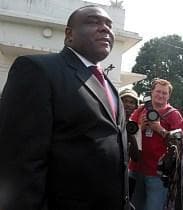
Jean-Pierre Bemba
Politician · Modern
41.4Total
Basic Information
Born
1957
1962
Died
—
—
Era
Modern
Modern
Nationality
Philippines
DR Congo
Occupation
Politician
Politician
Civilization
Eastern
Other
Score Comparison
Military (10%)
10.8
21.2
Political (20%)
32.2
29.3
Influence (20%)
48.6
51.0
Legacy (20%)
35.8
38.3
Leadership (15%)
51.9
55.3
Strategy (15%)
30.1
42.3
TOTAL
37.8
41.4
Bongbong Marcos — Complete Timeline
1998 AD
Elected Governor of Ilocos NortePolitical Action◆ Major
Bongbong Marcos was elected Governor of Ilocos Norte, a position his father had also held. He served for 9 years, focusing on infrastructure and economic development in the province.
GovernorshipPolitical Career
Impact: regionalconstructive
2010 AD
Elected Senator of the PhilippinesPolitical Action◆ Major
Bongbong Marcos was elected Senator of the Philippines, placing 7th in the national election. He served until 2016, advocating for infrastructure and agricultural development.
SenatePolitical Career
Impact: national
2016 AD
Lost vice presidential election to Leni RobredoPolitical Action◆ Major
Bongbong Marcos ran for Vice President of the Philippines in the 2016 election, losing narrowly to Leni Robredo by 263,473 votes. He contested the result, filing an electoral protest that was ultimately dismissed by the Supreme Court.
Vice Presidential ElectionElectoral Protest
Impact: national
2022 AD
Elected President of the PhilippinesPolitical Action
Bongbong Marcos was elected President of the Philippines in a landslide victory, winning 58.8% of the vote. His election marked the return of the Marcos family to the highest office, 36 years after his father's ouster.
PresidencyElectionMarcos Family
Impact: national
Jean-Pierre Bemba — Complete Timeline
1998 AD
Founded the Movement for the Liberation of Congo (MLC)Political Action
Jean-Pierre Bemba founded the MLC, a rebel group backed by Uganda, during the Second Congo War. The MLC became one of the most powerful armed groups in the DRC, controlling large parts of the north and engaging in widespread human rights abuses.
Rebel groupSecond Congo WarUganda
Impact: regionaldestructive
2003 AD
Appointed Vice President of the DRCPolitical Action◆ Major
As part of the peace deal ending the Second Congo War, Bemba was appointed one of four vice presidents in the transitional government. He oversaw the economic and finance portfolio, marking his transition from warlord to political leader.
Vice PresidentTransitional governmentPeace deal
Impact: national
2006 AD
Defeated in 2006 Presidential Election RunoffPolitical Action◆ Major
Bemba lost the presidential runoff election to Joseph Kabila, receiving about 42% of the vote. The election was marred by violence between supporters of both candidates, and Bemba initially rejected the results before accepting them under international pressure.
ElectionRunoffKabila
Impact: national
2008 AD
Arrested by the International Criminal Court (ICC)Political Action◆ Major
Bemba was arrested in Belgium and transferred to the ICC in The Hague. He was charged with war crimes and crimes against humanity committed by his MLC troops in the Central African Republic in 2002-2003, where they had intervened to support the government.
ICCArrestWar crimes
Impact: globaldestructive
2016 AD
Convicted by the ICC for War CrimesPolitical Action
The ICC convicted Bemba of two counts of crimes against humanity (murder and rape) and three counts of war crimes (murder, rape, and pillaging). He was sentenced to 18 years in prison, becoming the highest-profile conviction at the ICC at the time.
ICCConvictionWar crimes
Impact: globaldestructive
2018 AD
Acquitted on Appeal by the ICCPolitical Action◆ Major
The ICC Appeals Chamber overturned Bemba's conviction, ruling that the trial chamber had erred in its interpretation of command responsibility. Bemba was released after nearly a decade in detention, a decision that sparked controversy and criticism from human rights groups.
ICCAcquittalAppeal
Impact: global
2019 AD
Returned to DRC PoliticsPolitical Action◆ Major
After his release, Bemba returned to the DRC and re-entered politics, leading his MLC party. He formed an alliance with Felix Tshisekedi and was appointed as a roving ambassador, though his political influence was diminished compared to his earlier career.
Return to politicsMLCTshisekedi
Impact: national
This comparison has not been analyzed yet.
One-time AI generation (~1 minute). Scores and timeline are already available below.
Rankings
🥇
Jean-Pierre BembaLeader
Mil: 21.2Pol: 29.3Inf: 51.0
41.4
🥈
Bongbong Marcos
Mil: 10.8Pol: 32.2Inf: 48.6
37.8
+3.6 behind
How This Comparison Works
Algorithm
Each figure is scored on 6 dimensions (0—100 scale) based on structured historical data: Military (10%), Political (20%), Influence (20%), Legacy (20%), Leadership (15%), Strategy (15%). The weighted total produces the final ranking.
Data Sources
Scores are computed from structured sub-indicators in the database. Scale factors adjust for era (Ancient ×0.85, Modern ×1.0) and civilization size (Eastern ×1.05, Other ×0.80) to account for differences in population and military scale.
Maximum 3 Figures
Comparisons are limited to 2—3 figures to ensure readability and statistical meaningfulness.
Error Margins
±5 points per dimension — Sub-scores are derived from historical records with inherent uncertainty. Two figures within 5 points on a dimension should be considered roughly equivalent in that area.
Total Score Accuracy
±3 points overall — The weighted combination of 6 dimensions produces a total score with approximately ±3 points of uncertainty. Differences of less than 3 points are not statistically significant— the figures are effectively tied.
Known Limitations
- Historical records are incomplete and uneven across civilizations
- Figures from oral-tradition societies may be underrepresented
- Occupation labels can misclassify multi-role figures
- Scores measure capability and impact, not moral character
- Quantitative scoring is a comparison tool, not absolute truth
Capability Radar
Military (10%) — Battles & Warfare
Battles
16
25
Win Rate
16
20
Expansion
22
15
Political (20%) — Governance & Reform
Reform
20
15
Diplomacy
25
30
Economy
20
10
Influence (20%) — Cultural & Global Reach
Cultural
10
15
Global
10
20
Legacy (20%) — Historical Impact
Historical
10
20
Longevity
5
10
Leadership (15%) — Power & Stability
Tenure
30
40
Stability
15
10
Strategy (15%) — Tactics & Innovation
Strategy
26
25
Tactics
28
30
Reform
31
10
Similar Comparisons
Comments & Discussion
No comments yet. Be the first to share your thoughts!