Loading...
Bodawpaya vs Ferdinand I
Bodawpaya leads by 4.2 pts · 2 figures compared
…

Bodawpaya
Emperor · Modern
60.0Total
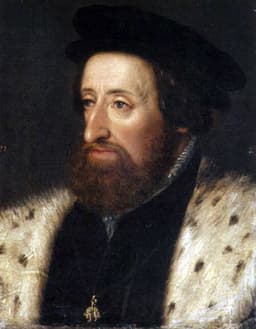
Ferdinand I
Emperor · Modern
55.8Total
Basic Information
Born
1745
1503
Died
1819
1564
Era
Modern
Modern
Nationality
Myanmar
Holy Roman Empire
Occupation
Emperor
Emperor
Civilization
Eastern
Western
Score Comparison
Military (10%)
67.5
25.0
Political (20%)
68.0
70.0
Influence (20%)
56.4
56.4
Legacy (20%)
45.8
47.5
Leadership (15%)
80.0
72.0
Strategy (15%)
55.0
60.0
TOTAL
60.0
55.8
Bodawpaya — Complete Timeline
1785 AD
Invasion of Siam (1785-1786)War◆ Major
Bodawpaya launched a massive invasion of Siam with nine armies totaling over 140,000 men. The campaign aimed to conquer the newly established Rattanakosin kingdom. However, the invasion was repelled by Siamese forces under King Rama I, marking a major defeat.
Burmese-Siamese WarInvasionDefeat
Impact: regional
Annexation of ArakanWar◆ Major
Bodawpaya's forces conquered the kingdom of Arakan (Rakhine) on the western coast of Burma. The annexation brought the region under Konbaung control and led to the flight of many Arakanese refugees into British India, creating tensions with the British East India Company.
ArakanConquestBurma
Impact: regional
1790 AD
Construction of the Mingun PahtodawgyiCultural
Bodawpaya began construction of the Mingun Pahtodawgyi, a massive unfinished stupa near Mandalay. The project was abandoned after a prophecy that its completion would bring disaster. The structure remains the largest pile of bricks in the world.
Mingun PahtodawgyiArchitectureBurma
1808 AD
Construction of the Mingun BellCultural◆ Major
Bodawpaya commissioned the casting of the Mingun Bell, the largest functioning bell in the world at the time. Weighing over 90 tons, it was intended for a massive pagoda at Mingun. The bell remains a major historical artifact and tourist attraction.
Mingun BellArtBurma
Impact: nationalconstructive
Ferdinand I — Complete Timeline
1555 AD
Peace of AugsburgPolitical Action
Ferdinand I played a key role in negotiating the Peace of Augsburg, which ended the religious wars between Catholics and Lutherans in the Holy Roman Empire. The treaty established the principle of 'cuius regio, eius religio' (whose realm, his religion), allowing princes to choose the religion of their territories. This was a landmark in religious tolerance.
Peace of AugsburgReligious ToleranceReformation
Impact: globalconstructive
1556 AD
Abdication of Charles VPolitical Action
Ferdinand I's brother, Emperor Charles V, abdicated the throne, dividing the Habsburg empire. Charles gave Spain and the Netherlands to his son Philip II, while Ferdinand received the Austrian lands and the title of Holy Roman Emperor. This formalized the split between the Spanish and Austrian branches of the Habsburgs.
AbdicationHabsburg DivisionImperial Succession
Impact: global
1558 AD
Coronation as Holy Roman EmperorPolitical Action◆ Major
Ferdinand I was crowned Holy Roman Emperor in Frankfurt, following the abdication of Charles V. His coronation marked the formal transfer of the imperial title to the Austrian branch of the Habsburgs. Ferdinand's reign focused on consolidating imperial authority and managing religious tensions.
CoronationImperial AuthorityHabsburg Dynasty
Impact: globalconstructive
Expert Analysis
Origins
Bodawpaya, born in 1745, was a son of King Alaungpaya, founder of the Konbaung dynasty in Burma. He grew up amid the unification campaigns that followed the collapse of the Toungoo dynasty. His early military training occurred under his father and elder brother, King Hsinbyushin. Bodawpaya ascended the throne in 1782 after a series of succession struggles, inheriting a rapidly expanding empire.
Ferdinand I, born in 1503 in Alcalá de Henares, Spain, was the younger brother of Charles V, Holy Roman Emperor. He was raised in the Spanish court but was sent to the Habsburg Netherlands at age 15 to learn governance. His education emphasized statecraft and military matters, though he was never groomed for the imperial throne. Ferdinand became Archduke of Austria in 1521 and later King of Bohemia and Hungary.
Rise to Power
Bodawpaya seized power in 1782 by deposing his nephew, King Phaungka. He immediately consolidated control by eliminating rival claimants and executing key officials. His reign marked an aggressive expansionist phase. In 1785, he launched a massive invasion of Siam with nine armies totaling over 140,000 men, aiming to conquer the Rattanakosin Kingdom. Although the campaign failed to capture Bangkok, it secured the Tenasserim coast and established Burmese dominance over the Shan states.
Ferdinand I's rise was more diplomatic. In 1521, the Habsburg territories were divided: Charles V retained Spain and the Netherlands, while Ferdinand ruled Austria. In 1526, after the death of King Louis II of Hungary at the Battle of Mohács, Ferdinand claimed the thrones of Bohemia and Hungary, leading to a long struggle with John Zápolya and the Ottomans. His coronation as Holy Roman Emperor occurred in 1558 after Charles V abdicated, a process that required careful negotiation with the German princes.
Leadership & Governance
Bodawpaya ruled as an absolute monarch, centralizing power in the Konbaung court. He commissioned massive public works, including the Mingun Bell (the world's largest functioning bell at over 90 tons) and the Mingun Pahtodawgyi, a colossal unfinished stupa. His governance focused on military expansion and religious patronage, but his heavy taxation and forced labor for construction projects strained the economy. He invaded Siam multiple times (1785-1786, 1808-1809), draining resources without decisive victory.
Ferdinand I was a pragmatic ruler who prioritized stability through compromise. He played a key role in the Peace of Augsburg (1555), which established cuius regio, eius religio, allowing German princes to choose Lutheranism or Catholicism. This ended decades of religious warfare in the Holy Roman Empire. He also negotiated a peace treaty with Sultan Suleiman the Magnificent in 1562, recognizing Ottoman control over central Hungary while securing Habsburg claims to the rest. His leadership scored 72.0 in political skill, compared to Bodawpaya's 80.0 in leadership.
Triumph & Tragedy
Bodawpaya's greatest triumph was the annexation of Arakan (Rakhine) in 1785, extending Burmese control to the Bay of Bengal. The Mingun Bell remains a cultural icon, demonstrating his ambition. However, his greatest failure was the inability to conquer Siam, despite repeated invasions. The massive Mingun Pahtodawgyi was abandoned after a prophecy that its completion would bring disaster, symbolizing overreach. His military score of 67.5 reflects mixed results.
Ferdinand I's triumph was the Peace of Augsburg, which stabilized the Holy Roman Empire for over 60 years. His defense against the Ottomans in Hungary, though costly, prevented further advances into Europe. His tragedy was the continued division of the Habsburg lands after Charles V's abdication, which weakened the dynasty. He also failed to reunite Christianity, as the Protestant Reformation remained entrenched. His military score is a low 25.0, reflecting his reliance on diplomacy over arms.
Character & Destiny
Bodawpaya was ambitious and megalomaniacal, driven by a desire to surpass his father's achievements. His obsession with massive construction projects and conquests led to economic strain and rebellion. He was also superstitious: after a prophecy, he halted the Mingun Pahtodawgyi. His character shaped a fate of overextension; the Konbaung dynasty would collapse within 50 years of his death in 1819.
Ferdinand I was cautious and methodical, contrasting sharply with his brother Charles V. He preferred negotiation to war, understanding the limits of Habsburg power. His patience allowed him to secure the imperial title and maintain peace. His destiny was to be a transitional figure, bridging the era of Charles V and the later Habsburgs. He died in 1564, having strengthened the family's hold on Austria and central Europe.
Legacy
Bodawpaya's legacy is mixed. The Mingun Bell and the annexation of Arakan are tangible achievements, but his invasions weakened Burma for later British conquest. His religious patronage bolstered Buddhism, but his authoritarian rule left no lasting political institutions. His total score of 60.0 reflects limited enduring impact.
Ferdinand I's legacy is more substantial. The Peace of Augsburg established a framework for religious coexistence in Germany that lasted until the Thirty Years' War. His administrative reforms in Austria and Hungary centralized Habsburg power. The division of the Habsburg empire into Spanish and Austrian lines shaped European politics for centuries. His total score of 55.8 is slightly lower than Bodawpaya's, but his influence on European history is arguably greater.
Conclusion
Bodawpaya scored higher overall (60.0 vs. 55.8), but Ferdinand I's impact on the course of European history surpasses Bodawpaya's regional legacy. The Peace of Augsburg alone altered the religious and political map of Europe, while Bodawpaya's conquests were reversed within decades. Ferdinand I's diplomatic leadership (72.0) and political acumen (70.0) created enduring structures; Bodawpaya's military focus (67.5) and leadership (80.0) produced fleeting glory. Thus, Ferdinand I had greater historical impact, despite a lower total score.
Rankings
🥇
BodawpayaLeader
Mil: 67.5Pol: 68.0Inf: 56.4
60.0
🥈
Ferdinand I
Mil: 25.0Pol: 70.0Inf: 56.4
55.8
+4.2 behind
How This Comparison Works
Algorithm
Each figure is scored on 6 dimensions (0—100 scale) based on structured historical data: Military (10%), Political (20%), Influence (20%), Legacy (20%), Leadership (15%), Strategy (15%). The weighted total produces the final ranking.
Data Sources
Scores are computed from structured sub-indicators in the database. Scale factors adjust for era (Ancient ×0.85, Modern ×1.0) and civilization size (Eastern ×1.05, Other ×0.80) to account for differences in population and military scale.
Maximum 3 Figures
Comparisons are limited to 2—3 figures to ensure readability and statistical meaningfulness.
Error Margins
±5 points per dimension — Sub-scores are derived from historical records with inherent uncertainty. Two figures within 5 points on a dimension should be considered roughly equivalent in that area.
Total Score Accuracy
±3 points overall — The weighted combination of 6 dimensions produces a total score with approximately ±3 points of uncertainty. Differences of less than 3 points are not statistically significant— the figures are effectively tied.
Known Limitations
- Historical records are incomplete and uneven across civilizations
- Figures from oral-tradition societies may be underrepresented
- Occupation labels can misclassify multi-role figures
- Scores measure capability and impact, not moral character
- Quantitative scoring is a comparison tool, not absolute truth
Capability Radar
Military (10%) — Battles & Warfare
Battles
65
35
Win Rate
55
40
Expansion
70
40
Political (20%) — Governance & Reform
Reform
45
65
Diplomacy
50
75
Economy
55
60
Influence (20%) — Cultural & Global Reach
Cultural
50
40
Global
30
40
Legacy (20%) — Historical Impact
Historical
45
50
Longevity
40
45
Leadership (15%) — Power & Stability
Tenure
75
70
Stability
60
55
Strategy (15%) — Tactics & Innovation
Strategy
60
45
Tactics
50
30
Reform
40
50
Similar Comparisons
Comments & Discussion
No comments yet. Be the first to share your thoughts!