Loading...
Bilge Qaghan vs Ulugh Muhammad
Bilge Qaghan leads by 9.8 pts · 2 figures compared
…
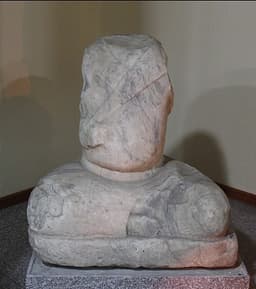
Bilge Qaghan
Emperor · Medieval
65.5Total
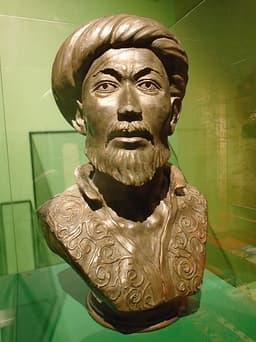
Ulugh Muhammad
Emperor · Medieval
55.7Total
Basic Information
Born
683
1380
Died
734
1445
Era
Medieval
Medieval
Nationality
Gokturk Khaganate
Golden Horde
Occupation
Emperor
Emperor
Civilization
Eastern
Eastern
Score Comparison
Military (10%)
78.0
52.5
Political (20%)
70.0
54.7
Influence (20%)
62.0
57.2
Legacy (20%)
56.0
49.2
Leadership (15%)
72.0
64.0
Strategy (15%)
69.1
60.0
TOTAL
65.5
55.7
Bilge Qaghan — Complete Timeline
716 AD
Restoration of the Eastern Turkic KhaganatePolitical Action◆ Major
After the Eastern Turkic Khaganate was destroyed by the Tang dynasty in 630, Bilge Qaghan, with the help of his brother Kul Tigin and vizier Tonyukuk, revived the khaganate. He defeated the Tang and their allies, re-establishing Turkic independence.
RestorationTurkic Revival
Impact: regionalconstructive
717 AD
Battle of the Irtysh RiverWar◆ Major
Bilge Qaghan led a campaign against the Tang and their Turkic allies, defeating them at the Irtysh River. This victory secured the khaganate's western borders and demonstrated the military prowess of the revived Turkic state.
BattleTang-Turkic War
Impact: regionaldestructive
727 AD
Peace treaty with the Tang dynastyPolitical Action◆ Major
Bilge Qaghan negotiated a peace treaty with the Tang dynasty, ending decades of conflict. The treaty established the borders between the two empires and allowed for trade and diplomatic exchanges, bringing stability to the region.
TreatyPeace
Impact: regionalconstructive
732 AD
Construction of the Orkhon inscriptionsCultural◆ Major
Bilge Qaghan commissioned the Orkhon inscriptions, monumental stelae inscribed with runic Turkic script. These inscriptions, written by Tonyukuk and later by Bilge's son, recorded the history and achievements of the Turkic Khaganate, providing a key source for Turkic history.
InscriptionsCultural Heritage
Impact: regionalconstructive
734 AD
Assassination of Bilge QaghanPolitical Action◆ Major
Bilge Qaghan was poisoned by a minister, possibly on the orders of the Tang court. His death led to a period of instability and decline for the Eastern Turkic Khaganate, which eventually fell to the Uyghurs in 744.
AssassinationDecline
Impact: regionaltragic
Ulugh Muhammad — Complete Timeline
1438 AD
Foundation of the Khanate of KazanPolitical Action
Ulugh Muhammad, after losing the throne of the Golden Horde, established the independent Khanate of Kazan on the middle Volga. This created a new Tatar state that would be a major political and military power in the region for over a century.
State FoundationKazan KhanateVolga Region
Impact: regionalconstructive
1439 AD
Raid on MoscowWar◆ Major
Shortly after founding the Khanate, Ulugh Muhammad led a military campaign against the Grand Principality of Moscow. His forces raided the outskirts of Moscow, demonstrating the new khanate's military capability and securing tribute from the Russians.
Russo-Kazan WarsRaidMoscow
Impact: regionaldestructive
1445 AD
Battle of SuzdalWar◆ Major
Ulugh Muhammad's forces defeated a larger Russian army near Suzdal. The Russian Grand Prince Vasily II was captured. This victory forced Moscow to pay a large ransom and recognize Kazan's independence, solidifying the Khanate's position.
Russo-Kazan WarsBattleVasily II Captured
Impact: regional
Expert Analysis
Origins
Bilge Qaghan (683–734) was born into the Ashina clan, the ruling family of the Eastern Turkic Khaganate, which had been subjugated by the Tang dynasty since 630. His father, Ilterish Qaghan, had led a brief rebellion but died early. Bilge was raised under the tutelage of his brother Kul Tigin and the wise vizier Tonyukuk, who instilled in him a deep knowledge of Turkic traditions and statecraft.
Ulugh Muhammad (early 1400s–1445) emerged from the turbulent politics of the Golden Horde, a Mongol successor state. He claimed descent from Genghis Khan through Jochi's line, but his early life is obscure. He likely participated in the internal power struggles of the Horde, gaining military experience but little stable support.
Rise to Power
Bilge Qaghan ascended the throne in 716 after his brother Kul Tigin overthrew the previous khagan, who had mismanaged the state. Bilge initially served as a co-ruler with Kul Tigin as regent. Their first major test came in 720 when the Tang dynasty launched a campaign to crush the resurgent khaganate. Bilge, guided by Tonyukuk, employed a strategy of avoiding pitched battles and using the steppe's vastness to exhaust Tang forces. The turning point was the Battle of the Irtysh River (720), where Bilge's forces defeated a Tang-led coalition, securing the khaganate's western borders.
Ulugh Muhammad rose by exploiting the collapse of the Golden Horde. After losing a bid for the khanate in the 1420s, he fled to the Volga region. In 1438, he declared independence and founded the Khanate of Kazan, seizing the city of Kazan from the local Bulgar population. His rise was marked by audacious raids, notably the 1439 raid on Moscow, which caught the Grand Prince Vasily II off guard. The Battle of Suzdal (1445) was his greatest triumph: his smaller force captured Vasily II, forcing Moscow to pay a heavy ransom and recognize Kazan's autonomy.
Leadership & Governance
Bilge Qaghan ruled with a balanced approach: he centralized power while respecting tribal autonomy. He continued the reforms of Tonyukuk, who codified laws and promoted a unified Turkic identity through the Orkhon inscriptions (erected 732–735). These stelae, written in runic script, proclaimed the khagan's authority and criticized Chinese influence. Bilge also negotiated a peace treaty with the Tang in 722, which defined borders and reduced tribute, allowing the khaganate to focus on internal consolidation. His governance scored 70.0 in political metrics, reflecting his ability to stabilize a fractured realm.
Ulugh Muhammad's leadership was more opportunistic and military-focused. He ruled Kazan as a personal khanate, relying on raids to extract wealth from Russian principalities. He did not establish lasting administrative institutions; instead, he maintained power through personal charisma and military success. His political score of 54.7 indicates a weaker governance structure. Unlike Bilge, he faced constant threats from both the Golden Horde remnants and Moscow, which limited his ability to build a stable state.
Triumph & Tragedy
Bilge Qaghan's greatest triumph was the restoration of the Eastern Turkic Khaganate, which had been extinct for nearly a century. His victories against the Tang revived Turkic pride and secured independence. The Orkhon inscriptions remain a monumental legacy of Turkic culture. However, his tragic end came in 734 when he was poisoned by a minister, possibly at Tang instigation. His death plunged the khaganate into succession crises, leading to its decline within a decade.
Ulugh Muhammad's triumph was founding the Khanate of Kazan, which endured for over a century (until 1552) as a major power in the Volga region. His capture of Vasily II at Suzdal was a stunning military feat. Yet his tragedy was the fragility of his state: after his death (c. 1445), Kazan faced internal strife and growing Russian pressure. His leadership score of 64.0 reflects his effectiveness in battle but not in long-term state-building.
Character & Destiny
Bilge Qaghan was prudent and strategic, shaped by the counsel of Tonyukuk. He prioritized cultural revival over conquest, as seen in his commissioning of the Orkhon inscriptions. His character—measured and diplomatic—allowed him to achieve a military score of 78.0 and a strategy score of 69.1. Yet his trust in a minister led to his assassination, a fate common among steppe rulers.
Ulugh Muhammad was bold and ambitious, but also reckless. His raid on Moscow and capture of a grand prince showed daring, but he lacked the patience to consolidate gains. His military score of 52.5 is lower than Bilge's, indicating less effective command. His destiny was to create a state that outlived him, but one that remained vulnerable to external forces.
Legacy
Bilge Qaghan's legacy is cultural and political: the Orkhon inscriptions are the earliest known Turkic literary works, influencing later Turkic identity. His khaganate set a precedent for steppe empires that resisted Chinese domination. However, his state collapsed soon after his death, limiting his long-term influence (legacy score 56.0).
Ulugh Muhammad's legacy is the Khanate of Kazan itself, which became a center of Tatar culture and Islam in the Volga region. It persisted until Ivan the Terrible's conquest in 1552, leaving a lasting imprint on Russian history. Yet his personal legacy is overshadowed by the state's later rulers. His legacy score of 49.2 reflects this limited personal impact.
Conclusion
Bilge Qaghan had greater impact than Ulugh Muhammad. With a total score of 65.5 versus 55.7, he outperformed in military (78.0 vs 52.5), political (70.0 vs 54.7), and strategy (69.1 vs 60.0). His achievements—reviving a khaganate, defeating the Tang, and creating a cultural monument—were more transformative for the Turkic world. Ulugh Muhammad founded a state, but it was a splinter from a declining empire and lacked the strategic depth of Bilge's restoration. Bilge's legacy, though cut short, shaped Turkic identity for centuries, while Ulugh's impact remained regional. The Orkhon inscriptions alone secure Bilge's place as a more significant historical figure.
Rankings
🥇
Bilge QaghanLeader
Mil: 78.0Pol: 70.0Inf: 62.0
65.5
🥈
Ulugh Muhammad
Mil: 52.5Pol: 54.7Inf: 57.2
55.7
+9.8 behind
How This Comparison Works
Algorithm
Each figure is scored on 6 dimensions (0—100 scale) based on structured historical data: Military (10%), Political (20%), Influence (20%), Legacy (20%), Leadership (15%), Strategy (15%). The weighted total produces the final ranking.
Data Sources
Scores are computed from structured sub-indicators in the database. Scale factors adjust for era (Ancient ×0.85, Modern ×1.0) and civilization size (Eastern ×1.05, Other ×0.80) to account for differences in population and military scale.
Maximum 3 Figures
Comparisons are limited to 2—3 figures to ensure readability and statistical meaningfulness.
Error Margins
±5 points per dimension — Sub-scores are derived from historical records with inherent uncertainty. Two figures within 5 points on a dimension should be considered roughly equivalent in that area.
Total Score Accuracy
±3 points overall — The weighted combination of 6 dimensions produces a total score with approximately ±3 points of uncertainty. Differences of less than 3 points are not statistically significant— the figures are effectively tied.
Known Limitations
- Historical records are incomplete and uneven across civilizations
- Figures from oral-tradition societies may be underrepresented
- Occupation labels can misclassify multi-role figures
- Scores measure capability and impact, not moral character
- Quantitative scoring is a comparison tool, not absolute truth
Capability Radar
Military (10%) — Battles & Warfare
Battles
75
55
Win Rate
80
50
Expansion
80
60
Political (20%) — Governance & Reform
Reform
85
45
Diplomacy
75
55
Economy
70
40
Influence (20%) — Cultural & Global Reach
Cultural
60
40
Global
50
35
Legacy (20%) — Historical Impact
Historical
65
50
Longevity
55
45
Leadership (15%) — Power & Stability
Tenure
70
60
Stability
75
35
Strategy (15%) — Tactics & Innovation
Strategy
75
50
Tactics
70
45
Reform
85
40
Similar Comparisons
Comments & Discussion
No comments yet. Be the first to share your thoughts!