Loading...
Bilge Qaghan vs Someshvara I
Bilge Qaghan leads by 14.3 pts · 2 figures compared
…
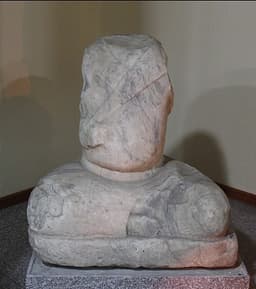
Bilge Qaghan
Emperor · Medieval
65.5Total
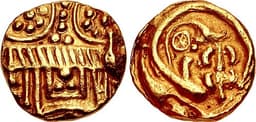
Someshvara I
Emperor · Medieval
51.2Total
Basic Information
Born
683
1042
Died
734
1068
Era
Medieval
Medieval
Nationality
Gokturk Khaganate
India
Occupation
Emperor
Emperor
Civilization
Eastern
Indian
Score Comparison
Military (10%)
78.0
40.0
Political (20%)
70.0
68.0
Influence (20%)
62.0
53.3
Legacy (20%)
56.0
46.7
Leadership (15%)
72.0
40.0
Strategy (15%)
69.1
60.0
TOTAL
65.5
51.2
Bilge Qaghan — Complete Timeline
716 AD
Restoration of the Eastern Turkic KhaganatePolitical Action◆ Major
After the Eastern Turkic Khaganate was destroyed by the Tang dynasty in 630, Bilge Qaghan, with the help of his brother Kul Tigin and vizier Tonyukuk, revived the khaganate. He defeated the Tang and their allies, re-establishing Turkic independence.
RestorationTurkic Revival
Impact: regionalconstructive
717 AD
Battle of the Irtysh RiverWar◆ Major
Bilge Qaghan led a campaign against the Tang and their Turkic allies, defeating them at the Irtysh River. This victory secured the khaganate's western borders and demonstrated the military prowess of the revived Turkic state.
BattleTang-Turkic War
Impact: regionaldestructive
727 AD
Peace treaty with the Tang dynastyPolitical Action◆ Major
Bilge Qaghan negotiated a peace treaty with the Tang dynasty, ending decades of conflict. The treaty established the borders between the two empires and allowed for trade and diplomatic exchanges, bringing stability to the region.
TreatyPeace
Impact: regionalconstructive
732 AD
Construction of the Orkhon inscriptionsCultural◆ Major
Bilge Qaghan commissioned the Orkhon inscriptions, monumental stelae inscribed with runic Turkic script. These inscriptions, written by Tonyukuk and later by Bilge's son, recorded the history and achievements of the Turkic Khaganate, providing a key source for Turkic history.
InscriptionsCultural Heritage
Impact: regionalconstructive
734 AD
Assassination of Bilge QaghanPolitical Action◆ Major
Bilge Qaghan was poisoned by a minister, possibly on the orders of the Tang court. His death led to a period of instability and decline for the Eastern Turkic Khaganate, which eventually fell to the Uyghurs in 744.
AssassinationDecline
Impact: regionaltragic
Someshvara I — Complete Timeline
1045 AD
Relocation of Capital to KalyaniPolitical Action◆ Major
Someshvara I moved the Western Chalukya capital from Manyakheta to Kalyani (modern Basavakalyan). This relocation shifted the political center of the empire and marked a new phase in Chalukya administration.
CapitalAdministrationKalyani
Impact: regionalconstructive
1050 AD
Construction of the Kalyani FortCultural
Someshvara I built a fortified palace and administrative complex at Kalyani. The fort became the center of Western Chalukya power and a symbol of their authority in the Deccan.
FortificationArchitectureKalyani
Impact: regionalconstructive
1060 AD
War with the Chola EmpireWar◆ Major
Someshvara I engaged in a prolonged conflict with the Chola king Rajendra II. The war included battles in the Tungabhadra region and resulted in territorial exchanges, with neither side achieving decisive victory.
CholaTungabhadraConflict
Impact: regional
Expert Analysis
Origins
Bilge Qaghan (683-734 CE) was born into the Ashina clan, the royal family of the Eastern Turkic Khaganate. Following the collapse of the khaganate under Tang dominance in 630, he grew up in a period of subjugation. His father, Ilterish Qaghan, had briefly restored independence, but instability persisted. Bilge was mentored by his capable brother Kul Tigin and the seasoned statesman Tonyukuk.
Someshvara I (c. 1010-1068 CE) was the son of Western Chalukya king Jayasimha II. The Chalukyas ruled the Deccan plateau, competing with the Chola dynasty and the Paramaras. Someshvara ascended the throne in 1042 CE after his father's death, inheriting a stable but regionally contested kingdom.
Rise to Power
Bilge Qaghan's rise was marked by military campaigns against the Tang and their Turkic vassals. In 716 CE, after the death of his uncle Kapaghan Qaghan, Bilge assumed leadership. With Kul Tigin and Tonyukuk, he defeated the Tang at the Battle of the Irtysh River (c. 720 CE), securing the western borders and reasserting Turkic authority. His political acumen (political score 70.0) allowed him to consolidate power.
Someshvara I's rise was smoother as a hereditary successor. He faced early challenges from the Chola king Rajendra II, who invaded Chalukya territory. Someshvara's military score of 40.0 reflects limited battlefield success; he often avoided open conflict, relying on fortifications and diplomacy. His key strategic move was relocating the capital from Manyakheta to Kalyani in 1048 CE, centralizing administration.
Leadership & Governance
Bilge Qaghan's leadership (score 72.0) combined military strength with cultural preservation. He commissioned the Orkhon inscriptions (732-735 CE), which recorded Turkic history and law, fostering a national identity. His governance emphasized stability through treaties, such as the peace agreement with Tang in 721 CE, which set borders and reduced raids. This diplomatic approach earned him a political score of 70.0.
Someshvara I's leadership (score 40.0) was more administrative. He built the Kalyani Fort and promoted trade and agriculture. However, his governance was reactive, focusing on defense against the Cholas. His political score of 68.0 reflects his ability to maintain internal order, but his lack of military initiative weakened his realm.
Triumph & Tragedy
Bilge Qaghan's greatest triumph was restoring the Eastern Turkic Khaganate and defeating the Tang at the Irtysh River, which established his empire's independence. His Orkhon inscriptions remain a cultural legacy. However, his tragedy was his assassination in 734 CE, poisoned by a minister, possibly Tang-instigated, leading to the khaganate's decline.
Someshvara I's triumph was the successful relocation of the capital to Kalyani, which became a cultural and political hub. He also built the Kalyani Fort, a symbol of Chalukya power. His tragedy was his inability to defeat the Cholas; the war with Rajendra II resulted in territorial losses and eventual Chalukya decline after his death.
Character & Destiny
Bilge Qaghan was pragmatic and visionary, balancing military aggression with diplomacy. His decision to commission the Orkhon inscriptions shows a focus on legacy. His character, as recorded in the inscriptions, highlights his wisdom and sense of duty. His assassination underscores the vulnerability of leadership in steppe politics.
Someshvara I was cautious and administrative, preferring fortification over battle. His move of the capital suggests strategic thinking, but his military timidity (military score 40.0) led to Chola encroachment. He died in 1068 CE, likely of natural causes, but his kingdom soon faced civil wars.
Legacy
Bilge Qaghan's legacy is profound: the Orkhon inscriptions are the earliest known Turkic script, influencing later Turkic cultures. His restoration of the khaganate set a precedent for Turkic unity. His scores reflect this: influence 62.0, legacy 56.0. The Tang treaty established a border that lasted decades.
Someshvara I's legacy is more regional. Kalyani remained the Chalukya capital until the dynasty's end. However, his military failures allowed the Cholas to dominate the Deccan. His influence score of 53.3 and legacy of 46.7 show limited lasting impact beyond the Chalukya realm.
Conclusion
Bilge Qaghan's total score of 65.5 decisively surpasses Someshvara I's 51.2. While both were medieval rulers, Bilge's military victories (78.0 vs 40.0) and cultural contributions gave him broader influence. Someshvara's capital move was significant but did not alter the regional power balance. Bilge Qaghan had greater impact on world history through the Turkic revival and the Orkhon inscriptions.
Rankings
🥇
Bilge QaghanLeader
Mil: 78.0Pol: 70.0Inf: 62.0
65.5
🥈
Someshvara I
Mil: 40.0Pol: 68.0Inf: 53.3
51.2
+14.3 behind
How This Comparison Works
Algorithm
Each figure is scored on 6 dimensions (0—100 scale) based on structured historical data: Military (10%), Political (20%), Influence (20%), Legacy (20%), Leadership (15%), Strategy (15%). The weighted total produces the final ranking.
Data Sources
Scores are computed from structured sub-indicators in the database. Scale factors adjust for era (Ancient ×0.85, Modern ×1.0) and civilization size (Eastern ×1.05, Other ×0.80) to account for differences in population and military scale.
Maximum 3 Figures
Comparisons are limited to 2—3 figures to ensure readability and statistical meaningfulness.
Error Margins
±5 points per dimension — Sub-scores are derived from historical records with inherent uncertainty. Two figures within 5 points on a dimension should be considered roughly equivalent in that area.
Total Score Accuracy
±3 points overall — The weighted combination of 6 dimensions produces a total score with approximately ±3 points of uncertainty. Differences of less than 3 points are not statistically significant— the figures are effectively tied.
Known Limitations
- Historical records are incomplete and uneven across civilizations
- Figures from oral-tradition societies may be underrepresented
- Occupation labels can misclassify multi-role figures
- Scores measure capability and impact, not moral character
- Quantitative scoring is a comparison tool, not absolute truth
Capability Radar
Military (10%) — Battles & Warfare
Battles
75
45
Win Rate
80
50
Expansion
80
40
Political (20%) — Governance & Reform
Reform
85
50
Diplomacy
75
55
Economy
70
55
Influence (20%) — Cultural & Global Reach
Cultural
60
40
Global
50
20
Legacy (20%) — Historical Impact
Historical
65
45
Longevity
55
35
Leadership (15%) — Power & Stability
Tenure
70
60
Stability
75
55
Strategy (15%) — Tactics & Innovation
Strategy
75
45
Tactics
70
40
Reform
85
30
Similar Comparisons
Comments & Discussion
No comments yet. Be the first to share your thoughts!