Loading...
Bilge Qaghan vs Henry VII of England
Bilge Qaghan leads by 2.8 pts · 2 figures compared
…
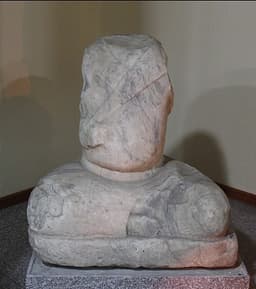
Bilge Qaghan
Emperor · Medieval
65.5Total
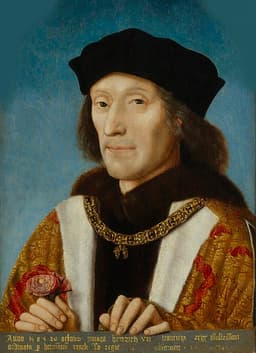
Henry VII of England
Emperor · Medieval
62.7Total
Basic Information
Born
683
1457
Died
734
1509
Era
Medieval
Medieval
Nationality
Gokturk Khaganate
England
Occupation
Emperor
Emperor
Civilization
Eastern
Western
Score Comparison
Military (10%)
78.0
55.0
Political (20%)
70.0
78.0
Influence (20%)
62.0
59.0
Legacy (20%)
56.0
52.0
Leadership (15%)
72.0
78.0
Strategy (15%)
69.1
60.0
TOTAL
65.5
62.7
Bilge Qaghan — Complete Timeline
716 AD
Restoration of the Eastern Turkic KhaganatePolitical Action◆ Major
After the Eastern Turkic Khaganate was destroyed by the Tang dynasty in 630, Bilge Qaghan, with the help of his brother Kul Tigin and vizier Tonyukuk, revived the khaganate. He defeated the Tang and their allies, re-establishing Turkic independence.
RestorationTurkic Revival
Impact: regionalconstructive
717 AD
Battle of the Irtysh RiverWar◆ Major
Bilge Qaghan led a campaign against the Tang and their Turkic allies, defeating them at the Irtysh River. This victory secured the khaganate's western borders and demonstrated the military prowess of the revived Turkic state.
BattleTang-Turkic War
Impact: regionaldestructive
727 AD
Peace treaty with the Tang dynastyPolitical Action◆ Major
Bilge Qaghan negotiated a peace treaty with the Tang dynasty, ending decades of conflict. The treaty established the borders between the two empires and allowed for trade and diplomatic exchanges, bringing stability to the region.
TreatyPeace
Impact: regionalconstructive
732 AD
Construction of the Orkhon inscriptionsCultural◆ Major
Bilge Qaghan commissioned the Orkhon inscriptions, monumental stelae inscribed with runic Turkic script. These inscriptions, written by Tonyukuk and later by Bilge's son, recorded the history and achievements of the Turkic Khaganate, providing a key source for Turkic history.
InscriptionsCultural Heritage
Impact: regionalconstructive
734 AD
Assassination of Bilge QaghanPolitical Action◆ Major
Bilge Qaghan was poisoned by a minister, possibly on the orders of the Tang court. His death led to a period of instability and decline for the Eastern Turkic Khaganate, which eventually fell to the Uyghurs in 744.
AssassinationDecline
Impact: regionaltragic
Henry VII of England — Complete Timeline
1485 AD
Battle of Bosworth FieldWar
Henry Tudor defeated and killed Richard III at Bosworth Field, ending the Wars of the Roses. This victory allowed Henry to claim the throne as Henry VII, founding the Tudor dynasty.
BattleVictoryTudor Dynasty
Impact: nationalconstructive
1486 AD
Marriage to Elizabeth of YorkPolitical Action◆ Major
Henry VII married Elizabeth of York, uniting the Houses of Lancaster and York. This marriage symbolically ended the Wars of the Roses and strengthened the legitimacy of the Tudor claim to the throne.
MarriageUnificationTudor
Impact: nationalconstructive
1487 AD
Defeat of Lambert SimnelWar◆ Major
Henry VII defeated the Yorkist pretender Lambert Simnel at the Battle of Stoke Field. This victory crushed a major rebellion and secured Henry's throne against early challenges to his rule.
RebellionBattleYorkist
Impact: nationalconstructive
1489 AD
Treaty of Medina del CampoPolitical Action◆ Major
Henry VII signed a treaty with Spain, arranging the marriage of his son Arthur to Catherine of Aragon. This alliance strengthened England's position in Europe and laid the groundwork for future diplomatic ties.
DiplomacySpainAlliance
Impact: regionalconstructive
1499 AD
Execution of Perkin WarbeckPolitical Action
Henry VII executed Perkin Warbeck, a pretender who claimed to be Richard of Shrewsbury. Warbeck's capture and execution ended a major threat to Henry's reign and demonstrated his firm control over the kingdom.
PretenderExecutionSecurity
Impact: national
Expert Analysis
Origins
Bilge Qaghan was born around 683 AD into the Ashina clan, the ruling family of the Eastern Turkic Khaganate. His early years were marked by the khaganate's subjugation under the Tang dynasty after 630. He was raised in a warrior tradition, learning military tactics from his brother Kul Tigin and the seasoned vizier Tonyukuk. His formative experiences included witnessing the humiliation of his people under Chinese suzerainty.
Henry VII was born on 28 January 1457 at Pembroke Castle, Wales, as Henry Tudor. His father, Edmund Tudor, died before his birth, and his mother, Margaret Beaufort, was a descendant of John of Gaunt. Henry spent much of his youth in exile in Brittany after the Yorkist victory in the Wars of the Roses. His claim to the throne was weak, but he was the leading Lancastrian claimant.
Rise to Power
Bilge Qaghan's rise began after the death of his father, Ilterish Qaghan, who had started the revival. Bilge became khagan in 716 AD following a coup that killed his predecessor. With his brother Kul Tigin as commander and Tonyukuk as advisor, he consolidated power. The turning point came in 717 AD at the Battle of the Irtysh River, where he defeated a Tang-led coalition, securing the khaganate's western borders. By 720, he had restored the Eastern Turkic Khaganate to its former glory.
Henry VII's rise was swift and decisive. In 1485, he landed at Mill Bay, Wales, with a small force. At the Battle of Bosworth Field on 22 August 1485, he defeated and killed Richard III, ending the Wars of the Roses. Henry was crowned on the battlefield and later married Elizabeth of York in 1486, uniting the warring houses. He faced immediate challenges from pretenders like Lambert Simnel (defeated at Stoke Field in 1487) and Perkin Warbeck (executed in 1499), but he secured his throne through a combination of military victory and shrewd diplomacy.
Leadership & Governance
Bilge Qaghan ruled as a traditional steppe khagan, relying on personal authority and the support of tribal leaders. He centralized power by appointing loyalists and promoting a unified Turkic identity. His governance was marked by the Orkhon inscriptions (c. 732 AD), which promoted Turkic culture and history. He maintained peace with the Tang through a treaty in 721 AD, which established borders and reduced conflict. However, his rule was autocratic and dependent on his ability to reward followers with plunder.
Henry VII was a master of political consolidation. He used marriage alliances (e.g., Treaty of Medina del Campo with Spain in 1489) and financial reforms to strengthen the crown. He established the Court of Star Chamber to curb noble power and avoided expensive wars, accumulating a personal fortune. His leadership scored 78.0 in politics, reflecting his skill in managing parliament and the nobility. Unlike Bilge, Henry focused on legal and fiscal systems rather than military expansion.
Triumph & Tragedy
Bilge Qaghan's greatest triumph was the restoration of the Eastern Turkic Khaganate, a feat scored at 78.0 in military leadership. His victory at the Irtysh River and the subsequent peace with Tang secured Turkic independence for a generation. However, his tragedy was his assassination by poison in 734 AD, likely ordered by the Tang court. His death led to internal strife and the eventual collapse of the khaganate by 745 AD.
Henry VII's greatest success was ending the Wars of the Roses and founding the Tudor dynasty, which ruled England for over a century. His financial prudence left a surplus of £300,000 at his death. However, his reign was marred by paranoia and heavy taxation, leading to unpopularity. His greatest failure was the death of his heir, Arthur, in 1502, which destabilized the succession and led to the later conflicts of Henry VIII's reign.
Character & Destiny
Bilge Qaghan was pragmatic and culturally conscious, commissioning the Orkhon inscriptions to preserve Turkic history. His character was shaped by the need to unite fractious tribes against a common enemy. His destiny was tied to the steppe cycle of rise and fall; his death triggered decline. Historians note his wisdom in seeking peace with Tang, but also his reliance on a small circle of loyalists.
Henry VII was cautious, calculating, and secretive. He avoided battle after Bosworth, preferring diplomacy and intrigue. His character was shaped by years of exile and insecurity. His destiny was to establish a stable dynasty, but his frugality and suspicion left a mixed legacy. He scored 78.0 in leadership for his ability to control the nobility and build institutions.
Legacy
Bilge Qaghan's legacy endures through the Orkhon inscriptions, which are among the earliest Turkic literary works. He is remembered as the restorer of Turkic independence, influencing later Turkic states. His military score of 78.0 reflects his battlefield successes, but his political score of 70.0 shows the limitations of steppe governance. The khaganate collapsed within a decade of his death.
Henry VII's legacy is the Tudor dynasty, which included Henry VIII and Elizabeth I. His financial and legal reforms strengthened the English monarchy and laid groundwork for the English Reformation. His political score of 78.0 highlights his state-building achievements. However, his legacy is less romanticized than that of his son or granddaughter.
Conclusion
While both leaders restored stability after periods of chaos, Bilge Qaghan's impact was more immediate but shorter-lived. His military score of 78.0 surpasses Henry's 55.0, but Henry's political score of 78.0 edges Bilge's 70.0. In terms of lasting influence, Henry VII's founding of the Tudor dynasty shaped English history for centuries, whereas Bilge's khaganate faded. However, Bilge's cultural contributions through the Orkhon inscriptions give him a unique legacy in Turkic identity. Ultimately, Henry VII had greater impact on the global stage due to England's later rise, but Bilge Qaghan was more effective in his context. The score gap of 2.8 points in Bilge's favor reflects his higher military and strategic scores, but Henry's political and leadership scores are equally impressive. Taking a stance: Bilge Qaghan was the more dynamic leader, but Henry VII's legacy proved more enduring.
Rankings
🥇
Bilge QaghanLeader
Mil: 78.0Pol: 70.0Inf: 62.0
65.5
🥈
Henry VII of England
Mil: 55.0Pol: 78.0Inf: 59.0
62.7
+2.8 behind
How This Comparison Works
Algorithm
Each figure is scored on 6 dimensions (0—100 scale) based on structured historical data: Military (10%), Political (20%), Influence (20%), Legacy (20%), Leadership (15%), Strategy (15%). The weighted total produces the final ranking.
Data Sources
Scores are computed from structured sub-indicators in the database. Scale factors adjust for era (Ancient ×0.85, Modern ×1.0) and civilization size (Eastern ×1.05, Other ×0.80) to account for differences in population and military scale.
Maximum 3 Figures
Comparisons are limited to 2—3 figures to ensure readability and statistical meaningfulness.
Error Margins
±5 points per dimension — Sub-scores are derived from historical records with inherent uncertainty. Two figures within 5 points on a dimension should be considered roughly equivalent in that area.
Total Score Accuracy
±3 points overall — The weighted combination of 6 dimensions produces a total score with approximately ±3 points of uncertainty. Differences of less than 3 points are not statistically significant— the figures are effectively tied.
Known Limitations
- Historical records are incomplete and uneven across civilizations
- Figures from oral-tradition societies may be underrepresented
- Occupation labels can misclassify multi-role figures
- Scores measure capability and impact, not moral character
- Quantitative scoring is a comparison tool, not absolute truth
Capability Radar
Military (10%) — Battles & Warfare
Battles
75
30
Win Rate
80
35
Expansion
80
25
Political (20%) — Governance & Reform
Reform
85
80
Diplomacy
75
85
Economy
70
80
Influence (20%) — Cultural & Global Reach
Cultural
60
50
Global
50
45
Legacy (20%) — Historical Impact
Historical
65
70
Longevity
55
65
Leadership (15%) — Power & Stability
Tenure
70
75
Stability
75
85
Strategy (15%) — Tactics & Innovation
Strategy
75
45
Tactics
70
40
Reform
85
50
Similar Comparisons
Comments & Discussion
No comments yet. Be the first to share your thoughts!