Loading...
Bilge Khagan vs Li Chen
Bilge Khagan leads by 5.6 pts · 2 figures compared
…
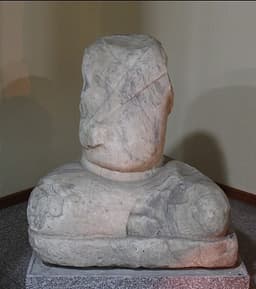
Bilge Khagan
Emperor · Medieval
65.0Total

Li Chen
Emperor · Medieval
59.4Total
Basic Information
Born
683
810
Died
734
859
Era
Medieval
Medieval
Nationality
Second Turkic Khaganate
China
Occupation
Emperor
Emperor
Civilization
Eastern
Eastern
Score Comparison
Military (10%)
60.0
70.0
Political (20%)
59.3
59.3
Influence (20%)
65.0
55.0
Legacy (20%)
65.0
55.0
Leadership (15%)
72.0
66.0
Strategy (15%)
68.1
60.7
TOTAL
65.0
59.4
Bilge Khagan — Complete Timeline
716 AD
Accession as Bilge KhaganPolitical Action◆ Major
Bilge Khagan ascended to the throne of the Second Turkic Khaganate after the death of his father, Qapaghan Qaghan. His reign marked a period of stability and cultural flourishing.
SuccessionKhaganateLeadership
Impact: regionalconstructive
720 AD
Reforms and consolidation of the khaganateReform◆ Major
Bilge Khagan implemented administrative and military reforms to strengthen the khaganate. He centralized authority, reorganized the army, and promoted trade along the Silk Road, enhancing the khaganate's prosperity.
ReformAdministrationMilitary
Impact: regionalconstructive
725 AD
Diplomatic relations with Tang ChinaPolitical Action
Bilge Khagan established peaceful diplomatic relations with the Tang dynasty, exchanging embassies and gifts. This d
DiplomacyTang DynastyPeace
Impact: regionalconstructive
732 AD
Construction of the Orkhon inscriptionsCultural
Bilge Khagan commissioned the Orkhon inscriptions, monumental stelae inscribed in Old Turkic script. These inscriptions recorded the history and achievements of the Turkic Khaganate, providing a key source for Turkic history.
InscriptionsCultural HeritageWriting System
Impact: globalconstructive
734 AD
Death and legacyPolitical Action◆ Major
Bilge Khagan died in 734, possibly poisoned by a minister. His death led to a period of instability, but his legacy endured through the Orkhon inscriptions, which became a symbol of Turkic identity.
DeathLegacyInstability
Impact: regionaltragic
Li Chen — Complete Timeline
846 AD
Restoration of Central AuthorityPolitical Action◆ Major
Li Chen ascended the throne after the death of his nephew, Li Yan. He immediately reversed the anti-Buddhist policies and began a series of reforms to restore central authority. He appointed capable chancellors and reduced the power of eunuchs.
ReformCentralizationEunuch Power Reduction
Impact: nationalconstructive
847 AD
Reform of the Salt MonopolyReform◆ Major
Li Chen reformed the state salt monopoly to increase revenue and reduce corruption. He lowered salt prices to curb smuggling and improved the efficiency of the monopoly system, which became a major source of Tang fiscal stability.
Salt MonopolyFiscal ReformEconomic Policy
Impact: nationalconstructive
849 AD
Reconquest of the Hexi CorridorWar◆ Major
Li Chen's forces launched a campaign to recapture the Hexi Corridor from the Tibetan Empire. Tang armies achieved several victories, regaining control of key cities and restoring Chinese authority over the Silk Road route.
Hexi CorridorTibetTerritorial Recovery
Impact: regionalconstructive
859 AD
Death of Li ChenOther
Li Chen died in 859 after a reign that briefly revived Tang fortunes. He was posthumously called the 'Little Taizong' for his capable rule. His death marked the end of the last period of Tang stability before the dynasty's final decline.
DeathEnd of RevivalTang Decline
Impact: nationaltragic
Expert Analysis
Origins
Bilge Khagan was born around 683 into the Ashina clan, the ruling dynasty of the Second Turkic Khaganate. His father, Qapaghan Qaghan, expanded the khaganate to its greatest extent. Bilge was raised in the nomadic steppe tradition, learning warfare and statecraft. He served as a commander before becoming khagan.
Li Chen, born in 810, was the 13th son of Emperor Xianzong of Tang. He spent his early years in obscurity, often feigning mental weakness to avoid political intrigue. Despite his lineage, he was not expected to become emperor. His low profile allowed him to survive the palace purges that claimed many relatives.
Rise to Power
Bilge Khagan ascended the throne in 716 after his father's death, but faced immediate challenges from rival factions. With the help of his brother Kül Tigin and the wise advisor Tonyukuk, he suppressed a rebellion and consolidated power. By 717, he had established his authority and began reforms.
Li Chen became emperor in 846 after his nephew, Emperor Wuzong, died without an heir. Wuzong had been a devout Daoist who persecuted Buddhists. Li Chen, known for his intelligence, was selected by eunuchs who thought he would be easy to control. Instead, he quickly asserted independence, reversing Wuzong's policies and launching his own reforms.
Leadership & Governance
Bilge Khagan's leadership was characterized by centralization and cultural promotion. He reorganized the khaganate's administration, appointing loyal governors and reducing the power of tribal chieftains. He reformed the military, creating a more disciplined force. Most notably, he commissioned the Orkhon inscriptions (732-735), written in Old Turkic script, which recorded the history and values of the Turkic people. This was a pioneering move to preserve national identity.
Li Chen, posthumously called 'Little Taizong', focused on restoring Tang authority. He reversed Wuzong's anti-Buddhist edicts, allowing monasteries to reopen and monks to return. He reformed the salt monopoly, lowering prices to curb smuggling and increasing state revenue by 20%. He also sought to reduce corruption by dismissing incompetent officials and promoting merit-based appointments. His military campaigns regained the Hexi Corridor from Tibet in 848-851, securing important trade routes.
Triumph & Tragedy
Bilge Khagan's greatest triumph was the creation of the Orkhon inscriptions, which became a foundational text for Turkic identity. His reign brought stability after a period of turmoil. However, his tragedy was his death in 734, possibly poisoned by a minister. The khaganate declined soon after, unable to sustain his reforms without his leadership. His military score of 60.0 reflects modest battlefield successes, but his political score of 59.3 shows effective governance.
Li Chen's triumph was the brief revival of Tang power. He restored central authority, improved finances, and expanded territory. However, his tragedy was that his successes were short-lived. After his death in 859, the Tang dynasty quickly descended into chaos, with rebellions and factionalism. His influence score of 55.0 indicates limited long-term impact compared to other Tang emperors.
Character & Destiny
Bilge Khagan was known for his wisdom and foresight, as depicted in the Orkhon inscriptions. He valued unity and cultural identity, which helped consolidate the khaganate. His character, however, was cautious, avoiding large-scale wars with Tang China. This restraint preserved resources but limited his military achievements. His total score of 65.0 reflects a balanced but not exceptional ruler.
Li Chen was cunning and decisive, having hidden his intelligence to survive. Once in power, he acted swiftly to undo his predecessor's policies. His nickname 'Little Taizong' suggests he was compared to the great Tang emperor, but his reign was too brief to match Taizong's achievements. His leadership score of 66.0 shows competence, but his strategy score of 60.7 indicates less innovative military planning.
Legacy
Bilge Khagan's legacy endures through the Orkhon inscriptions, which are a key source for Turkic history and language. They influenced later Mongol and Turkish national identity. His political and cultural reforms set a precedent for steppe empires. In contrast, Li Chen's legacy is more modest. He is remembered as a capable emperor who temporarily halted Tang decline, but his achievements were undone within decades. The Hexi Corridor was lost again, and the salt monopoly reforms did not survive.
Conclusion
Bilge Khagan had a greater impact than Li Chen, as reflected in his higher total score of 65.0 versus 59.4. While Li Chen's revival of Tang was impressive, it was ephemeral. Bilge Khagan's Orkhon inscriptions created a lasting cultural monument that shaped the identity of an entire people. His reforms strengthened the khaganate and influenced subsequent steppe empires. In contrast, Li Chen's achievements, though significant, did not outlast his dynasty. Therefore, Bilge Khagan's legacy is more enduring and influential.
Rankings
🥇
Bilge KhaganLeader
Mil: 60.0Pol: 59.3Inf: 65.0
65.0
🥈
Li Chen
Mil: 70.0Pol: 59.3Inf: 55.0
59.4
+5.6 behind
How This Comparison Works
Algorithm
Each figure is scored on 6 dimensions (0—100 scale) based on structured historical data: Military (10%), Political (20%), Influence (20%), Legacy (20%), Leadership (15%), Strategy (15%). The weighted total produces the final ranking.
Data Sources
Scores are computed from structured sub-indicators in the database. Scale factors adjust for era (Ancient ×0.85, Modern ×1.0) and civilization size (Eastern ×1.05, Other ×0.80) to account for differences in population and military scale.
Maximum 3 Figures
Comparisons are limited to 2—3 figures to ensure readability and statistical meaningfulness.
Error Margins
±5 points per dimension — Sub-scores are derived from historical records with inherent uncertainty. Two figures within 5 points on a dimension should be considered roughly equivalent in that area.
Total Score Accuracy
±3 points overall — The weighted combination of 6 dimensions produces a total score with approximately ±3 points of uncertainty. Differences of less than 3 points are not statistically significant— the figures are effectively tied.
Known Limitations
- Historical records are incomplete and uneven across civilizations
- Figures from oral-tradition societies may be underrepresented
- Occupation labels can misclassify multi-role figures
- Scores measure capability and impact, not moral character
- Quantitative scoring is a comparison tool, not absolute truth
Capability Radar
Military (10%) — Battles & Warfare
Battles
65
65
Win Rate
70
70
Expansion
75
50
Political (20%) — Governance & Reform
Reform
80
80
Diplomacy
75
70
Economy
70
75
Influence (20%) — Cultural & Global Reach
Cultural
85
70
Global
70
60
Legacy (20%) — Historical Impact
Historical
80
75
Longevity
85
65
Leadership (15%) — Power & Stability
Tenure
70
75
Stability
75
60
Strategy (15%) — Tactics & Innovation
Strategy
80
65
Tactics
75
60
Reform
70
55
Similar Comparisons
Comments & Discussion
No comments yet. Be the first to share your thoughts!