Loading...
This comparison has not been analyzed yet.
One-time AI generation (~1 minute). Scores and timeline are already available below.
Bilawal Bhutto Zardari vs Kim Campbell
Kim Campbell leads by 4.6 pts · 2 figures compared
…

Bilawal Bhutto Zardari
Politician · Modern
36.5Total
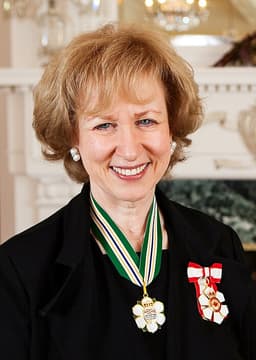
Kim Campbell
Politician · Modern
41.1Total
Basic Information
Born
1988
1947
Died
—
—
Era
Modern
Modern
Nationality
Pakistan
Canada
Occupation
Politician
Politician
Civilization
Indian
Western
Score Comparison
Military (10%)
12.2
49.1
Political (20%)
25.0
27.9
Influence (20%)
48.6
50.2
Legacy (20%)
36.7
40.0
Leadership (15%)
38.1
34.6
Strategy (15%)
44.8
42.4
TOTAL
36.5
41.1
Bilawal Bhutto Zardari — Complete Timeline
2014 AD
Leadership of Pakistan Peoples PartyPolitical Action◆ Major
Bilawal Bhutto Zardari assumed chairmanship of the Pakistan Peoples Party at age 25, following the death of his mother Benazir Bhutto. He led the party through elections and internal restructuring, maintaining its position as a major political force.
PPP LeadershipPolitical DynastyYouth
Impact: nationalconstructive
2018 AD
Election to National AssemblyPolitical Action
Bilawal Bhutto Zardari was elected to the National Assembly of Pakistan from Larkana, a Bhutto family stronghold. He became the youngest member of parliament, continuing the political legacy of his mother Benazir Bhutto and grandfather Zulfikar Ali Bhutto.
ElectionParliamentBhutto Dynasty
Impact: nationalconstructive
2022 AD
Appointment as Foreign MinisterPolitical Action◆ Major
Bilawal Bhutto Zardari was appointed Foreign Minister of Pakistan in the coalition government led by Shehbaz Sharif. He became one of the youngest foreign ministers in Pakistan's history, handling diplomatic relations during a period of economic crisis.
Foreign MinisterCoalition GovernmentDiplomacy
Impact: nationalconstructive
Kim Campbell — Complete Timeline
1990 AD
Appointed Minister of National DefencePolitical Action
Campbell was appointed Minister of National Defence by Prime Minister Brian Mulroney in 1990. She was the first woman to hold this portfolio in Canada. During her tenure, she oversaw Canadian forces during the Gulf War and the Oka Crisis.
Defence MinisterFirst WomanGulf War
Impact: national
1993 AD
Became Prime Minister of CanadaPolitical Action◆ Major
Kim Campbell was sworn in as the 19th Prime Minister of Canada on June 25, 1993, succeeding Brian Mulroney. She became the first and only woman to hold the office. Her tenure lasted only 132 days until the federal election in October.
Prime MinisterFirst WomanShort Tenure
Impact: national
1993 Canadian Federal Election DefeatPolitical Action◆ Major
In the October 25, 1993 federal election, Campbell's Progressive Conservative Party was reduced from a majority government to just two seats in the House of Commons. This was the worst defeat for a governing party at the federal level in Canadian history.
Election DefeatProgressive ConservativesPolitical Collapse
Impact: nationaldestructive
This comparison has not been analyzed yet.
One-time AI generation (~1 minute). Scores and timeline are already available below.
Rankings
🥇
Kim CampbellLeader
Mil: 49.1Pol: 27.9Inf: 50.2
41.1
🥈
Bilawal Bhutto Zardari
Mil: 12.2Pol: 25.0Inf: 48.6
36.5
+4.6 behind
How This Comparison Works
Algorithm
Each figure is scored on 6 dimensions (0—100 scale) based on structured historical data: Military (10%), Political (20%), Influence (20%), Legacy (20%), Leadership (15%), Strategy (15%). The weighted total produces the final ranking.
Data Sources
Scores are computed from structured sub-indicators in the database. Scale factors adjust for era (Ancient ×0.85, Modern ×1.0) and civilization size (Eastern ×1.05, Other ×0.80) to account for differences in population and military scale.
Maximum 3 Figures
Comparisons are limited to 2—3 figures to ensure readability and statistical meaningfulness.
Error Margins
±5 points per dimension — Sub-scores are derived from historical records with inherent uncertainty. Two figures within 5 points on a dimension should be considered roughly equivalent in that area.
Total Score Accuracy
±3 points overall — The weighted combination of 6 dimensions produces a total score with approximately ±3 points of uncertainty. Differences of less than 3 points are not statistically significant— the figures are effectively tied.
Known Limitations
- Historical records are incomplete and uneven across civilizations
- Figures from oral-tradition societies may be underrepresented
- Occupation labels can misclassify multi-role figures
- Scores measure capability and impact, not moral character
- Quantitative scoring is a comparison tool, not absolute truth
Capability Radar
Military (10%) — Battles & Warfare
Battles
23
31
Win Rate
24
29
Expansion
29
37
Political (20%) — Governance & Reform
Reform
10
15
Diplomacy
20
20
Economy
10
15
Influence (20%) — Cultural & Global Reach
Cultural
10
15
Global
10
15
Legacy (20%) — Historical Impact
Historical
10
20
Longevity
10
10
Leadership (15%) — Power & Stability
Tenure
15
10
Stability
10
10
Strategy (15%) — Tactics & Innovation
Strategy
29
39
Tactics
35
42
Reform
35
42
Similar Comparisons
Comments & Discussion
No comments yet. Be the first to share your thoughts!