Loading...
Khalil Haqqani vs Kim Campbell
Kim Campbell leads by 4.4 pts · 2 figures compared
…

Khalil Haqqani
Politician · Modern
36.7Total
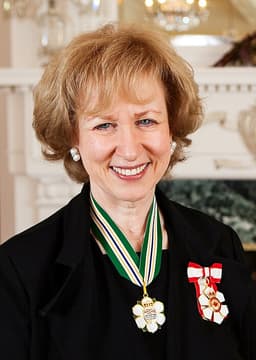
Kim Campbell
Politician · Modern
41.1Total
Basic Information
Born
1966
1947
Died
—
—
Era
Modern
Modern
Nationality
Afghanistan
Canada
Occupation
Politician
Politician
Civilization
Middle Eastern
Western
Score Comparison
Military (10%)
28.8
49.1
Political (20%)
25.0
27.9
Influence (20%)
47.1
50.2
Legacy (20%)
36.7
40.0
Leadership (15%)
34.6
34.6
Strategy (15%)
38.9
42.4
TOTAL
36.7
41.1
Khalil Haqqani — Complete Timeline
2021 AD
Appointment as Minister of Refugees and RepatriationPolitical Action◆ Major
Khalil Haqqani was appointed Minister of Refugees and Repatriation in the Taliban's interim government. He is a senior member of the Haqqani network, a militant group designated as a terrorist organization by the US.
Taliban GovernmentHaqqani NetworkMinister
Impact: national
2024 AD
Killed in Kabul BlastOther◆ Major
Khalil Haqqani was killed in a suicide bombing in Kabul. The attack targeted the Ministry of Refugees and Repatriation, killing multiple people. No group immediately claimed responsibility, but it highlighted internal security challenges.
AssassinationBombingKabul
Impact: nationaltragic
Kim Campbell — Complete Timeline
1990 AD
Appointed Minister of National DefencePolitical Action
Campbell was appointed Minister of National Defence by Prime Minister Brian Mulroney in 1990. She was the first woman to hold this portfolio in Canada. During her tenure, she oversaw Canadian forces during the Gulf War and the Oka Crisis.
Defence MinisterFirst WomanGulf War
Impact: national
1993 AD
Became Prime Minister of CanadaPolitical Action◆ Major
Kim Campbell was sworn in as the 19th Prime Minister of Canada on June 25, 1993, succeeding Brian Mulroney. She became the first and only woman to hold the office. Her tenure lasted only 132 days until the federal election in October.
Prime MinisterFirst WomanShort Tenure
Impact: national
1993 Canadian Federal Election DefeatPolitical Action◆ Major
In the October 25, 1993 federal election, Campbell's Progressive Conservative Party was reduced from a majority government to just two seats in the House of Commons. This was the worst defeat for a governing party at the federal level in Canadian history.
Election DefeatProgressive ConservativesPolitical Collapse
Impact: nationaldestructive
Expert Analysis
Origins
Khalil Haqqani was born around 1966 in the Zadran region of Paktia Province, Afghanistan, into the influential Haqqani family. His brother, Jalaluddin Haqqani, founded the Haqqani network, a key insurgent group. Khalil received religious education in madrasas along the Pakistan border, becoming a senior commander and financier for the network. His early life was shaped by the Soviet-Afghan war and the rise of the Taliban.
Kim Campbell was born Avril Phaedra Campbell on March 10, 1947, in Port Alberni, British Columbia, Canada. Her mother was a teacher, her father a lawyer. She studied political science at the University of British Columbia and earned a law degree from the same institution. She also studied Soviet government at the London School of Economics. Her early career included teaching law and entering politics in the 1980s.
Rise to Power
Khalil Haqqani rose through the ranks of the Haqqani network, serving as a key commander during the Soviet withdrawal and the ensuing civil war. He was a close associate of the Taliban leadership and played a role in fundraising and logistics. After the Taliban's return to power in 2021, he was appointed Minister of Refugees and Repatriation in September 2021, a position that gave him influence over aid and displacement issues.
Kim Campbell entered federal politics in 1988, winning a seat as a Progressive Conservative. She quickly rose to prominence, appointed Minister of State for Indian Affairs and Northern Development in 1989, then Minister of Justice and Attorney General in 1990. As Justice Minister, she introduced stricter gun control and reformed sexual assault laws. In 1990, she also became Canada's first female Minister of National Defence. In 1993, she succeeded Brian Mulroney as Prime Minister on June 25, after winning the party leadership.
Leadership & Governance
Khalil Haqqani's governance role was limited to the Taliban's interim administration, focused on refugee repatriation. His leadership style was authoritarian, rooted in the Haqqani network's militant operations. He lacked experience in modern statecraft and international diplomacy. His political score of 25.0 reflects his narrow scope of governance.
Kim Campbell led a democratically elected government, though her tenure was brief. She faced a deeply unpopular party after Mulroney, and her campaign struggled with economic issues and internal divisions. Her leadership was consultative but unable to overcome the party's collapse. She scored 27.9 in political influence, slightly higher than Haqqani, but still low due to her short term.
Triumph & Tragedy
Khalil Haqqani's greatest triumph was surviving decades of conflict and attaining a ministerial role in the Taliban government. His tragedy was his death in a suicide bombing on December 11, 2022, at the Ministry of Refugees building in Kabul, killing him and several others. This event highlighted the instability of the Taliban regime.
Kim Campbell's triumph was becoming Canada's first female Prime Minister, a milestone for gender equality. She also served as Defence Minister, influencing NATO policy during the Gulf War. Her tragedy was the 1993 federal election, where her party lost 151 seats, retaining only two, the worst defeat for a governing party in Canadian history. This ended her political career.
Character & Destiny
Khalil Haqqani was described as a pragmatic financier within the Haqqani network, focused on resources and logistics. His character was shaped by conflict and survival, leading to a cautious but ultimately fatal destiny. His total score of 36.7 reflects his limited global impact.
Kim Campbell was intellectual and ambitious, but her destiny was tied to the unpopularity of the Mulroney government. She lacked the charisma or time to redefine her party. Her total score of 41.1 is slightly higher, but still modest, as she is often remembered as a footnote in Canadian history.
Legacy
Khalil Haqqani's legacy is tied to the Haqqani network's role in the Taliban's resurgence. He is remembered as a senior figure who died in internal violence. His influence score of 47.1 is moderate, as his network continues to shape regional security. However, his legacy is largely negative internationally.
Kim Campbell's legacy is as Canada's first female Prime Minister, a symbolic milestone. She paved the way for women in politics, but her brief term means her policy impact is minimal. Her influence score of 50.2 is the highest among the two, reflecting her role as a trailblazer. Both score low in leadership (34.6 each), indicating limited effective governance.
Conclusion
When comparing Khalil Haqqani and Kim Campbell, Kim Campbell emerges with a higher total score of 41.1 versus 36.7. Campbell's impact, though limited, includes a historic first for women in Canadian governance and international roles. In contrast, Haqqani's influence is confined to a militant network and a short-lived ministerial role. The score gap of 4.4 points supports the conclusion that Campbell had greater impact, as her legacy includes a measurable step toward gender equality in a democratic context, while Haqqani's legacy is one of conflict and instability. Campbell's political and influence scores are higher, and she operated on a broader global stage. Therefore, Kim Campbell had a more significant, albeit still modest, historical impact.
Rankings
🥇
Kim CampbellLeader
Mil: 49.1Pol: 27.9Inf: 50.2
41.1
🥈
Khalil Haqqani
Mil: 28.8Pol: 25.0Inf: 47.1
36.7
+4.4 behind
How This Comparison Works
Algorithm
Each figure is scored on 6 dimensions (0—100 scale) based on structured historical data: Military (10%), Political (20%), Influence (20%), Legacy (20%), Leadership (15%), Strategy (15%). The weighted total produces the final ranking.
Data Sources
Scores are computed from structured sub-indicators in the database. Scale factors adjust for era (Ancient ×0.85, Modern ×1.0) and civilization size (Eastern ×1.05, Other ×0.80) to account for differences in population and military scale.
Maximum 3 Figures
Comparisons are limited to 2—3 figures to ensure readability and statistical meaningfulness.
Error Margins
±5 points per dimension — Sub-scores are derived from historical records with inherent uncertainty. Two figures within 5 points on a dimension should be considered roughly equivalent in that area.
Total Score Accuracy
±3 points overall — The weighted combination of 6 dimensions produces a total score with approximately ±3 points of uncertainty. Differences of less than 3 points are not statistically significant— the figures are effectively tied.
Known Limitations
- Historical records are incomplete and uneven across civilizations
- Figures from oral-tradition societies may be underrepresented
- Occupation labels can misclassify multi-role figures
- Scores measure capability and impact, not moral character
- Quantitative scoring is a comparison tool, not absolute truth
Capability Radar
Military (10%) — Battles & Warfare
Battles
19
31
Win Rate
22
29
Expansion
29
37
Political (20%) — Governance & Reform
Reform
10
15
Diplomacy
20
20
Economy
10
15
Influence (20%) — Cultural & Global Reach
Cultural
10
15
Global
10
15
Legacy (20%) — Historical Impact
Historical
15
20
Longevity
5
10
Leadership (15%) — Power & Stability
Tenure
15
10
Stability
5
10
Strategy (15%) — Tactics & Innovation
Strategy
32
39
Tactics
36
42
Reform
37
42
Similar Comparisons
Comments & Discussion
No comments yet. Be the first to share your thoughts!