Loading...
This comparison has not been analyzed yet.
One-time AI generation (~1 minute). Scores and timeline are already available below.
Bhawani Singh of Jaipur vs Wladyslaw IV Vasa
Wladyslaw IV Vasa leads by 12.0 pts · 2 figures compared
…

Bhawani Singh of Jaipur
Emperor · Modern
42.3Total
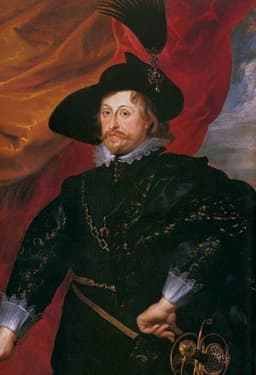
Wladyslaw IV Vasa
Emperor · Modern
54.3Total
Basic Information
Born
1931
1595
Died
—
1648
Era
Modern
Modern
Nationality
India
Poland
Occupation
Emperor
Emperor
Civilization
Indian
Western
Score Comparison
Military (10%)
25.9
20.0
Political (20%)
30.8
68.0
Influence (20%)
50.2
54.9
Legacy (20%)
37.5
45.0
Leadership (15%)
58.8
74.0
Strategy (15%)
43.7
60.0
TOTAL
42.3
54.3
Bhawani Singh of Jaipur — Complete Timeline
1955 AD
Service in the Indian Army's 8th Gorkha RiflesWar
Bhawani Singh was commissioned into the 8th Gorkha Rifles of the Indian Army. He served in various capacities, including during the 1962 Sino-Indian War, where he was involved in operations in the North-East Frontier Agency.
Military ServiceSino-Indian WarGorkha Rifles
Impact: national
1970 AD
Accession as titular Maharaja of JaipurPolitical Action
Bhawani Singh became the titular Maharaja of Jaipur after the death of his father Man Singh II. Although the princely state had been dissolved, he inherited the ceremonial title and continued to represent the Jaipur royal family in public life.
SuccessionRoyal TitlePost-Independence
Impact: regional
1971 AD
Service in the Indian Army during the Indo-Pakistani War of 1971War◆ Major
Bhawani Singh served as a Lieutenant Colonel in the Indian Army's 10th Para Commando unit during the Indo-Pakistani War of 1971. He led operations in the Chamb sector and was awarded the Maha Vir Chakra, India's second-highest military decoration, for gallantry.
Indo-Pakistani WarMilitary ServiceGallantry Award
Impact: national
Wladyslaw IV Vasa — Complete Timeline
1610 AD
Election as Tsar of RussiaPolitical Action◆ Major
Władysław IV Vasa was elected Tsar of Russia by a faction of boyars during the Time of Troubles. He was never crowned due to opposition from his father Sigismund III, who sought the throne for himself, leading to the failure of the Polish-Russian union.
RussiaTime of TroublesDynastic Ambition
Impact: regional
1621 AD
Battle of Chocim (1621)War◆ Major
Władysław IV Vasa, as a prince, commanded Polish forces at the Battle of Chocim against the Ottoman Empire. The Polish-Lithuanian army held off the Ottoman siege, leading to a peace treaty that secured the Commonwealth's southern border.
Ottoman EmpireMilitary VictoryDefense
Impact: regionalconstructive
1632 AD
Smolensk WarWar◆ Major
Władysław IV Vasa led a campaign to recapture Smolensk from Muscovy during the Smolensk War. The Polish victory resulted in the Treaty of Polyanovka, which confirmed Polish control over Smolensk and secured a 20-year truce.
MuscovyTerritorial GainMilitary Campaign
Impact: regionalconstructive
1640 AD
Attempt to Establish Hereditary MonarchyPolitical Action◆ Major
Władysław IV Vasa attempted to strengthen royal power by proposing reforms to make the monarchy hereditary and reduce noble privileges. The plan failed due to opposition from the szlachta, who feared absolutism, and the king's lack of funds.
Political ReformNobilityRoyal Power
Impact: national
1646 AD
Planned War with the Ottoman EmpireWar
Władysław IV Vasa secretly planned a large-scale war against the Ottoman Empire, seeking to unite the Cossacks and European allies. The plan was exposed and opposed by the nobility and the Sejm, forcing the king to abandon it and weakening his authority.
Ottoman EmpireCossacksFailed Ambition
Impact: regional
This comparison has not been analyzed yet.
One-time AI generation (~1 minute). Scores and timeline are already available below.
Rankings
🥇
Wladyslaw IV VasaLeader
Mil: 20.0Pol: 68.0Inf: 54.9
54.3
🥈
Bhawani Singh of Jaipur
Mil: 25.9Pol: 30.8Inf: 50.2
42.3
+12.0 behind
How This Comparison Works
Algorithm
Each figure is scored on 6 dimensions (0—100 scale) based on structured historical data: Military (10%), Political (20%), Influence (20%), Legacy (20%), Leadership (15%), Strategy (15%). The weighted total produces the final ranking.
Data Sources
Scores are computed from structured sub-indicators in the database. Scale factors adjust for era (Ancient ×0.85, Modern ×1.0) and civilization size (Eastern ×1.05, Other ×0.80) to account for differences in population and military scale.
Maximum 3 Figures
Comparisons are limited to 2—3 figures to ensure readability and statistical meaningfulness.
Error Margins
±5 points per dimension — Sub-scores are derived from historical records with inherent uncertainty. Two figures within 5 points on a dimension should be considered roughly equivalent in that area.
Total Score Accuracy
±3 points overall — The weighted combination of 6 dimensions produces a total score with approximately ±3 points of uncertainty. Differences of less than 3 points are not statistically significant— the figures are effectively tied.
Known Limitations
- Historical records are incomplete and uneven across civilizations
- Figures from oral-tradition societies may be underrepresented
- Occupation labels can misclassify multi-role figures
- Scores measure capability and impact, not moral character
- Quantitative scoring is a comparison tool, not absolute truth
Capability Radar
Military (10%) — Battles & Warfare
Battles
15
45
Win Rate
20
40
Expansion
5
40
Political (20%) — Governance & Reform
Reform
15
40
Diplomacy
25
60
Economy
20
45
Influence (20%) — Cultural & Global Reach
Cultural
20
35
Global
10
25
Legacy (20%) — Historical Impact
Historical
15
40
Longevity
10
30
Leadership (15%) — Power & Stability
Tenure
30
55
Stability
25
30
Strategy (15%) — Tactics & Innovation
Strategy
20
55
Tactics
25
50
Reform
10
35
Similar Comparisons
Comments & Discussion
No comments yet. Be the first to share your thoughts!